

For decades, the quest for life beyond Earth has been a monumental scientific endeavor, largely defined by the challenge of identifying specific molecules that could serve as definitive biosignatures on distant planets and moons. This pursuit has often centered on finding familiar compounds like amino acids and fatty acids, molecules intrinsically linked to life as we know it. However, groundbreaking research published in the prestigious journal Nature Astronomy is shifting this paradigm, suggesting that the answer may not lie in the molecules themselves, but in the subtle, underlying patterns that connect them. This innovative approach leverages statistical analysis to discern the hallmarks of biological processes, offering a powerful new lens through which to interpret the complex chemical landscapes of alien worlds.
The study, co-authored by Fabian Klenner, an assistant professor of planetary sciences at UC Riverside, and Gideon Yoffe, a postdoctoral researcher at the Weizmann Institute of Science in Israel, posits that life not only creates molecules but also imposes an "organizational principle" upon them. This principle, they argue, can be detected and understood through the application of statistical methods, effectively transforming astrobiology into a discipline that can read the subtle scripts written by life itself.
The Evolution of Biosignature Detection
The search for extraterrestrial life has historically relied on identifying molecules that are abundant in terrestrial biology. Amino acids, the building blocks of proteins, and fatty acids, crucial components of cell membranes, have long been considered prime candidates. Their presence on other celestial bodies would, at first glance, signal the possibility of life. However, a significant hurdle has emerged: these very molecules can also be produced through abiotic, or non-biological, processes. Scientists have discovered amino acids in meteorites that have fallen to Earth, and laboratory experiments mimicking the harsh conditions of space have successfully synthesized these organic compounds. This ubiquity of abiotic formation means that simply detecting these molecules is insufficient to definitively confirm the existence of life. It is akin to finding bricks at a construction site; they indicate building activity, but not necessarily that a human architect or builder was present.
This inherent ambiguity has long frustrated astrobiologists. As Gideon Yoffe aptly describes it, "Astrobiology is fundamentally a forensic science. We’re trying to infer processes from incomplete clues, often with very limited data collected by missions that are extraordinarily expensive and infrequent." The immense cost and rarity of space missions mean that every piece of data collected is precious, and the ability to extract the maximum possible information from each sample is paramount. The challenge, therefore, is to find a way to distinguish the subtle fingerprints of life from the more common signatures of geology and chemistry.
A Borrowed Tool from Ecology
The breakthrough in this research stems from an ingenious adaptation of a statistical method widely employed in the field of ecology. Ecologists routinely study the diversity of life within ecosystems, employing two key metrics: "richness," which quantifies the number of different species present, and "evenness," which measures how uniformly those species are distributed. For instance, a forest with a high richness would have many different types of trees, while a forest with high evenness would have roughly equal numbers of each tree species.
Gideon Yoffe first encountered this powerful framework during his doctoral studies in statistics and data science. He recognized its potential for uncovering intricate patterns within complex datasets, extending beyond biological surveys to areas like the analysis of ancient human cultures. The inspiration struck: could this ecological lens be applied to the chemical data being gathered from other planets?
The research team hypothesized that biological processes, with their inherent directionality and evolutionary pressures, would impose distinct statistical signatures on the molecules they produce, differentiating them from the more random and chaotic nature of abiotic chemical reactions. They set out to test this hypothesis by applying the ecological diversity metrics to chemical data associated with potential extraterrestrial life.
Unveiling Hidden Signatures: The Statistical Dance of Molecules
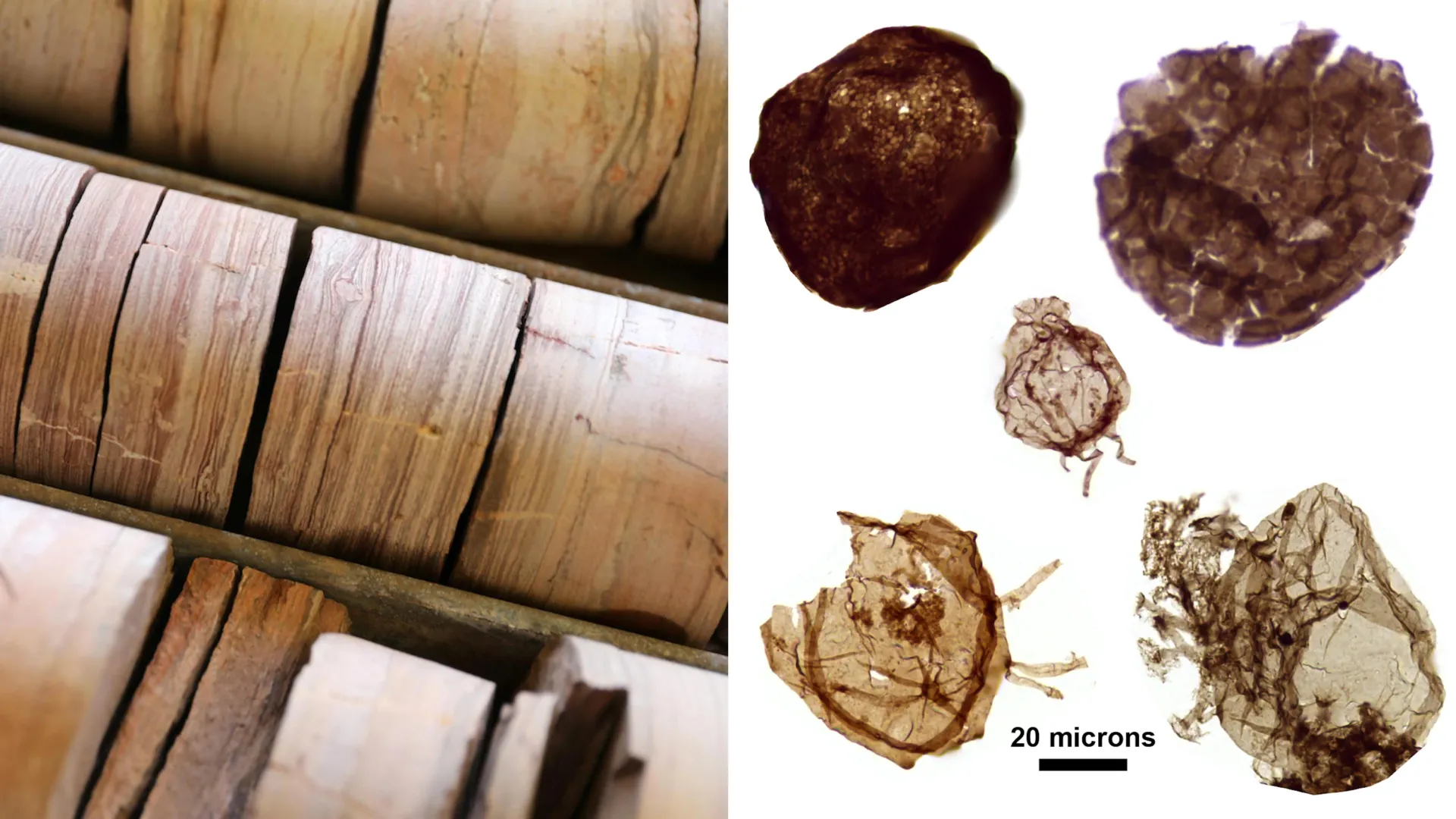
The researchers compiled and analyzed approximately 100 existing datasets, encompassing a wide array of samples. These included organic materials derived from terrestrial microbes, soils, fossilized remains, meteorites, asteroids, and synthetic samples created in laboratories under simulated extraterrestrial conditions. The goal was to compare the chemical composition and distribution of molecules in samples known to be biological in origin with those known to be abiotic.
The results were striking. The statistical analysis revealed consistent and discernible patterns. For amino acids, the building blocks of proteins, biological systems tended to produce a greater variety (higher richness) and a more even distribution (higher evenness) of different types of amino acids compared to those formed through nonbiological processes. This suggests that life, in its evolutionary journey, has explored and utilized a broader spectrum of amino acids and distributed them in a more balanced manner.
Conversely, fatty acids, essential components of cell membranes, exhibited an opposite trend. Nonliving chemical processes were found to produce more even distributions of fatty acids, while biological systems showed a greater tendency towards variation and less uniformity. This finding highlights that different classes of biomolecules may carry distinct statistical signatures, reflecting the unique biochemical pathways and selective pressures that govern their formation and utilization in living organisms.
The Persistence of Life’s Imprint
One of the most surprising and significant outcomes of the study was the robustness of the statistical method, even when applied to heavily degraded or ancient samples. The researchers found that they could reliably distinguish between biological and abiotic samples based solely on these hidden chemical patterns. This indicates that the organizational principle imposed by life is remarkably resilient, persisting even over vast timescales and through various geological and chemical transformations.
The team also observed that biological materials formed a continuum, ranging from well-preserved to significantly altered states. This continuum allowed them to assess the degree of preservation or degradation within a sample. Fabian Klenner expressed his astonishment at this finding: "That was genuinely surprising. The method captured not only the distinction between life and nonlife, but also degrees of preservation and alteration."
Remarkably, even samples that had undergone substantial degradation still retained detectable traces of this underlying biological structure. Fossilized dinosaur eggshells, included in the study, provided a compelling example. Despite being millions of years old and having undergone significant geological alteration, these fossilized remains still exhibited discernible statistical patterns that linked them to ancient biological activity. This suggests that the statistical approach may be capable of detecting biosignatures in environments where traditional methods might fail due to degradation of molecular integrity.
A New Paradigm for Future Space Exploration
The implications of this research for future space missions are profound. The ability to detect these hidden chemical patterns without relying on specialized, single-purpose instruments is a significant advantage. The statistical framework can potentially be applied to data already being collected by current and upcoming planetary exploration missions. Missions studying Mars, the icy moons Europa and Enceladus, and other potentially habitable worlds are generating increasingly detailed measurements of organic chemistry. Interpreting these complex chemical signals has been a major bottleneck, but this new statistical approach offers a powerful tool to help unlock their secrets.
This research arrives at a pivotal moment in planetary exploration. As our technological capabilities advance, so too does our capacity to probe the chemical composition of other worlds. Missions like NASA’s Perseverance rover on Mars, which is actively collecting samples for potential return to Earth, and the Europa Clipper mission, designed to investigate Jupiter’s moon Europa for signs of habitability, are generating unprecedented amounts of data. The statistical method developed by Klenner and Yoffe could provide a crucial analytical layer, helping scientists to interpret the complex organic chemistry detected by these missions and to identify potential biosignatures with greater confidence.
The Need for Multifaceted Evidence
While the researchers are optimistic about the potential of their statistical approach, they are also cautious. They emphasize that no single technique will be sufficient to definitively prove the existence of extraterrestrial life. "Any future claim of having found life would require multiple independent lines of evidence, interpreted within the geological and chemical context of a planetary environment," Klenner stated. This is a cornerstone principle of astrobiology: a single piece of evidence, no matter how compelling, is rarely enough to overturn established scientific understanding.
The strength of this new method lies in its potential to act as a corroborating piece of evidence. If different analytical techniques, including this statistical pattern recognition, all point towards a biological origin, the cumulative evidence becomes significantly more powerful. This approach aligns with the broader scientific consensus that the discovery of extraterrestrial life will likely be a gradual process, built upon converging lines of evidence from diverse sources.
Broader Impact and Future Directions
The implications of this research extend beyond the immediate search for alien life. The fundamental understanding that life imposes a distinct organizational principle on matter could have far-reaching consequences in various scientific fields. It prompts a re-evaluation of what constitutes a biosignature and encourages a more holistic approach to analyzing chemical data.
Future research will likely focus on expanding the datasets used to train and validate the statistical models. This includes analyzing a wider range of biological samples from diverse environments on Earth, as well as exploring more complex abiotic chemical systems. Further refinement of the statistical algorithms could lead to even greater sensitivity and specificity in detecting biosignatures.
Moreover, the development of instruments capable of performing in-situ statistical analysis on future missions could revolutionize the way we search for life. Imagine a rover on Mars or an orbiter around Enceladus that can not only detect organic molecules but also perform real-time statistical analysis to assess the likelihood of a biological origin.
The quest to answer the age-old question, "Are we alone?" has taken a significant leap forward with this innovative research. By shifting the focus from individual molecules to the hidden patterns that connect them, scientists are forging a new path in the search for life beyond Earth, a path that promises to reveal the subtle yet profound signatures of biology imprinted across the cosmos. This statistical " Rosetta Stone" for biosignatures may well be the key to unlocking one of humanity’s most profound scientific mysteries.

















Leave a Reply