The intricate genetic blueprints of many of the world’s most vital crops are a testament to a turbulent evolutionary past, marked by repeated instances of whole-genome duplication and hybridization. These "polyploid" genomes, containing multiple sets of chromosomes inherited from distinct ancestral species, present a formidable challenge for scientists seeking to understand their assembly. The difficulty is amplified when the original parent species are long extinct or have yet to be identified. Now, a groundbreaking study introduces a comprehensive genome-wide approach that leverages the subtle evolutionary imprints left by long terminal repeat retrotransposons—mobile DNA sequences—to untangle these complex genetic narratives. This innovative technique allows researchers to identify distinct subgenomes and precisely date the major genome-merging events that shaped them, offering unprecedented insights into the formation and diversification of complex plant genomes over millions of years.
The Enigma of Polyploid Genomes
Whole-genome duplication has been a powerful engine of plant evolution, driving adaptation, fostering innovation, and ultimately giving rise to many of our most important food crops. In allopolyploid plants, a key outcome of this process, chromosome sets originate from different ancestral genomes. These distinct groups of chromosomes, known as subgenomes, do not simply coexist; they continue to evolve and interact with one another long after the initial hybridization events that brought them together.
The ability to identify these subgenomes is paramount for comprehending a species’ evolutionary trajectory. Traditional methods often rely on direct comparisons between a polyploid genome and the genomes of its known diploid ancestors. However, this approach is frequently hampered by the unfortunate reality that many ancient progenitor species are no longer extant or have eluded scientific discovery. This knowledge gap leaves researchers with incomplete puzzle pieces, making the reconstruction of complex genomic histories an arduous task.
Retrotransposons: Molecular Fossils of Genome Evolution
In the absence of direct ancestral references, scientists have long recognized the potential of transposable elements—DNA sequences capable of moving within a genome—as an alternative source of evolutionary information. Among these, long terminal repeat (LTR) retrotransposons have proven particularly valuable. These elements accumulate in characteristic patterns that are specific to particular evolutionary lineages, effectively acting as molecular fossils that preserve evidence of past genomic events. While their potential has been acknowledged for some time, reliable methodologies for translating these intricate patterns into accurate subgenome assignments have remained elusive, underscoring the urgent need for new tools that can reconstruct polyploid genome evolution without pre-existing knowledge of progenitor species.
A Novel Framework for Reconstructing Genomic Histories
Responding to this critical need, researchers from the U.S. Department of Agriculture, in collaboration with several academic institutions, have developed a sophisticated bioinformatic framework capable of reconstructing the evolutionary history of complex polyploid genomes. This innovative tool, detailed in the latest issue of the journal Horticulture Research, offers a robust solution to the challenge of deciphering genomes whose ancestors are unknown.
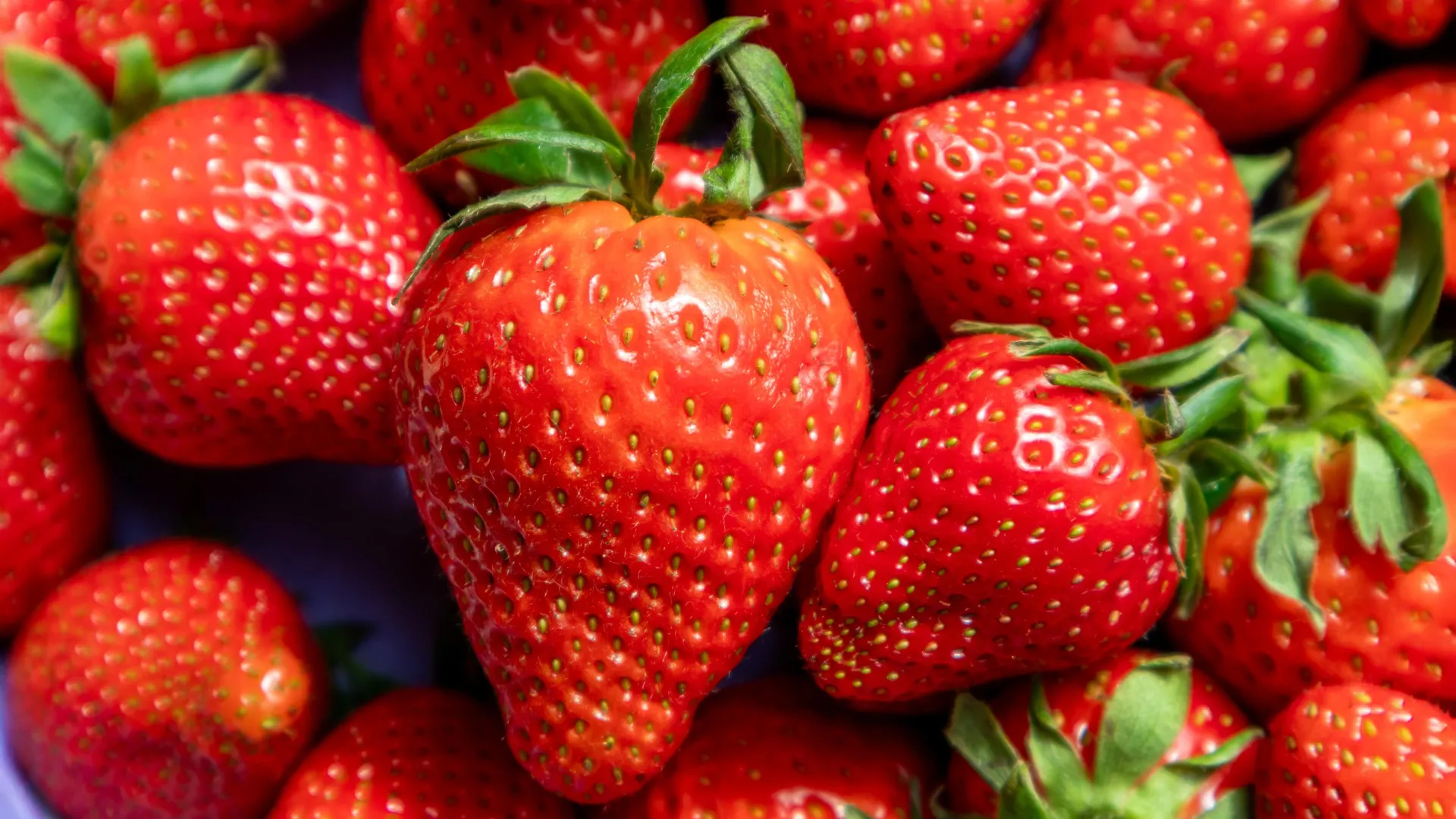
The team’s approach, demonstrated with remarkable clarity on the cultivated octoploid strawberry (Fragaria × ananassa), moves beyond traditional comparative genomics. Instead, it harnesses the power of LTR retrotransposons, which are abundant and widely distributed within plant genomes. By constructing a "serial similarity matrix" derived from these mobile elements, the researchers were able to meticulously map the structural organization of the strawberry’s subgenomes. This analysis unearthed evidence of multiple ancient genome-merging events that have contributed to the formation of the modern strawberry species, resolving long-standing questions about its evolutionary origins.
The framework conceptualizes genome evolution across three distinct phases: the period before ancestral species diverged, their subsequent independent evolutionary trajectories, and the crucial stage following the merger of their genomes. LTR retrotransposons that expanded during the divergence phase carry unique molecular signatures that are specific to each developing subgenome. By calculating similarity matrices for these elements across all chromosomes and analyzing how they cluster at varying similarity thresholds, the researchers have devised a method that effectively captures evolutionary signals accumulated over different temporal scales. This "serial similarity matrix" acts as a high-resolution timeline, revealing the sequence and timing of key genomic events.
Rigorous Testing on Known Polyploids and Artificial Genomes
Before applying their novel framework to the complex strawberry genome, the researchers subjected it to rigorous validation using well-studied allopolyploid crops, including teff (Eragrostis tef) and cotton (Gossypium spp.). In both instances, the method successfully distinguished known subgenomes and accurately separated genomic events that occurred before and after the polyploidization events. This initial success provided strong evidence for the robustness and reliability of the approach.
Further bolstering confidence in their method, the team also evaluated its performance on artificially constructed polyploid genomes. These controlled experiments confirmed that the framework is highly sensitive to both the divergence times of ancestral species and the relative abundance of transposable elements within the genome. This meticulous testing phase ensured that the tool was not only effective but also adaptable to a wide range of genomic complexities.
The Strawberry’s Evolutionary Saga Revealed
The application of this innovative method to the octoploid strawberry yielded illuminating results. The analysis identified four distinct subgenomes within the strawberry’s complex genetic architecture. More significantly, it uncovered compelling evidence for three sequential allopolyploidization events. These crucial genome-merging events are estimated to have occurred at approximately 3.1-4.2 million years ago, 1.9-3.1 million years ago, and 0.8-1.9 million years ago, painting a detailed picture of the strawberry’s gradual assembly.
The findings revealed close evolutionary relationships between two of the strawberry’s subgenomes and the species Fragaria vesca and Fragaria iinumae. This insight provides a crucial link to known extant relatives. However, the study also challenged some prevailing models that had proposed the involvement of additional diploid progenitor species. The complexity of the strawberry’s genome suggests that some of its contributors may have been extinct for millennia or remain unsampled, underscoring the profound challenges inherent in polyploid genome evolution.
"This work demonstrates how transposable elements can function as evolutionary time stamps embedded in plant genomes," stated one of the study’s senior authors. "By focusing on when and where these elements expanded, we can reconstruct genome history even when direct ancestral references are missing. This method provides a powerful new lens for studying polyploid crops and moves beyond reliance on incomplete progenitor data, offering a more objective and reproducible framework for evolutionary genomics."
Broad Implications for Agriculture and Biodiversity Research
The potential applications of this new method extend far beyond the cultivated strawberry. Many of the world’s most economically important crops, including staple grains like wheat and rice, as well as cotton, sugarcane, and coffee, are polyploids with similarly intricate evolutionary histories. The ability to accurately dissect the subgenomic composition of these crops could revolutionize agricultural research and breeding practices.
More precise identification and characterization of subgenomes are crucial for improving gene annotation—the process of identifying genes and their functions within a genome. This enhanced understanding can lead to more accurate trait mapping, allowing breeders to pinpoint the genetic basis of desirable characteristics such as yield, disease resistance, and nutritional content. Furthermore, these advances will bolster comparative genomic studies, enabling scientists to draw more meaningful comparisons between related species and understand the evolutionary forces that have shaped crop diversity.
Ultimately, these insights can support precision breeding efforts, a more targeted and efficient approach to crop improvement. By accelerating the development of new crop varieties with enhanced traits, this research has the potential to contribute significantly to global food security and agricultural sustainability.
The serial similarity matrix approach also offers a valuable new tool for fundamental research into biodiversity, speciation, and adaptation. By making it possible to reconstruct genome evolution without relying on known ancestors, it opens up new avenues for studying the origins and diversification of life on Earth. The framework’s versatility suggests it may prove useful for investigating other complex polyploid organisms beyond the plant kingdom, forging a stronger connection between evolutionary biology and practical agricultural research. The funding for this pivotal research, provided by the National Institute of Food and Agriculture (NIFA) through the Specialty Crop Research Initiative (SCRI) Grant 2022-51181-38241 to Q.Y., highlights the strategic importance of such advancements for the future of agriculture. This interdisciplinary effort underscores a growing recognition that understanding the deep evolutionary past of our crops is essential for securing a resilient and productive future.