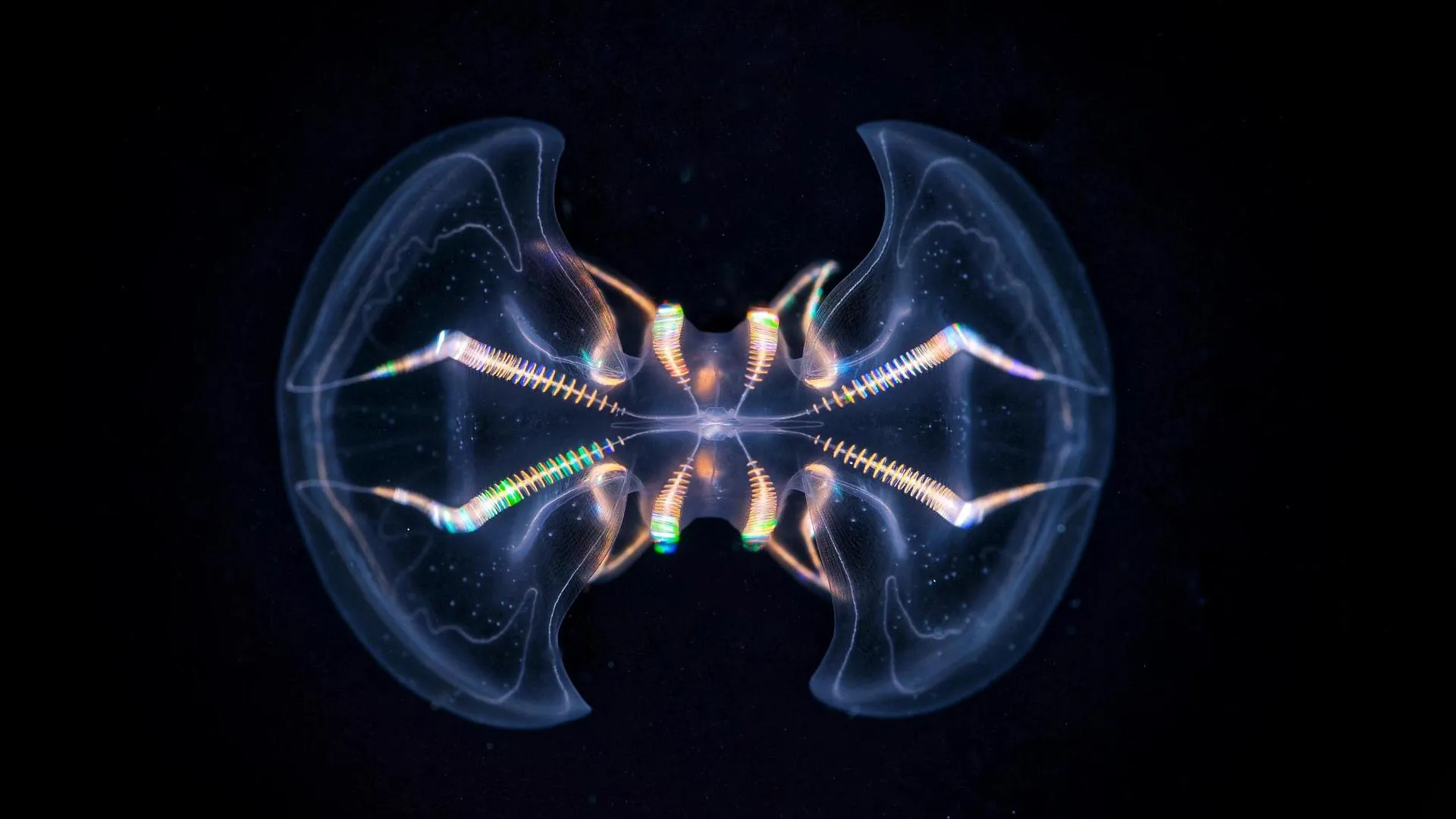
Bergen, Norway – A groundbreaking study employing advanced three-dimensional reconstruction techniques has revealed an astonishing level of structural and functional complexity within the aboral organ of ctenophores, commonly known as comb jellies. This intricate sensory apparatus, ancient organisms that first graced Earth’s oceans approximately 550 million years ago, has demonstrated a sophistication far exceeding previous scientific understanding. The findings strongly suggest that rudimentary, brain-like processing systems may have been present in some of the earliest animal lineages, offering profound new insights into the evolutionary trajectory of nervous systems.
Decoding the Aboral Organ: A Multimodal Sensory Hub
Ctenophores, characterized by their delicate, gelatinous bodies and the shimmering rows of cilia that propel them through the water, represent one of the oldest branches on the animal tree of life. Their aboral organ (AO), a specialized structure located at the apical pole of the animal, serves as a critical interface for sensing the environment. This organ is instrumental in detecting fundamental cues such as gravity, pressure, and light, thereby guiding the organism’s behavior and survival.
A pivotal new morphological study, published in the esteemed journal Science Advances, has meticulously detailed the internal architecture of this ancient organ. The research, spearheaded by Pawel Burkhardt, group leader at the Michael Sars Centre for Biomedical Research at the University of Bergen, has dramatically enhanced the scientific community’s comprehension of the AO’s sophisticated capabilities.
"We have demonstrated that the aboral organ is not merely a simple sensory receptor but a complex and functionally unique sensory system," stated Burkhardt. "Our findings significantly deepen our understanding of how behavioral coordination evolved in the animal kingdom, pushing back the potential origins of sophisticated neural processing."
Mapping Cellular Diversity: A Microscopic Marvel
To unravel the intricate internal organization of the aboral organ, researchers from the Michael Sars Centre collaborated with Maike Kittelmann at Oxford Brookes University. Their approach leveraged state-of-the-art volume electron microscopy, a powerful technique that allows for the generation of exceptionally detailed three-dimensional reconstructions of biological structures at the cellular level. This method effectively transformed a microscopic examination into a comprehensive exploration of the organ’s architecture.
The exhaustive analysis unearthed a remarkable 17 distinct cell types within the aboral organ. This cellular diversity is particularly striking, with 11 previously unidentified secretory and ciliated cell types. The sheer variety of specialized cells underscores the aboral organ’s role as a sophisticated, multimodal sensory processor, capable of integrating information from multiple environmental sources.
Anna Ferraioli, a postdoctoral researcher at the Michael Sars Centre and the study’s first author, expressed her astonishment at the findings. "I was amazed almost immediately by the morphological diversity of the aboral organ cells. Working with volume EM data feels like discovering new exciting things every day," Ferraioli remarked. "The AO possesses a striking complexity when compared to the apical organs of cnidarians and bilaterians. It is truly unique!" This comparison highlights how distinct evolutionary paths may have led to specialized sensory structures in different animal phyla, even among early diverging lineages.
A Hybrid Neural Communication System: Synapses and Volume Transmission
Beyond its extraordinary cellular diversity, the aboral organ’s intimate connection with the ctenophore’s nervous system has emerged as a key finding. Ctenophores possess a unique nerve net composed of fused neurons, forming a continuous network that permeates the entire body. This decentralized nervous system is a hallmark of their ancient lineage.
The research revealed that this nerve net forms direct synaptic connections with cells located within the aboral organ. These synapses act as crucial communication points, establishing a direct pathway for bidirectional signaling between the sensory organ and the broader nervous system. This allows for rapid transmission of sensory information and coordinated responses.
Crucially, the study also identified that many cells within the aboral organ are replete with vesicles. These vesicles are indicative of the release of widespread chemical signals through a process known as volume transmission. Unlike the highly localized, point-to-point communication of synaptic transmission, volume transmission allows signaling molecules to diffuse across a wider area, influencing multiple target cells simultaneously.
The combined presence of both synaptic and non-synaptic signaling mechanisms within the aboral organ suggests a sophisticated communication strategy. This hybrid approach allows for both rapid, precise responses and broader, modulatory signaling, enhancing the organ’s overall functional capacity.
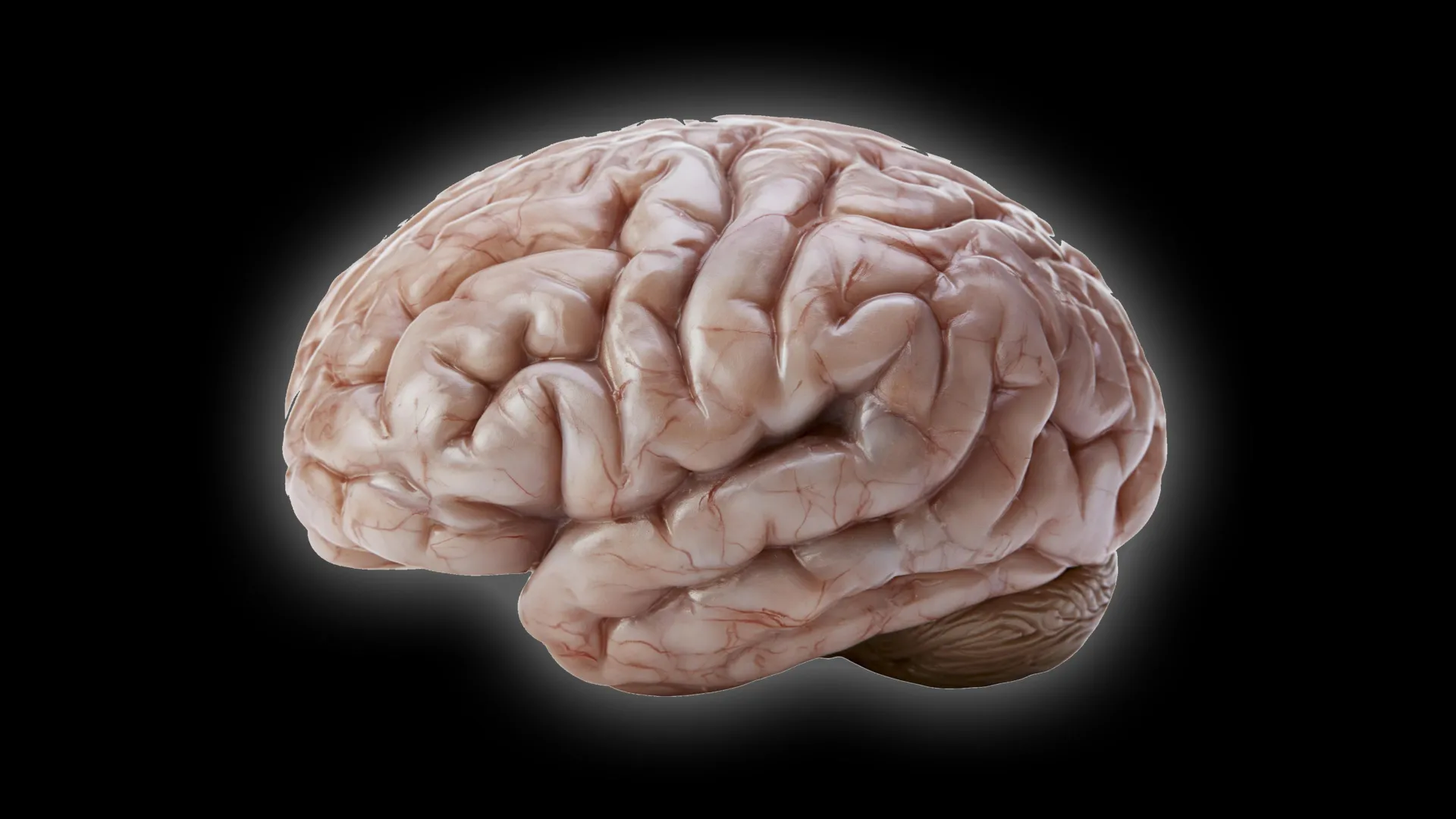
"I believe our work provides an important perspective on how much we can learn from studying morphology," Ferraioli elaborated. "While the AO is definitely not structured like our own brain, it could aptly be defined as the organ that ctenophores utilize as their ‘brain’ – their central processing unit for navigating their environment." This analogy, while emphasizing functional similarity, acknowledges the significant structural differences from more complex vertebrate brains.
Rethinking Neural Evolution: Multiple Origins of Centralization
The evolutionary implications of these findings are profound. The research team also investigated the expression patterns of certain developmental genes within ctenophores. Many of these genes are known to be critical for shaping body organization in a wide array of other animals. While these genes are present in ctenophores, their patterns of expression within the aboral organ differ substantially from their roles in the development of nervous systems in other animal groups.
This divergence in gene expression suggests that the aboral organ, while functionally akin to a central processing unit, may not be directly homologous to the brains found in other major animal groups, such as bilaterians. Instead, it points towards the possibility that complex nervous systems and centralized processing capabilities may have evolved independently multiple times throughout animal history.
"In other words," Burkhardt added, "evolution appears to have invented centralized nervous systems more than once." This hypothesis challenges the long-held view that nervous systems and brain-like structures evolved along a single, linear path. It suggests a more convergent evolutionary process, where similar functional solutions to environmental challenges arose independently in different lineages.
Corroborating Evidence: Neural Wiring and Behavioral Coordination
Further compelling evidence supporting these conclusions comes from related research led by Kei Jokura at the National Institute for Basic Biology in Japan, in collaboration with Professor Gaspar Jekely from Heidelberg University. This parallel study, which also included Burkhardt as a co-author, focused on reconstructing the complete neural wiring of the ctenophore’s gravity-sensing organ.
By integrating high-speed imaging with detailed three-dimensional reconstructions of over 1,000 individual neurons, these scientists were able to map the precise neural circuits responsible for coordinating the beating of cilia across different regions of the comb jelly’s body. This intricate coordination is essential for the organism to maintain its orientation and navigate effectively through the water column.
"The similarities to neural circuits in other marine organisms suggest that comparable solutions to gravity sensing may have evolved independently in distant animal lineages," Jokura commented. This finding from a separate but related study reinforces the idea of convergent evolution in neural systems. It suggests that similar environmental pressures, such as the need to sense gravity, can drive the development of analogous neural structures and functions, even in distantly related animals.
A New Dawn for Understanding Nervous System Origins
Taken together, these multifaceted studies paint a compelling picture of early nervous system evolution. The research strongly indicates that centralized nervous systems, and potentially rudimentary brain-like processing centers, may have been more prevalent among the earliest animals than previously theorized. This challenges the traditional view that complex nervous systems only emerged later in evolutionary history, particularly with the advent of bilaterian animals.
The implications for our understanding of life’s history are far-reaching. It suggests that the building blocks for complex behavior and sensory processing were present much earlier than anticipated, potentially influencing the ecological success and diversification of ancient marine life.
According to Ferraioli, the next critical phase of research will involve delving deeper into the molecular characteristics of the newly identified cell types within the aboral organ. Furthermore, scientists aim to investigate the extent to which the aboral organ influences and dictates comb jelly behavior. Understanding the precise molecular mechanisms underlying the aboral organ’s function and its behavioral outputs will be crucial for further elucidating the evolutionary pathways of nervous systems. This ongoing research promises to continue reshaping our fundamental understanding of how complex life, with its intricate sensory and processing capabilities, first emerged and diversified on Earth.