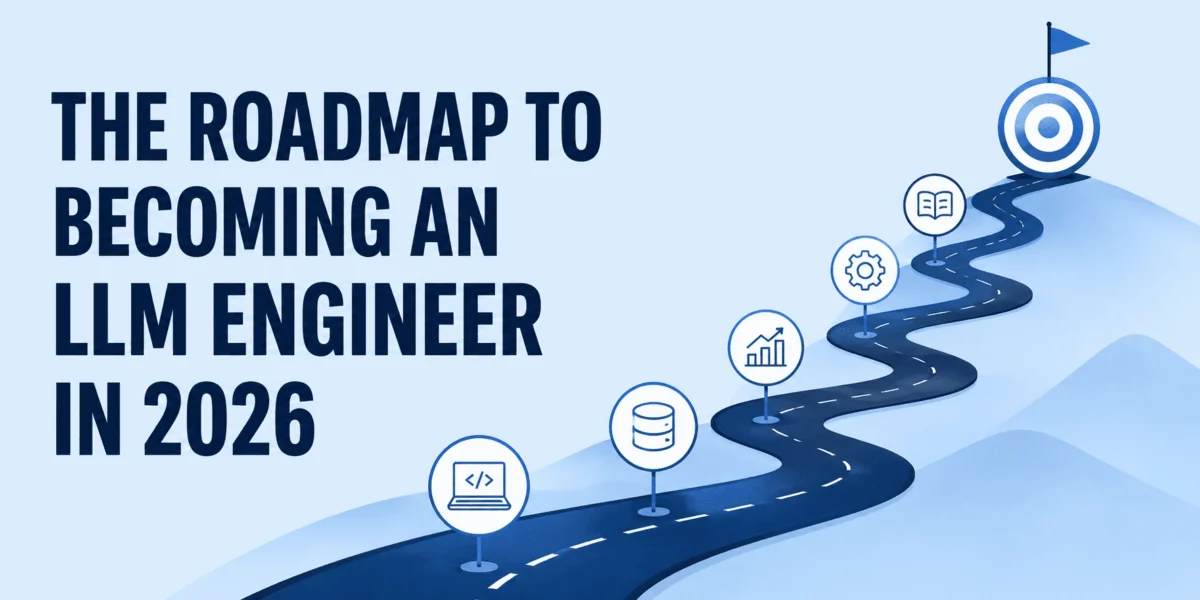
The year 2026 marks a pivotal moment in the evolution of artificial intelligence, characterized by a substantial surge in demand for a highly specialized role: the Large Language Model (LLM) Engineer. This burgeoning profession, distinct from traditional machine learning engineering, focuses on adapting, orchestrating, and serving pretrained LLMs to perform useful, reliable work within real-world products. The transition of LLM features from internal research and development demonstrations in 2023 and 2024 to robust, production-grade systems by 2026 has created an urgent need for engineers capable of building and maintaining these complex AI deployments. Possessing a general machine learning background serves as a valuable starting point, but the specific skills required for LLM engineering necessitate a dedicated and focused learning trajectory.
This comprehensive roadmap outlines five critical skill areas that form the bedrock of an LLM Engineer’s expertise: foundational understanding, advanced prompting and tool calling, sophisticated retrieval systems, effective fine-tuning and alignment, and robust serving and operational practices. Each step is designed to build upon the last, culminating in a clear understanding of the necessary competencies and practical experience.
The Emergence of a Specialized Role: A Brief History
The landscape of AI development has undergone rapid transformation since the advent of generative AI models in late 2022. Initially, the focus was on demonstrating the capabilities of these nascent technologies, with researchers and general machine learning engineers exploring their potential through proofs-of-concept. The years 2023 and 2024 saw widespread experimentation across industries, as companies grappled with integrating powerful, yet often unpredictable, LLMs into their existing infrastructure. This period of intense exploration revealed that while foundational models offered unprecedented capabilities, their deployment in production environments required a nuanced understanding of their specific behaviors, limitations, and optimization techniques.
Traditional machine learning engineers, often spending months training neural networks from scratch and meticulously curating vast datasets, found their expertise needed reorientation. The new paradigm centered on leveraging powerful, pre-trained foundation models and iteratively refining their outputs. This shift gave rise to the LLM Engineer role, a specialist who bridges the gap between raw model intelligence and practical application. By 2026, many organizations have moved beyond pilot programs, actively shipping LLM-powered products to millions of users, from enhanced customer service chatbots to sophisticated content generation platforms and intelligent data analysis tools. This industrialization phase solidified the LLM Engineer as an indispensable asset, driving the demand for professionals with this distinct skill set.
Market Dynamics and Industry Outlook
The growth in demand for LLM Engineers is not merely anecdotal; it is reflected in significant market trends. Industry reports project a compound annual growth rate (CAGR) exceeding 30% for LLM-related job roles between 2024 and 2029, indicating a sustained need for this expertise. Average salaries for LLM Engineers have reportedly surpassed those of general machine learning engineers by 15-25% in many regions, underscoring the specialized value these professionals bring. A recent survey conducted by a leading tech consultancy firm indicated that over 60% of large enterprises are actively integrating LLM-powered features into their core products by 2026, with another 25% planning to do so within the next two years. This widespread adoption is fueled by venture capital flowing into AI startups and established tech giants investing heavily in LLM platforms and applications. The competitive landscape for talent is intensifying, prompting educational institutions and online learning platforms to rapidly update their curricula to meet this specialized demand.
Step 1: Building the Foundational Understanding
The journey to becoming an LLM Engineer begins with a solid foundation in core concepts, even for those already proficient in Python and possessing a working understanding of machine learning. The emphasis here is not on re-deriving complex mathematical principles, but rather on cultivating an intuitive grasp of how LLMs operate at the most granular level. This includes understanding four critical concepts:
- Tokens: The fundamental units of text that models process. Understanding tokenization helps in predicting model behavior, managing context windows, and optimizing input/output.
- Embeddings: The dense vector representations that transform tokens into points in a high-dimensional space, capturing semantic relationships and allowing models to understand context.
- Attention: The mechanism that allows a model to weigh the importance of different tokens in an input sequence when generating an output, crucial for understanding how context is maintained and relationships are formed.
- Transformer Block: The repeating architectural unit that forms the backbone of modern LLMs, comprising multi-head attention and feed-forward neural networks. A conceptual understanding of its function is vital for reasoning about model capabilities and limitations.
Proficiency in the PyTorch deep learning framework and the extensive Hugging Face ecosystem (particularly the Transformers and Datasets libraries) is paramount. These tools serve as the default working environment for LLM Engineers, facilitating everything from model loading to dataset management. Familiarity with their APIs and best practices is expected.
Project: Load a small open-source language model using the Hugging Face Transformers library and execute a text generation task from a given prompt. This hands-on exercise provides concrete experience with the tokenize-forward-decode loop, offering an immediate feel for how models process and generate text before layering additional complexities. For example, using HuggingFaceTB/SmolLM2-135M-Instruct allows for rapid iteration and observation of basic LLM behavior.
Step 2: Designing Advanced Prompts and Building Tool-Calling Systems
Prompt engineering, far from being a "soft skill," is the primary lever an LLM Engineer employs to steer model behavior. It demands systematic thinking, meticulous structuring, and a deep understanding of how to elicit precise responses. Key elements include crafting structured system messages that define the model’s persona and task, strategically placing few-shot examples to guide its reasoning, and defining robust JSON output schemas to ensure parseable and reliable responses for downstream systems.
However, the capabilities of prompting alone reach a ceiling when models need to interact with external state or perform actions beyond text generation. This is where tool calling, now a first-class capability in every major model API, becomes indispensable. Tool calling empowers LLMs to invoke external functions based on user requests, bridging the gap between reasoning and action. The model is provided with a set of function signatures; it then decides which tool to call, returns a structured call, and your code executes the external API. The result is then fed back to the model, allowing it to incorporate real-world information into its subsequent responses. This feedback loop is the architectural genesis of agentic systems, a concept that will be further expanded in subsequent steps.
For optimizing prompts programmatically, especially once robust test metrics are in place, frameworks like DSPy offer a significant advantage. DSPy treats prompt construction as an optimization problem, automating the search for effective prompts rather than relying solely on manual tuning.
Project: Develop a command-line tool that can answer user queries requiring external data by leveraging native tool calling to interact with an external API (e.g., a weather service or stock market data provider). The tool should then format the model’s response based on the retrieved information. This project highlights the practical application of enabling LLMs to act as intelligent intermediaries between users and external data sources.
Step 3: Building Retrieval Systems Beyond the Basics (RAG)
Retrieval-Augmented Generation (RAG) has become the de facto architecture for LLM applications that need to provide accurate answers based on private, proprietary, or frequently updated data. The baseline RAG pipeline involves chunking documents into manageable segments, embedding each chunk into a vector, storing these vectors in a specialized vector database, retrieving the most relevant chunks at query time, and finally assembling them into the LLM’s context window for generation.
The true engineering challenge and opportunity lie in moving beyond this basic setup. Naive sparse keyword search and dense embedding search often miss different types of queries. Combining them through hybrid search (which leverages both lexical and semantic matching) and then applying a reranker to reorder results based on their relevance to the specific question significantly enhances retrieval precision. Semantic routing, where a classifier directs queries to the most appropriate data source before retrieval, efficiently handles multi-source systems without degrading performance on any single source.
Common failure modes in RAG systems include:
- Chunk size issues: Chunks that are too large dilute the signal, while chunks that are too small lose crucial context.
- Retrieval misses: Leading to confident-sounding but factually incorrect "hallucinations" by the LLM.
Debugging these issues requires measuring retrieval quality independently of generation quality.
The agentic thread from Step 2 remains relevant: retrieval itself can be seen as a tool an intelligent agent calls, deciding when to look something up based on the user’s query. For complex private data with intricate entity relationships, knowledge graph approaches, sometimes referred to as GraphRAG, offer a deeper grounding option, providing structured relationships for more accurate and inferential responses.
A diverse array of vector store options exists, from local solutions like FAISS and Chroma to managed cloud services such as Weaviate and Pinecone. Orchestration frameworks like LangChain, LlamaIndex, and LangGraph are essential for constructing, managing, and optimizing RAG pipelines.
Project: Construct a document-answering system that incorporates self-reflection. If the initial retrieval attempt yields low-confidence results, the system should use the LLM to rewrite or refine the query before attempting retrieval again, ultimately generating a more accurate response. This project demonstrates advanced RAG strategies and the iterative refinement of queries.
Step 4: Fine-Tuning and Aligning Models
While prompting and retrieval solve a significant majority of LLM application problems, fine-tuning becomes appropriate in specific scenarios. These include instances where a model needs to consistently adopt a precise format, tone, or domain-specific vocabulary that prompting alone cannot reliably enforce, or when the goal is to reduce inference costs by distilling complex behavior into a smaller, more efficient model.
Parameter-efficient fine-tuning (PEFT) methods are the standard starting point. Techniques like Low-Rank Adaptation (LoRA) and its quantized variant, QLoRA, enable training a small set of adapter weights on top of a frozen base model. This approach achieves substantial behavioral modification at a mere fraction of the computational cost of full fine-tuning. The Hugging Face ecosystem provides robust libraries like PEFT and TRL (Transformer Reinforcement Learning) to facilitate both.
For aligning model behavior with preferred outputs, Direct Preference Optimization (DPO) has emerged as a common and effective method, largely replacing the more complex reinforcement learning from human feedback (RLHF) approaches. DPO operates by training from pairs of preferred and rejected completions, simplifying the alignment process for specific tones, styles, or safety guidelines.
The most time-consuming aspect of fine-tuning often lies in dataset curation. A fine-tuned model’s performance is directly tied to the quality of its training examples. Constructing clean, representative preference pairs or task-specific datasets requires significant engineering effort and domain expertise.
Evaluation is a critical, first-class engineering task in this phase. Building programmatic evaluation sets, writing comprehensive test suites to check output format and factual adherence, and implementing guardrails to catch failure modes before they reach end-users are essential. Tools like Ragas and Phoenix offer practical capabilities for both evaluation metrics and ongoing observability of fine-tuned models.
Project: Fine-tune a small open-source model to adhere to a specific corporate tone or style. Subsequently, develop a programmatic evaluator to measure the fine-tuned model’s adherence against a baseline model, quantifying the improvement in tone consistency. This project highlights the practical application of PEFT and the importance of objective evaluation.
Step 5: Serving and Operating LLM Applications (LLMOps)
The transition from a locally functioning model to one serving production traffic reliably and efficiently presents a distinct set of engineering challenges. For open-weights models, specialized inference infrastructure is required to handle:
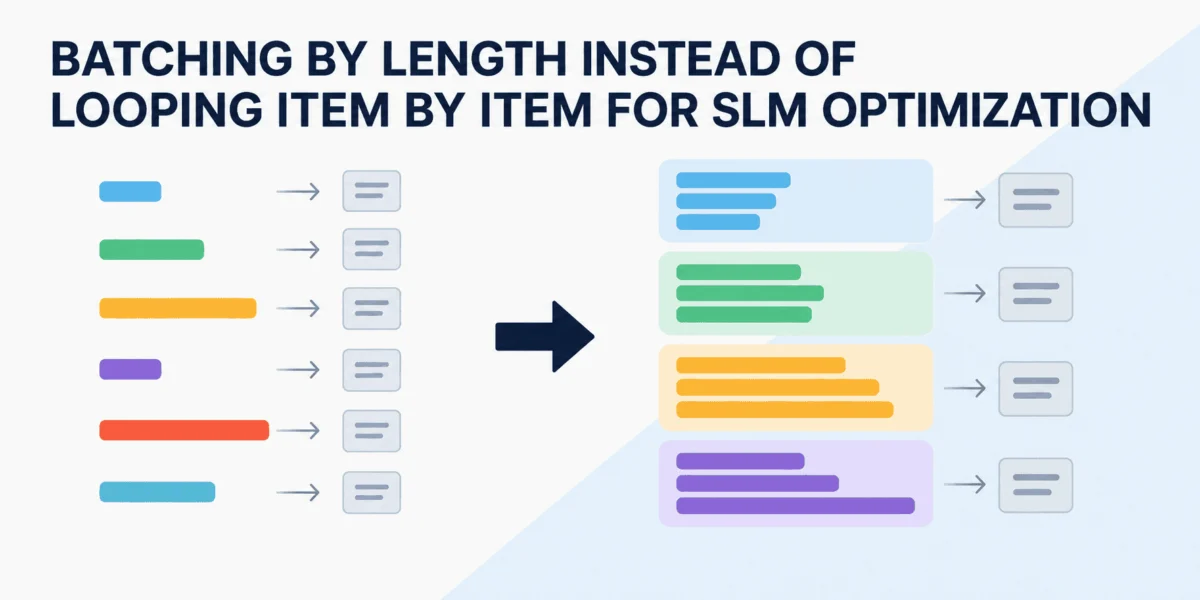
- Batching: Serving multiple requests simultaneously to maximize GPU utilization and reduce latency.
- Quantization: Reducing the numerical precision of model weights (e.g., 4-bit or 8-bit) to significantly lower memory footprint and increase throughput on less powerful hardware.
vLLM stands out as the standard choice for throughput-optimized serving, while Ollama provides an excellent environment for local development and testing. The bitsandbytes library is crucial for implementing efficient 4-bit and 8-bit quantization techniques.
Beyond raw inference, LLMOps encompasses the operational layer essential for maintaining production systems:
- Tracing: Monitoring token usage per request for cost analysis and debugging.
- Logging: Capturing inputs and outputs for compliance, post-hoc analysis, and error diagnosis.
- Prompt Versioning: Managing prompts alongside application code, enabling reproducibility of past behaviors and facilitating A/B testing of different prompting strategies.
- Monitoring: Continuously tracking cost, latency, error rates, and model drift over time to ensure system health and performance.
These practices distinguish a mere prototype from a maintainable, scalable production system. Weights & Biases is a popular tool for experiment tracking and model versioning, while Phoenix extends observability into production environments. The focus here remains at the application layer, ensuring the reliability and cost-efficiency of the LLM-powered application rather than broader organizational infrastructure design.
Project: Wrap the retrieval system developed in Step 3 behind a lightweight API using a framework like FastAPI. Integrate a telemetry logger that tracks key metrics such as token count, latency, and estimated cost per API call. Adding structured telemetry early in the development cycle is crucial; it provides baseline data that helps in proactively identifying cost surprises and latency regressions, ensuring the long-term sustainability of the application.
Recommended Learning Resources and Broader Implications
While specific courses and books are continually evolving, bookmarking key documentation remains invaluable. The Hugging Face PEFT documentation, LangGraph tutorials on agentic loops, and the vLLM deployment guide are indispensable references for practical implementation.
These five steps form an integrated stack, where each layer critically depends on the one below. Foundational knowledge provides the vocabulary to reason about model behavior. Prompting and tool calling establish the primary interface for leveraging model capabilities. Retrieval connects models to external, dynamic knowledge bases. Fine-tuning and alignment enable the precise shaping of model behavior for specific requirements. Finally, serving and operations transform the entire stack into a reliable system capable of running under real-world load.
For an individual with an existing machine learning background, a realistic timeline to build confidence across all five areas is typically three to six months of focused work, with the first production-ready project often shipped well before the full mastery of all steps. In this rapidly evolving field, a strong portfolio of practical projects holds more weight than academic certificates. A public demonstration of a working retrieval system or a fine-tuned model accompanied by documented evaluation results provides concrete proof of competence.
The LLM Engineer role also carries significant implications for the broader talent landscape. It necessitates a continuous learning mindset, as the underlying technologies and best practices evolve at an unprecedented pace. The role further underscores the importance of interdisciplinary skills, combining software engineering rigor with a deep understanding of linguistic nuances and user experience design. Furthermore, LLM Engineers play a crucial part in building responsible AI systems, requiring an awareness of potential biases, fairness considerations, and the ethical implications of their deployments. Their decisions in prompt design, data curation for fine-tuning, and operational guardrails directly impact the safety and trustworthiness of AI products.
For those whose interests gravitate more towards system design, infrastructure, and organizational architecture rather than hands-on code-level development, the companion path of an AI Architect might be more suitable. While sharing foundational knowledge, these two roles diverge significantly after the initial conceptual understanding of LLMs.
In conclusion, the LLM Engineer stands as a critical enabler of the AI revolution, transforming powerful, abstract models into tangible, value-generating applications. The journey demands a blend of technical expertise, systematic thinking, and practical application, ensuring that the promise of large language models translates into reliable and impactful real-world solutions. The advice remains simple yet potent: start with foundational knowledge, ship something small end-to-end early, and then delve deeper into specific areas as needed.