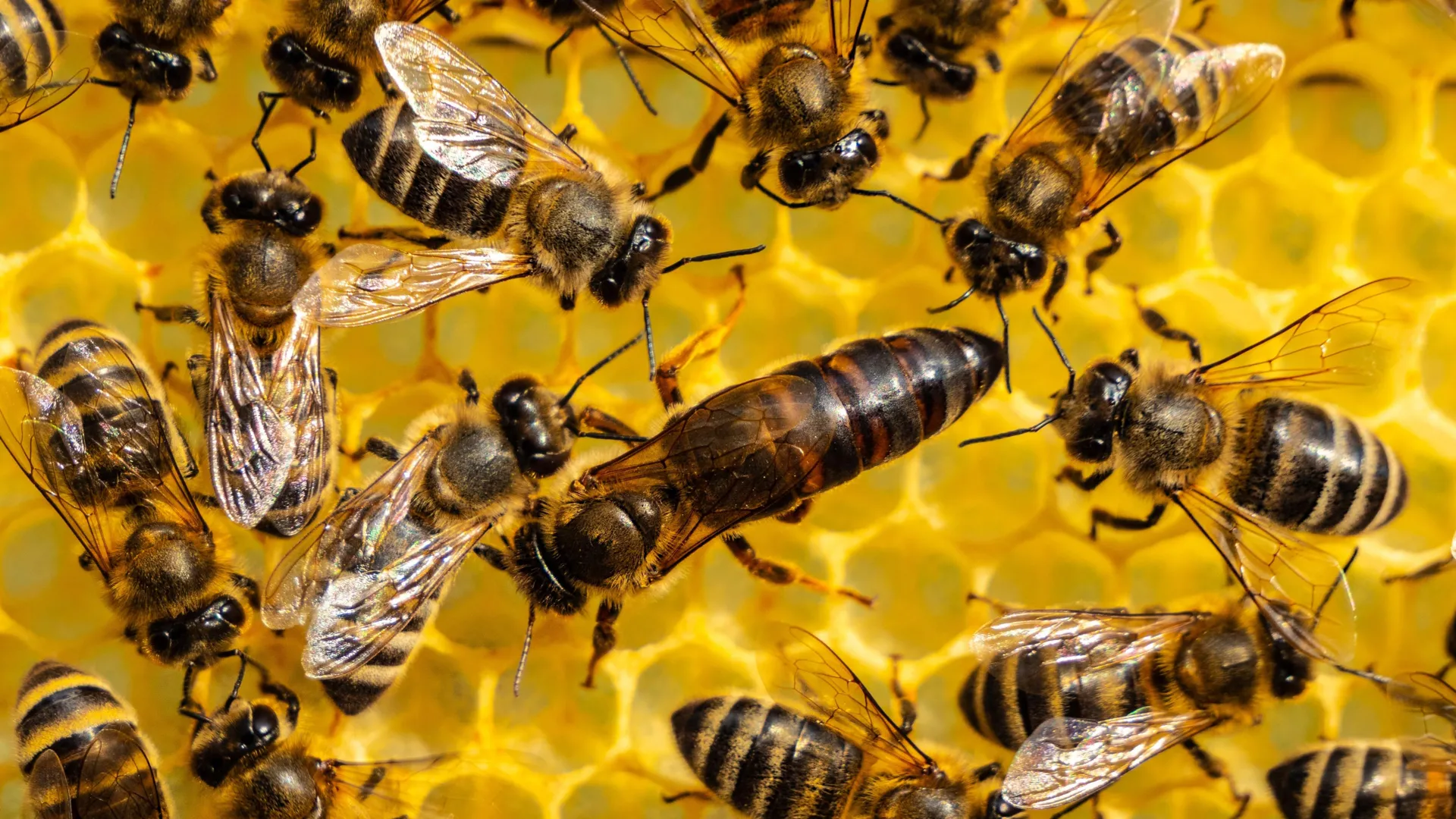
For decades, the prevailing scientific understanding of how a honeybee colony designates its queen was elegantly simple: a developing larva, bathed in the nutrient-rich elixir known as royal jelly, would invariably transform into the colony’s singular female ruler. This narrative, deeply ingrained in entomological discourse, painted a picture of a process driven primarily by dietary intervention. However, a groundbreaking new study, published in the esteemed journal Nature, has meticulously dismantled this long-held assumption, revealing a far more intricate and architecturally sophisticated reality behind the genesis of a queen honeybee. The research indicates that the development of a queen is not merely a matter of superior sustenance, but a carefully orchestrated environmental construction project, managed by a specialized cadre of worker bees.
The Royal Nursery: More Than Just a Cradle
The cornerstone of this paradigm shift lies in the discovery of specially constructed nursery chambers, meticulously crafted by young worker bees. These are not haphazard dwellings but precisely engineered environments that provide a unique combination of specialized wax, consistently warmer temperatures, and dedicated, intensive care. These factors, working in concert, guide a larva’s development into the robust and fertile queen essential for the colony’s survival and reproduction.
The structures, commonly referred to as queen cells, and poetically nicknamed "royal cribs," have been revealed to be far more than mere protective casings. They are, in fact, sophisticated developmental platforms. The research team, a multidisciplinary consortium comprising experts in behavior, physiology, chemistry, materials science, and genomics, has identified a previously unrecognized group of young worker bees. These individuals, now designated as "queen cell builders," exhibit specialized traits and behaviors that appear perfectly adapted for the creation and meticulous maintenance of these critical chambers.
"The previous understanding was quite rudimentary: take an egg, place it in a queen cell, feed it royal jelly, and voilà, you have a queen," explained Boris Baer, an entomologist and director of the Center for Integrative Bee Research (CIBER) at the University of California, Riverside, whose laboratory played a pivotal role in this research. "What we’ve uncovered is an entire intricate machinery underpinning this process. It’s profoundly more complex than we ever imagined."
Beyond Royal Jelly: The Multifaceted Genesis of a Queen
The fundamental starting point for both queen bees and their sterile female counterparts, the worker bees, is remarkably similar: they both emerge from nearly identical eggs. Yet, the divergence in their destinies is stark. Queens grow significantly larger, mature at a faster rate, and possess a lifespan that dwarfs that of ordinary workers. Crucially, they are the sole reproductive females within the colony, responsible for laying all the eggs that will replenish the hive’s population.
For many years, royal jelly, a protein-rich secretion produced by young worker bees, was considered the singular catalyst for this dramatic metamorphosis. This nutrient-dense substance, fed to young larvae, was believed to be the primary determinant of whether a larva would develop into a queen or a worker. The new study, however, strongly suggests that nutritional input alone is insufficient to account for the observed differences in development.
To unravel the complexities of queen development, the scientists employed a sophisticated array of techniques. These included thermal imaging to monitor temperature fluctuations within the cells, behavioral monitoring to observe the actions of the worker bees, advanced materials science methods to analyze the composition of the wax, and detailed chemical analysis of the substances involved. Through this comprehensive approach, they meticulously examined the micro-environments where queens are raised, uncovering significant distinctions between queen cells and the familiar hexagonal chambers that house worker bee larvae.
The Unseen Engineering of Queen Cells
Queen cells possess a distinctive, elongated shape, often likened to a peanut or a teardrop. Their construction utilizes a specialized type of wax that differs both physically and chemically from the wax used for standard worker brood cells. This unique royal wax is characterized by its lower density, increased flexibility, and a superior capacity for retaining heat and moisture. These properties create an optimal thermal and humid microclimate, ideal for the delicate and rapid development of queen larvae.
Further analysis revealed subtle yet significant differences in the fatty acid profiles and chemical signaling compounds present in the wax of queen cells. These chemical signatures suggest that the queen cell is not merely a structural component but an active participant in providing a unique developmental setting, influencing gene expression and physiological pathways within the developing larva.
To rigorously test the hypothesis that these specialized chambers are indeed critical for successful queen development, the researchers conducted a crucial experiment. They raised queen larvae in two distinct conditions: some were housed in cells constructed from the unique queen wax, while others were placed in cells made from standard worker wax. All larvae received the same diet of royal jelly. The results were compelling. Larvae reared in worker wax exhibited a higher mortality rate and, among those that survived, developed into significantly smaller queens compared to their counterparts in queen wax cells. This finding unequivocally demonstrates that the surrounding physical environment is as influential as dietary intake in shaping a future queen’s development and viability.
The Specialized Labor Force: Queen Cell Builders
The study also shed light on the specific worker bees tasked with this vital construction project. These individuals, dubbed "queen cell builders," are typically younger bees within the hive. Their role in caring for developing queens appears to induce physiological changes and maintain elevated body temperatures, suggesting a specialized biological adaptation for their task.
The enhanced warmth provided by these builder bees may offer a key explanation for the accelerated development of queens. A queen bee typically reaches maturity in approximately 16 days, a stark contrast to the roughly 21 days required for a worker bee to develop. This rapid maturation is critical for a colony facing an urgent need for a new queen, such as after the loss of an existing one.
Rather than passively reusing existing wax, queen cell builders actively procure, modify, and enrich the materials destined for royal chambers. Their metabolic processes appear to shift, activating distinct biological pathways associated with wax production. This altered functioning allows them to effectively transform raw materials into the specialized wax required for queen cell construction.
To further investigate the selective sourcing of these materials, the researchers introduced trace amounts of graphite into the general honeycomb. Over time, they observed the appearance of darkened wax within the newly constructed queen cells. This observation provided tangible proof that these specialized workers were not simply using readily available materials but were actively collecting and transforming resources from elsewhere within the hive to meet the specific requirements of queen development.
A Glimpse into the Royal Court
According to Baer, the intricate process of queen rearing bears a striking resemblance to a highly organized and dedicated court, far removed from the typical image of an insect nursery. "You can envision it as something akin to Buckingham Palace," he remarked. "There is a dedicated group of bees focused entirely on the task of raising the queen, and if they falter, the entire colony’s ability to reproduce is jeopardized."
The researchers observed this sophisticated strategy in both Asian (Apis cerana) and European (Apis mellifera) honeybee species. This consistency across different species suggests that this elaborate system for queen rearing is an ancient evolutionary adaptation, likely widespread among honeybee populations globally. The collaborative nature of this research project, bringing together diverse fields of expertise, exemplifies the CIBER philosophy of interdisciplinary collaboration to address complex biological enigmas. The study was spearheaded by former UCR postdoctoral researchers Yu Fang and Yahya Al Naggar, underscoring the significant contributions of emerging scientists.
Broader Implications: Engineering Life’s Blueprint
The implications of these findings extend far beyond the confines of apiculture. They suggest that organismal development, across a vast spectrum of life, is not solely dictated by genetic predispositions and nutritional intake. The physical and social environments experienced by an organism during its formative stages play an equally, if not more, crucial role in shaping its ultimate form and function.
For years, the queen honeybee served as a seemingly straightforward biological exemplar: a specific diet yielding a distinct insect. This new research fundamentally alters that perception, presenting a far richer and more nuanced picture. A queen bee does not simply emerge from a diet of royal jelly; she is the product of an entire colony’s concerted effort to engineer the precise conditions necessary for her successful development and the future prosperity of the hive.
"This work powerfully illustrates the profound sophistication inherent within insect societies," Baer concluded. "Honeybee colonies are not merely aggregations of individual insects. They function as cohesive, integrated biological systems possessing the remarkable capacity to actively engineer their own environments." This revelation underscores the complexity and adaptability of social insect colonies, hinting at a level of environmental control and resource management that may be more common in the natural world than previously understood. The discovery opens new avenues for research into how environmental factors, beyond simple nutrition, influence developmental pathways in other species, potentially offering insights into developmental biology, evolutionary adaptation, and the intricate interplay between organisms and their constructed habitats.