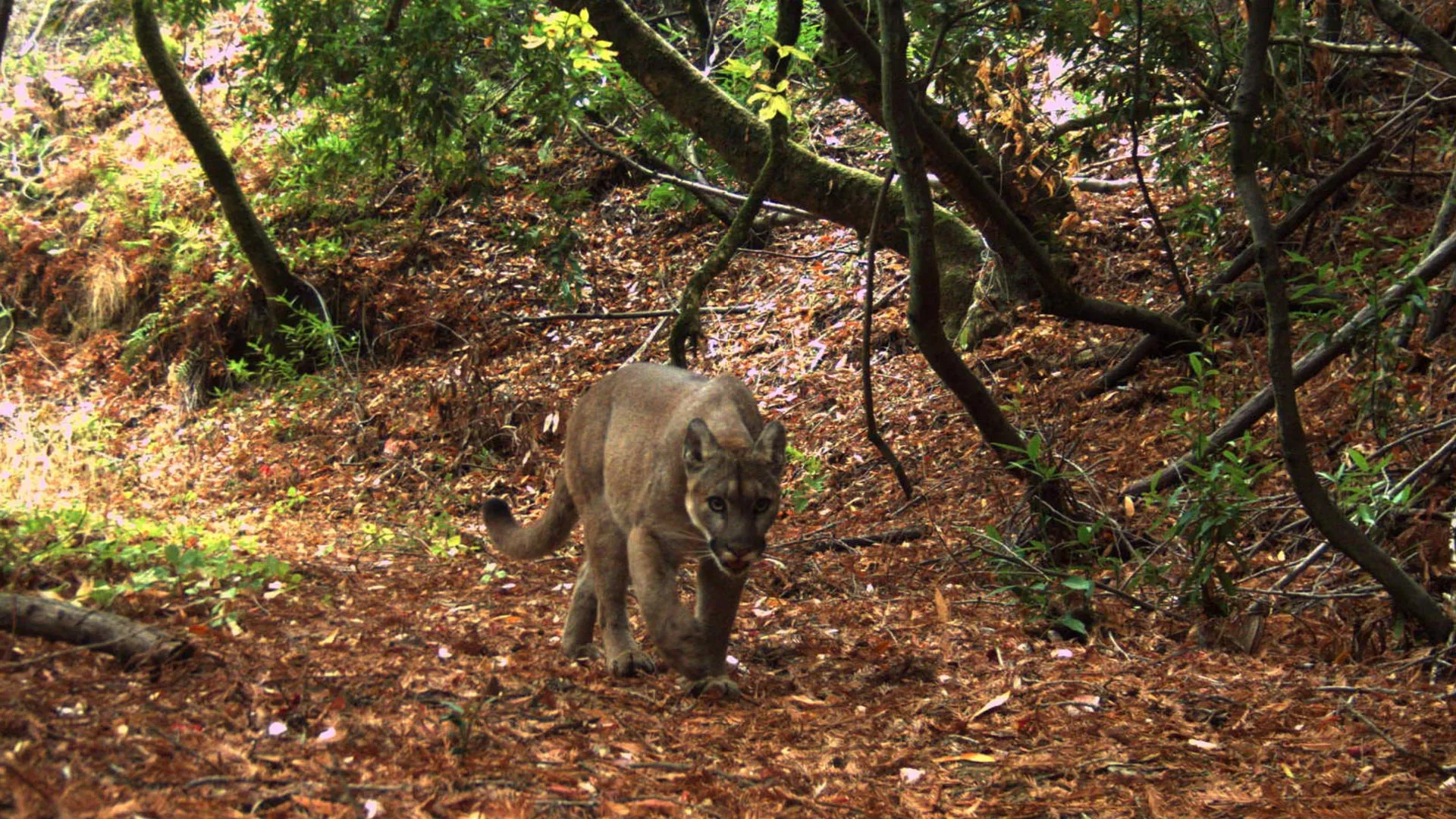
A groundbreaking long-term study conducted at Stanford’s Jasper Ridge Biological Preserve has unveiled a profound ecological revelation: the mere occasional presence of mountain lions can trigger significant, cascading changes throughout an entire ecosystem, even within a small, urban-adjacent landscape. This research challenges long-held assumptions about the ecological value of smaller protected areas and underscores the critical role of apex predators in maintaining biodiversity and ecological health. The findings, published in the esteemed journal Ecology and Evolution, demonstrate that the influence of these elusive felines extends far beyond direct predation, altering the behavior of numerous species, impacting plant life, and ultimately shaping the vitality of the landscape.
The study, which meticulously tracked animal activity and vegetation health at the preserve, located approximately 45 miles south of San Francisco, spanned a crucial five-year period between 2015 and 2020. During these years, researchers observed a marked increase in the frequency of mountain lion ( Puma concolor ) appearances on motion-activated trail cameras. This surge in puma activity coincided with a discernible decline in the presence and movement of deer populations when compared to earlier years when mountain lions were rarely sighted or entirely absent from the preserve.
This shift in the dominant predator’s presence initiated a chain reaction, a phenomenon scientists term a "trophic cascade." As deer, a primary prey species, became more wary or altered their grazing patterns due to the perceived threat of mountain lions, vegetation surveys revealed a significant recovery among woody plants. Species that are typically heavily browsed or damaged by deer, such as young oak saplings, began to exhibit renewed growth and improved health. This demonstrates a direct link between the top predator and the foundational plant community.
The Ecology of Fear: Predators and Their Subtle Influence
The research team delved deeper into these observed ecological shifts, identifying two distinct types of trophic cascades at play. The most apparent was the classic tri-trophic cascade involving mountain lions, deer, and plant life. However, the study also uncovered a more complex cascade involving smaller predators that share the Jasper Ridge habitat.
As mountain lion activity intensified, researchers noted a decrease in the frequency of sightings for coyotes and bobcats, both of which are significant predators in their own right. The prevailing hypothesis among the researchers is that these mid-level predators may have either been actively avoiding the preserve to minimize encounters with the much larger and more dominant mountain lions, or they have significantly altered their hunting and movement patterns to operate in areas or at times that reduce the risk of confrontation.
This reduction in coyote and bobcat presence, in turn, appeared to create an advantageous environment for foxes. The study documented an increase in fox activity during the period of higher mountain lion presence. This surge in fox populations or activity could, the researchers posit, lead to increased predation pressure on smaller prey species like rabbits, thus completing another segment of the cascade.
This complex web of interactions exemplifies what scientists refer to as the "ecology of fear." This concept posits that the mere presence or perceived threat of a top predator can exert profound influence on the behavior of other animals, even in the absence of direct lethal encounters. Animals, attuned to the risks, may alter their foraging habits, adjust their daily activity schedules, and modify their movement corridors, all in an effort to avoid predation. These behavioral modifications, driven by fear, can then propagate through the ecosystem, influencing predator-prey dynamics at multiple levels and impacting resource availability and plant community structure.
While the links between mountain lion activity and changes in deer, coyote, and bobcat behavior were strongly supported by the data, the researchers acknowledged that some of the subtler impacts observed at lower trophic levels—such as those on vegetation, foxes, and rabbits—might also be influenced by other environmental variables. These could include fluctuations in local weather patterns, such as changes in fog density, which significantly impacts the microclimate of coastal California, or variations in ambient temperature. Nevertheless, the consistency and strength of the observed correlations with mountain lion presence provide compelling evidence for their pivotal role.
Small Preserves, Big Impact: Redefining Ecological Value
The findings from Jasper Ridge carry significant implications for conservation efforts, particularly concerning the management of smaller protected areas. Historically, many smaller nature preserves, especially those situated near urban centers, have been undervalued, often perceived as ecologically marginal compared to vast wilderness tracts. This study powerfully refutes that notion, demonstrating that even limited access by apex predators can revitalize these fragmented landscapes.
Chinmay Sonawane, the study’s lead author and a doctoral student in biology at Stanford, emphasized this critical point. "In the past, small preserves like Jasper Ridge have often been dismissed for holding very little ecological value," Sonawane stated. "But this study shows that when these small preserves are connected to large wilderness like the Santa Cruz Mountains, you can still see magnificent ecological phenomena like trophic cascades. They are not just things that happen in places like Yellowstone far away from the city and people. They can happen in these places that are quite small and more urban as well."
The study’s conclusions are particularly pertinent given the current landscape of conservation. According to the researchers, an overwhelming 82% of protected areas in the United States are smaller than 5 square kilometers (approximately 2 square miles). As human populations continue to grow and urban development expands, these smaller, often overlooked, protected zones are increasingly becoming critical refuges for biodiversity. Their role in supporting wildlife and maintaining ecosystem functions is therefore growing in importance.
Rodolfo Dirzo, a co-author of the study and a professor of biology at Stanford, underscored the importance of these areas. "Maintaining sites where there is an entire community of animals, from predators to prey to the prey’s resource base, is very important," Dirzo explained. "When one piece is missing—and it’s typically the top predators that require larger areas and are more sensitive to human impact—we will no longer have fully functioning ecosystems."
The Mystery of the Visiting Pumas
While the ecological impact of the mountain lions’ increased presence is evident, the precise reasons behind their growing use of Jasper Ridge remain a subject of ongoing investigation. One compelling possibility is that the preserve offers a relatively safe haven for female mountain lions to raise their young. During the study period, trail camera footage captured images of a mother mountain lion accompanied by kittens, lending credence to this theory. Such sightings suggest that the preserve may be an attractive location for mothers seeking to protect their vulnerable offspring from the numerous threats in the wider landscape.
It is crucial to note, however, that mountain lions are not establishing permanent residency at Jasper Ridge. The preserve, by its nature, is far too small to support a self-sustaining puma population. Mountain lions in the Santa Cruz Mountains are known to maintain expansive territories, typically ranging from 20 to 170 square kilometers (approximately 8 to 66 square miles). Their visits to Jasper Ridge are likely opportunistic, serving as temporary extensions of their broader home ranges rather than establishing a fixed base of operations.
Navigating the Human-Puma Interface
The increased presence of mountain lions in areas adjacent to human settlements naturally raises questions about human-wildlife interactions. Elizabeth Hadly, the senior author of the study and an emerita professor of biology at Stanford, provided crucial context regarding mountain lion behavior around people. "Pumas are afraid of our smell and our sounds; they don’t like to see us moving," Hadly explained. "Pumas use all of their senses to avoid humans."
Mountain lions are primarily nocturnal animals, meaning their activity peaks during hours when human presence is minimal. Their inherent wariness and sophisticated sensory capabilities allow them to effectively evade human contact. Despite occasional media attention surrounding sightings in San Francisco and its surrounding suburbs, these animals generally go to great lengths to avoid direct encounters with people.
Ironically, humans represent the most significant threat to mountain lion populations. Whether through hunting, vehicle collisions, or habitat loss, human activities are the leading cause of mountain lion mortality. This creates a peculiar dynamic where humans, often fearful of mountain lions, are in reality the dominant predator shaping the survival of these large cats. "Clearly, we exert our own ecology of fear," Hadly remarked. "Humans are the ultimate predator on almost every landscape."
Broader Implications for Conservation and Research
The study’s findings are not merely academic; they hold tangible implications for how conservation efforts are planned and executed. The demonstrated ability of a small, connected preserve to host significant ecological processes highlights the importance of maintaining habitat corridors and ensuring that even urban-adjacent natural areas are integrated into larger conservation networks.
The research also opens new avenues for understanding the nuanced impacts of predators in human-dominated landscapes. By providing concrete data on trophic cascades within a suburban context, the study serves as a powerful argument for the preservation and restoration of natural habitats, even in areas experiencing intense human development. The continued monitoring of Jasper Ridge and similar preserves will be vital in understanding the long-term resilience of these ecosystems and the complex interplay between human activity and wildlife.
The research was made possible through the dedicated efforts of a multidisciplinary team and received crucial support from the National Science Foundation, underscoring the national significance of this work. The findings by Sonawane, Dirzo, Hadly, and their colleagues at Stanford University are a compelling reminder that the intricate dance of nature continues, even in our backyards, and that the presence of even the most elusive predators can be a powerful force for ecological health.