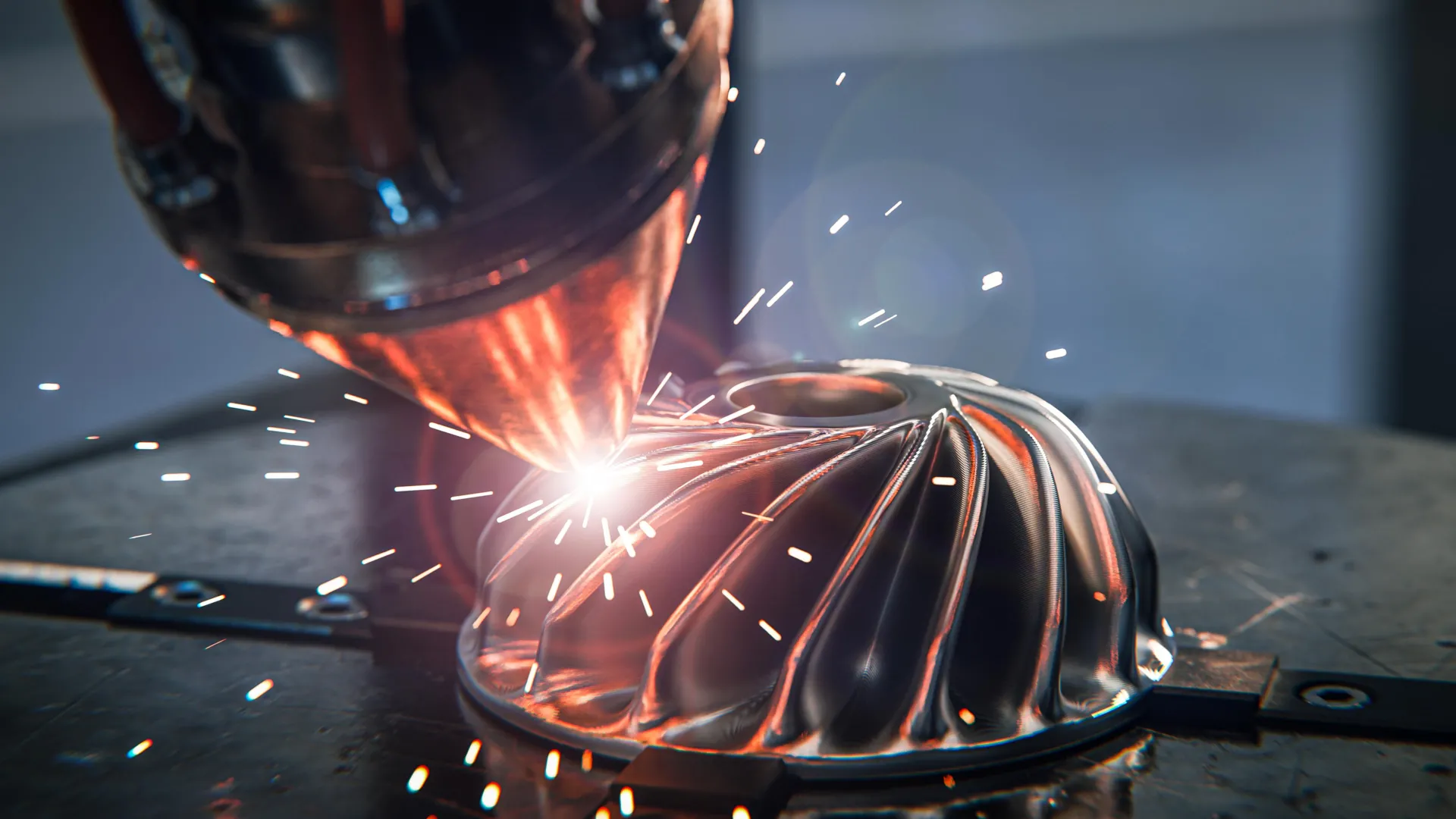
Researchers at Washington State University (WSU) have successfully harnessed the power of artificial intelligence to drastically accelerate and economize the 3D printing process for a specialized, high-performance metal alloy. By bypassing the necessity to manually test more than 100 million potential manufacturing configurations, the interdisciplinary team has unlocked a pathway to utilize standard commercial equipment for materials that previously required specialized, high-power industrial machinery.
The breakthrough centers on GRCop-42, a high-conductivity copper-chromium-niobium alloy originally engineered by the National Aeronautics and Space Administration (NASA) for extreme aerospace environments. Until now, the fabrication of this material through additive manufacturing has been severely constrained by the sheer volume of energy required, alongside the prohibitive costs and time commitments associated with trial-and-error physical testing. The WSU team’s machine learning methodology successfully discovered six viable, low-power printing configurations out of an astronomical search space, utilizing a mere 40 physical experiments over a concentrated three-month development window.
The implications of this study extend far beyond aerospace manufacturing. The underlying optimization framework offers a blueprint for tackling complex scientific and industrial challenges characterized by vast experimental parameters, sparse successful outcomes, and high costs per trial—methodologies that could soon transform fields ranging from advanced materials science to pharmaceutical drug discovery. The findings were detailed in the Proceedings of the AAAI Conference on Artificial Intelligence, where the project was honored with the Innovative Deployed Application Award.
Background Context: The Engineering Challenge of GRCop-42
GRCop-42 represents a critical class of materials engineered to withstand punishing thermal environments while maintaining exceptional structural integrity. Composed of copper alloyed with chromium and niobium, the material boasts extraordinarily high thermal conductivity paired with robust mechanical strength at elevated temperatures. These characteristics make it an ideal candidate for components exposed to extreme thermal loads, most notably liquid rocket engine combustion chambers and advanced heat exchangers.
Despite its exceptional performance profile, GRCop-42 has presented a persistent manufacturing bottleneck. Traditional additive manufacturing of the alloy typically demands immense laser power and dense energy inputs to fuse the metallic powders properly. Prior to the WSU study, attempts to utilize the lower wattages characteristic of more affordable, widely available commercial 3D printers consistently failed, often resulting in catastrophic melting or structural deformities.
The traditional method of overcoming such manufacturing hurdles relies on empirical testing: adjusting laser power, scan speed, hatch spacing, and other variables iteratively until a workable parameter set is identified. However, for GRCop-42, the matrix of potential settings exceeded 100 million distinct combinations.
Conducting a physical trial in a laser powder bed fusion system is far from trivial. Each individual print run consumes costly metallic feedstock, ties up specialized laboratory equipment, and requires significant labor hours from trained technicians. Furthermore, post-processing evaluation—such as metallographic sectioning, microscopy, and mechanical testing—can consume several days per sample. At hundreds of dollars per print, an exhaustive manual exploration of the parameter space was financially and logistically impossible.
The Chronology and Collaborative Framework of the Study
The breakthrough was made possible through a close collaboration between researchers in WSU’s School of Electrical Engineering and Computer Science and the School of Mechanical and Materials Engineering, with additional contributions from the University of Minnesota.
The project commenced with a foundational dataset consisting of 37 failed printing configurations generated during prior, separate empirical investigations within WSU’s materials engineering laboratories. Rather than viewing these failures as setbacks, the computer science team recognized them as valuable negative data points that could train a predictive model.
Led by Jana Doppa, the Huie-Rogers Endowed Chair Professor of Computer Science and Berry Distinguished Professor in Engineering, along with computer science PhD student and first author Azza Fadhel, the team developed a specialized active-learning AI framework. This algorithm was tasked with navigating the vast, largely uncharted search space to predict the probability of success for untested configurations.
Over a rigorous three-month timeline, the research followed a cyclical, iterative workflow:
- Data Initialization: The AI model was seeded with the historical baseline of 37 failed parameter sets.
- Predictive Modeling: The algorithm evaluated the entire landscape of 100 million potential configurations, estimating the likelihood of success for each.
- Strategic Sampling: The model recommended small, highly targeted batches of new configurations to test. These selections were governed by an acquisition function that balanced exploitation (testing areas with high predicted promise) with exploration (probing uncertain zones to refine the algorithm’s overall accuracy).
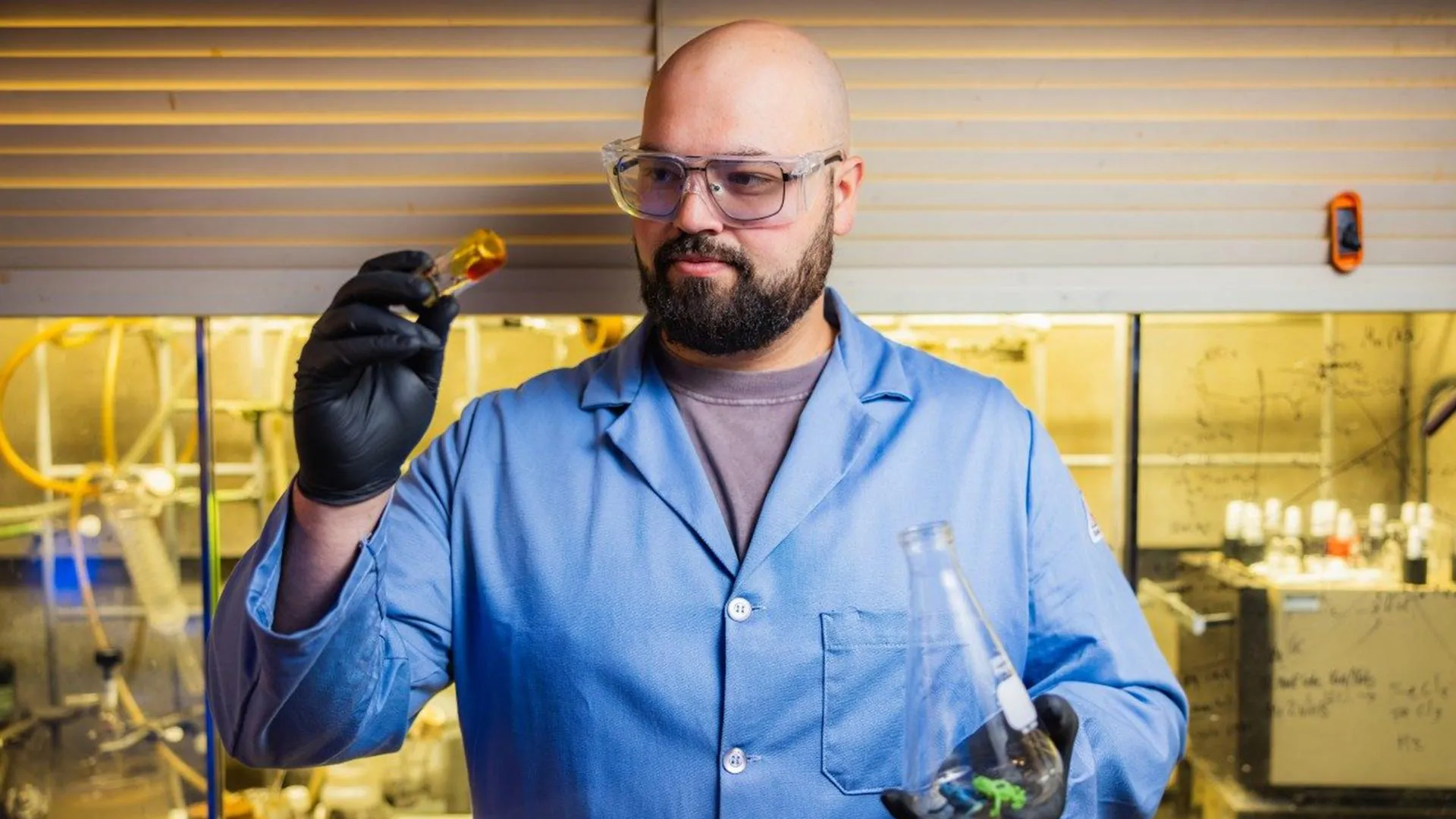
- Physical Fabrication: Faculty and student researchers in the School of Mechanical and Materials Engineering—including Nathaniel Zuckschwerdt, Susmita Bose, and Amit Bandyopadhyay—executed the AI-selected prints using laboratory hardware.
- Evaluation and Feedback: The printed samples were rigorously analyzed, and the resulting performance data—whether successful or failed—was immediately fed back into the AI model to recalibrate its predictive parameters.
Through this closed-loop iterative process, the research team achieved unprecedented efficiency. Limiting their physical validation phase to a total of just 40 targeted experiments, the system successfully identified six viable printing configurations operating at distinct laser power levels. Most notably, for the first time in experimental literature, the team successfully printed high-quality GRCop-42 components using a significantly reduced laser power threshold of 500 watts.
Democratizing Additive Manufacturing and Expanding Commercial Access
The technical achievement of lowering the required laser power yields profound economic and operational advantages for the advanced manufacturing sector.
Operating at lower wattages inherently reduces overall energy consumption during the additive manufacturing process. It also mitigates thermal stress and wear on expensive optical and mechanical components within the 3D printers, potentially extending the operational lifespan of the hardware. Additionally, reduced energy inputs frequently translate to less complex post-processing requirements and lower component finishing costs.
Perhaps the most significant commercial implication, however, is the democratization of the technology. According to WSU researchers, approximately 90 percent of commercial 3D printers currently in industrial service lack the ultra-high laser power required by legacy recipes for aerospace-grade superalloys like GRCop-42. By proving that the alloy can be successfully manipulated at lower energy thresholds through optimized parameter settings, the WSU team has effectively unlocked access to the material for a much broader demographic of users.
Small- and medium-sized enterprises, university laboratories, and independent research institutions that cannot justify the capital expenditure of specialized, high-power industrial printers can now contemplate working with GRCop-42 using their existing commercial machinery. This reduction in the barrier to entry could accelerate prototyping cycles and foster novel commercial applications outside of traditional aerospace contractors.
Official Responses and Expert Perspectives
Reflecting on the risks associated with applying theoretical machine learning models to physical, high-stakes manufacturing environments, the research leadership emphasized the uncertainty inherent in the project.
"There’s always uncertainty when you are deploying something where real people, materials, and physical costs are involved," Doppa noted regarding the initial phases of the study. "We didn’t know whether we would succeed or not, and there is always that risk. There are real stakes. I was very surprised that we were able to do this so well."
The success of the project hinged heavily on treating negative experimental data as a critical asset rather than a waste of resources. Azza Fadhel underscored the value of this cooperative feedback loop between disciplines: "They would give me back the results, and I liked all of them—even if they failed—because every result improved our AI model."
By framing the problem as an extreme optimization challenge where successful outcomes function as rare "needles in a haystack," the researchers demonstrated how intelligent sampling strategies can overcome the limitations of traditional trial-and-error methodologies.
Broader Implications for Scientific Discovery and Industrial R&D
Beyond the immediate success of fabricating GRCop-42 at lower power levels, the underlying artificial intelligence architecture developed at Washington State University holds sweeping implications for broader scientific and industrial research.
Many of the most pressing challenges in modern engineering, chemistry, and materials science share a common profile: an enormous parameter space, a low frequency of successful outcomes, and prohibitive financial or temporal costs associated with physical experimentation. Traditional methodologies struggle under the weight of exponential complexity, often forcing researchers to rely on intuition or narrow subsets of historical data.
The WSU team’s active-learning framework provides a scalable template for addressing these bottlenecks. By intelligently navigating vast search spaces with minimal physical trials, the approach can be readily adapted to identify optimal processing conditions for alternative metal alloys, ceramic matrix composites, and novel polymers in additive manufacturing.
Furthermore, the researchers suggest that the algorithmic principles underpinning the study can be translated to other high-cost scientific domains, including pharmaceutical drug discovery, where molecular combinations run into the billions and laboratory assays are both expensive and time-consuming.
As industries increasingly look to artificial intelligence to compress research and development timelines, the WSU study serves as a compelling empirical validation of how machine learning can successfully bridge the gap between computational prediction and physical reality—turning insurmountable piles of experimental possibilities into actionable, efficient solutions.