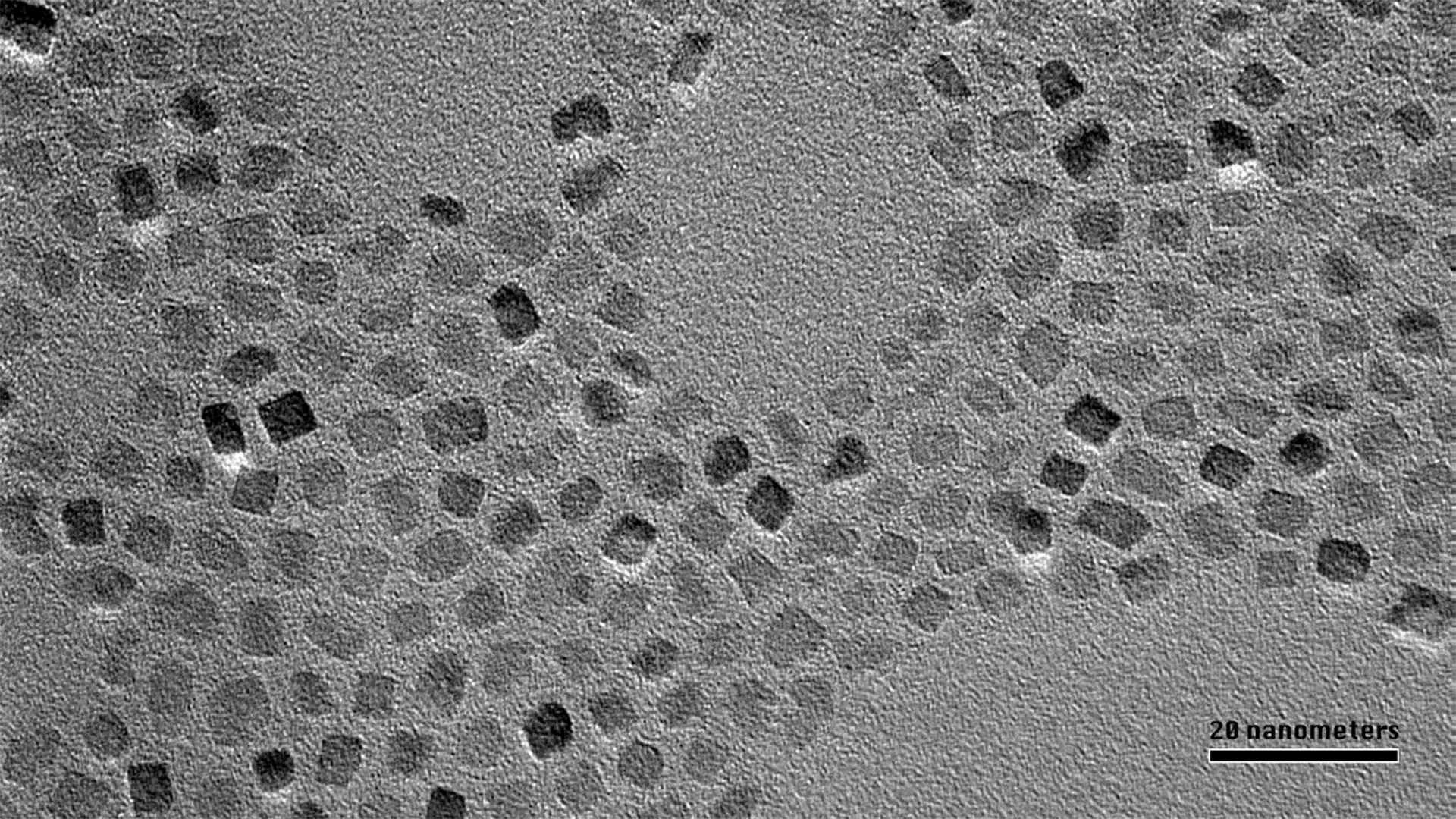
A collaborative team of chemists spanning the University of Chicago and the U.S. Department of Energy’s Argonne National Laboratory has successfully developed a groundbreaking synthetic pathway to produce nanocrystals from metal nitrides—a strategically vital class of materials that had long eluded conventional nanomaterial fabrication techniques. Published in the peer-reviewed journal Nature, this metallurgical advance effectively dismantles a decades-long barrier in materials science, opening unprecedented avenues for manufacturing next-generation electronics, flexible optoelectronics, biocompatible medical implants, and high-efficiency industrial catalysts.
For decades, the broader scientific community has recognized the immense theoretical utility of metal nitrides, which are prized for their exceptional mechanical strength, thermal durability, corrosion resistance, and remarkable biocompatibility. Yet, despite their widespread utility in macroscopic manufacturing—such as gallium nitride powering modern solid-state lighting and high-efficiency display technologies—fabricating these compounds at the nanometer scale proved virtually impossible via standard colloidal chemistry. The newly unveiled technique successfully bypasses these fundamental thermodynamic and kinetic constraints, allowing researchers to synthesize a diverse library of nearly a dozen previously inaccessible metal nitride nanocrystal compositions in a single stroke.
Understanding the Nanocrystal Frontier and the Nobel Legacy
Nanocrystals represent a transformative domain within modern materials science, operating at a dimensional scale where quantum mechanical effects fundamentally alter the physical, optical, and electronic properties of matter. When dimensions shrink down to the nanometer scale—where millions or billions of individual crystals can comfortably reside on the surface of a human fingernail—substances frequently exhibit dramatically altered behaviors. Depending on their exact composition and quantum confinement characteristics, these microscopic structures can emit intensely bright, precisely tuned wavelengths of light or function as exceptionally potent catalysts capable of accelerating industrial chemical reactions with minimal energy input.
The global significance of quantum dots and semiconductor nanocrystals was profoundly underscored by the awarding of the 2023 Nobel Prize in Chemistry to Moungi Bawendi, Louis Brus, and Alexei Ekimov for their pioneering discoveries in synthesizing quantum dots. While that historical milestone catalyzed an explosion of research and commercial applications—ranging from medical imaging probes to ultra-vibrant QLED television displays—the broader materials science community remained severely restricted by the availability of precursor materials. While researchers could readily synthesize oxide, phosphide, and selenide nanocrystals, a vast and technologically critical segment of the periodic table, specifically metal nitrides, stubbornly resisted conventional colloidal growth strategies.
The Chemistry of Constraint: Why Metal Nitrides Stymied Synthesis
To comprehend the magnitude of the breakthrough achieved by the Chicago and Argonne researchers, one must examine the precise chemical hurdles that govern crystal growth. During standard nanocrystal formation, constituent ions must possess sufficient thermal and kinetic mobility to diffuse through a liquid medium, break existing chemical bonds, rearrange their spatial orientations, and finally settle into an orderly, low-energy crystalline lattice.
The research team compares this dynamic organizational phase to dancers changing partners in a complex square dance. In most conventional syntheses, the intermediate bonds are flexible enough to allow trial and error; if a molecular partnership is formed incorrectly, the atoms possess the freedom to break apart and correct their configuration.
Metal nitrides, however, operate under entirely different thermodynamic rules. The chemical bonds binding metal atoms to nitrogen ions are exceptionally strong and rigid. Consequently, once a metallic ion and a nitrogen atom forge an incorrect bond during the initial nucleation phase, they are utterly incapable of breaking free to reorganize.
In the words of Dmitri Talapin, the Ernest DeWitt Burton Distinguished Service Professor of Chemistry and Molecular Engineering at the University of Chicago, a senior scientist at Argonne, and the senior author of the study, this kinetic trap represents a fatal obstacle for nanocrystal nucleation. If bonds cannot break during the dynamic growth process, it serves as a literal death sentence for the nanocrystals, condemning the batch to structural defects, aggregation, or precipitation into amorphous waste. Once an incorrect bond is forged at the atomic level, the entire synthesis goes irretrievably south.
A Chronology of Innovation: Rethinking Conventional Dogma
Overcoming this formidable kinetic barrier required a multi-year investigative timeline that discarded conventional chemical intuition and embraced a radically unconventional synthesis strategy. The foundational groundwork for the breakthrough began years prior within Talapin’s laboratory, where researchers investigated the use of molten salts as specialized liquid reaction mediums capable of stabilizing delicate nanostructures during formation.
Building upon these preliminary insights, Ruiming Lin, a doctoral candidate in chemistry at the University of Chicago and the primary author of the study, spearheaded an exhaustive series of empirical trials. The research team systematically varied thermal conditions, chemical precursors, and gaseous environments until they successfully pinpointed a remarkably narrow experimental "sweet spot."
This critical operational window delicately balanced precise reaction temperatures with carefully regulated ammonia gas pressure. Under these highly specialized conditions, the robust bonds governing metal-nitrogen interactions temporarily acquired the precise degree of lability required to break apart and reform dynamically. This allowed the atomic constituents to self-organize into pristine, highly ordered crystal lattices without succumbing to structural degradation.
Reflecting on the counterintuitive nature of the discovery, Talapin noted that the successful protocol defied conventional wisdom within inorganic chemistry. The methodology required the research team to completely discard established paradigms and rethink high-temperature synthetic pathways from the ground up.
For Lin, the emotional culmination of this grueling experimental timeline materialized during routine electron microscopy characterization. Catching his first direct visual confirmation of the synthesized structures through the lens of a high-resolution electron microscope, Lin recalled the profound realization that the team had broken through a persistent scientific ceiling. Seeing the fully formed nanocrystals crystallized a moment of professional validation, reinforcing the belief that the newly unlocked materials will soon find widespread integration into practical technologies.
Expanding the Periodic Table: A Dozen New Nanomaterials
The versatility of the newly established synthetic protocol extends far beyond a single isolated compound. By successfully adjusting their methodology, the research collective synthesized a robust library comprising nearly a dozen distinct metal nitride nanocrystal compositions that had previously defied traditional wet-chemical manufacturing techniques.
Among the newly unlocked materials are several commercially and industrially significant compounds:
- Titanium Nitride (TiN): Widely celebrated for its extreme surface hardness, golden metallic luster, and exceptional biocompatibility, titanium nitride is a staple in modern biomedical engineering, where it coats surgical instruments, orthopedic hardware, and permanent medical implants to reduce friction and wear.
- Niobium Nitride (NbN): A critical industrial superconductor characterized by remarkably high critical temperatures relative to its material class, niobium nitride holds immense promise for quantum computing architecture, ultra-sensitive photon detectors, and high-frequency electronics.
- Molybdenum Nitride (MoN): A highly efficient, cost-effective catalytic material extensively utilized in chemical manufacturing, petroleum refining, and advanced renewable energy conversion technologies, such as hydrogen evolution catalysts for green fuel generation.
- Gallium Nitride (GaN): A wide-bandgap semiconductor that currently serves as the backbone of modern efficient lighting systems, power electronics, and radio-frequency amplifiers, but which can now be processed via liquid-phase methods.
By converting these resilient industrial workhorses into colloidal nanocrystals, researchers have effectively bridged the gap between bulk metallurgy and solution-processed nanotechnology.
Analytical Implications: Transforming Manufacturing and Applications
The successful transition of metal nitrides from rigid, energy-intensive bulk films to fluid, processable nanocrystal inks carries profound implications for multiple high-tech manufacturing sectors. Historically, integrating materials like gallium nitride or titanium nitride into commercial products required specialized, highly restrictive physical vapor deposition techniques, high-vacuum chambers, and expensive single-crystal substrates. These legacy manufacturing constraints severely limited the physical form factor of the final devices, restricting them to flat, rigid architectures.
In stark contrast, colloidal nanocrystals can be suspended in liquid solvents, transforming them into versatile functional inks. This material evolution unlocks an array of advanced manufacturing techniques:
- Additive Manufacturing and Inkjet Printing: Metal nitride inks can now be precisely deposited onto diverse substrates using high-resolution inkjet printing systems, enabling the direct fabrication of micro-electronic circuits and sensor arrays.
- Polymer Integration and Composites: Because these nanocrystals can be uniformly dispersed throughout polymer matrices, manufacturers can engineer composite materials that combine the mechanical flexibility of plastics with the thermal and electronic resilience of advanced ceramics.
- Wearable Electronics and Smart Fabrics: The ability to formulate printable, flexible nanomaterials paves the way for seamless integration into textiles, flexible displays, and epidermal health-monitoring patches that conform naturally to the human body.
Independent industrial analysts note that while scaling these laboratory-scale protocols to commercial manufacturing volumes will require substantial optimization, the foundational hurdle—the chemical synthesis barrier itself—has been decisively cleared.
Collaborative Infrastructure and Institutional Support
The successful execution of this multidisciplinary study reflects the robust collaborative framework uniting academic institutions and federal research facilities in the United States. The research team utilized advanced characterization instrumentation and shared user facilities across several premier institutions, including the National Science Foundation (NSF) Materials Research Science and Engineering Center (MRSEC) and the Soft Matter Characterization Facility at the University of Chicago, alongside the Center for Nanoscale Materials at Argonne National Laboratory.
Financial backing for the research was drawn from multiple prominent public and private funding agencies, underlining the strategic national importance of advanced nanomaterials synthesis. Primary financial support was provided by the U.S. Department of Energy, the National Science Foundation, the Air Force Office of Scientific Research, and the Samsung QD Cluster Collaboration initiative.
Alongside senior author Dmitri Talapin and first author Ruiming Lin, the comprehensive research paper credits a broad roster of University of Chicago co-authors, including Ningxin Jiang, Wooje Cho, Zirui Zhou, Di Wang, Justin Ondry, Zehan Mi, James Cassidy, Alex Hinckle, Alexander Filatov, and John S. Anderson.
As these researchers continue to refine their synthetic protocols and explore the physical limits of their newly created nanocrystal library, the scientific community stands on the precipice of a new era in nanotechnology—one where the traditional boundaries separating hard refractory ceramics from soft, processable nanomaterials have been permanently erased.