A collaborative team of researchers from Carnegie Mellon University (CMU), the University of Pittsburgh (Pitt), and the University of Washington has unveiled a pivotal discovery in Alzheimer’s research, identifying that the three-dimensional architecture of the genome plays a far more significant role in the disease than previously understood. Published in the journal Science, the study shifts the scientific gaze away from the traditional singular focus on amyloid-beta plaques and tau protein tangles, suggesting that the physical "folding" of DNA within brain cells is a critical, yet overlooked, driver of neurodegeneration.
For decades, the global scientific community has centered its efforts on the extracellular amyloid-beta plaques and intracellular tau tangles that characterize the brains of Alzheimer’s patients. While these markers are undeniably central to the pathology, clinical trials targeting these features have frequently yielded disappointing results, leading to a desperate need for a more comprehensive understanding of the molecular landscape. This latest research posits that the "regulatory layer" of the genome—how DNA is physically organized and accessed—is fundamental to understanding why brain cells fail as the disease progresses.
The Mechanism of Genomic Folding
DNA is not a static, linear strand within the nucleus of a cell. It is a highly complex, three-dimensional structure. This organization is not merely a space-saving measure; it dictates gene accessibility, effectively serving as an on-off switch for cellular function. When the genome folds correctly, specific genes are available to be expressed, allowing the cell to maintain its health and perform its specialized duties.
In the context of the study, researchers utilized postmortem tissue samples from the prefrontal cortex—a region vital for cognitive functions such as planning, personality expression, and decision-making—collected from individuals who participated in long-term dementia studies. By comparing these samples to those from cognitively healthy individuals, the team discovered that in Alzheimer’s-affected brains, the genome’s architectural integrity is significantly compromised.
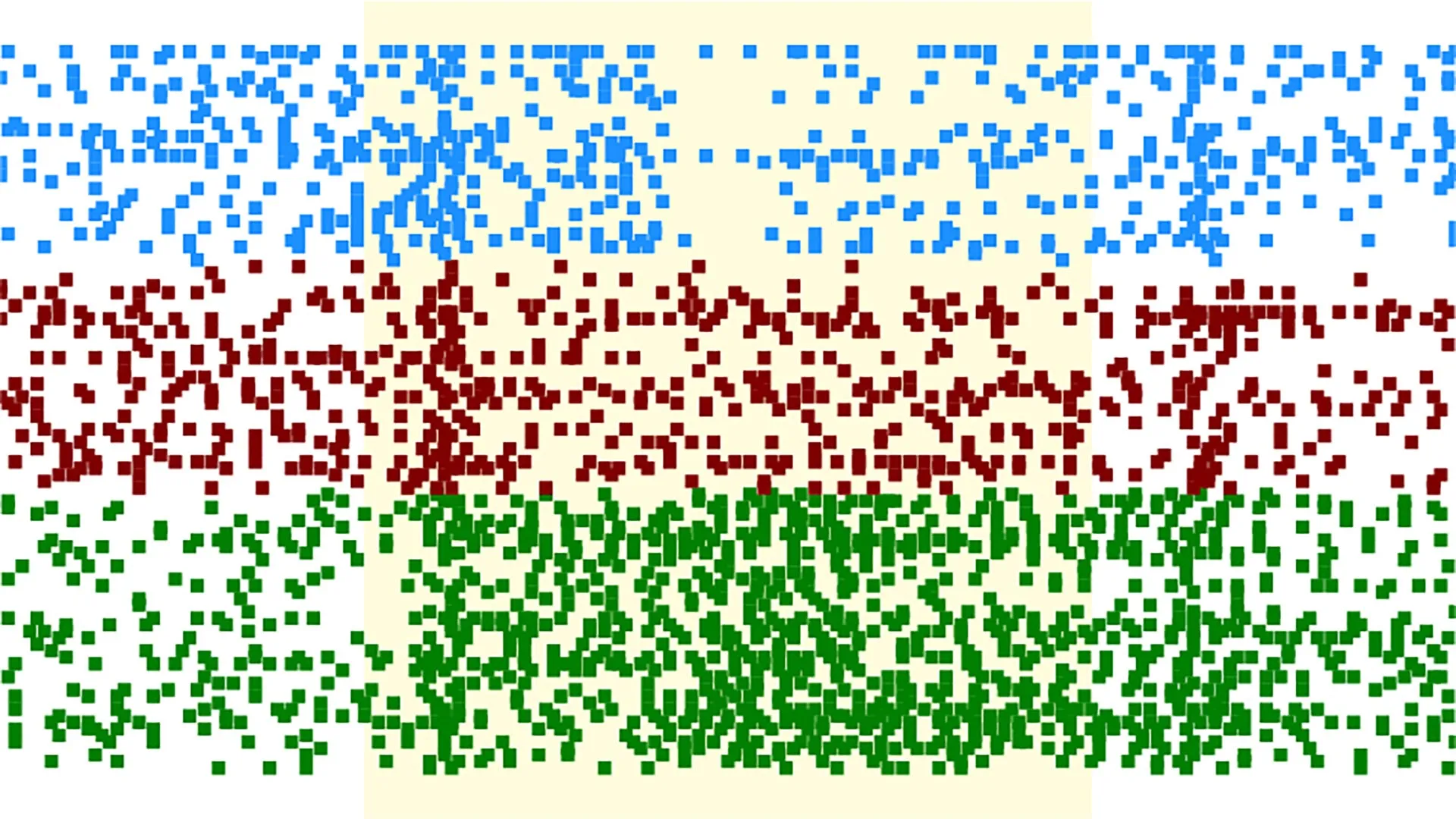
The researchers observed a phenomenon they dubbed "increased compartment mingling." Normally, the genome is sequestered into distinct active and inactive compartments. In Alzheimer’s cells, these boundaries blur, leading to a disorganized structural state that correlates with reduced gene activity. Furthermore, the team noted a weakening of interactions between genes and their regulatory elements, alongside an increase in aberrant contacts between distant genomic regions. These structural failures were found to disrupt critical biological programs, including those responsible for synaptic health, neuronal metabolism, and stress response mechanisms.
Bridging Technology and Biology: The Role of Hicformer
To map these microscopic changes, the team integrated high-resolution single-cell technology with spatial transcriptomic mapping. This allowed them to see not only how the genome was folded in a specific cell but also where that cell was situated within the complex architecture of the brain tissue.
A centerpiece of this analytical pipeline was "Hicformer," a deep learning model developed specifically for this research. Hicformer acts as a computational test bed, processing vast amounts of DNA sequence information, broad folding patterns, and physical contact maps to predict gene expression. By training the AI on these variables, the researchers could simulate how structural changes at the genomic level influence cellular behavior.
According to Xinyue Lu, a doctoral student in Computational Biology and co-lead of the research, the integration of AI provided a "computational bridge" that allowed the team to connect abstract chromosomal structures to observable, disease-related gene programs. This approach effectively turned the study into a predictive model, enabling researchers to prioritize specific regulatory regions for future experimental validation.
Chronology of Alzheimer’s Research and the Paradigm Shift
The history of Alzheimer’s research has been marked by a transition from observational pathology to molecular mapping. In 1906, Dr. Alois Alzheimer first described the plaques and tangles that remain the hallmark of the disease. For the better part of the 20th century, these were the primary objects of study.
The early 2000s saw the dominance of the "Amyloid Cascade Hypothesis," which suggested that amyloid accumulation was the primary cause of the disease. However, the lack of correlation between the amount of plaque and the severity of cognitive decline in many patients led to the "post-amyloid" era of research. The 2010s brought the rise of single-cell sequencing and epigenomics, which highlighted the role of neuroinflammation and microglia.
The current study represents the next phase in this timeline: the era of 3D genomics. By establishing that chromatin architecture is a distinct component of the molecular pathology, the researchers are effectively expanding the "Alzheimer’s toolkit." This is particularly relevant as the number of Americans living with Alzheimer’s is projected to rise significantly, with current estimates placing the figure at seven million and rising, according to the Alzheimer’s Association.
Institutional Responses and Collaborative Impact
The project was a multi-institutional effort that drew on expertise from diverse fields, including computational biology, neurobiology, and data science. Jian Ma, the Ray and Stephanie Lane Professor of Computational Biology at CMU, who supervised the study, emphasized the necessity of a multi-layered approach. "Alzheimer’s disease cannot be understood one layer at a time," Ma noted. "By integrating genome folding, cell state, and tissue context, we can move beyond cataloging disease-associated changes toward understanding how they fit together."
Hansruedi Mathys, assistant professor of neurobiology at the University of Pittsburgh and the director of the Pitt arm of the study, underscored the clinical implications. "We know the classic hallmarks, but our results establish higher-order chromatin alterations as a key component of the molecular pathology associated with the disease," Mathys stated. The inclusion of researchers from the Broad Institute of MIT and Harvard, UCLA, and the Rush Alzheimer’s Disease Center further highlights the scale of the investigation and the importance placed on these findings by the scientific community.
Fact-Based Analysis: Implications for Future Therapeutics
The identification of chromatin alterations as a driver of disease offers several promising, albeit early-stage, avenues for therapeutic intervention. If the "mingling" of genomic compartments is indeed a driver of neuronal dysfunction, future research could focus on small-molecule interventions designed to stabilize the 3D genome.
Furthermore, the study sheds new light on the role of microglia—the immune cells of the brain. The researchers found links between genome reorganization and senescence-related programs in these cells, suggesting that the brain’s internal defense system may be losing its ability to respond to damage due to structural DNA changes. If scientists can identify the specific regulatory regions that become dysfunctional, they may eventually be able to "reset" these cells or prevent them from entering a senescent, non-functional state.
However, the team remains cautious. The study is a foundational piece of research that maps the landscape of the disease but does not yet provide a clinical treatment. The next steps will involve longitudinal studies to determine if these genomic changes appear before the onset of cognitive symptoms, which could open the door for early diagnostic screening.
Conclusion: A Broader Understanding of Neurodegeneration
The collaborative work from CMU, Pitt, and the University of Washington provides a robust framework for investigating Alzheimer’s as a systems-level failure rather than a localized protein accumulation issue. By looking at the brain through the lens of 3D genomic architecture, the scientific community now has a more complete picture of the molecular landscape.
As the global burden of Alzheimer’s continues to grow, this research provides more than just data; it provides a new perspective. By shifting the focus toward the fundamental regulatory layers of the genome, the study paves the way for a generation of therapies that may address the root causes of neuronal decline, potentially offering hope where traditional methods have hit a ceiling. While the path to a cure remains long, the ability to map the "folding" of the brain’s genetic blueprint marks a definitive turning point in the scientific effort to understand, and eventually defeat, Alzheimer’s disease. The integration of artificial intelligence with traditional molecular biology will likely remain the standard for such complex neurological investigations in the years to come.