Docker, a cornerstone of modern software development, built its enduring industry reputation on a singular, transformative premise: package software once, run it anywhere, identically and reliably every time. Today, Docker Engineering is extending that foundational philosophy into the artificial intelligence landscape with the open-source release of Docker Agent. By allowing developers and organizations to describe autonomous AI systems through declarative configuration files rather than complex custom code, this new command-line interface (CLI) plugin bridges the historical gap between software deployment workflows and advanced artificial intelligence agent architectures.
The tool enables practitioners to define, version, and share sophisticated AI agents and multi-agent teams through the exact same Open Container Initiative (OCI) registries that currently store millions of standard container images worldwide. As enterprise adoption of artificial intelligence accelerates, the introduction of Docker Agent marks a significant evolution in how engineering teams manage, distribute, and orchestrate complex autonomous systems across diverse infrastructure environments.
Background Context and Evolution of Containerized AI
The arrival of Docker Agent is not an isolated development; rather, it represents the culmination of a deliberate, multi-year strategic engineering roadmap executed by Docker. Throughout 2025, the company systematically laid the technical groundwork required to bring agentic applications into traditional container workflows. A critical milestone occurred in July 2025, when Docker announced an expanded iteration of Docker Compose explicitly engineered to support agentic applications and integrated AI models natively.
This was swiftly followed by the launch of Docker Model Runner, an innovative utility designed to facilitate the local execution of large language models without necessitating third-party cloud API keys. Docker Agent successfully unifies these disparate capabilities into a single, cohesive, dedicated tool. Licensed permissively under the Apache 2.0 open-source license, the project has experienced explosive growth since its early tagged releases on pkg.go.dev in March 2026. The GitHub repository has already surpassed 3,300 stars and accumulated nearly 10,000 commits, signaling robust community engagement and rapid enterprise experimentation.
Core Architecture and Technical Capabilities
Unlike conventional development paradigms that require extensive Python or JavaScript boilerplate code to instantiate agent frameworks, Docker Agent relies entirely on declarative YAML or HCL configuration files. This design choice effectively lowers the technical barrier to entry, enabling professionals across various disciplines to construct and deploy intelligent automation agents without deep software engineering backgrounds.
Furthermore, the platform is entirely provider-agnostic. It seamlessly integrates with leading commercial and open-source foundation models, including offerings from OpenAI, Anthropic, Google Gemini, AWS Bedrock, Mistral, xAI, and fully localized models operating via Docker Model Runner. This flexibility ensures that organizations are never locked into a single proprietary AI vendor.
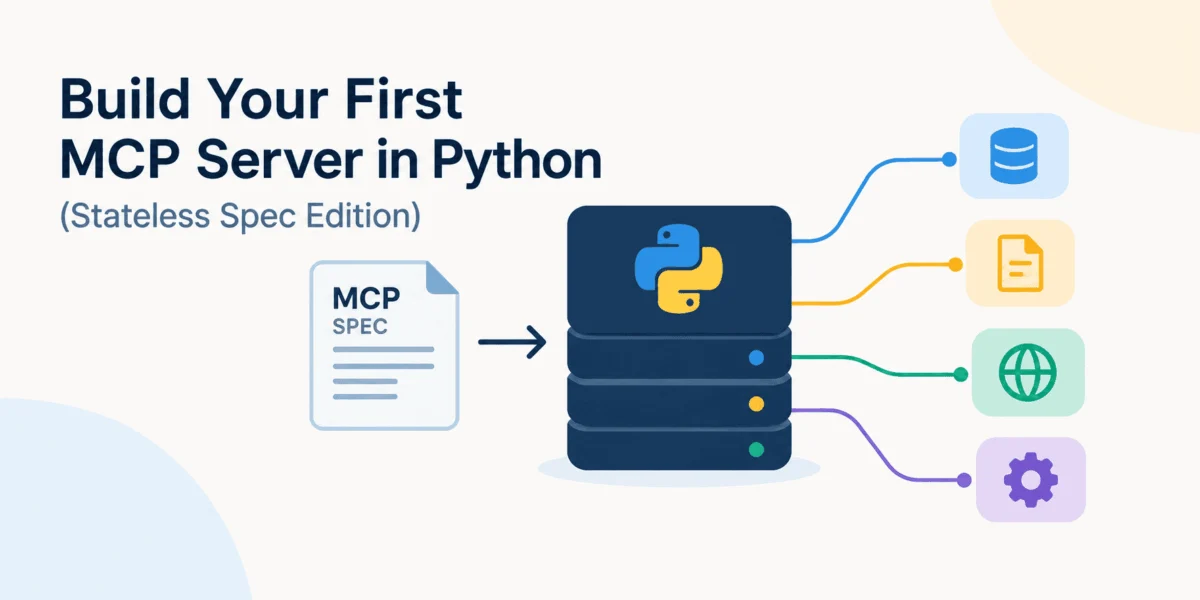
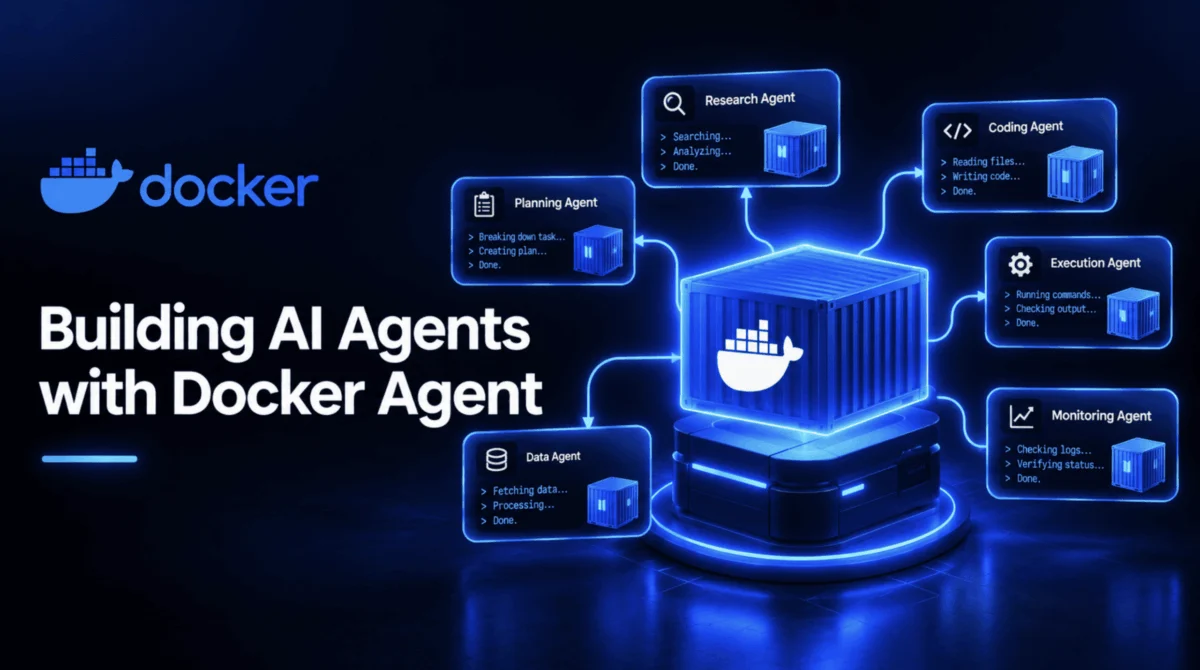
One of the project’s most powerful architectural features is native support for multi-agent orchestration. Instead of relying on a monolithic agent to execute multifaceted workflows, developers can configure collaborative teams of specialized agents capable of delegating tasks among themselves. The tool’s expansive ecosystem accommodates built-in toolsets alongside any Model Context Protocol (MCP) server. These servers can execute locally, remotely, or within isolated Docker containers to guarantee operational security. Once an agentic workflow is finalized, it can be pushed to and pulled from any OCI-compatible container registry, standardizing distribution across development, staging, and production environments.
Prerequisites and System Installation
Implementing Docker Agent within an existing development workflow requires three fundamental components: a functional Docker environment, a mechanism to execute commands, and active access to at least one language model.
Installation pathways are tailored to accommodate various developer setups. For users operating Docker Desktop version 4.63 or newer, the plugin is pre-installed natively; verifying functionality requires simply executing the docker agent command in the terminal. Alternatively, practitioners utilizing Homebrew can run brew install docker-agent to install the binary directly. This binary can be executed independently or symlinked to ~/.docker/cli-plugins/docker-agent to integrate seamlessly with standard Docker CLI syntax. Standalone binary releases are also accessible directly via GitHub Releases.
Configuring the underlying intelligence layer offers equal flexibility. Developers can initialize a cloud provider’s API key by exporting standard environment variables, such as export ANTHROPIC_API_KEY=sk-ant-your-key-here. Alternatively, organizations preferring strict data privacy can bypass cloud infrastructure entirely by deploying localized models via Docker Model Runner. Verifying a successful installation is accomplished by executing docker agent --help, which returns the comprehensive command-line reference guide.
Constructing Single and Multi-Agent Workflows
The foundational building block of the ecosystem is a single YAML configuration file. A basic coding assistant agent can be instantiated by defining an agent.yaml configuration containing model specifications, descriptive metadata, precise behavioral instructions, and designated toolsets such as filesystem access, shell execution, and analytical thinking frameworks.
agents:
  root:
    model: anthropic/claude-sonnet-4-5
    description: A helpful coding assistant
    instruction: |
      You are an expert software developer. Help users write
      clean, efficient code. Explain your reasoning step by step.
    toolsets:
      - type: filesystem
      - type: shell
      - type: think
Operators can execute this configuration interactively through the terminal user interface using docker agent run agent.yaml, or execute non-interactive automated tasks within continuous integration pipelines by appending the execution flag: docker agent run --exec agent.yaml "Create a Dockerfile for a Node.js app".
To tackle complex real-world workflows, agents frequently require external connectivity beyond local file systems. Docker Agent addresses this security and utility requirement through Model Context Protocol (MCP) integration, strongly recommending that MCP servers operate within isolated Docker containers rather than as uncontained local processes.
agents:
  root:
    model: anthropic/claude-sonnet-4-5
    description: Research assistant with memory and web search
    instruction: |
      You are a research assistant. Search the web for information,
      remember important findings, and provide thorough analysis.
    toolsets:
      - type: think
      - type: memory
        path: ./research.db
      - type: mcp
        ref: docker:duckduckgo
The true utility of the platform emerges when scaling from single-agent setups to multi-agent teams. Consider a collaborative content research architecture comprising a lead coordinator, a specialized web researcher utilizing OpenAI’s GPT-5, and a technical writer powered by Anthropic Claude. Each agent operates with specialized instructions and isolated toolsets, communicating seamlessly under the central coordinator’s management.
agents:
  root:
    model: anthropic/claude-sonnet-4-5
    description: Coordinator for a content research team
    instruction: |
      You are a content lead coordinating a small research team.
      When given a topic, delegate web research to the researcher,
      then pass the findings to the writer to produce a short,
      well-organized report. Review the final output before
      presenting it to the user.
    sub_agents: [researcher, writer]
    toolsets:
      - type: think

  researcher:
    model: openai/gpt-5
    description: Web researcher who gathers and summarizes findings
    instruction: |
      Search the web for current, credible information on the
      given topic. Summarize the key findings in a structured list,
      noting the source for each claim.
    toolsets:
      - type: mcp
        ref: docker:duckduckgo
      - type: memory
        path: ./research.db

  writer:
    model: anthropic/claude-sonnet-4-5
    description: Turns research findings into a clear, organized report
    instruction: |
      Take the research findings you're given and write a short,
      well-structured report a general reader could follow, with
      clear section headings and no unexplained jargon.
    toolsets:
      - type: filesystem
Schema Validation and Operational Safety
To maintain enterprise-grade reliability, Docker Agent incorporates strict schema validation, ensuring that configurations are structurally sound before runtime execution. Developers can validate YAML definitions programmatically using standard validation libraries against the project’s official JSON schema:
import yaml, json, jsonschema

with open("agent-schema.json") as f:
    SCHEMA = json.load(f)

def validate(yaml_text: str, label: str):
    config = yaml.safe_load(yaml_text)
    try:
        jsonschema.validate(instance=config, schema=SCHEMA)
        print(f"[label] VALID against agent-schema.json")
    except jsonschema.ValidationError as e:
        print(f"[label] SCHEMA VALIDATION ERROR: e.message")
This validation step successfully intercepts syntax anomalies, misconfigured toolset types, and structural errors prior to deployment. Once validated, operators can manage execution modes ranging from interactive chat interfaces to fully unattended background tasks utilizing the --yolo auto-approval flag for high-speed automated pipelines.
Packaging, Distribution, and OCI Registry Integration
The definitive operational advantage of Docker Agent lies in its distribution model. Because finished agents conform to OCI standards, development teams can push fully configured agent teams directly to private or public container registries. Other engineers can subsequently instantiate complex multi-agent systems instantly via simple container references:
docker agent run myorg/agent:tagFurthermore, individual agents can reference external sub-agents hosted across remote registries, allowing organizations to mix local configurations with globally shared, centrally maintained team members. Industry experts recommend pinning external references to immutable cryptographic digests—such as @sha256:44117e73263afa5c861bdf3730dae7925918ffdd146827eee5bcff20bc55e8fa—rather than mutable text tags like :latest. Digest pinning eliminates network resolution latency during startup and guarantees absolute behavioral reproducibility across distributed production environments.
Broader Industry Implications and Future Outlook
The introduction of Docker Agent signals a fundamental maturation in how the software engineering community approaches artificial intelligence integration. By moving past simple prompt engineering wrappers and embracing containerized, declarative, and version-controlled agent architectures, Docker has provided a scalable blueprint for enterprise AI deployment.
As organizations increasingly transition experimental AI projects into mission-critical production workflows, the ability to audit, secure, version, and distribute autonomous agents using existing container infrastructure will likely become an industry standard. By harmonizing artificial intelligence orchestration with established DevOps paradigms, Docker Agent successfully bridges the gap between software reliability and cognitive automation.