The landscape of modern computing is approaching fundamental physical limitations. As traditional silicon-based transistors shrink to atomic scales, manufacturers face severe hurdles related to excessive heat generation, quantum tunneling, and soaring electrical demands. To circumvent these roadblocks, an international consortium of physicists has turned its attention to a peculiar class of magnetic quasiparticles known as skyrmions. A landmark study recently published in the prestigious journal Nature Nanotechnology has unveiled unprecedented insights into the behavioral dynamics of these magnetic vortices, marking a critical milestone in the race toward ultra-low-power data storage and neuromorphic computing paradigms.
The core of the research was spearheaded at the Institute of Physics within Johannes Gutenberg University (JGU) in Mainz, Germany, with pivotal theoretical and experimental contributions from the Norwegian University of Science and Technology (NTNU). By capturing the real-time melting of magnetic skyrmion lattices while simultaneously manipulating individual vortices on the fly, the research team has opened a new frontier in spintronics and topological quantum information processing.
The Physics and Promise of Magnetic Skyrmions
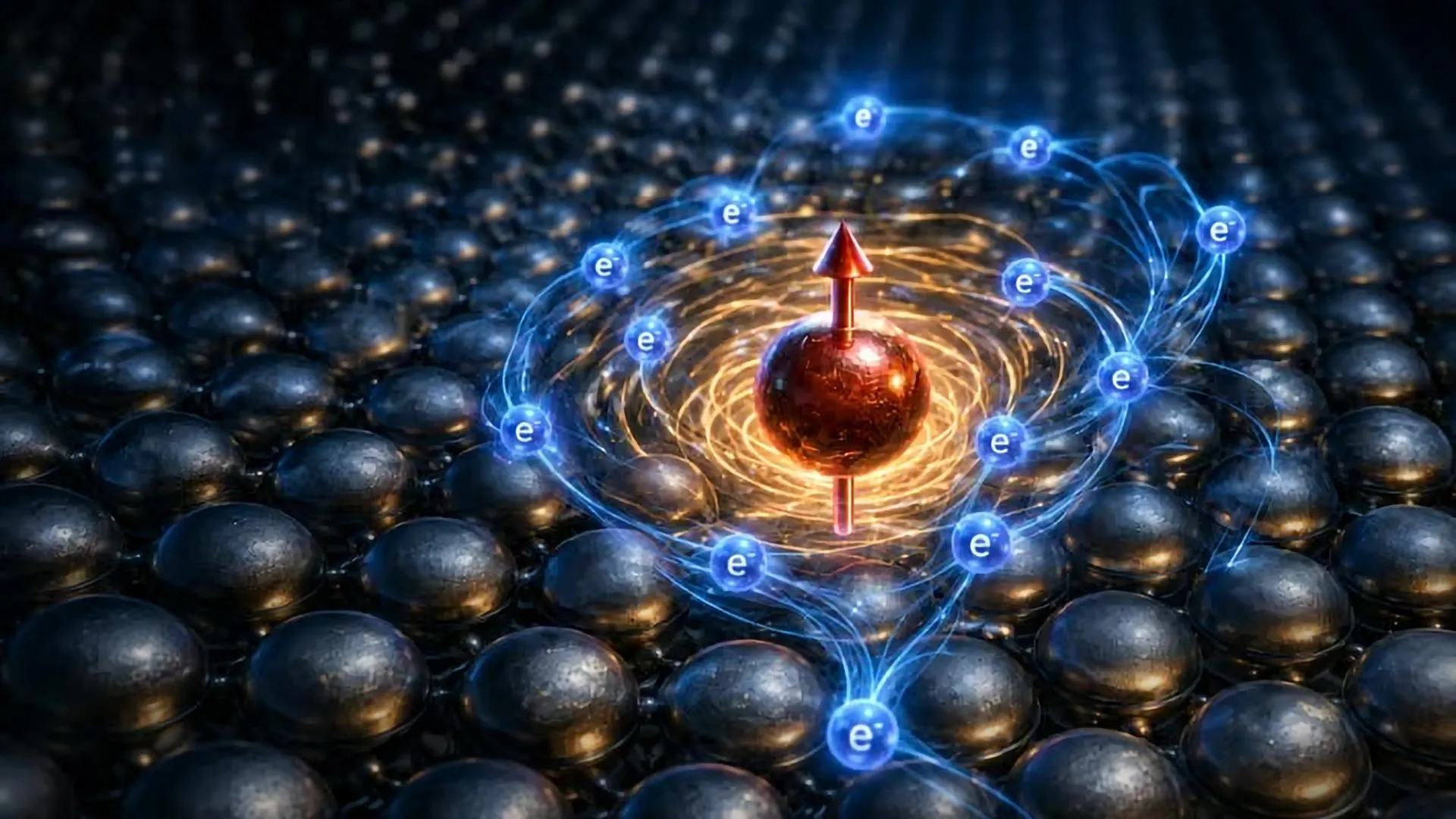
To understand the magnitude of this breakthrough, one must examine the fundamental nature of skyrmions. First theorized in the context of particle physics by British physicist Tony Skyrme in the 1960s, skyrmions were later identified in condensed matter physics as localized topological excitations in magnetic fields. Structurally, a skyrmion resembles a microscopic magnetic vortex. Within a thin film of magnetic material, the spins of electrons point in various directions, gradually twisting into a whirlpool-like configuration.
Crucially, the outer spins of the vortex point in one direction, while the core spins point in the exact opposite direction. This swirling configuration is protected by a topological property, meaning that once a skyrmion is formed, it cannot easily be untwisted or destroyed by minor impurities or thermal fluctuations. This inherent stability makes them exceptionally attractive for data storage. Traditional hard drives and solid-state memory rely on moving billions of electrons or flipping large domains of magnetic polarity, processes that consume substantial electrical current and generate considerable waste heat. Skyrmions, by contrast, can be translated across a racetrack-style memory device using extraordinarily low electrical currents—up to 100,000 times smaller than those required to move traditional magnetic domains.
"Skyrmions are small, magnetic vortices that can store information in a completely new way," explains Professor Asle Sudbø, who leads NTNU’s Centre for Quantum Spintronics (QuSom/QuSpin). "Instead of the current technology, where we constantly need more space and energy to process data, skyrmions could make it possible to build much smaller and more energy-efficient data storage systems."
A Chronological Leap: From Theoretical Concept to Real-Time Observation
The path from theoretical physics to actionable hardware has been fraught with experimental obstacles. Although skyrmions were experimentally observed for the first time in magnetic materials roughly a decade and a half ago—initially in manganese silicide (MnSi) alloys by neutron scattering and later in ultra-thin metallic multilayers using advanced electron microscopy—controlling them individually has remained a formidable challenge.
Historically, researchers could create skyrmion phases and observe static snapshots of their arrangements, but tracking their chaotic transitions in real time was deemed nearly impossible due to their minuscule size, typically measuring between 1 and 100 nanometers in diameter. The recent study published in Nature Nanotechnology represents a definitive turning point in this chronology.
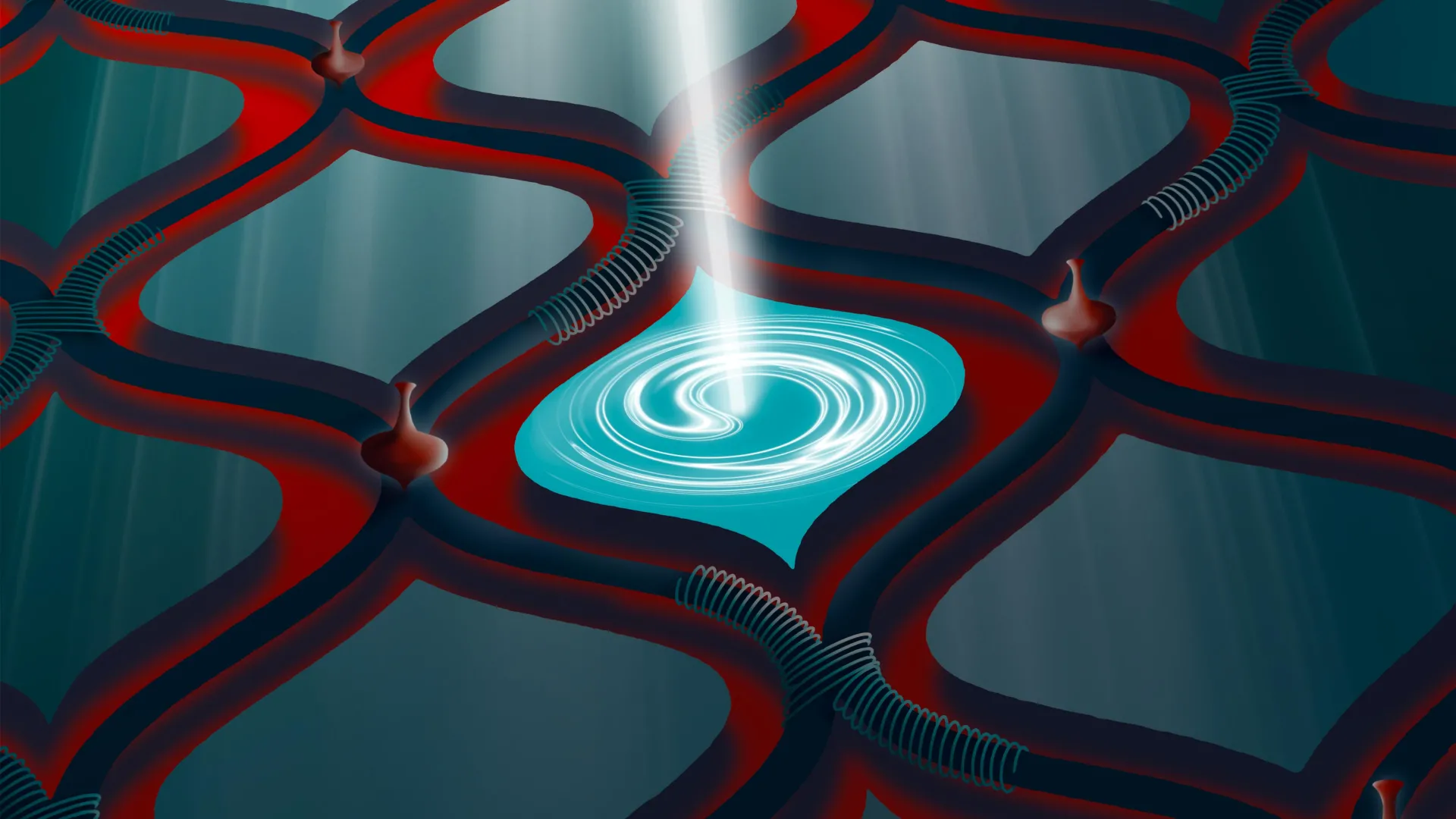
For the first time, researchers successfully utilized advanced microscopy and precise local stimulus techniques to record the exact moment a magnetic skyrmion lattice breaks down, or "melts," into a disordered gas of individual skyrmions. More impressively, the team did not merely observe this thermodynamic phase transition passively; they actively manipulated the shape, size, and trajectory of individual skyrmions while the recording was underway.
"For the first time, researchers have managed to film how a magnetic skyrmion lattice melts in real time, while simultaneously being able to manipulate each individual skyrmion directly as they film it," Sudbø notes. "For example, both their shape and size can be changed on the fly."
This capability to dynamically alter topological magnetic structures under direct observation bridges a critical gap in nanomagnetism, shifting the field from descriptive observation to active engineering.
Neuromorphic Computing and the Brain-Inspired Paradigm
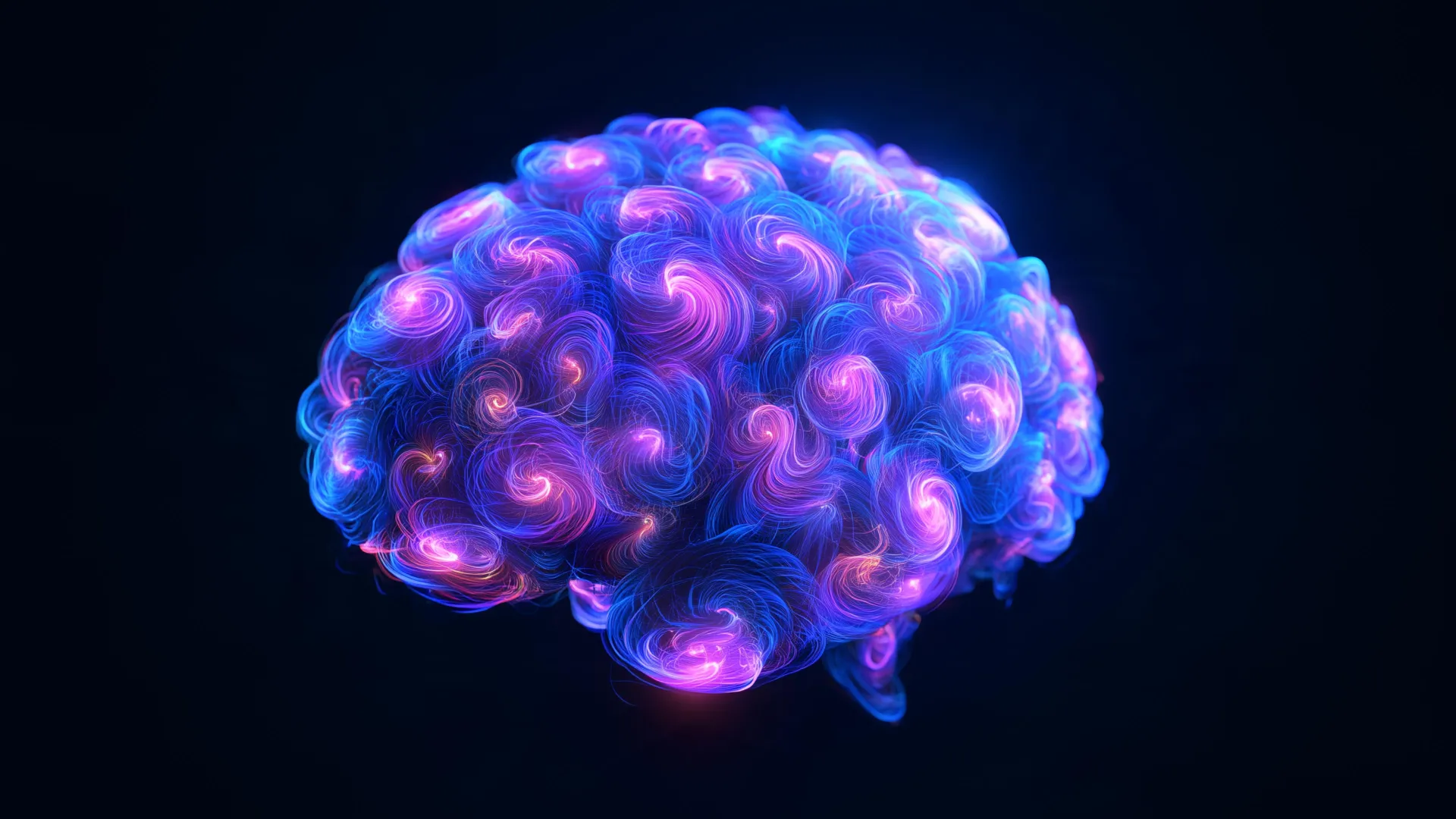
While high-density data storage represents the most immediate commercial application for skyrmion technology, the broader implications extend deeply into the realm of neuromorphic computing—the design of computer architectures that mimic the neural networks of the biological human brain.
Modern von Neumann computing architectures separate processing units from memory units, creating a computational bottleneck often referred to as the "memory wall." Moving data back and forth between the processor and the RAM consumes significant amounts of time and electricity. The human brain, conversely, integrates processing and memory directly within an interconnected web of roughly 86 billion neurons and 100 trillion synapses, operating on a mere 20 watts of power—roughly the energy required to illuminate a dim incandescent light bulb.
Spintronics and skyrmionics offer a compelling physical substrate to replicate this biological efficiency. Because skyrmions can interact with one another through repulsive forces, forming orderly lattices resembling crystal structures, their collective behavior mirrors the synchronization and signaling patterns of neural networks. By designing circuits where skyrmions represent synaptic weights or neural activation states, engineers can construct hardware capable of pattern recognition, associative memory, and adaptive learning with minimal electrical overhead.
"These nanoscale vortices could help develop computers that resemble biological brains," Sudbø emphasizes. Rather than relying on binary transistor switches operating on Boolean logic, skyrmion-based neuromorphic systems could process graded, probabilistic information natively through magnetism. In principle, this architecture could reduce electricity consumption by orders of magnitude, empowering future data centers and edge-computing devices to perform complex artificial intelligence workloads without triggering thermal throttling or straining power grids.
Broader Technological Implications and Industry Analysis
The convergence of topological physics, advanced material science, and real-time nanoscale imaging has triggered a surge of interest across both academic institutions and industrial research laboratories. Major technology firms and specialized semiconductor startups are closely monitoring developments in spintronics, seeking viable alternatives to silicon scaling as Moore’s Law steadily approaches its physical limits.
Industry analysts point out that while the theoretical energy efficiency of skyrmions is undisputed, significant engineering hurdles must be cleared before commercialization can occur. Chief among these challenges is the requirement that most magnetic skyrmions previously required cryogenic temperatures to remain stable, or relied on heavy, rare-earth metal substrates that complicate mass manufacturing.
However, recent advancements—including room-temperature skyrmion generation in engineered synthetic antiferromagnets and heavy-metal/ferromagnet multilayers—have largely neutralized the temperature barrier. The ability demonstrated in the recent Nature Nanotechnology study to manipulate individual skyrmion dimensions dynamically at room temperature provides the precise control mechanisms required for industrial fabrication lines.
Furthermore, the synergy between skyrmionics and quantum information processing is gaining momentum. Topological protection makes skyrmions robust against local perturbations, a characteristic that researchers hope to exploit in fault-tolerant quantum computing architectures and novel sensor technologies.
Next Steps for the Scientific Community
Following the publication of these findings, the research consortium at Johannes Gutenberg University and NTNU plans to expand its investigations into multi-layer skyrmion systems and electrical current-driven manipulation dynamics. By refining the parameters under which skyrmion lattices melt and reform, scientists aim to establish a standardized design toolkit for device engineers.
Although everyday consumers will not see skyrmion-powered processors in their smartphones or laptops immediately, the foundational science is advancing rapidly. The ability to film and master the melting of magnetic lattices transforms skyrmions from an esoteric theoretical curiosity into a tangible engineering medium.
"This could revolutionize the way we think about computers," Sudbø concludes. As research transitions from laboratory observation to prototype development, the microscopic magnetic vortex stands poised to redefine the future of computation, promising a world where massive data processing and artificial intelligence operate in harmony with strict energy boundaries.