The cosmic origins of heavy elements like gold, platinum, and uranium have long remained one of the most profound mysteries in modern astrophysics. While the fusion processes within active stars can forge elements up to iron, the creation of heavier matter requires cataclysmic environments and complex nuclear pathways that are difficult to replicate or observe. In a landmark study published in Physical Review Letters, nuclear physicists at the University of Tennessee, Knoxville (UT), have announced three distinct discoveries that provide a new level of clarity regarding the nuclear transformations essential for the existence of precious metals. By utilizing the advanced facilities at CERN and specialized detection technology developed at UT, the research team has successfully mapped previously invisible segments of the "r-process," the rapid neutron capture mechanism responsible for roughly half of the elements heavier than iron.
The Galactic Forge: Understanding the Rapid Neutron Capture Process
To understand the significance of the UT findings, one must first look toward the most violent events in the universe. Heavy elements are not formed during the steady life of a star but are instead birthed during its death or through the collision of its remnants. When massive stars collapse and explode as supernovae, or when two neutron stars collide in a kilonova event, they create an environment saturated with a staggering density of neutrons.
During these events, an existing atomic nucleus is bombarded by neutrons so quickly that it does not have time to stabilize through radioactive decay before the next neutron is absorbed. This is the rapid neutron capture process, or r-process. This chain of events forces the nucleus to grow increasingly heavy and move further away from the "valley of stability"—the region on the nuclide chart where the ratio of protons to neutrons allows an atom to remain intact. Eventually, these "exotic" nuclei reach a tipping point where they must undergo beta decay, a process where a neutron transforms into a proton, emitting an electron and often releasing additional neutrons to reach a more stable state.
The path from these unstable, short-lived isotopes to the stable gold found in the Earth’s crust is a complex sequence of transmutations. Because these intermediate nuclei exist for only fractions of a second in the hearts of dying stars, scientists must recreate them in terrestrial laboratories to understand the fundamental laws governing their behavior.
Precision Engineering at CERN’s ISOLDE Facility
The research was led by a collaborative team from the UT Department of Physics and Astronomy, including Graduate Students Peter Dyszel and Jacob Gouge, Professor Robert Grzywacz, Associate Professor Miguel Madurga, and Research Associate Monika Piersa-Silkowska. Their investigation centered on indium-134, a rare and highly unstable isotope that serves as a critical proxy for the nuclei involved in the r-process.
Synthesizing indium-134 is an immense technical challenge. The nuclei are not found naturally on Earth and must be produced through high-energy particle collisions. The team utilized the ISOLDE (Isotope Mass Separator On-Line) facility at CERN in Geneva, Switzerland. ISOLDE is a world-renowned laboratory capable of producing a wide array of radioactive ion beams. By bombarding a thick target with high-energy protons, researchers can induce fission, creating a "soup" of various isotopes.
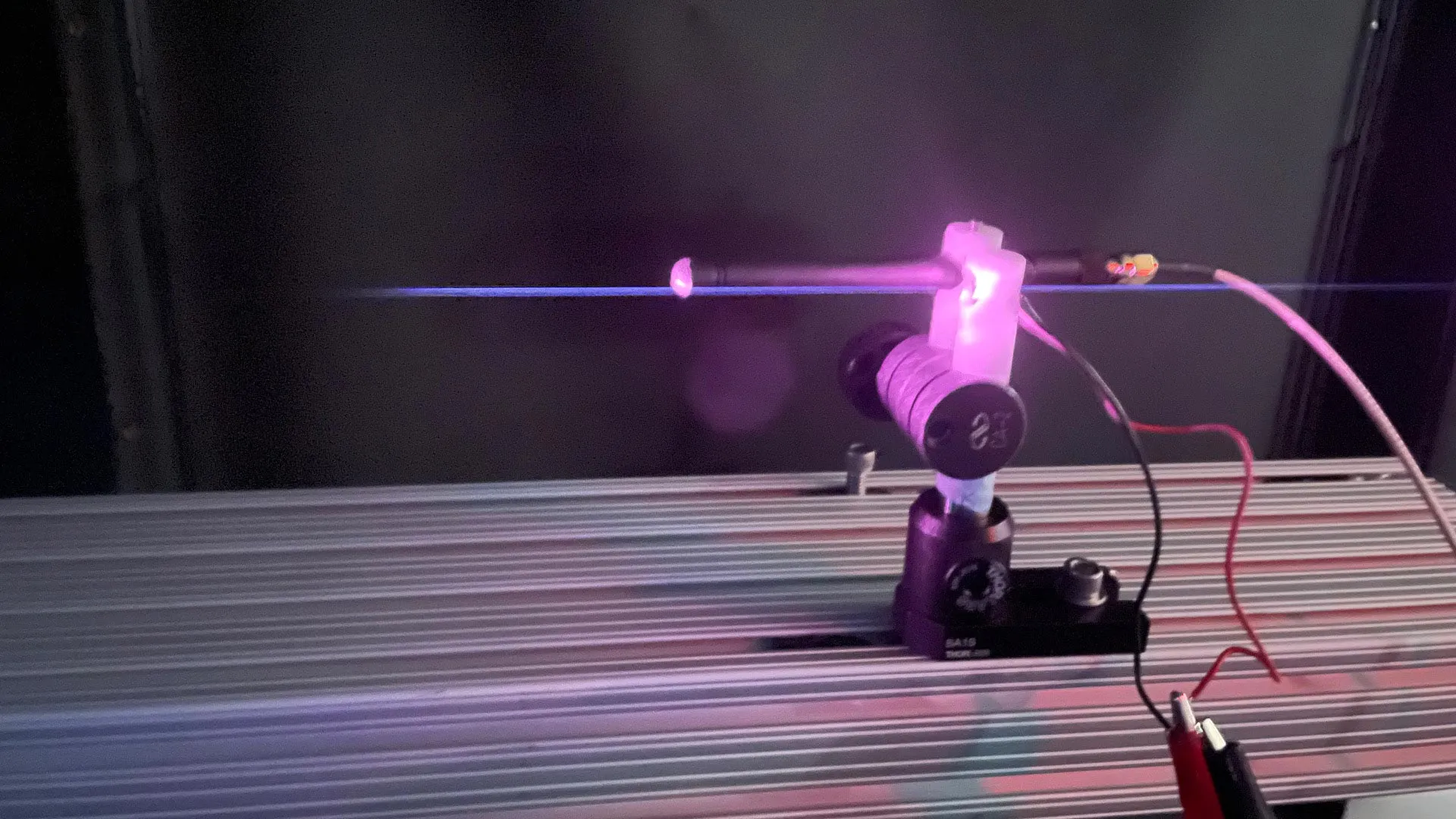
To isolate the specific indium-134 nuclei needed for the study, the team employed advanced laser ion source techniques. This ensured that the sample was pure, allowing for the precise measurement of its decay products: excited states of tin-134, tin-133, and tin-132. The detection of these decays required a specialized neutron detector, funded by the National Science Foundation (NSF) and meticulously constructed at the University of Tennessee. This instrumentation allowed the researchers to track not just the presence of neutrons, but their specific kinetic energies, a feat that had eluded previous experimental attempts.
Discovery One: Measuring the Energy of Two-Neutron Emissions
The most significant of the three findings was the first-ever measurement of neutron energies associated with beta-delayed two-neutron emission. In this specific nuclear reaction, a parent nucleus (indium-134) undergoes beta decay, and the resulting daughter nucleus is left in such a highly excited state that it ejects two neutrons simultaneously or in very quick succession to find a lower energy state.
"The two-neutron emission is the biggest deal," noted Professor Robert Grzywacz. While the theoretical existence of this decay mode has been known, measuring the energy of the released neutrons has historically been nearly impossible. Neutrons are notoriously difficult to detect because they carry no electric charge, meaning they do not interact with matter in the same way protons or electrons do. They tend to "bounce" off detector materials, making it hard for scientists to distinguish between a single neutron that has scattered and two distinct neutrons being emitted at once.
By successfully measuring these energies, the UT team has provided a new benchmark for nuclear models. This data allows astrophysicists to more accurately calculate the "neutron economy" of a supernova or neutron star merger. Knowing exactly how much energy is carried away by these neutrons helps determine the final distribution of elements produced in the r-process, explaining why certain elements are more abundant in the universe than others.
Discovery Two: The "Memory" of the Tin-133 Nucleus
The second breakthrough involved the observation of a long-predicted "single-particle" neutron state in tin-133. This discovery challenges a long-standing assumption in nuclear physics regarding how excited nuclei "cool off" or return to a ground state.
Traditionally, many physicists operated under the "amnesiac nucleus" hypothesis. This theory suggested that once a nucleus reached a high state of excitation, it would release energy (often by spitting out neutrons) in a way that effectively erased the "memory" of the parent nucleus and the specific decay event that created it. The nucleus was thought to reach a state of statistical equilibrium, where its subsequent behavior was governed by general probabilities rather than the specific quantum configuration of its predecessor.
However, the UT researchers found that "tin doesn’t forget." By observing the specific state of tin-133, they realized that the "shadow" of the original indium-134 nucleus remained. The nucleus retained a structural memory of its formation, influencing whether it would emit one neutron or two. This "non-amnesiac" behavior suggests that the internal structure of the nucleus plays a far more dominant role in the r-process than previously accounted for in statistical models. This finding forces a shift toward more sophisticated theoretical frameworks that account for individual quantum states rather than broad statistical averages.
Discovery Three: Challenging Statistical Mechanics in Exotic Nuclei
The third discovery stems from the observation of a "non-statistical population" of the newly identified state in tin-133. In nuclear physics, researchers often use the "split-pea soup" analogy to describe the dense, crowded environment of nuclear states where individual characteristics are lost in a collective mix. In many heavy nuclei, the states are so close together that they behave statistically.
However, the UT experiment revealed that in the decay of indium-134, the nuclear states are relatively clean and separated. Despite this lack of "crowding," the system did not behave as existing models predicted. "Why is it statistical, even though it shouldn’t be, and why in our case it isn’t?" Grzywacz posited.
This discrepancy indicates that as scientists push further into the "terra incognita" of the nuclide chart—the regions inhabited by extremely exotic and short-lived nuclei—the standard rules of nuclear physics may begin to break down. This has significant implications for the study of superheavy elements, such as Tennessine (Element 117), which was also co-discovered by UT faculty. The findings suggest that the models used to predict the stability and synthesis of the heaviest elements in the periodic table may need substantial revision to account for these non-statistical behaviors.
The Human Element: Training the Next Generation of Scientists
Beyond the theoretical and experimental milestones, the study highlights the critical role of early-career researchers in high-stakes physics. Peter Dyszel, the paper’s first author, joined the project in 2022 and took on a Herculean set of responsibilities. His work involved everything from the physical construction of detector frames and the assembly of electronic systems to the development of data acquisition software and the final analysis of the complex data sets.
Dyszel’s journey from a chemistry student in Florida to a lead researcher in nuclear physics at UT underscores the interdisciplinary nature of modern science. "I’ve always been interested in understanding how the world works, and physics has been the path I want to follow in pursuit of that curiosity," Dyszel said. His success, and that of his fellow students, demonstrates the University of Tennessee’s growing status as a powerhouse in nuclear astrophysics, providing students with direct access to global facilities like CERN.
Broader Implications and the Future of Nuclear Astrophysics
The implications of this study extend from the subatomic scale to the reaches of the cosmos. By refining our understanding of how indium-134 decays into tin, scientists can better interpret the light signatures from kilonovae detected by gravitational wave observatories like LIGO and Virgo. When astronomers witness the collision of neutron stars, they see an "afterglow" caused by the radioactive decay of newly formed heavy elements. To translate that light into a precise list of which elements were created, they need the exact nuclear data provided by the UT team.
Furthermore, these findings contribute to the "Standard Model" of nuclear structure. As researchers look toward the next generation of particle accelerators, such as the Facility for Rare Isotope Beams (FRIB) in Michigan, the data from ISOLDE will serve as a foundational roadmap.
The discovery that nuclei retain a "memory" of their parentage and that two-neutron emission can be precisely measured opens a new field of study. It moves nuclear physics away from generalized guesses and toward a high-precision science that can explain the very matter we are made of. As Professor Grzywacz noted, the search for these states has lasted two decades; their discovery not only completes a piece of the nuclear puzzle but also sets the stage for the next twenty years of exploration into the heart of the atom and the origins of the universe.