The fundamental understanding of how liquids move through foams has undergone a significant paradigm shift following a study by researchers at Tokyo Metropolitan University, who have successfully identified the physical mechanisms responsible for foam drainage. For decades, the scientific community has grappled with a persistent discrepancy between theoretical models and empirical observations regarding the stability of foams. Traditional physics suggested that foams should be capable of retaining liquid at much greater heights than what is observed in everyday life; however, the Tokyo-based team, led by Professor Rei Kurita, has demonstrated that the onset of liquid leakage—or drainage—is governed not by static pressure alone, but by the dynamic rearrangement of the bubbles themselves. This discovery, which identifies yield stress as the primary controlling factor, offers a new framework for the study of soft matter and has far-reaching implications for industries ranging from food science and cosmetics to pharmaceuticals and firefighting.
The Scientific Discrepancy: Challenging the Osmotic Pressure Model
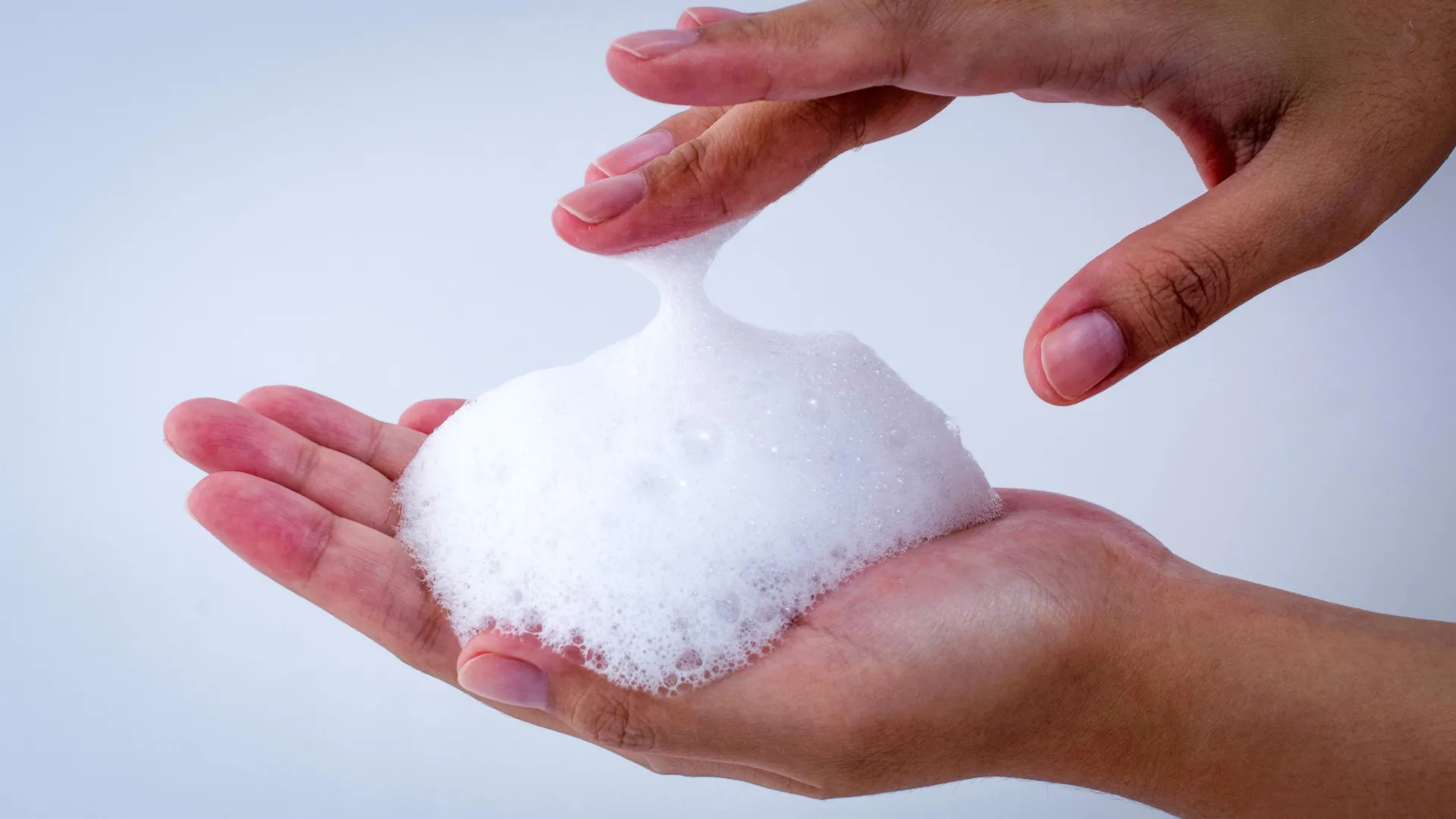
Foams are ubiquitous in modern life, appearing in everything from the morning’s espresso to the sophisticated fire-suppression systems used in aviation. Structurally, foam is a complex dispersion of gas bubbles within a liquid medium, where the bubbles are separated by thin liquid films and interconnected by a network of channels known as Plateau borders. The stability of this structure is critical; once the liquid drains out, the foam becomes brittle and eventually collapses.
For years, the standard model used to predict this drainage was based on the concept of "osmotic pressure." In the context of foam, osmotic pressure refers to the energy change that occurs when bubbles are compressed together. As gravity pulls liquid downward, the bubbles at the top of a foam column become more tightly packed. Scientists believed that the "absorptive limit"—the point at which a foam can no longer hold onto its liquid—was reached when the gravitational pull exceeded the osmotic pressure.
However, a glaring problem existed within this model: the numbers did not add up. Mathematical calculations based on the osmotic pressure of bubble structures suggested that a typical foam would need to reach a height of approximately one meter before the liquid began to drain from the bottom. In reality, researchers and industrial manufacturers have long observed that liquid begins to leak from foams that are only a few tens of centimeters tall. This order-of-magnitude difference indicated that the prevailing theory was missing a fundamental piece of the puzzle, leading the Tokyo Metropolitan University team to investigate the "yield stress" of the foam structure.
Experimental Methodology and the Search for a Universal Pattern
To bridge the gap between theory and reality, Professor Rei Kurita’s team designed a series of controlled experiments aimed at observing foam behavior in real-time. The researchers utilized a variety of surfactants—the agents responsible for reducing surface tension and allowing foams to form—to create different types of foam with varying bubble sizes and liquid volumes.
The experimental setup involved placing these foams between two parallel transparent plates, a configuration that allowed for high-resolution visual monitoring of the internal structure. By positioning these plates vertically, the team could subject the foams to gravitational forces and precisely measure the "critical height" at which liquid began to seep out of the bottom.
The results revealed a universal pattern that defied previous expectations. The team found that the height at which drainage begins is inversely related to the initial liquid content of the foam. Most notably, this relationship remained consistent regardless of the specific surfactant used or the initial size of the bubbles. When the researchers calculated the "effective osmotic pressure" required to trigger drainage in these experiments, they found it to be significantly lower than the values predicted by traditional models based solely on bubble surface tension and geometry.
Visualizing the Dynamic Shift: The Role of Yield Stress
The breakthrough moment in the research occurred when the team utilized high-speed video recording to look inside the foam at the exact moment drainage commenced. According to the old models, liquid should have been flowing through a static, rigid scaffolding of bubbles. Instead, the video evidence showed a much more dynamic process: as the liquid began to move, the bubbles themselves were shifting, sliding, and rearranging.
This observation led the researchers to conclude that the foam’s resistance to drainage is tied to its "yield stress." In physics, yield stress is the amount of force required to make a soft material transition from behaving like a solid to behaving like a liquid. Because foam is a "soft" material, it can support its own weight and hold liquid up to a certain point. However, when the weight of the liquid creates enough pressure to overcome the foam’s yield stress, the bubbles are forced to move. This movement opens up larger pathways, allowing the liquid to drain much faster than it would through a stationary structure.
By incorporating yield stress into their calculations, the researchers developed a new model that accurately predicts the height at which different foams will begin to leak. This model aligns perfectly with the empirical evidence that had previously baffled scientists, explaining why foams drain at heights of 10 to 30 centimeters rather than the theoretical one-meter mark.
A Chronology of Foam Physics Development
The journey to this discovery is part of a long history of fluid dynamics and soft matter physics.
- Early 19th Century: Joseph Plateau first describes the geometric rules governing the intersections of soap films (Plateau’s laws), laying the groundwork for foam topology.
- Mid-20th Century: The development of the "Foam Drainage Equation" attempts to model liquid flow through the network of Plateau borders, treating the foam as a porous medium.
- Late 20th Century: The osmotic pressure model gains traction, attempting to explain the equilibrium between gravity and the energy of bubble deformation.
- 2010s: Advanced imaging techniques begin to show that foams are less stable than once thought, but the "one-meter mystery" remains unsolved.
- Current Study: Professor Rei Kurita’s team at Tokyo Metropolitan University publishes their findings, proving that bubble rearrangement and yield stress are the missing variables.
Industrial Implications and the Future of Soft Materials
The practical applications of this research are extensive. In the consumer goods sector, manufacturers of shaving creams, cleaning foams, and cosmetic mousses strive to create products that maintain their texture and "wetness" for as long as possible. Understanding that bubble rearrangement is the trigger for leakage allows chemists to design surfactants that increase the yield stress of the foam, thereby extending its shelf life and performance.
In the pharmaceutical industry, foams are increasingly used as a delivery vehicle for topical medications. The ability to control drainage is vital for ensuring that the active ingredients remain suspended in the foam and are delivered evenly to the skin. Similarly, in the field of firefighting, "aqueous film-forming foams" (AFFF) must remain stable under extreme heat to effectively smother flames. The Tokyo Metropolitan University study provides the mathematical tools necessary to engineer foams that can withstand greater gravitational and environmental pressures without losing their liquid content.
Furthermore, the study sheds light on the broader category of "athermal systems"—materials where thermal fluctuations do not play a role in structural changes. This includes not only foams but also emulsions, granular materials, and certain biological tissues. By proving that structural rearrangement is a key driver of transport properties in these materials, the research opens new doors for the field of condensed matter physics.
Analysis of Scientific Impact
The significance of this work lies in its move away from "static" physics toward "dynamic" physics. For a long time, soft matter was treated as a collection of fixed shapes. The Tokyo Metropolitan University team has shown that the "softness" of the material—its ability to deform and reorganize—is not just a side effect, but the central mechanism of its behavior.
This shift in perspective is likely to prompt a re-evaluation of other soft-matter phenomena. If liquid drainage is caused by structural shifting, it is possible that other processes, such as gas diffusion between bubbles (coarsening) or the collapse of foam cells (coalescence), are also more dependent on yield stress than previously believed.
Acknowledgments and Official Support
The research conducted at Tokyo Metropolitan University was a rigorous multi-year effort that required precision instrumentation and a deep dive into the thermodynamics of interfaces. The study was officially supported by the Japan Society for the Promotion of Science (JSPS) through KAKENHI Grant Number 20H01874. This grant program is known for funding high-risk, high-reward basic science research that has the potential to fundamentally change established scientific doctrines.
As the scientific community begins to integrate these findings into textbooks and industrial processes, the work of Professor Kurita and his team stands as a testament to the importance of revisiting "settled" science with fresh eyes and modern technology. By solving the mystery of why foam leaks, they have provided a clearer view of the complex, shifting world of soft materials.