Schizophrenia remains one of the most complex and debilitating psychiatric disorders, affecting approximately 24 million people worldwide. While the condition is often associated with "positive" symptoms like hallucinations and delusions, researchers have long recognized that its "cognitive" symptoms—such as difficulties in processing information, making decisions, and updating beliefs—are equally critical to the pathology. A groundbreaking study led by researchers at the Massachusetts Institute of Technology (MIT) and the Broad Institute of Harvard and MIT has identified a specific genetic mutation and an associated brain circuit that appear to drive these cognitive deficits. By pinpointing a mutation in the grin2a gene, the team has mapped out how a failure in the mediodorsal thalamus-prefrontal cortex circuit prevents the brain from effectively integrating new information, leading to a disconnect from reality.
The findings, published in the journal Nature Neuroscience, offer a new framework for understanding the biological basis of psychosis. The study suggests that the inability to update "prior beliefs" when faced with new sensory input is not merely a psychological byproduct but is rooted in a physical disruption of neural communication. This discovery could pave the way for targeted therapies that go beyond suppressing symptoms to addressing the underlying cognitive architecture of the disorder.
The Cognitive Framework of Schizophrenia
For decades, the prevailing understanding of schizophrenia focused on the dopamine hypothesis, which suggested that an overabundance of dopamine in certain brain regions caused the hallucinations and delusions characteristic of the disorder. However, this theory failed to explain the persistent cognitive impairments that often precede the onset of psychosis and remain even after traditional antipsychotic medications have stabilized a patient’s mood or perception.
Modern neuroscience has shifted toward a "predictive coding" or "Bayesian brain" model to explain these cognitive gaps. In a neurotypical brain, the mind constantly generates "prior beliefs" about how the world works. When new sensory information arrives that contradicts these beliefs, the brain uses that data to update its internal model. This allows humans to adapt to changing environments and maintain an accurate grasp of reality.
In patients with schizophrenia, this updating process is often flawed. As noted by Tingting Zhou, a research scientist at the McGovern Institute for Brain Research and lead author of the study, patients tend to "weigh too heavily on the prior belief." Because they do not use current sensory input to adjust their expectations, their internal model of reality becomes increasingly rigid and eventually detached from the external world. The MIT study provides the first clear genetic and circuit-level evidence for why this occurs.
The Genetic Landscape and the Grin2a Discovery
The genetic basis of schizophrenia is well-established but notoriously difficult to map. Statistics show that while the general population has a 1% risk of developing the disorder, that risk jumps to 10% for those with an affected first-degree relative and nearly 50% for identical twins. Despite this high heritability, identifying the specific genes responsible has been a monumental task.
Earlier Genome-Wide Association Studies (GWAS) conducted by the Stanley Center for Psychiatric Research identified over 100 gene variants associated with the disorder. However, most of these variants reside in non-coding "junk" DNA, which regulates other genes rather than producing proteins directly. This makes it difficult to determine exactly how they influence brain function.
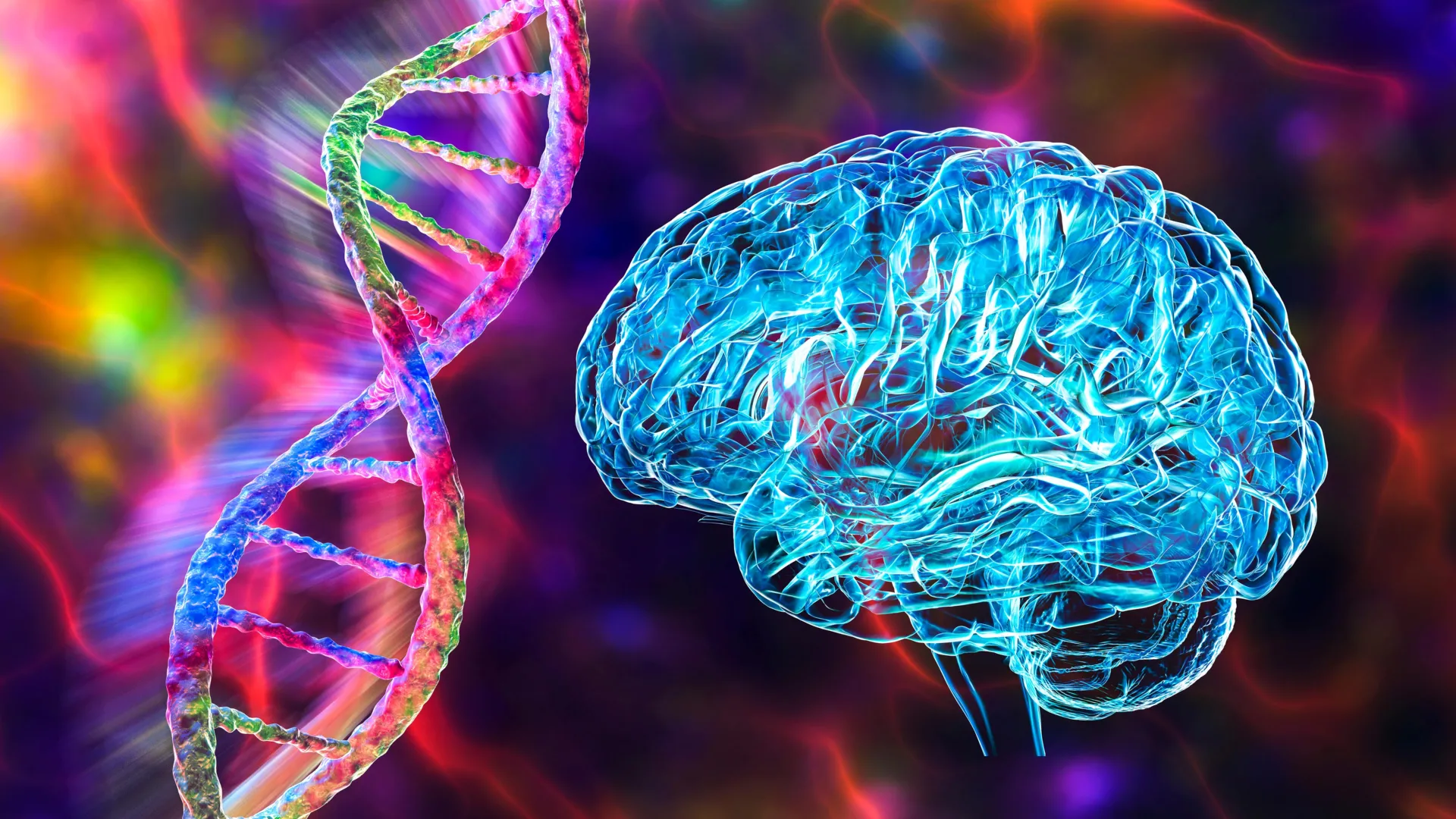
To circumvent this, the MIT team utilized whole-exome sequencing, focusing exclusively on the 2% of the genome that codes for proteins. By comparing the genetic sequences of 25,000 individuals diagnosed with schizophrenia against 100,000 control subjects, they identified 10 genes where mutations significantly increased the risk of the disorder. Among these, the grin2a gene stood out. This gene is responsible for encoding a subunit of the NMDA receptor, a critical component of the brain’s excitatory signaling system that relies on the neurotransmitter glutamate.
Behavioral Evidence from Mouse Models
To investigate how the grin2a mutation affects behavior, the researchers engineered a line of mice carrying the same mutation found in human patients. While mice cannot report hallucinations, they can be tested on their "adaptive decision-making"—the ability to change behavior when the environment changes.
In a carefully designed experiment, mice were presented with two levers. One lever provided a small reward (one drop of milk) for low effort (six presses). The other lever provided a high reward (three drops of milk) for similar effort. Initially, all mice—both the "wild-type" (healthy) and those with the grin2a mutation—learned to prefer the high-reward lever.
The researchers then introduced a shift: the effort required for the high-reward lever was gradually increased. As the "cost" of the high reward began to outweigh its benefits, the healthy mice quickly recognized the change and switched their preference to the low-effort, low-reward lever. They reached an "equal value point" and adapted their strategy efficiently.
In contrast, the mice with the grin2a mutation struggled to commit to a new strategy. They continued to switch back and forth between the two levers long after the high-reward option had become inefficient. Their decision-making was significantly slower and less adaptive, mirroring the cognitive rigidity seen in human schizophrenia patients who struggle to move past outdated beliefs or habits.
Identifying the Thalamocortical Circuit
Using a combination of functional ultrasound imaging and high-density electrical recordings, the researchers traced the source of this behavioral failure to the mediodorsal thalamus (MD). This region acts as a vital communication hub, connecting to the prefrontal cortex (PFC), which is the brain’s "executive suite" responsible for complex planning and decision-making.
In the mutant mice, the NMDA receptors in the mediodorsal thalamus were dysfunctional due to the grin2a mutation. The researchers observed that in healthy mice, neurons in the MD tracked the shifting value of the different choices in real-time, sending clear signals to the PFC to guide the switch in behavior. In the mutant mice, these signals were weak and disorganized.
"We are quite confident this circuit is one of the mechanisms that contributes to the cognitive impairment that is a major part of the pathology of schizophrenia," stated Guoping Feng, the James W. and Patricia T. Poitras Professor at MIT. This finding is significant because it shifts the focus of the disease from a global brain "chemical imbalance" to a specific failure in a localized circuit responsible for belief updating.
Reversing Symptoms and Therapeutic Implications
Perhaps the most promising aspect of the study was the researchers’ ability to "rescue" the behavior of the mutant mice. Using optogenetics—a technique that uses light to control the activity of specific neurons—the team stimulated the neurons in the mediodorsal thalamus.
When the researchers artificially boosted the activity of this circuit, the grin2a mutant mice began to behave like their healthy counterparts. They were able to recognize the shifting rewards and update their decision-making process more rapidly. This serves as a "proof of concept" that the cognitive symptoms of schizophrenia are not necessarily permanent and could be mitigated by restoring function to this specific thalamocortical pathway.
While only a small percentage of schizophrenia patients carry the specific grin2a mutation, the researchers believe the thalamocortical circuit itself may be a "common denominator." Other genetic mutations or environmental factors associated with schizophrenia likely converge on this same pathway. If drugs or neuromodulation techniques (such as Transcranial Magnetic Stimulation) can be developed to target the mediodorsal thalamus, they might help a broad range of patients regain cognitive flexibility.
Broader Impact and Future Directions
The implications of this research extend beyond the laboratory. For decades, the pharmaceutical industry has struggled to develop new treatments for schizophrenia, with many large firms divesting from psychiatric research due to the lack of clear biological targets. The identification of the grin2a pathway provides a concrete target for drug discovery.
Michael Halassa, an associate professor of psychiatry and neuroscience at Tufts University and co-senior author of the study, emphasized the importance of this circuit-based approach. By understanding how specific genes influence specific brain regions, psychiatry can move toward a model of precision medicine, where treatments are tailored to the specific neural disruptions present in a patient.
The study was supported by a coalition of high-profile institutions, including the National Institutes of Mental Health (NIMH) and several specialized centers at MIT, such as the Poitras Center for Psychiatric Disorders Research and the Yang Tan Collective. This collaborative effort highlights the scale of resources required to untangle the genetic and neurological threads of mental illness.
Looking forward, the MIT team is working to identify specific molecular components within the mediodorsal thalamus that could be targeted with new medications. They are also investigating whether other genes associated with schizophrenia, such as those involved in synaptic pruning or different neurotransmitter systems, affect the same thalamocortical circuit.
As the scientific community continues to move from describing symptoms to mapping circuits, the hope is that schizophrenia will eventually be treated not just as a mysterious psychological condition, but as a manageable neurological disorder. This study marks a significant milestone in that journey, offering a clearer view than ever before of the biological mechanisms that separate the mind from reality.