

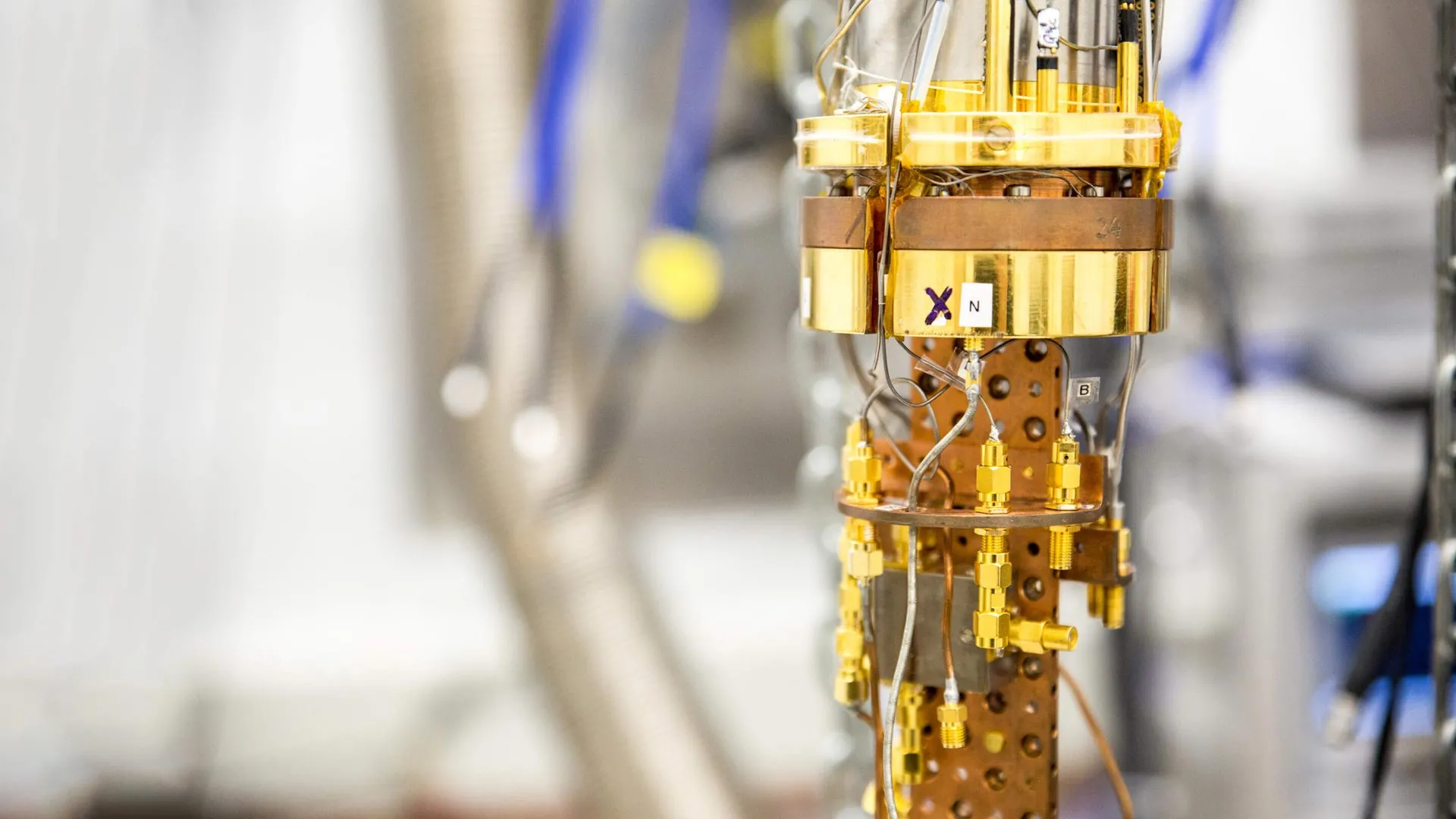
In a landmark development for the field of condensed matter physics, a research team at Aalto University has successfully integrated a quantum time crystal with an external mechanical system. This achievement, detailed in a recent publication in the journal Nature Communications, marks the first time scientists have managed to link these exotic phases of matter to the macroscopic world without destroying their delicate quantum properties. Led by Academy Research Fellow Jere Mäkinen within the Department of Applied Physics, the study demonstrates a functional conversion of a time crystal into an optomechanical system, a breakthrough that could fundamentally alter the trajectory of quantum computing and high-precision sensing technologies.
For decades, the concept of a time crystal remained in the realm of theoretical speculation. Unlike standard crystals, such as diamonds or quartz, which are defined by a repeating pattern of atoms in three-dimensional space, time crystals exhibit a repeating structure in time. This means that even in their lowest possible energy state—where all motion typically ceases in classical physics—these systems continue to oscillate or move in a periodic pattern indefinitely. The successful coupling of such a system to an external oscillator provides a bridge between the isolated quantum realm and practical engineering, opening the door to a new generation of "time-crystal-powered" devices.
The Evolution of Time Crystal Theory and Discovery
The conceptual framework for time crystals was first introduced in 2012 by Frank Wilczek, a Nobel Prize-winning physicist at the Massachusetts Institute of Technology. Wilczek hypothesized that if spatial symmetry could be broken to create conventional crystals, then time-translation symmetry could similarly be broken. In a system that breaks time-translation symmetry, the laws of physics remain constant, but the system itself does not stay stationary; instead, it cycles through a sequence of states at regular intervals without the need for an external clock or energy source.
Initially, Wilczek’s proposal met with skepticism, as critics argued it resembled a "perpetual motion machine," which is forbidden by the laws of thermodynamics. However, subsequent theoretical refinements clarified that time crystals do not violate energy conservation because they do not perform work in their ground state. By 2016, experimental physicists at the University of Maryland and Harvard University confirmed the existence of "discrete time crystals" using trapped ions and nitrogen-vacancy centers in diamonds. These early experiments proved that time crystals were a physical reality, but they remained isolated curiosities—systems that existed only as long as they were shielded from the outside environment.
The challenge that Jere Mäkinen and his team at Aalto University addressed was the "isolation paradox." In quantum mechanics, observing or interacting with a system often causes decoherence, where the quantum state collapses. Because time crystals are defined by their internal, undisturbed motion, connecting them to an external sensor or circuit was previously thought to be impossible without halting the very motion that defines them.
Experimental Methodology: Helium-3 and Magnon Organization
To overcome the barriers of decoherence and external interference, the Aalto University researchers utilized a highly specialized environment: a Helium-3 superfluid. Helium-3 is a rare isotope of helium that, when cooled to temperatures within a few millikelvins of absolute zero, loses all viscosity and becomes a superfluid. In this state, the liquid flows without friction, providing an ideal medium for observing quantum phenomena at a relatively large scale.
The team focused on "magnons," which are quasiparticles representing collective excitations of the electron spins in a magnetic field. Magnons behave like a gas of particles that can be manipulated through magnetic resonance. The researchers employed radio waves to inject these magnons into the Helium-3 superfluid. Once the external radio frequency input was terminated, the magnons did not simply dissipate. Instead, through a process of spontaneous self-organization, they formed a Bose-Einstein condensate that exhibited the characteristics of a time crystal.
In this state, the magnon time crystal began to oscillate at a fixed frequency. What distinguished this experiment from previous ones was the duration and stability of the system. The time crystal maintained its periodic motion for up to 108 cycles, translating to several minutes of sustained activity. In the world of quantum physics, where states often last for mere microseconds, a lifespan of several minutes represents a massive leap in stability.
Achieving the Optomechanical Link
The core of the Aalto breakthrough lies in the interaction between the time crystal and a nearby mechanical oscillator. In physics, optomechanics refers to the study of the interaction between light (photons) and mechanical motion. In this specific experiment, the researchers adapted this concept to create a "magnomechanical" link.
As the time crystal’s internal oscillations continued, it began to interact with the mechanical components of the experimental setup. The researchers observed that the frequency of the time crystal shifted in response to the amplitude and frequency of the mechanical oscillator. This indicated a two-way exchange of information, where the time crystal could "feel" the external system and vice versa.
"We showed that changes in the time crystal’s frequency are completely analogous to optomechanical phenomena widely known in physics," Jere Mäkinen explained. He noted that these are the same physical principles utilized by the Laser Interferometer Gravitational-Wave Observatory (LIGO) to detect ripples in spacetime. By establishing this link, the team proved that a time crystal could serve as a functional component in a larger mechanical or electronic architecture.
Timeline of Significant Milestones in Time Crystal Research
To understand the weight of the Aalto University study, it is essential to view it within the broader chronology of the field:
- 2012: Frank Wilczek publishes the original theoretical paper proposing time crystals as a new phase of matter.
- 2015: Physicists refine the theory, establishing the necessity of "discrete" time crystals to satisfy thermodynamic constraints.
- 2016: Two independent teams (led by Chris Monroe and Mikhail Lukin) report the first experimental observations of time crystals in laboratory settings.
- 2018: Researchers observe time crystal behavior in more common materials, such as ammonium phosphate crystals, suggesting the phenomena are more robust than initially thought.
- 2021: Google, in collaboration with several universities, uses its Sycamore quantum processor to create a time crystal within a quantum computer’s qubits.
- 2024: The Aalto University team successfully links a time crystal to an external mechanical system, transitioning the technology from a laboratory observation to a potential engineering tool.
Implications for Quantum Computing and Memory
The most immediate application of this research is in the realm of quantum computing. One of the primary obstacles to building a practical quantum computer is "decoherence"—the tendency of quantum bits (qubits) to lose their information when they interact with their surroundings. Because time crystals are inherently stable and resistant to environmental noise, they are prime candidates for quantum memory.
Current quantum memory systems are fragile and require constant error correction. However, because a time crystal’s motion is a fundamental property of its ground state, it possesses a natural "robustness." If a quantum computer’s memory were powered by a time crystal, it could potentially store information for orders of magnitude longer than current superconducting or ion-trap qubits.
"The best-case scenario is that time crystals could power the memory systems of quantum computers to significantly improve them," Mäkinen stated. This longevity would allow for more complex calculations and a reduction in the overhead required for error-correcting algorithms.
High-Sensitivity Sensing and Frequency References
Beyond computing, the Aalto University study points toward a revolution in metrology—the science of measurement. Time crystals are essentially perfect clocks. Because their frequency is determined by internal quantum dynamics rather than external mechanical components, they are immune to many of the drifts and inaccuracies that affect traditional oscillators.
The researchers envision using time crystals as "frequency combs." In precision measurement, a frequency comb acts as a "ruler" for light or radio waves, allowing scientists to measure frequencies with extreme accuracy. By integrating time crystals into optomechanical sensors, engineers could develop devices capable of detecting incredibly subtle changes in magnetic fields, gravity, or temperature.
Mäkinen highlighted that by reducing energy loss and increasing the frequency of the mechanical oscillator, their setup could eventually reach the "quantum limit"—the point where the sensitivity of a measurement is restricted only by the fundamental laws of quantum mechanics.
Infrastructure and Collaborative Efforts
The success of this research was made possible by the specialized infrastructure available in Finland. The experiment was conducted at the Low Temperature Laboratory, a part of OtaNano, which serves as Finland’s national research infrastructure for micro-, nano-, and quantum technologies. The laboratory is world-renowned for its ability to reach temperatures just a fraction of a degree above absolute zero, a requirement for maintaining Helium-3 in a superfluid state.
Furthermore, the team utilized the Aalto Science-IT project for the complex computational modeling required to predict the interactions between the magnons and the mechanical oscillator. This combination of extreme experimental conditions and high-performance computing was essential for validating that the observed phenomena were indeed the result of time crystal dynamics and not classical interference.
Factual Analysis of the Path Ahead
While the Aalto University study represents a significant leap forward, challenges remain before time crystals can be integrated into consumer electronics. The requirement for Helium-3 and near-absolute-zero temperatures limits current applications to high-end laboratory and industrial environments. Helium-3 is notably expensive and scarce, often sourced from the decay of tritium in nuclear stockpiles.
However, the proof-of-concept provided by Mäkinen’s team suggests that the physics of coupling time crystals to external systems is sound. Future research will likely focus on achieving similar results in solid-state systems or at higher temperatures, potentially using the nitrogen-vacancy centers in diamonds that were used in early 2016 experiments.
The ability to adjust a crystal’s properties through an external link—as demonstrated by the Aalto team—is the "missing link" that researchers have sought for a decade. By proving that these systems can be controlled and tuned, the Aalto team has moved time crystals out of the realm of theoretical physics and into the domain of applied quantum engineering. As the boundary between the quantum and classical worlds continues to blur, the time crystal may emerge as one of the most stable and versatile tools in the physicist’s toolkit, providing a heartbeat for the next generation of quantum machines.













Leave a Reply