

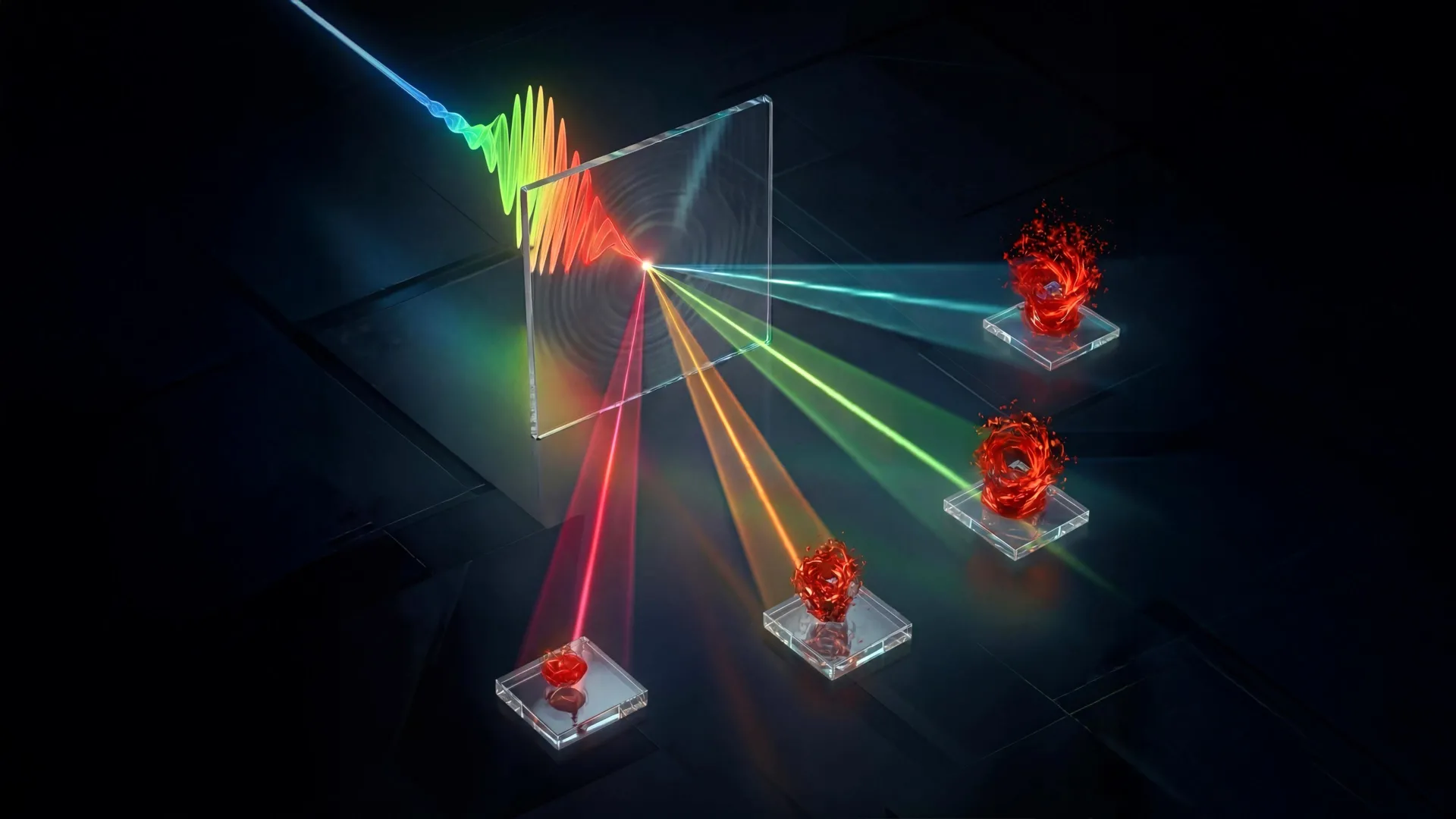
Researchers at East China Normal University have announced the development of a pioneering imaging architecture capable of visualizing the microscopic world at speeds previously thought unattainable, providing a comprehensive view of events that occur within quadrillionths of a second. This new methodology, detailed in a recent publication in the journal Optica, allows for the simultaneous recording of both the intensity and phase of light during ultrafast processes. By capturing the complete evolution of an object’s brightness and internal structural changes in a single measurement, the technique, known as compressed spectral-temporal coherent modulation femtosecond imaging (CST-CMFI), represents a significant leap forward in the study of transient physical and chemical phenomena.
The microscopic world is governed by actions that unfold on the femtosecond scale—where one femtosecond is to a second what one second is to approximately 32 million years. At this level, atoms rearrange during chemical reactions, electrons migrate within semiconductors, and plasma filaments form and dissipate with staggering rapidity. Historically, capturing these events has required "multi-shot" imaging, which involves repeating an experiment thousands of times to piece together a sequence. However, many of the most critical processes in nature are non-reversible or stochastic, meaning they cannot be exactly replicated. The CST-CMFI system addresses this limitation by utilizing "single-shot" imaging, effectively recording an entire high-speed "movie" in one exposure.
The Evolution of Ultrafast Observation
The quest to capture motion has defined much of modern scientific history, dating back to Eadweard Muybridge’s 19th-century photographic studies of galloping horses. As science moved into the atomic and molecular realms, the requirements for "shutter speed" became exponentially more demanding. Traditional electronic sensors, such as those found in high-end consumer cameras, are limited by their refresh rates, which rarely exceed a few thousand frames per second. To observe femtosecond events, scientists must rely on optical methods where the laser pulse itself acts as the shutter.
In the previous decade, the Extreme Optical Imaging Laboratory at East China Normal University has been at the forefront of this field. Earlier iterations of ultrafast cameras focused primarily on light intensity—the brightness of an object. While intensity provides a clear picture of where light is, it misses the "phase" information. Phase describes the position of the light wave’s peaks and troughs as it passes through a medium. Because phase is highly sensitive to the refractive index and thickness of a material, it can reveal the internal density of a plasma or the subtle shifting of charges in a crystal—details that are invisible to intensity-only sensors.
The CST-CMFI technique bridges this gap by integrating three distinct optical concepts: time-spectrum mapping, compressive spectral imaging, and coherent modulation imaging. This fusion allows the system to bypass the data bottlenecks that typically plague high-speed sensors, enabling the capture of complex, multi-dimensional data in a single compressed frame.
Technical Architecture and the Role of Physics-Informed AI
The mechanical and mathematical foundation of CST-CMFI is rooted in the use of "chirped" laser pulses. In a chirped pulse, the different wavelengths (colors) of light are stretched out so they arrive at the target at slightly different times. This creates a deterministic link between time and wavelength. As this pulse interacts with a rapidly changing phenomenon, each "color" of the light records a different moment of the event.
Once the light has interacted with the object, it carries a wealth of spatial, spectral, and phase information. To record this without overwhelming the sensor, the researchers employed dispersion-encoded coherent modulation. This process essentially "scrambles" the data into a single, complex image. The true breakthrough, however, lies in how this data is decoded.
The team utilized a physics-informed neural network (PINN) to reconstruct the final video. Unlike standard artificial intelligence, which may hallucinate details based on patterns, a physics-informed network is constrained by the actual laws of optics and electromagnetism. The neural network separates the overlapping wavelengths and reconstructs a sequence of frames, each showing both the intensity and the phase of the object at a specific point in time. This results in a high-fidelity, three-dimensional representation of the event’s evolution.
Experimental Validation: From Water Plasma to Semiconductors
To demonstrate the versatility of the CST-CMFI system, the research team conducted two landmark experiments. The first involved the observation of plasma formation in water following a femtosecond laser pulse. This process is of particular interest to the medical community, as it is the fundamental mechanism behind laser-based eye surgeries and certain cancer treatments.
The CST-CMFI system allowed the researchers to watch the plasma channel evolve in real-time. They observed the creation of a dense free-electron plasma, which altered the refractive index of the water. Because the system captured phase data, the researchers could quantify the electron density and see how the plasma affected the speed of light passing through the channel. Such insights are vital for refining the precision of medical lasers to ensure they interact with tissue exactly as intended without causing collateral damage.
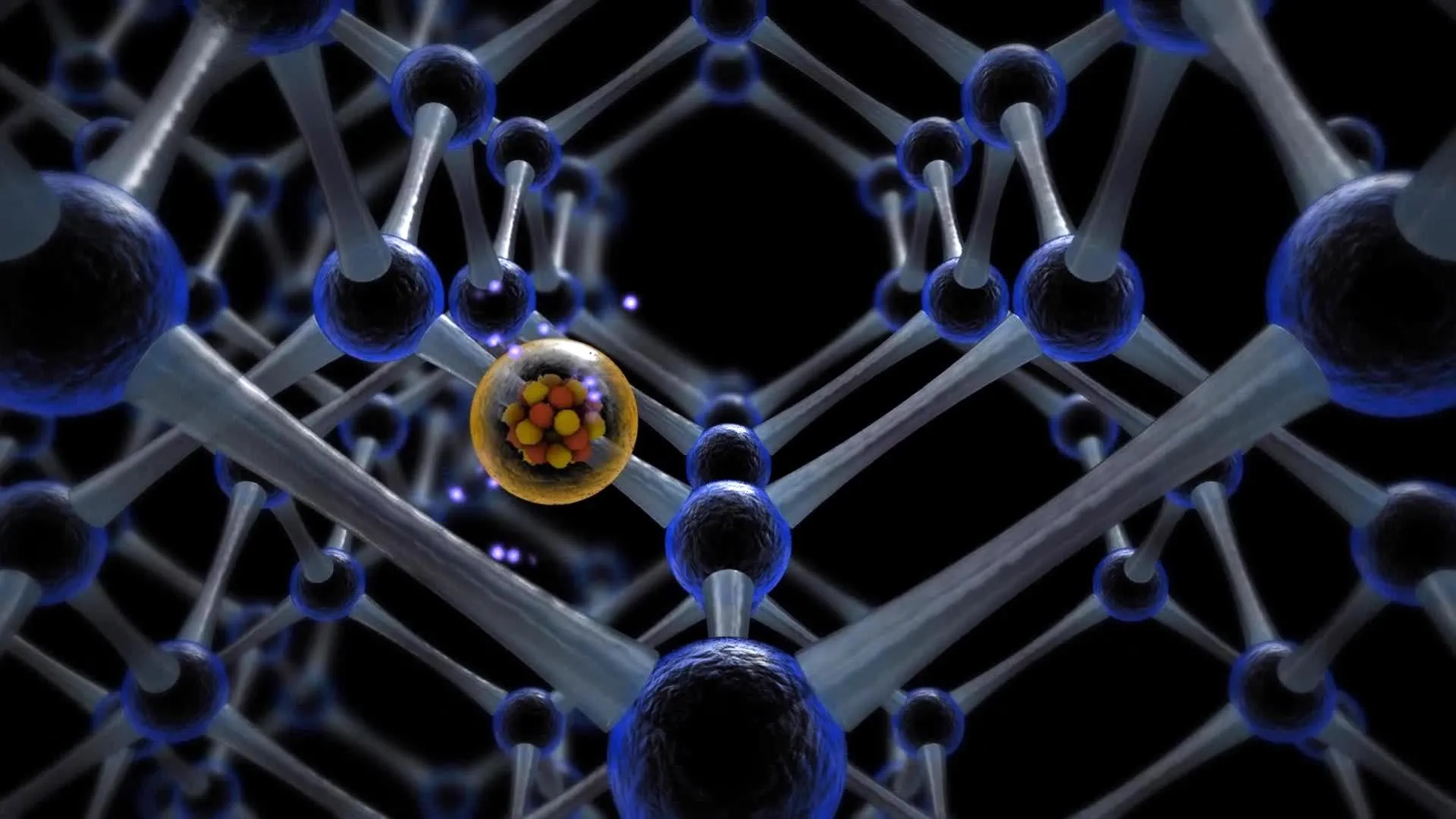
The second experiment focused on the carrier dynamics of Zinc Selenide (ZnSe), a semiconductor material used in high-performance optics and electronics. When light hits a semiconductor, it excites charge carriers (electrons and holes), which move and eventually recombine. This movement is the basis for all modern computing. Using CST-CMFI, the team observed phase variations associated with these carrier dynamics even when the intensity of the light showed no measurable change.
"Phase measurements can be much more sensitive than intensity measurements in detecting subtle ultrafast processes," noted Yunhua Yao, the lead researcher. This sensitivity is critical for engineers attempting to design the next generation of "optoelectronic" devices, which use light instead of electricity to process information at much higher speeds and with lower energy consumption.
Broader Scientific and Industrial Implications
The implications of the CST-CMFI breakthrough extend far beyond the laboratory. The ability to witness atomic and electronic behavior in real-time provides a new toolkit for several high-stakes industries:
- Clean Energy and Nuclear Fusion: In inertial confinement fusion research, high-power lasers are used to compress fuel pellets. Understanding the ultrafast plasma dynamics during this compression is key to achieving a stable, net-positive energy gain.
- Advanced Manufacturing: As industries move toward "femtosecond machining"—using lasers to cut materials with sub-micron precision—CST-CMFI can be used to monitor the process in real-time, ensuring quality control at the atomic level.
- Biotechnology: Many biological processes, such as the initial steps of photosynthesis or the folding of proteins, happen on incredibly short timescales. Visualizing these could lead to breakthroughs in synthetic biology and drug delivery.
- Information Technology: By understanding how materials like ZnSe behave under excitation, researchers can develop faster transistors and more efficient solar cells, potentially breaking the current physical limits of silicon-based technology.
Future Research and Limitations
While CST-CMFI is a transformative tool, the research team at East China Normal University acknowledges that there is room for further refinement. Currently, the technique relies on converting spectral information into temporal information. This means that if a process is highly sensitive to specific wavelengths of light—such as a chemical reaction that absorbs only a very specific shade of blue—the current system might struggle to distinguish between a change in time and a change in spectrum.
To solve this, Yao and his colleagues are looking toward "compressive ultrafast photography" (CUP) as a complementary technology. By combining CST-CMFI with CUP, the researchers hope to create a system that can capture spectral, temporal, spatial, and phase information all at once, without trade-offs.
The scientific community has reacted with optimism to the ECNU team’s findings. Experts in the field of ultrafast spectroscopy suggest that this could democratize high-speed imaging, as the computational reconstruction (the neural network) reduces the need for some of the most expensive and cumbersome hardware components traditionally required for such experiments.
As the Extreme Optical Imaging Laboratory continues its work, the focus remains on pushing the boundaries of what is "seeable." With CST-CMFI, the "black box" of femtosecond phenomena is being pried open, offering a clear view into the fundamental mechanics of the universe. The ability to see not just the shadow of an event (intensity) but its very shape and structure (phase) ensures that the next decade of materials science and physics will be characterized by unprecedented clarity.












Leave a Reply