

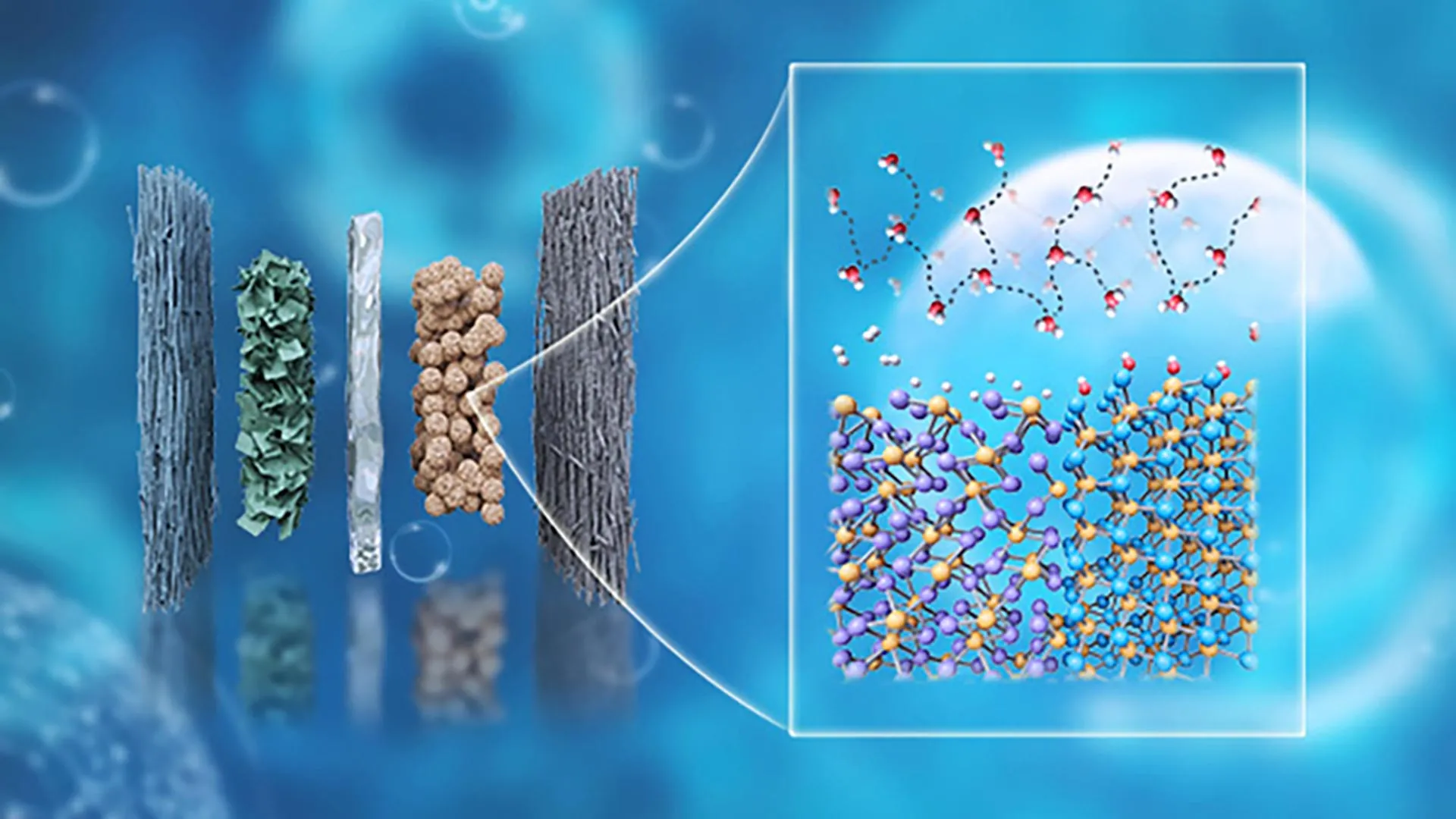
In an era defined by the urgent need to decarbonize global industrial sectors, researchers at Washington University in St. Louis have announced a significant leap forward in green hydrogen technology, potentially resolving one of the most persistent bottlenecks in the transition to renewable energy. A research team led by Gang Wu, a professor of energy, environmental, and chemical engineering at the McKelvey School of Engineering, has successfully developed a high-performance, platinum-free catalyst designed specifically for anion-exchange membrane water electrolyzers (AEMWE). This innovation addresses the dual challenges of cost and durability that have long hindered the large-scale adoption of hydrogen as a primary energy carrier. By utilizing a sophisticated composite of rhenium and molybdenum, the team has demonstrated a method to split water into hydrogen and oxygen without the need for prohibitively expensive precious metals, marking a pivotal moment in the quest for sustainable fuel production.
The Global Imperative for Green Hydrogen
The global energy landscape is currently undergoing a radical transformation as nations strive to meet net-zero emission targets. While solar and wind power have seen massive growth, they are inherently intermittent, requiring robust storage solutions to balance the grid. Green hydrogen—produced by splitting water using renewable electricity—has emerged as the leading candidate for long-duration energy storage and as a clean fuel for "hard-to-abate" sectors such as heavy shipping, aviation, and steel manufacturing.
However, the primary method for producing green hydrogen today involves Proton Exchange Membrane (PEM) electrolysis, which relies heavily on platinum group metals (PGM) like platinum and iridium. These materials are not only expensive but also subject to volatile supply chains and geopolitical instability. The transition toward Anion-Exchange Membrane (AEM) electrolysis is viewed by experts as a superior alternative because it operates in an alkaline environment, which theoretically allows for the use of non-precious metal catalysts. Until now, however, non-PGM catalysts have struggled to match the efficiency and longevity of their platinum-based counterparts. The work at Washington University represents a direct challenge to this status quo.
Engineering the Next-Generation Catalyst: Re2P and MoP
The core of Professor Wu’s breakthrough lies in the precise molecular engineering of a composite material. The research team combined rhenium phosphide (Re2P) and molybdenum phosphide (MoP) to create a synergistic effect that optimizes the hydrogen evolution reaction (HER). In the complex environment of an alkaline electrolyte, the extraction of hydrogen from water molecules requires two distinct steps: the splitting of the water molecule (H2O) into hydrogen and hydroxyl ions, and the subsequent adsorption and release of hydrogen atoms from the catalyst surface.
The team’s research revealed that the two materials perform specialized roles within the composite. The molybdenum component (MoP) was found to be exceptionally efficient at accelerating the initial water-splitting process. Meanwhile, the rhenium component (Re2P) played a critical role in managing the hydrogen-bond network at the interface of the catalyst and the electrolyte. This allowed hydrogen atoms to attach to the surface and then release as gas molecules with minimal energy loss. By engineering this interface, the researchers were able to reduce the electrical resistance of the system, leading to what Wu described as the fastest hydrogen adsorption kinetics observed among similar studied catalysts.
Performance Metrics and Industrial Benchmarks
For a laboratory discovery to be considered viable for industrial application, it must withstand the rigors of high-intensity operation. The Washington University team subjected their new catalyst to rigorous testing that mirrored industrial conditions. The catalyst was paired with a nickel-iron (NiFe) anode to form a complete membrane electrode assembly (MEA), the "heart" of the electrolyzer.
The results were remarkable. The system maintained stable operation for over 1,000 hours, a critical benchmark for durability in the field of electrochemical energy conversion. Perhaps more importantly, the catalyst performed at industry-level current densities of 1 and 2 amperes per square centimeter (A/cm²). In the world of electrolysis, current density is a measure of how much hydrogen can be produced per unit of electrode area; high current density is essential for keeping the physical size and capital cost of electrolyzer plants manageable.
According to the data released by the university, the Re2P-MoP catalyst not only matched but in several metrics outperformed leading state-of-the-art cathodes, including those containing expensive platinum group metals. This performance suggests that the trade-off between cost and efficiency—long thought to be an unavoidable hurdle for AEMWE technology—may finally be nearing an end.
Chronology of Development and Research Context
The development of this catalyst is the culmination of years of focus on electrocatalysis by Gang Wu’s laboratory. Professor Wu, who joined Washington University in St. Louis after significant tenures at other leading research institutions, has long focused on finding alternatives to PGMs in fuel cells and electrolyzers.
- Phase I: Conceptualization (2021-2022): The team identified the limitations of single-metal phosphides and began theorizing how a binary phosphide system could overcome the sluggish kinetics of water splitting in alkaline media.
- Phase II: Synthesis and Lab Testing (2022-2023): Researchers experimented with various ratios of rhenium and molybdenum, eventually discovering the optimal Re2P-MoP configuration. Initial tests focused on surface chemistry and the "hydrogen-bond network."
- Phase III: Durability Trials (Late 2023): The catalyst was moved into long-term stress testing, where it surpassed the 1,000-hour mark at high current densities, proving it could handle the electrical load required for commercial hydrogen production.
- Phase IV: Publication and Peer Review (2024): The findings were finalized and shared with the scientific community, detailing the "rationalization of the critical role of engineering the hydrogen-bond network."
This work was supported by Professor Wu’s startup fund at Washington University, highlighting the university’s commitment to fostering high-impact, early-stage energy research.
Economic and Strategic Implications
The implications of a viable platinum-free catalyst extend far beyond the laboratory. The "Hydrogen Earthshot" initiative launched by the U.S. Department of Energy (DOE) aims to reduce the cost of clean hydrogen to $1 per kilogram within one decade. Currently, the cost of green hydrogen is significantly higher, largely due to the capital expenditures (CAPEX) associated with electrolyzer hardware.
By removing platinum—which currently trades at roughly $900 to $1,000 per ounce—and replacing it with materials like molybdenum (which is significantly more abundant and less expensive), the cost of the electrolyzer stack can be drastically reduced. While rhenium is still a rare metal, it is used in much smaller quantities and in different configurations than the massive amounts of iridium and platinum required for PEM systems.
Furthermore, the increased durability of the Re2P-MoP catalyst reduces the frequency of maintenance and replacement. In an industrial setting, an electrolyzer that can run for thousands of hours without degradation significantly lowers the Levelized Cost of Hydrogen (LCOH), making it competitive with hydrogen produced from natural gas (grey hydrogen).
Analysis of Broader Impacts on the Energy Transition
The success of the AEMWE technology could shift the global competitive landscape for hydrogen production. Currently, China, Europe, and the United States are in a race to dominate the electrolyzer market. Most commercial systems today are either traditional alkaline electrolyzers (which are bulky and less efficient) or PEM electrolyzers (which are efficient but expensive).
AEMWE, powered by the Washington University catalyst, offers a "best of both worlds" scenario: the high efficiency and compact design of PEM with the low-cost materials of alkaline systems. This could enable localized hydrogen production, where small-scale electrolyzers are co-located with wind farms or solar arrays, producing fuel on-site for agricultural machinery or local transport fleets.
From a manufacturing perspective, the ability to use nickel-iron anodes and molybdenum-based cathodes means that existing industrial supply chains for stainless steel and common alloys can be leveraged. This reduces the reliance on specialized mining operations for precious metals, which are often concentrated in a few geographical regions, thereby enhancing the energy security of nations adopting this technology.
Future Outlook: Scaling from Lab to Industry
Despite the promising results, Professor Wu and his team acknowledge that moving from a laboratory-scale experiment to an industrial-scale plant involves significant engineering challenges. The next phase of research will likely focus on the "scaling up" of the catalyst synthesis process to ensure that the material can be produced in ton-quantities with the same precision as the milligram-quantities used in the lab.
Additionally, the researchers plan to further investigate the interaction between the catalyst and the anion-exchange membrane itself. The longevity of the membrane is just as critical as the longevity of the catalyst; ensuring that the entire "membrane electrode assembly" can survive for tens of thousands of hours is the ultimate goal for commercial viability.
"Our catalyst showed the lowest resistance across the studied potential range," Wu noted, emphasizing the technical superiority of the design. "This suggests the fastest hydrogen adsorption kinetics among the studied catalysts. This newly achieved performance and durability metrics make our catalyst one of the most promising membrane electrode assemblies for practical anion-exchange membrane water electrolyzers."
As the world looks toward 2030 and 2050 climate milestones, breakthroughs like those from the McKelvey School of Engineering provide a tangible pathway toward a hydrogen economy. By solving the fundamental chemical challenges of water splitting, the team at Washington University in St. Louis has brought the prospect of affordable, ubiquitous green hydrogen one step closer to reality.















Leave a Reply