BD (Becton, Dickinson and Company), a leading global medical technology company, has announced a strategic partnership with Wellstar Health System, one of Georgia’s largest not-for-profit healthcare providers, to implement an advanced artificial intelligence (AI)-enabled medication management solution across Wellstar’s extensive network of hospitals and care facilities. This collaboration represents a significant step forward in integrating cutting-edge technology to enhance patient safety, optimize operational efficiency, and streamline the complex process of medication delivery from the pharmacy to the patient’s bedside. The initiative aims to create a seamlessly connected ecosystem for medication management, leveraging BD’s robust portfolio of dispensing, infusion, and inventory analytics technologies.
A Holistic Approach to Medication Management
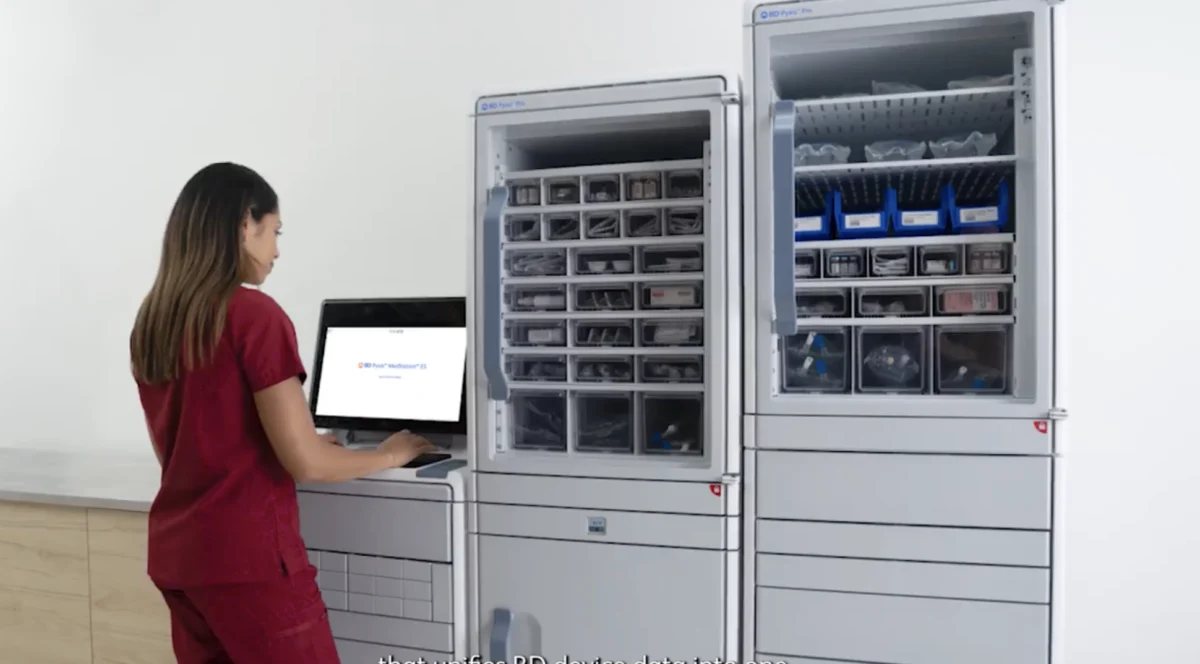
The core of this transformative partnership lies in the integration of several key BD technologies. At its foundation are BD Pyxis Pro medication dispensing technologies, widely recognized for their role in automating and securing medication storage and retrieval in clinical settings. These systems are designed to reduce manual errors, improve inventory control, and ensure that the right medication is available at the right time. Complementing this is the deployment of BD Alaris Infusion Systems, critical devices for delivering intravenous medications with precision and safety. The Alaris systems are designed with advanced features to prevent medication errors during infusion, including dose error reduction software and guardrails.
The truly innovative element of this collaboration is the incorporation of BD Incada, an AI-enabled analytics platform. BD Incada is designed to provide enterprise-level medication inventory insights through natural-language querying. This means that hospital staff can ask questions in plain English about medication availability, stock levels, and usage patterns, and the system will provide real-time, actionable data. This level of visibility is crucial for proactive medication management, allowing Wellstar to maintain optimal stock levels, identify potential shortages before they impact patient care, and reduce waste. Furthermore, the Alaris EMR Interoperability feature facilitates direct communication between the infusion systems and the electronic medical record (EMR), allowing clinicians to use barcode scanning to send infusion orders directly from the EMR to the Alaris pump and receive real-time updates on infusion status back into the EMR. This closed-loop system significantly enhances accuracy and reduces the risk of manual transcription errors, creating a truly connected "pharmacy-to-bedside" workflow.
Addressing Pressing Healthcare Challenges
Medication management has historically been one of the most labor-intensive and error-prone areas within healthcare. The complexities range from maintaining accurate inventory and managing expiry dates to ensuring correct dispensing and administration. These challenges have only been exacerbated in recent years by persistent drug shortages and increasing supply chain volatility. According to a recent survey by Vizient, a leading healthcare performance improvement company, hospital labor costs directly tied to managing drug shortages have nearly tripled between 2019 and 2024, skyrocketing from $359 million to an estimated $894 million annually. This staggering figure underscores the profound operational and financial strain that inefficient medication management places on healthcare institutions.

Beyond financial implications, medication errors remain a significant public health concern. The World Health Organization estimates that medication errors cause at least one death every day and injure approximately 1.3 million people annually in the United States alone. These errors can occur at any stage of the medication process, from prescribing and dispensing to administration and monitoring. By automating and integrating various stages of medication management with AI-powered analytics, the BD-Wellstar partnership directly targets these critical pain points, aiming to create a safer environment for patients and a more efficient workflow for clinicians.
Leadership Perspectives on Innovation and Safety
Susan Wright, Pharm.D., Vice President of Pharmacy Services at Wellstar Health System, emphasized the strategic importance of this technological adoption. "Wellstar uses advanced technologies, including the AI-powered tools by BD, to supercharge our team members’ ability to deliver the highest levels of clinical care, safety, quality, and patient experience," Dr. Wright stated in an email correspondence. She further elaborated on Wellstar’s multi-layered approach to ensuring accuracy, highlighting that "accuracy depends on team members’ critical thinking, local oversight, and decision-making, supported by validation layers such as medication barcode scanning, EMR cross-checks, and other system controls." Dr. Wright also confirmed Wellstar’s commitment to continuous improvement, adding, "We also monitor for metrics relative to Incada’s performance and keep a close eye on improving medication safety outcomes." This demonstrates Wellstar’s proactive stance on leveraging data and technology for ongoing enhancement of patient care protocols.
The strategic importance of this partnership is further underscored by Wellstar’s active participation in the Strategic Development Council for BD’s Medication Management Solutions business. In this capacity, Wellstar executives contribute invaluable expertise across critical areas such as enterprise pharmacy operations, medication safety, nursing, and informatics. This collaborative feedback loop ensures that BD’s solutions are continuously refined and aligned with the real-world needs and challenges faced by large healthcare systems.
The Nuance of AI: Natural Language and Guardrails
A key differentiator of BD Incada is its natural-language interface, which allows users to interact with the system using conversational queries rather than complex technical commands. This approach significantly lowers the barrier to entry for clinicians and pharmacists, making powerful data analytics accessible to a broader range of users. However, BD has meticulously designed Incada to operate distinctly from general-purpose large language models (LLMs) like ChatGPT, which are trained on vast, uncurated internet data.
Omar Ahmed, SVP R&D, Connected Care Segment at BD, elaborated on Incada’s sophisticated architecture. "The BD Incada natural language query is a layered system where a large language model translates user questions into structured queries using a governed semantic layer that maps business terms to data," Ahmed explained. He further detailed the robust validation process: "The system then validates those queries through schema checks, access controls, and rule-based or statistical guardrails before execution." This multi-layered validation is critical to ensuring the reliability and precision of the information returned. Ahmed also emphasized the company’s commitment to accuracy, stating that "further training and safety guardrails ensure that the plain-language answers delivered to users are precise and reliable." This stringent approach is vital in a healthcare context where inaccuracies can have severe consequences.
Navigating the Regulatory Landscape: Operational vs. Clinical Support
BD’s development and deployment strategy for Incada are carefully aligned with the complex regulatory environment governing healthcare technologies. The company is strategically positioning Incada primarily around operational data, inventory management, and workflow optimization. This deliberate focus on descriptive insights, rather than patient-specific recommendations, helps to maintain a clear regulatory boundary. Software functions that directly influence patient care decisions or provide diagnostic or treatment recommendations can fall under the stringent oversight of the U.S. Food and Drug Administration (FDA) as medical devices.
Ahmed articulated this strategic positioning: "BD is focusing first on operational data, specifically inventory and workflow optimization, where insights are descriptive rather than patient-specific." He acknowledged the heightened regulatory scrutiny associated with clinical decision support, noting that "software functions that influence patient care decisions can fall under FDA medical-device oversight." To this end, BD is committed to a cautious approach: "BD will draw a clear boundary by avoiding patient-level recommendations, requiring human oversight, and limiting early use cases to informational insights rather than prescriptive clinical guidance," Ahmed affirmed. This approach allows BD to bring valuable AI capabilities to market quickly for operational improvements while ensuring compliance and building trust in a highly sensitive domain.
Broader Implications for the Healthcare Ecosystem
The partnership between BD and Wellstar heralds a new era for medication management, with profound implications across the healthcare ecosystem:
- Enhanced Patient Safety: By minimizing manual processes, reducing human error, and providing real-time data, the integrated system is expected to significantly decrease medication errors, adverse drug events, and improve overall patient outcomes. The barcode scanning and EMR interoperability specifically target common points of failure in the medication administration process.
- Operational Efficiency and Cost Savings: Optimized inventory management, enabled by Incada’s AI analytics, will lead to reduced waste from expired medications, improved resource allocation, and a more resilient supply chain. The automation of dispensing and infusion processes also frees up valuable nursing and pharmacy staff time, allowing them to focus on direct patient care rather than administrative tasks. The significant labor costs associated with drug shortages, as highlighted by Vizient, stand to be substantially mitigated through proactive AI-driven inventory insights.
- Data-Driven Decision Making: The ability to query enterprise medication data in natural language empowers hospital administrators and pharmacy leaders with unprecedented insights into their operations. This data can inform strategic purchasing decisions, staffing adjustments, and process improvements, leading to more agile and responsive healthcare delivery.
- Scalability and Future Innovation: The modular yet integrated nature of BD’s solutions allows for scalability across Wellstar’s diverse facilities. As AI technology evolves and regulatory frameworks mature, there is potential for further innovation, gradually expanding the scope of AI applications while maintaining safety and compliance.
- Blueprint for Smart Hospitals: This collaboration serves as a compelling case study for other healthcare systems looking to modernize their operations and embrace digital transformation. It demonstrates a practical and impactful application of AI in a critical area of hospital management, laying a foundation for the "smart hospital" of the future.
Conclusion
The partnership between BD and Wellstar Health System to deploy an AI-enabled, pharmacy-to-bedside medication management system marks a pivotal moment in healthcare innovation. By seamlessly connecting medication dispensing, infusion, and inventory workflows with advanced AI analytics and natural-language processing, this initiative directly addresses long-standing challenges related to patient safety, operational efficiency, and the economic burden of drug shortages. As Wellstar embarks on this transformative journey, supported by BD’s technological prowess and a careful approach to AI implementation, it sets a new standard for intelligent healthcare delivery, promising a future where medication management is safer, smarter, and more sustainable.