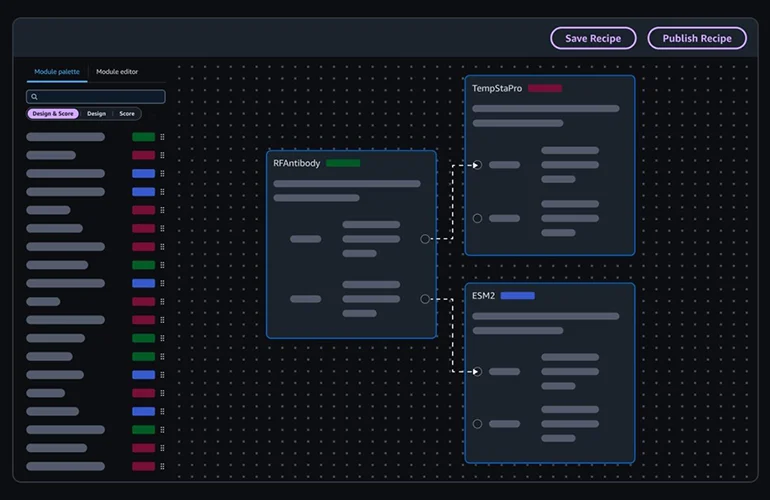
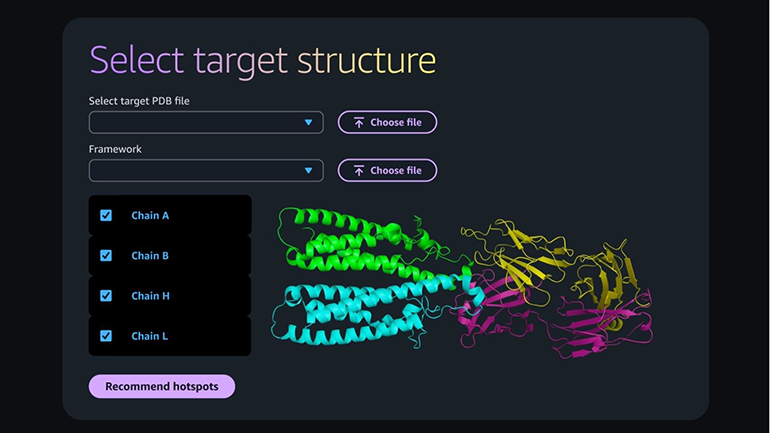
Amazon Web Services (AWS) has announced the launch of Amazon Bio Discovery, a groundbreaking application designed to revolutionize the speed and efficiency of drug discovery, particularly in the realm of antibody design. This new platform seamlessly integrates advanced artificial intelligence (AI) with experimental wet-lab capabilities, offering a direct pipeline from AI-designed antibody candidates to DNA synthesis firms like Twist Bioscience and techbio leader Ginkgo Bioworks for rapid testing and feedback. This innovative approach promises to drastically shorten traditional drug development timelines, a critical advancement in the race against debilitating diseases.
The introduction of Amazon Bio Discovery marks a significant step forward in the application of generative AI and machine learning to the complex challenges of pharmaceutical research and development. The platform’s ability to route AI-generated candidates directly to synthesis and testing partners, with results feeding back into the generating interface, creates a closed-loop system designed for unprecedented acceleration. This integrated ecosystem is poised to transform how researchers identify, evaluate, and optimize potential therapeutic molecules.
Accelerating Antibody Design: The Memorial Sloan Kettering Case Study
A prime example of Amazon Bio Discovery’s transformative potential comes from an early project with Memorial Sloan Kettering Cancer Center (MSK). Researchers, collaborating with Dr. Nai-Kong Cheung, M.D., Ph.D., Enid A. Haupt Chair in Pediatric Oncology at MSK, utilized the new platform to orchestrate multiple AI models. This powerful combination enabled the generation of nearly 300,000 novel antibody molecules. From this vast pool, the team selected the top 100,000 candidates and dispatched them to Twist Bioscience for rapid synthesis and testing.
The impact of this collaboration was immediate and profound. AWS reports that this streamlined process compressed a phase of antibody design that traditionally spans up to a year into a mere matter of weeks. Dr. Cheung underscored the urgency driving this innovation, stating, "Patients come here with a clock. We need results sooner." This sentiment highlights the critical need for accelerated discovery processes in oncology, where timely interventions can significantly impact patient outcomes. This particular antibody design project is an outgrowth of a broader strategic collaboration between AWS and MSK, initially announced in February 2025, focused on leveraging AI to accelerate cancer innovation. The success of this early endeavor demonstrates the platform’s capacity to deliver tangible, time-saving benefits in high-stakes research environments.
The Technological Core: Biological Foundation Models and AI Agents
At the heart of Amazon Bio Discovery lies a sophisticated technological architecture. The application pairs its integrated wet-lab handoff with a comprehensive catalog of biological foundation models (bioFMs). These are large AI models, similar in concept to large language models (LLMs), but specifically trained on vast biological datasets. These datasets encompass everything from protein sequences and structures to genomic data and molecular interactions. By learning the intricate patterns and principles governing biological systems, bioFMs can generate and evaluate potential drug molecules with a high degree of accuracy and novelty.
Complementing the bioFMs is a natural-language agent designed for experiment design and fine-tuning on proprietary lab data. This agent acts as an intelligent assistant, allowing researchers to interact with the platform using intuitive language, guiding the AI in defining experimental parameters, optimizing molecular properties, and refining models based on real-world experimental results. This human-AI collaboration ensures that the generative capabilities of the bioFMs are precisely aligned with specific research objectives and informed by the unique data generated within individual labs. The combination of generative AI, predictive modeling, and intelligent agents represents a paradigm shift from traditional, often laborious, hypothesis-driven drug discovery to a more data-driven, iterative, and accelerated process.
AWS’s Broader Commitments to Healthcare and Life Sciences
The launch of Amazon Bio Discovery is not an isolated event but rather a key component of AWS’s expanding strategy to infuse AI and cloud computing into various facets of healthcare and life sciences. During symposium materials shared with media, AWS outlined several other significant initiatives:
-
AI-Powered Real-World Data Platform for Alzheimer’s Research (with Labcorp and Datavant): AWS, in collaboration with Labcorp and data-linkage firm Datavant, is developing an AI-powered real-world data platform specifically for Alzheimer’s disease research. This platform leverages Labcorp’s extensive blood-based biomarker testing data, which the company claims is the broadest such portfolio for Alzheimer’s and dementia. The proprietary lab data serves as a crucial differentiator, while AWS provides the underlying Bedrock agents and SageMaker analytics capabilities. Datavant ensures privacy-preserving linkage, connecting lab results to medical claims data, and Labcorp supplies the longitudinal diagnostic records. Early use cases for this platform center on identifying patient cohorts for clinical trial recruitment, addressing a persistent bottleneck in Alzheimer’s drug development. The Alzheimer’s version is expected to complete initial validation this spring, with planned expansions into inflammatory diseases, cardiometabolic conditions, women’s health, and oncology throughout 2026. Labcorp emphasizes its significant role in the industry, having supported over 85% of FDA drug approvals in 2025, underscoring the potential impact of this data-driven initiative.
-
AI-Enabled Clinical Trial Site Selection (with Merck and BCG): Recognizing the inefficiencies in clinical trial execution, AWS is also collaborating with pharmaceutical giant Merck and consulting firm Boston Consulting Group (BCG) on an AI-enabled solution for clinical trial site selection. Optimizing site selection is critical for reducing trial timelines, controlling costs, and improving patient recruitment, all of which are major challenges in bringing new therapies to market. AI can analyze vast datasets of patient demographics, disease prevalence, investigator expertise, and logistical factors to identify the most suitable trial sites, thereby accelerating the entire clinical development process.
-
Verily Workbench General Availability for AWS Users: Further expanding its ecosystem, AWS is working with Verily (an Alphabet company focused on life sciences) to make Verily Workbench generally available for AWS users. Verily Workbench provides a secure, cloud-based platform for biomedical researchers to access, harmonize, and analyze large-scale multi-omics datasets. Its availability on AWS will democratize access to powerful analytical tools and rich biological data, fostering greater collaboration and accelerating discoveries across the life sciences community.
These diverse initiatives underscore AWS’s ambition to become a foundational technology provider across the entire biopharmaceutical value chain, from early discovery to clinical development and real-world evidence generation.
The Evolving Landscape of AI in Drug Discovery
AWS’s foray into deep integration of AI with wet-lab capabilities through Amazon Bio Discovery arrives amidst a surging tide of innovation in AI-driven drug discovery. The concept of "agents" – AI systems designed to perform complex tasks autonomously or semi-autonomously – is rapidly becoming the preferred architectural frame for these advanced platforms.
-
Isomorphic Labs (Google DeepMind Spinout): A prominent player in this space is Isomorphic Labs, a spinout from Google DeepMind. In 2024, Isomorphic Labs secured high-profile drug-design partnerships with pharmaceutical giants Eli Lilly, Novartis, and Johnson & Johnson, with a potential cumulative value exceeding $3 billion. These collaborations highlight the industry’s confidence in AI’s ability to identify novel targets and design promising molecules.
-
Insilico Medicine’s Pharma.AI and Rentosertib: Insilico Medicine, another leader, has demonstrated the tangible benefits of its Pharma.AI platform. Its lead candidate, Rentosertib, an anti-fibrotic compound, progressed from preclinical candidate stage to completing a Phase IIa trial in idiopathic pulmonary fibrosis (IPF) in a remarkable 18 months. The positive results from this trial were published in Nature Medicine in 2025, providing strong validation for their AI-driven approach. IPF is a severe, chronic lung disease with limited treatment options, making rapid progress in this area particularly impactful.
-
NVIDIA’s BioNeMo: Chipmaker NVIDIA, a key enabler of AI innovation through its powerful GPUs, is also actively engaged in the healthcare sector. Its healthcare division is promoting a similar "co-scientist" architecture through BioNeMo, a generative AI platform designed to accelerate drug discovery by enabling researchers to build, customize, and deploy their own biological foundation models for tasks like protein design, molecular docking, and drug optimization.
-
Anthropic’s Acquisition of Coefficient Bio: The competitive intensity in this field was further underscored in early April when AI safety company Anthropic reportedly acquired Coefficient Bio for $400 million in stock. Coefficient Bio, a relatively young drug design startup founded just eight months prior, was staffed by computational biologists with experience from leading organizations like Evozyne, Genentech, and Prescient Design. This acquisition signals a deeper push by general AI powerhouses into the specialized domain of drug discovery, recognizing the immense potential and strategic value of this sector.
These developments illustrate a clear trend: AI is moving beyond being a mere analytical tool to becoming an integral, generative force in drug discovery, capable of proposing novel solutions and dramatically accelerating research timelines.
Implications and Future Outlook
The launch of Amazon Bio Discovery and the broader initiatives by AWS and its competitors carry profound implications for the pharmaceutical and biotechnology industries.
-
Democratization of Advanced Tools: By offering these powerful AI capabilities as a service through its cloud platform, AWS is democratizing access to cutting-edge drug discovery tools. This could enable smaller biotech firms and academic institutions, which may lack the in-house computational infrastructure or expertise of large pharmaceutical companies, to leverage advanced AI for their research. This broader access could foster more innovation and diversify the pipeline of potential therapies.
-
Acceleration of Drug Development: The most immediate and celebrated impact is the potential to drastically cut down the time required for drug discovery and preclinical development. If processes like antibody design can be reduced from years to weeks, the entire journey from target identification to clinical trials could be significantly shortened, bringing life-saving treatments to patients faster. This is particularly crucial for diseases with high unmet medical needs and rapid progression.
-
Cost Reduction and Efficiency Gains: Traditional drug discovery is notoriously expensive, with costs often running into billions of dollars per successful drug. By accelerating discovery, reducing the number of failed candidates earlier in the pipeline, and optimizing experimental design, AI platforms like Amazon Bio Discovery have the potential to significantly lower R&D costs, making drug development more sustainable.
-
Enhanced Drug Design and Novelty: BioFMs and AI agents are capable of exploring vast chemical and biological spaces that would be impossible for human researchers alone. This can lead to the discovery of novel molecular structures and therapeutic mechanisms that might otherwise be overlooked, potentially yielding more effective and safer drugs. The ability to generate and evaluate hundreds of thousands of candidates, as seen with MSK, is a testament to this expanded design space.
-
Ethical Considerations and Data Governance: As AI becomes more deeply embedded in healthcare, critical ethical considerations surrounding data privacy, algorithmic bias, and the interpretability of AI-generated insights will need careful navigation. Platforms like Labcorp’s real-world data initiative, which uses privacy-preserving linkage, highlight the industry’s efforts to address these concerns. Robust regulatory frameworks and industry best practices will be essential to ensure responsible deployment of these powerful technologies.
-
Transformation of Scientific Roles: The rise of AI in drug discovery will inevitably reshape the roles of scientists. Instead of spending vast amounts of time on iterative experiments or manual data analysis, researchers may increasingly focus on higher-level tasks: interpreting AI outputs, designing innovative experiments based on AI hypotheses, and validating AI-generated candidates. This shift will require new skill sets and a greater emphasis on computational biology and data science within traditional life sciences curricula.
The convergence of cloud computing, advanced AI, and integrated wet-lab capabilities, exemplified by Amazon Bio Discovery, signals a new era in pharmaceutical innovation. The industry is moving towards a future where intelligent agents and vast biological datasets work in tandem to unlock new therapeutic possibilities with unprecedented speed and precision, ultimately offering renewed hope for patients worldwide.