A peculiar, shimmering object, christened the "golden orb" by the scientific community and captivating the public imagination, has finally yielded its secrets. Collected during a 2023 National Oceanic and Atmospheric Administration (NOAA) expedition in the abyssal depths of the Gulf of Alaska, this enigmatic artifact has undergone a rigorous, multi-year investigation, culminating in its definitive identification as the calcified base of a colossal deep-sea anemone. The discovery underscores the vast unknowns that persist in Earth’s least explored frontiers and highlights the power of advanced scientific techniques in unraveling nature’s enigmas.
A Glimpse into the Abyss: The Unveiling of the Golden Orb
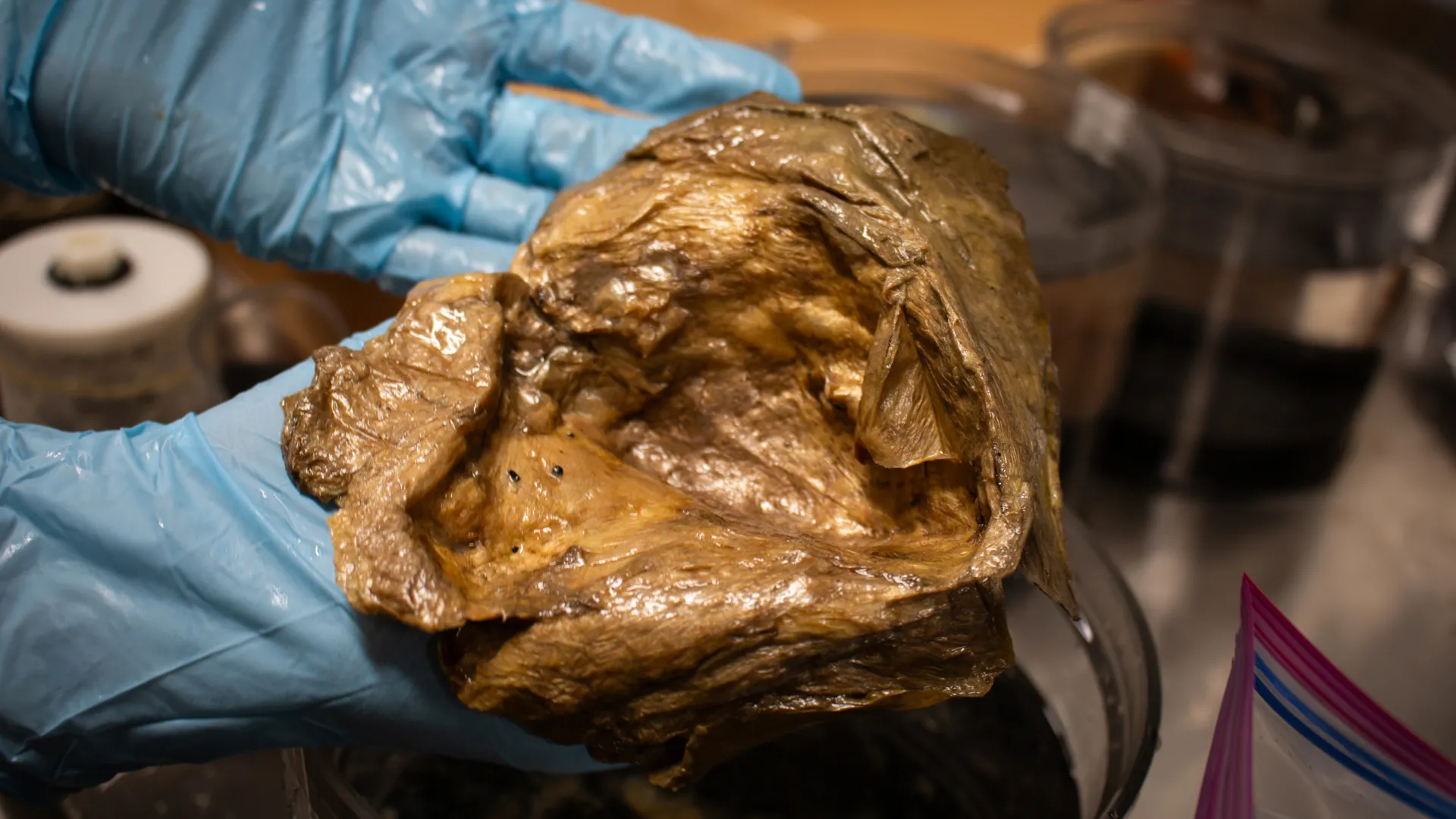
The initial encounter with the "golden orb" occurred on June 12, 2023, during a NOAA Ocean Exploration mission aboard the research vessel Okeanos Explorer. The remotely operated vehicle (ROV) Deep Discoverer, while navigating the rugged topography of the Gulf of Alaska at a staggering depth of 3,250 meters (approximately 10,660 feet or over two miles), detected an anomaly. Resting incongruously on a rocky outcrop was a rounded, lustrous object, approximately the size of a grapefruit, with a distinct, small opening. Its unusual appearance immediately sparked a flurry of hypotheses among the onboard science team. Was it an undiscovered species’ egg case, a unique type of sponge, or perhaps a geological formation? The mystery deepened with each passing moment of observation, fueling speculation about what creature might inhabit or have egressed from such a peculiar structure.
This profound curiosity necessitated further investigation. The team meticulously maneuvered the ROV to collect the specimen using a specialized suction sampler, ensuring its preservation for subsequent analysis. The "golden orb" was then carefully transported to the Smithsonian National Museum of Natural History (NMNH) in Washington, D.C., a world-renowned institution dedicated to cataloging and understanding the diversity of life on Earth. Its journey from the crushing pressures and perpetual darkness of the deep sea to the controlled environment of a leading research laboratory marked the beginning of an intricate scientific puzzle.
The Chronology of Discovery and Investigation
The story of the "golden orb" is a testament to the patience and perseverance inherent in scientific exploration.
- June 12, 2023: During a NOAA Ocean Exploration mission in the Gulf of Alaska, the ROV Deep Discoverer encounters and collects the "golden orb" at a depth of 3,250 meters.
- Post-Collection: The specimen is transported to the Smithsonian National Museum of Natural History for detailed examination.
- Initial Analysis (2023-2024): Researchers begin morphological and preliminary genetic studies. Early findings suggest a cnidarian origin but lack definitive identification.
- Comparative Study (2024): A similar object, collected in 2021 by the Schmidt Ocean Institute’s Research Vessel Falkor, is brought into the investigation, revealing matching cellular structures.
- Advanced Genetic Sequencing (2024-2025): Standard DNA barcoding proves inconclusive. The team opts for whole-genome sequencing to obtain more robust genetic data.
- Confirmation and Identification (Early 2025): Whole-genome sequencing conclusively identifies the "golden orb" as the basal structure of a giant deep-sea anemone, Relicanthus daphneae.
The journey from initial discovery to definitive identification spanned over two years, highlighting the complexity of deep-sea biology and the iterative nature of scientific inquiry.
Unraveling the Enigma: A Multi-Disciplinary Approach
The identification of the "golden orb" was far from a straightforward process. Unlike many marine organisms that can be readily classified through established taxonomic keys, this specimen presented unique challenges. Dr. Allen Collins, a zoologist and director of NOAA Fisheries’ National Systematics Laboratory, physically housed within the Smithsonian NMNH, recounted the arduous nature of the investigation. "We work on hundreds of different samples, and I suspected that our routine processes would clarify the mystery," Dr. Collins stated. "But this turned into a special case that required focused efforts and expertise of several different individuals. This was a complex mystery that required morphological, genetic, deep-sea, and bioinformatics expertise to solve."
The initial examination at the Smithsonian involved a meticulous morphological analysis. Researchers observed that the object’s structure did not align with typical animal tissues. Instead, it was composed of layered, fibrous material densely packed with cnidocytes – the characteristic stinging cells found in cnidarians, a phylum that includes jellyfish, corals, and anemones. This discovery strongly suggested its cnidarian lineage.
Further microscopic investigation by Abigail Reft, a scientist at the National Systematics Lab, revealed the presence of spirocysts, a specific type of cnidocyte unique to the Hexacorallia subclass of cnidarians. This finding narrowed the potential taxonomic group but still left the exact species unidentified. Crucially, during this period, scientists also learned of a similar object recovered in 2021 from the abyssal plains by the Schmidt Ocean Institute’s Research Vessel Falkor. Upon comparison, the cellular structures of both specimens were found to be remarkably similar, suggesting a potential shared origin or ecological role. This cross-institutional collaboration proved invaluable in building a comprehensive understanding.
The Power of Genomics: Decoding the Genetic Blueprint
The initial attempts at DNA barcoding, a common method for identifying species, yielded ambiguous results. It is believed that the sample may have contained degraded DNA or was contaminated with genetic material from numerous microscopic organisms that inhabit the deep sea. To overcome this hurdle, the research team escalated their efforts to whole-genome sequencing, a more comprehensive technique that analyzes the entire genetic makeup of an organism.
This advanced genetic analysis proved to be the linchpin in solving the mystery. The sequencing successfully extracted viable animal DNA, which was then compared against existing genetic databases. The results were striking: a robust genetic match was established with the giant deep-sea anemone, Relicanthus daphneae. Further analysis of mitochondrial genomes from both the 2023 "golden orb" and the 2021 comparative specimen showed an almost identical genetic profile to a known reference genome for this species. This genetic concordance provided the definitive evidence required to identify the object.
The True Nature of the Golden Orb Revealed
With the cumulative evidence from morphological, cellular, and genetic analyses, the scientific consensus solidified: the "golden orb" was not an egg case, a novel sponge, or an entirely unknown creature. Instead, it represented a significant biological structure of a known, albeit rarely encountered, deep-sea inhabitant. Specifically, the object was identified as the basal portion of a Relicanthus daphneae anemone.
Relicanthus daphneae is an exceptionally large species of anemone, known for its elongated, stalk-like body and its ability to anchor itself to hard substrates on the seafloor. The "golden orb" was, in essence, the calcified, fibrous base that provided this massive invertebrate with a secure attachment to the rocky environments of the deep ocean. Its golden hue is likely due to mineral deposition and the natural coloration of the anemone’s tissues. The small opening observed on the object is consistent with the central body cavity or the point where the anemone would have detached from its base.
The fact that the anemone itself was not found suggests that it had either detached from its base and drifted away, or had died and decomposed, leaving only its robust anchoring structure behind. The survival of this basal tissue over time in the harsh deep-sea environment is a testament to its resilient composition.
Supporting Data: The Relicanthus daphneae and Deep-Sea Environments
- Habitat: Relicanthus daphneae inhabits the deep sea, typically found at depths ranging from 2,000 to 4,000 meters (approximately 6,500 to 13,000 feet).
- Size: These anemones can grow to be remarkably large, with some specimens reported to reach lengths of up to 2 meters (over 6 feet).
- Anchorage: They are sessile organisms, meaning they remain attached to a fixed location on the seafloor, often on hard substrates like rocks or manganese nodules.
- Ecological Role: As large predators, deep-sea anemones like Relicanthus daphneae play a role in the deep-sea food web, consuming small invertebrates and fish that venture too close.
- Gulf of Alaska Deep-Sea Ecosystem: The Gulf of Alaska is known for its complex deep-sea ecosystems, supporting a diverse array of life adapted to extreme pressure, low temperatures, and perpetual darkness. NOAA expeditions in this region frequently document new species and behaviors, contributing significantly to our understanding of these remote habitats.
Broader Implications: The Enduring Mysteries of the Deep Ocean
The successful identification of the "golden orb," while a significant scientific achievement, also serves as a potent reminder of the vastness of our ignorance regarding the deep ocean. This environment, covering over 60% of the Earth’s surface, remains largely unexplored, with less than 5% of its area mapped in detail. Each expedition, like the one that yielded the "golden orb," has the potential to uncover new species, novel biological processes, and unique geological formations.
CAPT William Mowitt, acting director of NOAA Ocean Exploration, emphasized the significance of such discoveries and the ongoing mission. "So often in deep ocean exploration, we find these captivating mysteries, like the ‘golden orb’," CAPT Mowitt stated. "With advanced techniques like DNA sequencing, we are able to solve more and more of them. This is why we keep exploring – to unlock the secrets of the deep and better understand how the ocean and its resources can drive economic growth, strengthen our national security, and sustain our planet."
The implications of this discovery extend beyond mere taxonomic classification. Understanding the biology of deep-sea organisms like Relicanthus daphneae is crucial for several reasons:
- Biodiversity Assessment: Accurately identifying species allows scientists to build comprehensive inventories of marine life, essential for conservation efforts and understanding ecosystem health.
- Bioprospecting: Deep-sea organisms often possess unique biochemical compounds with potential applications in medicine, industry, and biotechnology. Understanding their biology is the first step in identifying these resources.
- Climate Change Research: Deep-sea ecosystems are sensitive to changes in ocean temperature, chemistry, and oxygen levels. Studying these environments provides critical data for understanding the impacts of climate change.
- Resource Management: As human activities, including fishing and potential deep-sea mining, increasingly impact the ocean, a thorough understanding of its inhabitants and their ecological roles is vital for sustainable resource management.
Even with this particular mystery solved, the scientific community is keenly aware that the deep sea continues to be one of the least understood environments on Earth, a frontier brimming with countless discoveries still waiting to be made. The "golden orb," once a symbol of the unknown, has now become a beacon, illuminating the path for future exploration and the continued unveiling of our planet’s hidden wonders.