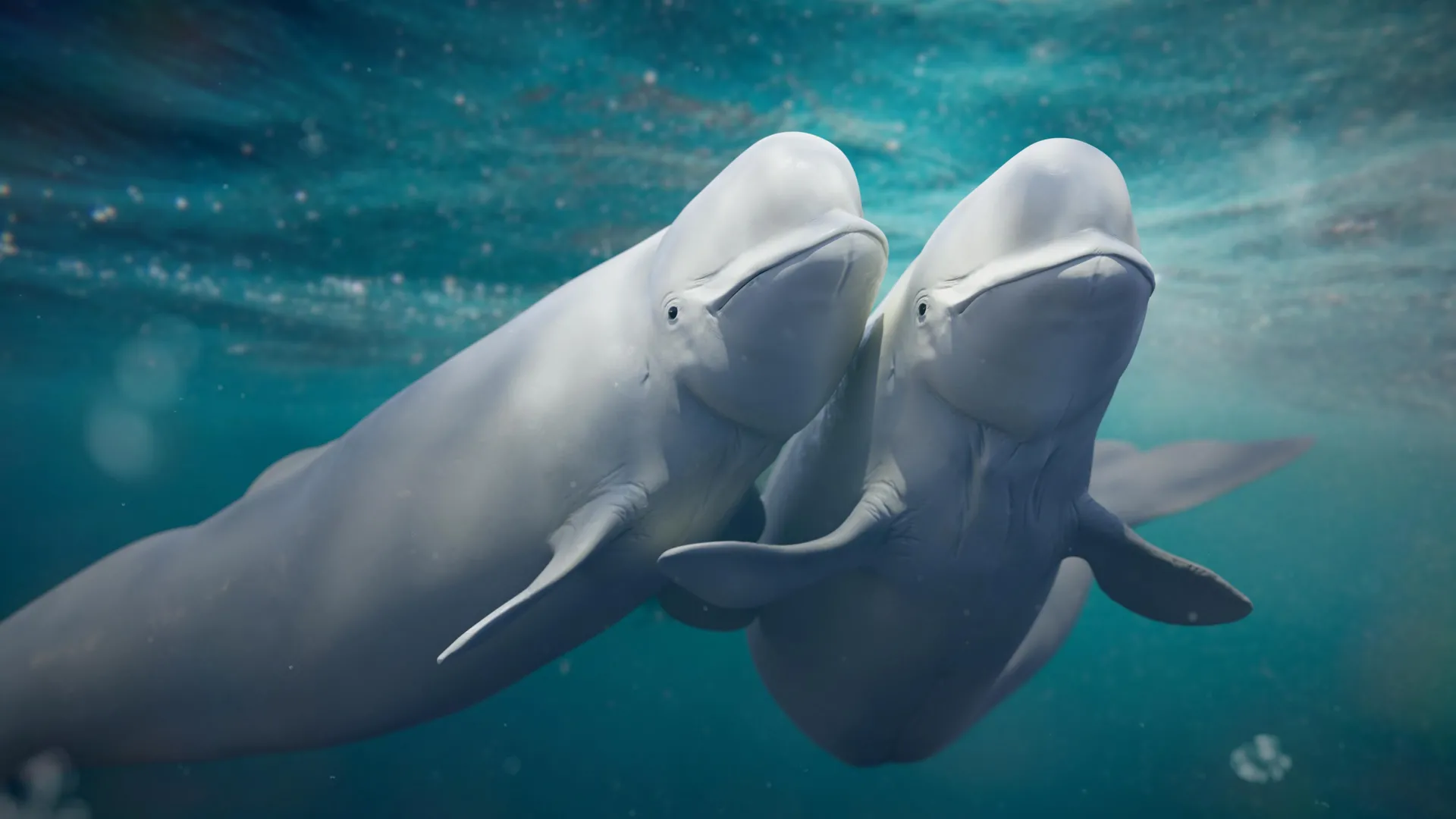
Beluga whales, elusive inhabitants of the frigid Arctic, have long presented a profound challenge to researchers. Their lives unfold largely beneath the vast expanses of Arctic waters and the ever-shifting sea ice, rendering direct observation an arduous, often impossible, undertaking. However, a groundbreaking, long-term DNA study has pierced this veil of mystery, offering unprecedented insights into the intricate family connections and remarkable genetic resilience of a specific beluga whale population residing in Alaska’s Bristol Bay. The findings, published in the esteemed journal Frontiers in Marine Science, reveal a sophisticated mating strategy that may be the key to the species’ survival in an increasingly precarious environment.
Decades of Dedication: The Genesis of a Groundbreaking Study
The journey to understanding the Bristol Bay belugas began over a decade ago, a testament to the persistence and collaborative spirit of the scientific community and Alaska Native communities. From 2009 to 2022, a dedicated team of researchers embarked on an ambitious project, meticulously collecting small, non-lethal tissue samples from an impressive 623 individual beluga whales. This extensive sampling effort was not merely an academic exercise; it was a vital endeavor involving collaboration between Florida Atlantic University, the Alaska Department of Fish and Game, and crucially, experienced Alaska Native subsistence hunters from the Bristol Bay region. These hunters, with their profound generational knowledge of the marine environment and its inhabitants, played an indispensable role in accessing and safely collecting samples, bridging the gap between scientific inquiry and traditional ecological understanding.
The initial hypotheses guiding the research were rooted in established evolutionary principles and existing, albeit limited, knowledge of beluga whale behavior. Given the noticeable sexual dimorphism – with males typically being significantly larger than females – and the reproductive pattern where females generally produce only one calf every few years, researchers, led by Dr. Greg O’Corry-Crowe of Florida Atlantic University, initially posited a polygynous mating system. This theoretical framework suggested that a select group of highly competitive, likely larger, males would dominate mating opportunities within a given season or even across several seasons, with minimal to no paternal investment.
"We still know very little about beluga whales, despite their immense popularity," Dr. O’Corry-Crowe remarked, underscoring the inherent difficulties. "The primary reason for this is the difficulty of studying a species that lives beneath the waves in the cold and often frozen north. But this is the challenge that makes discovery, when it happens, more exciting."
The Social Tapestry: Beluga Group Dynamics and Mating Predictions
Adding another layer to the predictive model was the understanding of beluga social structures. These whales are known to form large, fluid social groups that frequently coalesce and then disperse. This dynamic social environment led researchers to hypothesize that females might have ample opportunity to interact with a diverse array of potential mates over time. Consequently, the prevailing prediction was that females might engage in reproductive partnerships with multiple males across different breeding seasons, a strategy that could enhance genetic variability within offspring. This prediction was a crucial element, as it introduced the possibility of a more complex mating system than initially assumed.
Unveiling the Unexpected: DNA’s Revelation of Mating Patterns
The meticulous genetic analysis, however, yielded a surprising departure from these initial predictions. The DNA data unequivocally demonstrated that both male and female beluga whales in Bristol Bay engage in reproductive activities with multiple partners throughout their lives. A striking observation was that when calves were found to have siblings, they typically shared only one parent, rather than both. This indicated a widespread pattern of multiple paternity and, to a lesser extent, multiple maternity.
While it remained evident that beluga whales, on average, produce a relatively limited number of offspring, the genetic data revealed a greater degree of variation among males than initially anticipated. Some males did sire a larger number of calves, but the disparity was not as pronounced as the theoretical model of extreme polygyny would have suggested.
"Beluga males were indeed polygynous, but, surprisingly, only moderately so," Dr. O’Corry-Crowe explained. "The three-dimensional aquatic environment likely limits a male’s ability to successfully court or corral multiple females. However, a long life may also be key. Belugas can live 90 years, possibly more. Male beluga whales may, therefore, play a long game of securing a few matings each year over a very long reproductive life!"
The reproductive strategy of females proved equally fascinating. The genetic profiling unveiled a consistent pattern of mate switching across breeding seasons, also extending over their potentially long lifespans. This behavior, researchers suggest, could represent a "bet-hedging" strategy, a means of mitigating the risk associated with mating with a single, potentially low-quality male. By diversifying their mating partners, females may be enhancing the probability of producing healthier, more viable offspring, thereby safeguarding the future of the population.
A Paradoxical Outcome: High Genetic Diversity in a Small Population
Perhaps the most remarkable and counterintuitive discovery of the study pertained to the genetic health of the Bristol Bay beluga population. Despite numbering only approximately 2,000 individuals, a relatively small and isolated group, these whales exhibited unexpectedly high levels of genetic diversity. Furthermore, the evidence of inbreeding was notably low. When these findings were compared with historical genetic samples from the same population and data from other beluga whale populations worldwide, the Bristol Bay belugas displayed a level of genetic diversity comparable to that of much larger, more widespread populations. Crucially, this high diversity had remained stable over the observed period, a testament to the robustness of their reproductive strategies.
"A leading concern for small populations is that they tend to lose genetic diversity faster than large populations and the risks of inbreeding are higher," Dr. O’Corry-Crowe elaborated. "We expected to find low diversity and high inbreeding, but we found something quite different. The mating system may explain this surprising finding. Frequent mate switching limits the number of highly related offspring in the population. This in turn reduces the risk of highly related individuals mating and producing highly inbred offspring. It also minimizes the risk of diversity loss. We cannot afford to be complacent, but we can be optimistic that beluga whale mating strategies provide evidence of nature’s resilience."
Implications for Conservation and Future Research
The implications of this study extend far beyond a mere understanding of beluga whale reproductive behavior. In an era of unprecedented climate change and increasing anthropogenic pressures on marine ecosystems, the resilience of species like the beluga whale is of paramount importance. The findings suggest that flexible mating strategies, characterized by both sexes engaging with multiple partners over extended reproductive lifespans, can be a powerful evolutionary mechanism for maintaining genetic health, even within small and geographically isolated populations. This has significant ramifications for conservation efforts, highlighting the need to understand and protect not only habitat but also the complex social and reproductive behaviors that underpin species’ survival.
The study also underscores the value of long-term ecological research, particularly in challenging environments. The 13-year duration of the DNA sampling project was critical in capturing the long-term mating patterns of these long-lived animals. The successful collaboration with Indigenous communities further emphasizes the indispensable role of traditional knowledge and local expertise in advancing scientific understanding and promoting effective conservation.
Lingering Questions and Emerging Frontiers in Beluga Research
Despite the significant breakthroughs, the study acknowledges that this is not a definitive conclusion for all beluga whale populations. Researchers caution that the unique characteristics of the Bristol Bay population may not be universally applicable. For instance, the observed differences in sexual dimorphism between males and females in Bristol Bay are relatively modest compared to some other beluga populations. This variation in size difference could indicate differing levels of male-male competition and, consequently, distinct mating systems in other regions.
"To me, the differences in sexual dimorphism among populations of beluga whales could indicate that mating systems also vary, and this is something we are currently working on," Dr. O’Corry-Crowe stated, hinting at ongoing research. "We also can’t determine if females mate with multiple males within a season using genetics, as a female only produces one calf from one lucky male. But we are working on this, using drones at other locations to determine if we can observe mating behaviors in the wild. More on that soon…"
The prospect of using drone technology to observe mating behaviors directly in the wild represents the next frontier in beluga research. Such advancements could provide crucial complementary data to genetic analyses, offering a more comprehensive picture of beluga social and reproductive dynamics. Understanding these nuances across different populations is vital for developing targeted conservation strategies tailored to the specific needs of each group.
In essence, this comprehensive DNA study has provided one of the clearest views yet into the heretofore hidden social lives of beluga whales. It has illuminated a remarkable adaptive capacity, suggesting that their flexible mating behavior is not merely a curiosity but a vital strategy that enables these iconic Arctic animals to maintain robust genetic diversity, a critical asset in the face of ongoing environmental change. The ongoing commitment to unraveling the mysteries of these magnificent marine mammals offers a beacon of hope for their continued presence in the world’s oceans.