

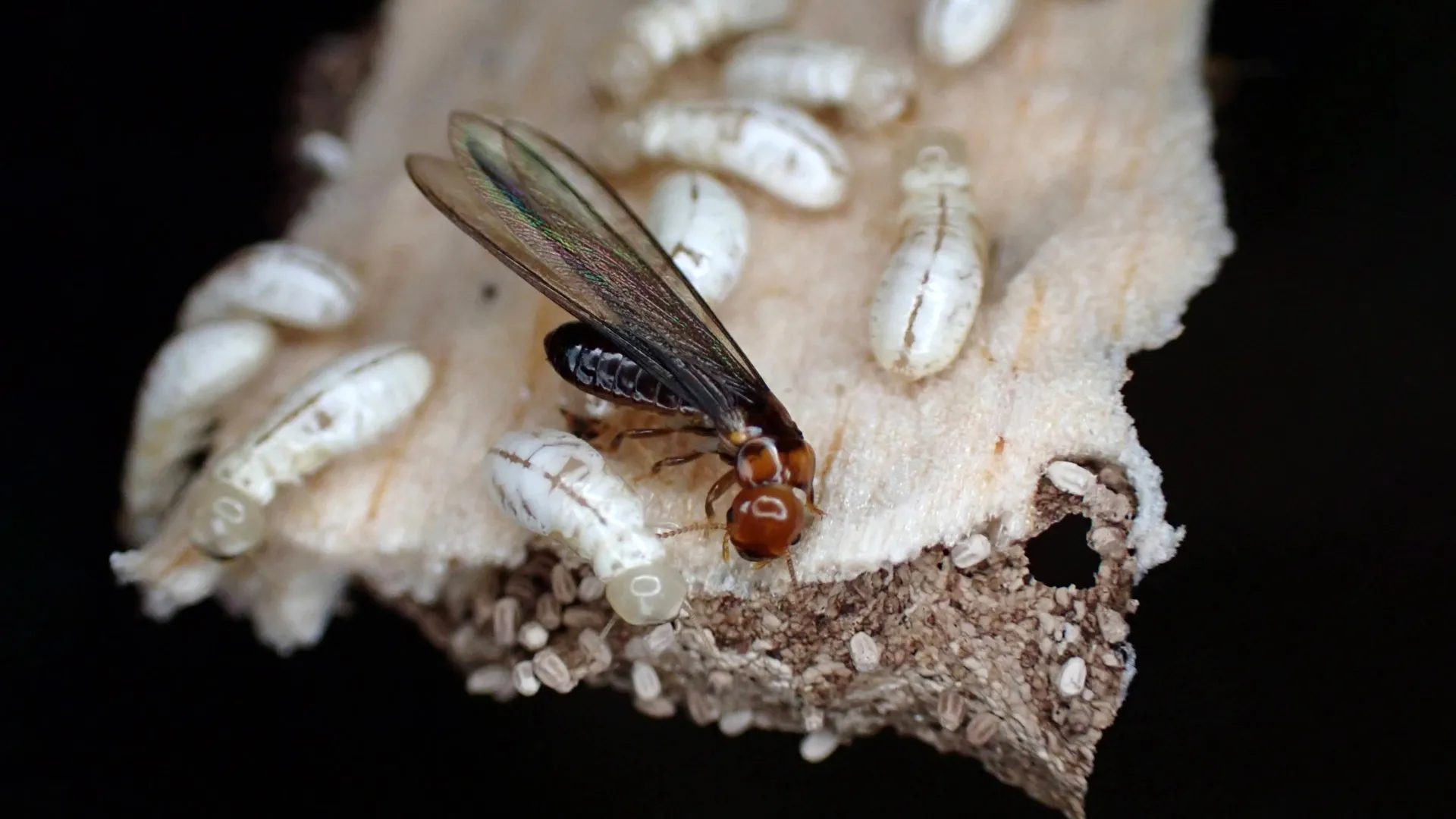
Researchers at the University of California, Riverside (UCR) have unveiled a promising new strategy in the ongoing battle against drywood termites, a notoriously elusive pest that silently inflicts billions of dollars in damage annually to structures worldwide. A novel chemical compound, bistrifluron, has demonstrated remarkable efficacy in laboratory settings, eradicating nearly 95% of drywood termite colonies by disrupting a fundamental biological process essential for their survival: molting. This breakthrough, detailed in the Journal of Economic Entomology, represents a significant advancement over traditional termite control methods, which often carry substantial environmental and human health risks.
The Silent Threat of Drywood Termites
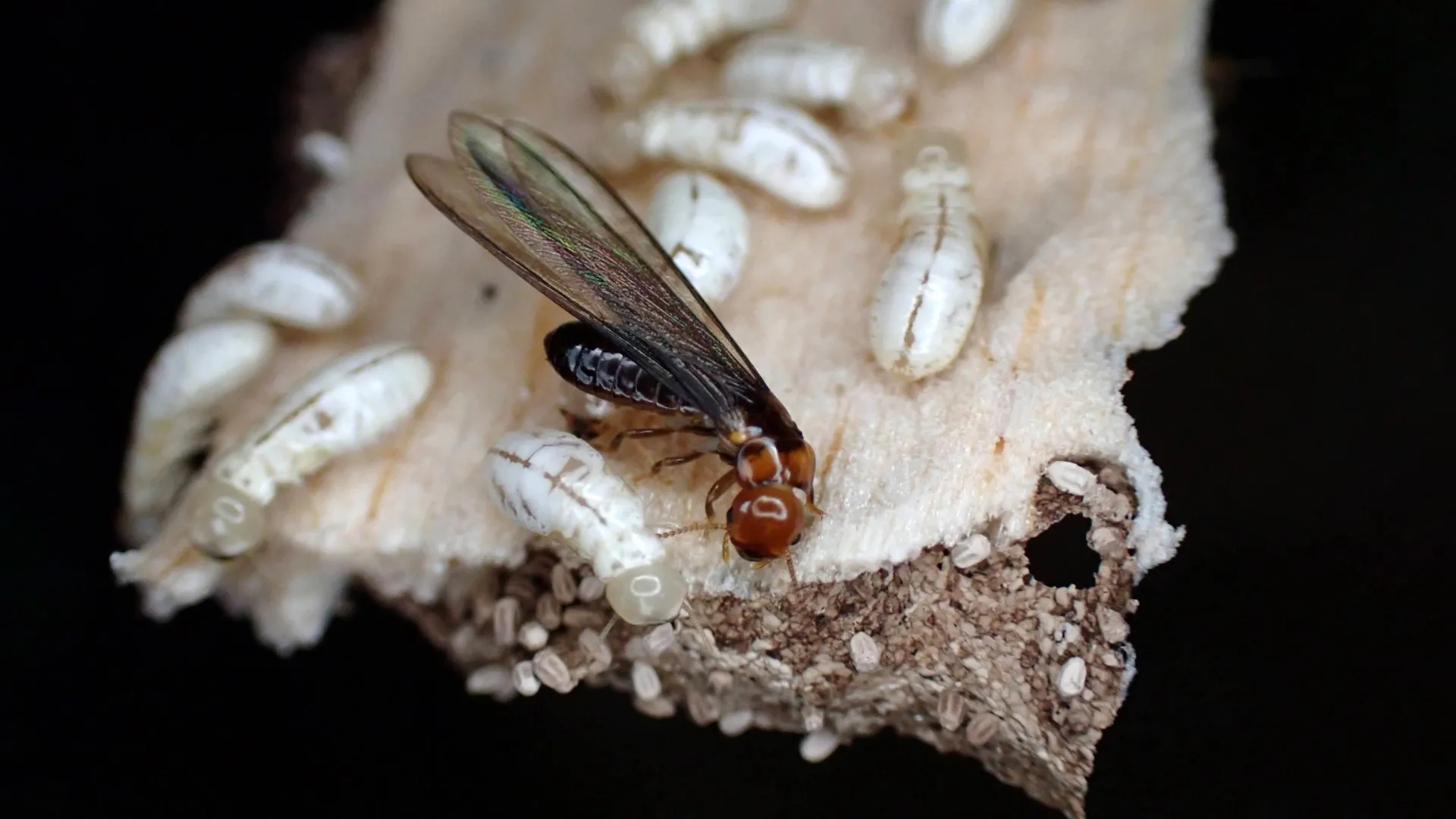
Drywood termites (family Kalotermitidae) are distinct from their subterranean counterparts in their habitat and behavior. Unlike subterranean termites that rely on constant contact with soil moisture, drywood termites live entirely within the wood they infest. This self-contained lifestyle, where they consume and reside within structural timbers, furniture, and even picture frames, makes them exceptionally difficult to detect. Colonies can exist for years, growing in size and steadily compromising the structural integrity of buildings without any outward signs of infestation. Homeowners often only become aware of their presence when significant damage, such as hollowed-out wood or visible damage, has already occurred, leading to costly repairs. The economic impact of termite damage is substantial, with estimates suggesting that U.S. homeowners spend over $5 billion annually on termite control and repairs.
A Targeted Approach: Bistrifluron and Chitin Synthesis Inhibition
The UCR study focused on the vulnerability inherent in the termite life cycle. Insects, including termites, possess an exoskeleton – a rigid outer shell that provides structural support, protection, and points of muscle attachment. This exoskeleton is primarily composed of chitin, a tough polysaccharide. As termites grow, they must periodically shed their old exoskeleton and form a new, larger one, a process known as molting. Drywood termites, for instance, undergo this process approximately seven times throughout their life cycle.
Bistrifluron intervenes directly in this critical developmental stage. It functions as a chitin synthesis inhibitor, meaning it prevents the termite from producing the necessary chitin to construct a new exoskeleton. Instead of acting as a rapid poison, bistrifluron induces a slow but ultimately fatal developmental failure.
"This chemical is more environmentally friendly than ones traditionally used for drywood termite infestations," stated Nicholas Poulos, the study’s corresponding author and a doctoral student in UCR’s Department of Entomology. "It’s specific to insects and can’t harm humans." This specificity is attributed to the fundamental difference in skeletal structure between insects and mammals. Humans possess an internal skeletal system, while insects rely on an external exoskeleton. Bistrifluron targets the biochemical pathways involved in chitin production, a process absent in vertebrates.
The Mechanism of Colony Collapse
The research meticulously documented the effects of bistrifluron on western drywood termites (Incisitermes minor), a species prevalent in California and other parts of the world. In laboratory experiments, termites exposed to treated wood exhibited a noticeable decline in activity and a reduction in feeding. This initial lethargy was a precursor to the ultimate failure to molt.
"Once the termites reach a certain stage, they have to molt. They cannot avoid that," explained Dong-Hwan Choe, a UCR entomology professor and senior author of the paper. "With a lethal dose of this chemical, they’ll try to shed their old exoskeleton but won’t have a new one ready to protect them." The consequences are dire: without a functional new exoskeleton, the termites are unable to regulate their internal environment, move effectively, or defend themselves, leading to their demise.
The study tested bistrifluron alongside two other chitin synthesis inhibitors, chlorfluazuron and noviflumuron. At the tested concentrations, bistrifluron proved to be the most potent and fastest-acting. In a "no-choice" laboratory setting, where termites had no alternative food source, bistrifluron achieved 99% mortality within 60 days. In a more realistic "choice" test, where termites could select between treated and untreated wood, a 0.1% concentration of bistrifluron still resulted in 96% mortality over the same period.
A Self-Propagating Treatment: The Power of Social Behavior
A critical finding from the UCR research highlights the potential for bistrifluron to spread throughout a colony naturally. Termites are highly social insects, engaging in behaviors like trophallaxis – the exchange of food and other substances among colony members. After feeding on wood treated with bistrifluron, the affected termites effectively became carriers of the insecticide.
"The most important part may be how the chemical travels," the researchers noted. In transfer tests, where only a small percentage of termites (5%) were initially exposed to the treated wood, the entire colony eventually reached 100% mortality within 90 days. The study revealed that treated food material was transferred from exposed "donor" termites to unexposed "recipient" termites within a remarkably short timeframe of 24 to 48 hours.
This observation aligns with recent UCR work that has illuminated the complex social interactions within western drywood termite colonies, including proctodeal trophallaxis – a form of feeding where termites ingest regurgitated gut contents from other individuals, including through anal secretions. While these hidden social behaviors make infestations difficult to detect, they also present a powerful mechanism for the dissemination of treatments once termites come into contact with them. This social transmission capability could revolutionize localized treatment strategies, reducing the need for broad-scale applications.
Advantages Over Conventional Termite Control
Traditional methods for controlling drywood termites, such as fumigation, are often disruptive, expensive, and carry significant health and environmental concerns. Fumigation typically involves tenting the entire structure, requiring residents to vacate for several days, remove food items, and endure the application of potentially toxic gases. Furthermore, fumigation does not offer long-term protection and does not prevent re-infestation.
The bistrifluron approach offers several compelling advantages. Its targeted action means it primarily affects insects, minimizing risks to humans, pets, and beneficial organisms. The slower, colony-wide collapse, while taking approximately two months, is a trade-off for a less disruptive and potentially more effective long-term solution. The ability of the chemical to spread through social interactions suggests that localized treatments, perhaps applied only to infested timbers or areas, could be sufficient to eradicate an entire colony. This contrasts sharply with the current necessity for whole-house fumigation.
"We believe this method of spot treatment can kill a larger colony and spread more easily than current termite control methods," Professor Choe asserted. "You don’t have to apply too much to get a very good result. The chitin synthesis inhibitors show promise as localized treatment for drywood termites."
Enhancing Treatment Efficacy: The Role of Scent
The UCR team is not resting on its laurels and is exploring complementary strategies to further enhance termite control. One innovative approach involves using olfactory cues to lure termites towards treated wood. In prior research, Professor Choe’s lab investigated pinene, a volatile organic compound commonly released by pine trees and other coniferous plants. Western drywood termites perceive pinene as a signal for food sources.
By incorporating pinene into insecticide-treated bait or directly into localized treatments, researchers aim to increase the attractiveness of the treated material to termites. This olfactory lure can draw termites into the treatment zone, thereby accelerating the efficacy of the insecticide and increasing the overall mortality rate. A 2025 patent application filed by UCR describes the use of pinenes to augment localized insecticide injections against western drywood termites. This application indicates that treatments combined with pinene achieved significantly faster termite eradication and higher final mortality rates compared to insecticide alone. In one experimental comparison, insecticide with pinene achieved over 95% mortality, while insecticide without pinene only reached about 70%. The potential benefits extend to practical application, suggesting that pinene could allow for wider spacing between injection points, reducing the time, labor, and quantity of insecticide required for effective treatment.
Practical Challenges and Future Directions
While the laboratory results are highly encouraging, the UCR team is actively working to translate these findings into practical, real-world applications. The current method of dissolving bistrifluron in acetone for wood treatment, while effective in research settings, is not ideal for widespread domestic use due to acetone’s flammability and strong odor.
"We are working to make it more feasible for practical application in real-life scenarios," Poulos confirmed. This involves developing alternative carriers or formulations that are safer and more user-friendly for pest control professionals and potentially for homeowners.
The urgency of finding effective and sustainable termite control methods is underscored by the increasing global distribution of western drywood termites. Originally native to parts of Mexico and the Southwestern United States, these termites have been inadvertently transported to new regions worldwide through the movement of lumber and wood products. Infestations have been reported in Hawaii, New York, Florida, Canada, and across Asia and Australia.
The Impact of Climate Change on Termite Proliferation
Compounding the challenge is the potential influence of climate change. As global temperatures rise and weather patterns shift, previously unsuitable regions may become more hospitable to drywood termites. This expansion could exacerbate existing infestations and introduce the pests to new areas where structures are not prepared for their presence.
"As we move lumber around the world, the termites are constantly transported to new locations. If they find the climate there acceptable, the problem will spread," Professor Choe warned. "In areas where these termites are common, it’s just a matter of time before homes are infested, so this study is a good initial step toward alternative strategies for controlling them."
The development of targeted, low-impact termite control solutions like bistrifluron represents a critical step forward. Beyond environmental benefits, such methods can reduce the economic burden on homeowners and contribute to the preservation of built environments. The potential for chemicals like bistrifluron to remain active in wood for extended periods could also offer a proactive defense against future infestations, a significant improvement over reactive treatments. The ongoing research at UCR promises to deliver more sustainable and effective solutions for managing these persistent structural pests.











Leave a Reply