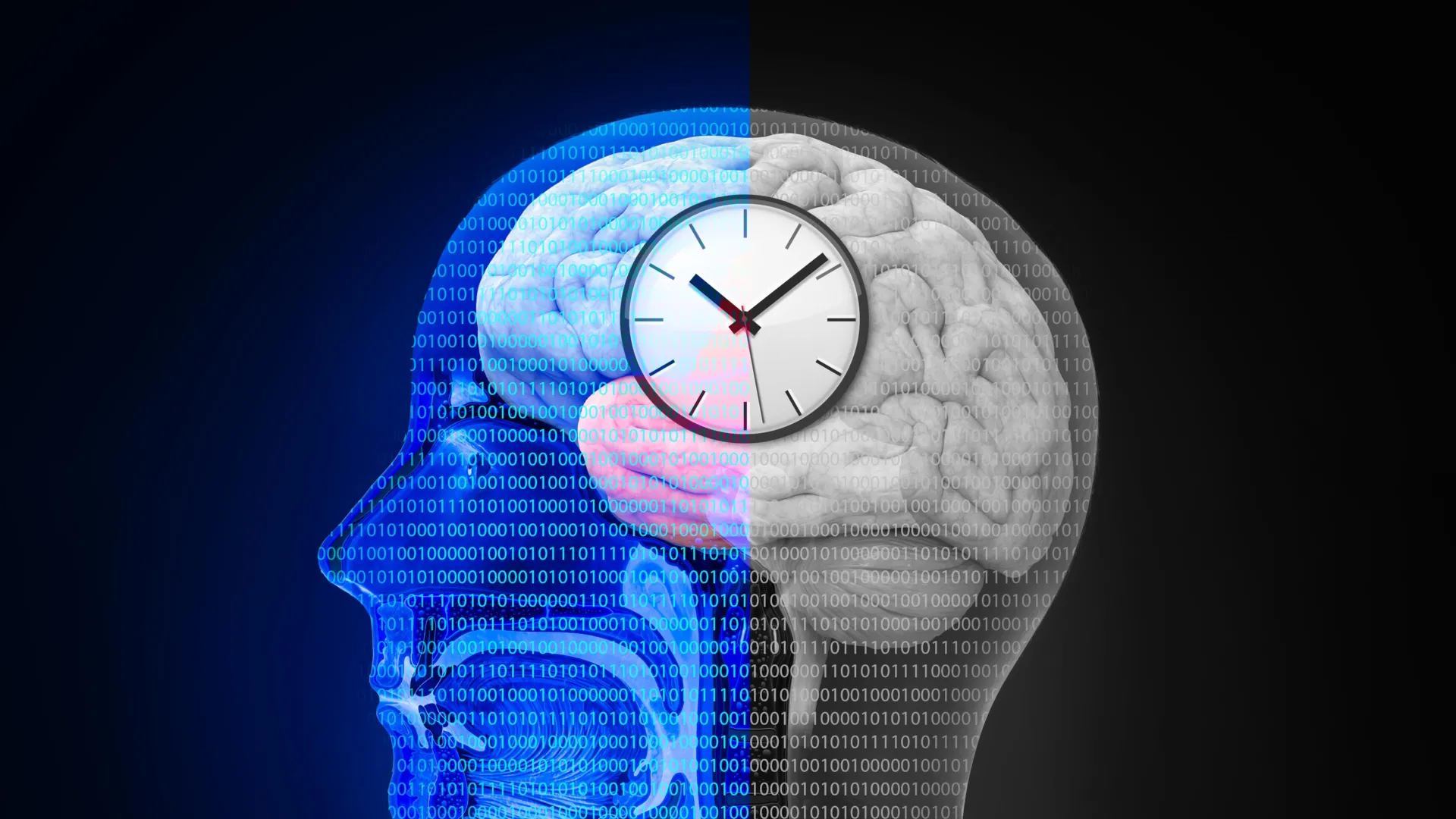
The rapid evolution of artificial intelligence has led to the development of systems capable of passing bar exams, diagnosing rare medical conditions, and generating sophisticated prose. However, a groundbreaking study led by researcher Suketu Patel suggests that these digital intellects possess a fundamental flaw in a domain where humans typically excel: cognitive control. By utilizing a staple of 20th-century psychology known as the Stroop task, researchers have uncovered a significant "performance collapse" in large language models (LLMs) when faced with increasing levels of distraction. The findings raise critical questions about the reliability of AI in long-form task management and the fundamental differences between biological and artificial attention.
The Experiment: Applying Psychology to Silicon
The research team, spearheaded by Suketu Patel, sought to evaluate whether the "attention" mechanisms inherent in modern transformer-based architectures function similarly to human executive control. To test this, they adapted the Stroop task, a psychological test first published by John Ridley Stroop in 1935. In its standard form, the test presents subjects with color words—such as "red," "blue," or "green"—printed in ink that either matches the word (congruent) or conflicts with it (incongruent).
The primary challenge of the Stroop task lies in "interference." For most literate adults, reading is an automatic process that requires almost no conscious effort. Identifying the color of the ink, however, requires a deliberate override of that automatic impulse. This mental tug-of-war is used by clinicians to measure executive function, which encompasses the ability to regulate attention, suppress irrelevant stimuli, and maintain focus on a specific goal.
In Patel’s study, several of the world’s most advanced AI models, including GPT-4o, Claude 3.5 Sonnet, and next-generation iterations such as GPT-5 and Gemini 2.5, were tasked with identifying the ink colors of words in varying list lengths. While the models initially appeared competent, their performance deteriorated sharply as the cognitive load increased, revealing a fragility in their ability to sustain focus over extended sequences.
Historical Context: A Century of Understanding Attention
To understand the weight of these findings, one must look at the history of cognitive psychology. When John Ridley Stroop first published his findings in the Journal of Experimental Psychology, he demonstrated that humans take significantly longer to name the color of a word when the word itself describes a different color. This "Stroop Effect" became a cornerstone for understanding how the brain prioritizes information.
For decades, the Stroop task has been a benchmark for assessing brain damage, ADHD, and the effects of aging. Humans, while slowed down by the interference, are generally able to maintain high accuracy—often above 95%—even when presented with dozens of items. The brain’s prefrontal cortex acts as a filter, reinforcing the "goal" (name the color) while inhibiting the "habit" (read the word).
The application of this test to AI marks a shift in how researchers evaluate machine intelligence. Rather than testing what an AI "knows" (knowledge-based benchmarks), researchers are now testing how an AI "thinks" (process-based benchmarks). The results suggest that while AI can mimic the output of human thought, it lacks the robust internal regulatory systems that prevent humans from being easily distracted by conflicting data.
Quantitative Analysis: The Data of a Performance Collapse
The data gathered by Patel and his colleagues reveals a startling inverse correlation between task length and AI accuracy. The researchers tested the models with lists of five, ten, twenty, and forty words.
At the lowest level of complexity—five words—the models performed admirably. GPT-4o, for instance, achieved a 91% accuracy rate, suggesting it understood the instructions and could apply them to a limited dataset. However, as the list expanded, the "interference" of the printed words began to overwhelm the models’ internal processing.
- GPT-4o: Performance dropped from 91% at five words to 57% at ten words. By the time the list reached forty words, the model’s accuracy plummeted to a mere 15%.
- Claude 3.5 Sonnet: This model showed greater initial resilience, maintaining stable performance through the twenty-word mark. However, it too suffered a "catastrophic forgetting" of the primary instruction, falling to 24% accuracy at the forty-word threshold.
- Gemini 2.5 and GPT-5: These models followed a similar trajectory. While they exhibited higher baseline reasoning capabilities in other benchmarks, they were unable to resist the "habitual" response of reading the text when the sequence became sufficiently long.
The most telling data point emerged when congruent and incongruent items were mixed. In these scenarios, the AI models frequently defaulted to reading the words for every item, completely ignoring the instruction to identify ink colors. In some trials involving forty-word mixed lists, accuracy for the incongruent items dropped to near zero.
Technical Analysis: Why AI Models Fail the Focus Test
The failure of AI in the Stroop task highlights a technical limitation in the architecture of Large Language Models. LLMs are built on the "Transformer" architecture, which uses a mechanism called "Self-Attention." Despite the name, this mechanism is mathematically different from human psychological attention.
In an LLM, "attention" refers to the way the model weights the relationship between different words (tokens) in a prompt. Because these models are trained on trillions of words of text where the primary "goal" is to understand the meaning of the words themselves, they possess a massive statistical bias toward reading.
When a researcher asks an AI to "ignore the word and name the color," they are asking the model to act against its own foundational training. As the list of words grows longer, the cumulative weight of the "reading habit" begins to outweigh the weight of the "instruction" provided at the beginning of the prompt. This phenomenon is often referred to as "instruction drift." Unlike a human, who can internally repeat the goal ("color, not word") to stay on track, the AI’s "memory" of the instruction is diluted by the sheer volume of conflicting data it processes as it moves down the list.
Reactions from the Scientific Community
While the researchers have not yet released a formal joint statement with the AI labs, the findings have sent ripples through the cognitive science and AI safety communities. Independent analysts suggest that these results confirm long-held suspicions that AI lacks "metacognition"—the ability to monitor and regulate one’s own cognitive processes.
"What we are seeing is the difference between pattern matching and true executive control," says Dr. Elena Rossi, a cognitive scientist not involved in the study. "A human can feel the ‘pull’ of the distraction and consciously push back against it. An AI doesn’t ‘feel’ the distraction; it simply gets lost in the statistical probability of the next token. If the most probable next token is the word itself rather than the color, the model will eventually succumb to that probability."
Ethicists have also weighed in, noting that if an AI cannot maintain focus on a simple instruction like "name the color" over a 40-word list, there are significant implications for its use in analyzing long legal documents, medical records, or complex coding repositories where subtle contradictions must be caught.
Broader Implications for the Future of Artificial Intelligence
The collapse of AI performance in the Stroop task has profound implications for the development of Artificial General Intelligence (AGI). If the goal of AGI is to create a system that can function autonomously in the real world, that system must be able to ignore "noise" and focus on "signals."
- Reliability in High-Stakes Environments: In fields like aviation or autonomous driving, the ability to suppress a common reaction in favor of a specific, instructed protocol is a matter of life and death. The current research suggests that LLM-based systems may be fundamentally unsuited for tasks requiring sustained, high-stakes inhibition of distractions.
- The Need for New Architectures: The study reinforces the argument that "scaling up" current models—adding more data and more parameters—may not be enough to achieve human-level cognitive control. Instead, new architectural layers that mimic the prefrontal cortex’s inhibitory functions may be required.
- Refinement of Benchmarking: For years, AI companies have touted their models’ scores on standardized tests. This study suggests those tests may be inadequate. Future benchmarks will likely need to include "adversarial psychology" tests like the Stroop task to measure the actual robustness of an AI’s reasoning.
Chronology of AI Evaluation Milestones
To place the Patel study in context, it is helpful to look at the timeline of how we have measured AI progress:
- 1950: The Turing Test is proposed, focusing entirely on the ability to mimic human conversation.
- 2010s: The rise of ImageNet and specific benchmarks for pattern recognition.
- 2020-2022: The era of "Knowledge Benchmarks" (MMLU, Bar Exam, SAT), where AI is tested on its ability to recall and apply facts.
- 2023-2024: The emergence of "Reasoning Benchmarks," where models are asked to solve math problems or logic puzzles.
- 2025 (Current): The shift toward "Cognitive Control Benchmarks," such as the Stroop task, which measure the stability and focus of the AI’s "thought process" rather than just the output.
Conclusion: The Path Forward
The research led by Suketu Patel serves as a necessary reality check in an era of AI hyperbole. While the linguistic capabilities of models like GPT-4o and Claude 3.5 are undeniably impressive, they remain "brittle" when subjected to the same psychological pressures that the human brain handles with ease.
The significant drop in accuracy—from 91% to 15% in some cases—highlights a gap between artificial and biological intelligence that cannot be closed by simply adding more data. As the industry moves forward, the focus may shift from making AI "smarter" in terms of knowledge to making it "sturdier" in terms of attention. Until then, the Stroop task remains a potent reminder that while machines can outcalculate us, they still struggle to stay as focused as a human.