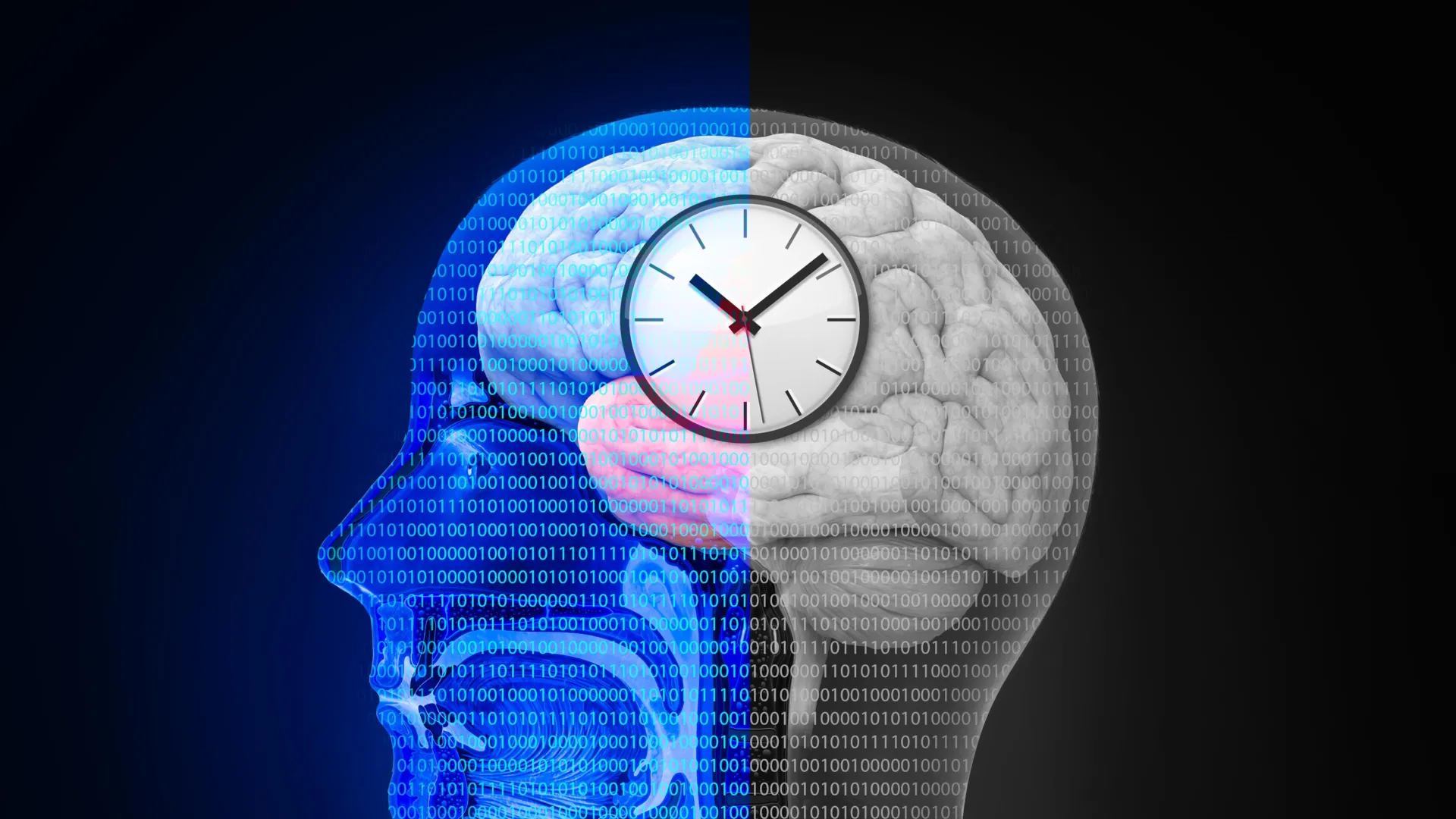
The rapid advancement of artificial intelligence has led to systems capable of passing bar exams, diagnosing rare medical conditions, and generating sophisticated prose. However, a new study led by researcher Suketu Patel suggests that these digital intellects possess a fundamental vulnerability in an area where humans typically excel: the ability to maintain focus amidst conflicting information. By subjecting several of the world’s most advanced large language models (LLMs) to a classic psychological evaluation known as the Stroop task, researchers have uncovered a significant "performance collapse" that highlights the structural differences between artificial neural networks and the human brain.
The findings, which reveal that AI accuracy plummets as tasks become longer and more distracting, raise critical questions about the reliability of AI in high-stakes environments where sustained attention is required. While AI can process vast amounts of data at speeds no human could match, its inability to exercise what psychologists call "executive control" suggests that today’s leading models remain tethered to their training biases, often at the expense of following specific, countervailing instructions.
The Historical Context of the Stroop Task
To understand the significance of the research, one must first look at the origins of the test itself. The Stroop task, named after psychologist John Ridley Stroop who first published the findings in 1935, has served as a cornerstone of cognitive psychology for nearly a century. The experiment is designed to measure the "interference" that occurs in the brain when it is forced to process two conflicting stimuli simultaneously.
In a standard Stroop test, a participant is shown a list of color words. The challenge arises when the meaning of the word—such as "RED"—is printed in a color that does not match, such as blue ink. The participant is instructed to ignore the word itself and instead name the color of the ink. For most literate humans, reading is an "automatic" process—a deeply ingrained habit that requires little conscious effort. Naming a color, however, requires "controlled" processing.
The delay in reaction time and the tendency to make errors when the word and color do not match is known as the "Stroop Effect." It is a primary tool for measuring executive function, the mental capacity that allows individuals to plan, focus attention, remember instructions, and juggle multiple tasks successfully.
Methodology: Testing the Limits of Machine Attention
The research team led by Suketu Patel sought to determine if modern LLMs—specifically those built on the transformer architecture like GPT-4o, Claude 3.5 Sonnet, and Gemini 2.5—exhibit a digital version of the Stroop Effect. Because LLMs process text rather than visual light waves, the researchers adapted the task by providing the models with text-based descriptions or structured data representing the color words and their associated "ink" colors.
The experiment was structured to test the models across varying levels of complexity. Initially, the AI systems were given short lists of five color words where the text and the designated color were mismatched (e.g., the word "Green" associated with the attribute "Blue"). As the experiment progressed, the researchers increased the length of these lists to ten, twenty, and finally forty words.
This scaling was intended to simulate the "cognitive load" that humans experience during repetitive or lengthy tasks. In human subjects, while fatigue may eventually set in, the ability to maintain the "rule" (identify the color, not the word) remains relatively stable over a short session. The researchers aimed to see if AI models could maintain that same level of rule-adherence as the volume of information increased.
Quantitative Analysis: The Performance Collapse
The data gathered from the experiment revealed a stark and unexpected decline in AI performance as the lists grew longer. The results suggest that while AI can "understand" a rule in a vacuum, it struggles to apply that rule consistently over a sequence of distracting data points.
GPT-4o Performance Metrics
GPT-4o, currently considered one of the most capable models in the industry, started with high marks. When presented with a list of five mismatched words, it achieved 91% accuracy. However, as the list doubled to ten words, accuracy dropped precipitously to 57%. By the time the model reached the forty-word threshold, its accuracy hit a nadir of 15%. This represents a near-total failure to follow the primary instruction, as the model began to default to the "automatic" response of simply reading the words.
Claude 3.5 Sonnet and Others
Anthropic’s Claude 3.5 Sonnet showed greater initial resilience, maintaining stable performance through the twenty-word mark. However, it was not immune to the collapse. Upon reaching the forty-word list, its accuracy dropped to 24%. Similar patterns were observed in Google’s Gemini 2.5 and OpenAI’s GPT-5 (internal testing versions), as well as Claude Opus 4.1.
The researchers noted that the "interference" became most acute when the lists contained a mix of congruent words (where the word and color match) and incongruent words (where they do not). In these mixed-condition tests, the AI models’ accuracy on mismatched items dropped to nearly zero in several iterations. The presence of "correct" matches seemed to reinforce the AI’s tendency to read the words, making it even harder for the system to switch back to the color-naming rule for the next item.
The Cognitive Divide: Human vs. Machine
The most compelling aspect of Patel’s research is the comparison between these results and human performance. In human psychology, the Stroop task reveals that we are slower and more prone to error when distractions are present, but our "executive control" allows us to maintain a relatively high baseline of accuracy. A focused human might take longer to finish a forty-word list, but they are unlikely to see their accuracy drop from 91% to 15%.
Humans utilize the prefrontal cortex to maintain "top-down" goals. This allows us to suppress an automatic urge (reading) in favor of a task-specific requirement (naming colors). The AI models, conversely, appear to lack this persistent goal-oriented layer.
Instead, LLMs operate on probabilistic patterns. They are trained on trillions of words where the word "Red" is almost always associated with the concept of the color red. When an LLM is asked to perform the Stroop task, it is essentially being asked to fight against the very statistical foundations of its training. As the list grows longer, the "weight" of its training—the urge to predict the most likely next word—overpowers the specific instruction provided in the prompt.
Industry Implications and Expert Reactions
While the developers of these models, such as OpenAI, Google, and Anthropic, have not issued official statements specifically regarding the Patel study, the findings align with a growing body of research concerning "instruction drift" and "context window" reliability.
Tech industry analysts suggest that these findings have significant implications for how AI is deployed in professional settings. For example, in legal document review or medical record analysis, an AI might be given a specific set of criteria to look for. If the AI exhibits the same "focus collapse" seen in the Stroop task, it might begin to overlook critical details or revert to general patterns as it processes longer documents.
"This research is a humbling reminder that ‘intelligence’ is not a monolithic trait," says Dr. Elena Rossi, a cognitive scientist not involved in the study. "What we are seeing is that AI lacks ‘System 2’ thinking—the slow, deliberate, and logical processing described by Daniel Kahneman. AI is essentially an incredibly sophisticated ‘System 1’—fast, intuitive, and associative. When you force a System 1 entity to do a System 2 task over a long duration, it eventually breaks."
Chronology of AI Attention Research
The Patel study is the latest in a timeline of research aimed at understanding the limitations of machine attention:
- 2017: The "Attention is All You Need" paper introduces the transformer architecture, allowing AI to weigh the importance of different words in a sentence.
- 2020-2022: Researchers find that LLMs suffer from the "lost in the middle" phenomenon, where they forget information placed in the center of long prompts.
- 2023: Studies on "hallucinations" reveal that AI often prioritizes plausible-sounding patterns over factual accuracy when under pressure.
- 2024 (Current): The Patel study applies classical human psychological benchmarks to quantify the collapse of executive control in the latest generation of "frontier" models.
Broader Impact: The Path to AGI
The quest for Artificial General Intelligence (AGI)—AI that can perform any intellectual task a human can—remains the "north star" for the tech industry. However, the inability of current models to pass a basic Stroop task with high consistency suggests that the path to AGI may require more than just more data and more computing power.
It may require a fundamental shift in architecture. Current LLMs are "stateless" in many ways, treating each token as a probabilistic calculation. Human-like focus requires a "state" of mind that can hold a rule steady regardless of the distractions flowing through the sensory or data stream.
For developers, the results provide a roadmap for improvement. Techniques such as "Chain-of-Thought" prompting, where an AI is encouraged to "think out loud" before providing an answer, have been shown to improve performance on logic tasks. However, the Patel study shows that even these techniques may fail when the distraction is repetitive and the volume of data is high.
Conclusion
The research led by Suketu Patel serves as a vital benchmark in the ongoing evaluation of artificial intelligence. By demonstrating that models like GPT-4o and Claude 3.5 Sonnet experience a dramatic loss of focus when confronted with the Stroop task, the study highlights a critical gap between machine output and human-like cognition.
As AI continues to integrate into the fabric of daily life, understanding these limitations is essential for ensuring safety and reliability. While AI can simulate human conversation and solve complex equations, the ability to stay focused on a simple task—ignoring the noise to find the signal—remains a uniquely biological triumph. For now, the "executive control" that allows a child to name a blue-inked "RED" remains a frontier that silicon has yet to truly conquer.