The burgeoning landscape of artificial intelligence continues to reshape professional workflows, but for one software engineer, the generic offerings fell short of a critical need for personalized leverage. Olumide Shittu embarked on a personal project to construct a custom AI assistant, a decision born from a particularly unproductive Tuesday and a strategic vision for optimizing his demanding workload. This endeavor underscores a growing trend among tech-savvy professionals seeking bespoke solutions to enhance productivity, maintain data control, and deepen their understanding of cutting-edge AI technologies.
The Genesis of a Bespoke Solution
The catalyst for Shittu’s ambitious project was a common professional plight: a day consumed by context-switching between disparate tasks, resulting in minimal tangible output. Faced with three client briefs requiring summarization, a substantial backlog of research tabs, several emails demanding thoughtful replies, and a stalled technical document, Shittu found himself past 7 PM with little to show for his efforts. This moment of frustration led to a pivotal realization: the problem wasn’t a shortage of time, but a profound lack of leverage. He envisioned delegating routine, information-intensive tasks to an intelligent agent, freeing himself for higher-order cognitive work.
This recognition spurred him to action, initiating the development of an AI assistant tailored precisely to his unique requirements. His journey, meticulously documented, provides a blueprint for others grappling with similar productivity bottlenecks, emphasizing the strategic advantage of building rather than merely consuming AI tools.
Beyond Off-the-Shelf: The Case for Customization
In an era dominated by ubiquitous AI tools like Siri, ChatGPT, and Microsoft Copilot, the decision to build a custom assistant might appear counterintuitive. However, Shittu’s rationale highlights a critical limitation of general-purpose AI: a lack of inherent context and specialized integration. "Most people who decide to build an AI assistant start by Googling ‘Python LangChain tutorial.’ That’s backwards," Shittu observed, emphasizing the primacy of the "why" over the "how."
His primary motivation was control. Off-the-shelf assistants, by design, are built upon generalized assumptions about user needs. This inherent generality often translates into compromises in specificity, tone, integration with niche tools, and adherence to established workflows. A bespoke assistant, conversely, can be engineered to understand an individual’s specific context, emulate their preferred communication style, seamlessly connect with their proprietary systems, and operate within a trusted operational framework. This level of tailored functionality is rarely achievable with commercially available products.
Another significant driver was data sovereignty. Utilizing third-party assistants invariably means funneling prompts and sensitive information through external infrastructure. While this may be acceptable for casual personal use, it becomes a substantial concern for client-related work, commercially sensitive projects, or proprietary research. Building a custom solution empowers the user to dictate where data resides, mitigating privacy risks and ensuring compliance with confidentiality protocols. This control over data flow is becoming an increasingly critical factor for professionals and organizations navigating complex regulatory environments and heightened cybersecurity threats.
Furthermore, Shittu championed the often-undersold "learning curve argument." The act of constructing an AI tool from the ground up offers an unparalleled depth of understanding. When issues arise, the builder possesses the intimate knowledge required for effective troubleshooting. When new functionalities are desired, there’s no waiting for a product update; the developer can directly implement the necessary changes. This hands-on engagement transforms a user from a passive consumer into an active architect of their digital environment.
A Strategic Investment in Future Fluency
The timing of Shittu’s project also coincided with a period of explosive growth in the AI assistant market, reinforcing the strategic wisdom of his undertaking. According to a report by MarketsandMarkets, the AI assistant market is projected to skyrocket from $3.35 billion in 2025 to $21.11 billion by 2030, demonstrating a staggering 44.5% compound annual growth rate (CAGR). This exponential trajectory signals that AI assistants are not a transient trend but an emerging, fundamental layer of digital infrastructure.
This market expansion is driven by several factors, including the increasing complexity of information environments, the imperative for enhanced operational efficiency across industries, and the continuous advancement of large language models (LLMs) and their integration capabilities. For professionals like Shittu, gaining fluency in building, rather than merely using, these technologies now offers a significant competitive advantage, positioning them at the forefront of future innovation and productivity paradigms. While readily available tools offer immediate gratification for simple tasks, the long-term value lies in the ability to craft and adapt AI to deeply integrate with evolving professional demands.
Architecting Autonomy: The Technical Blueprint
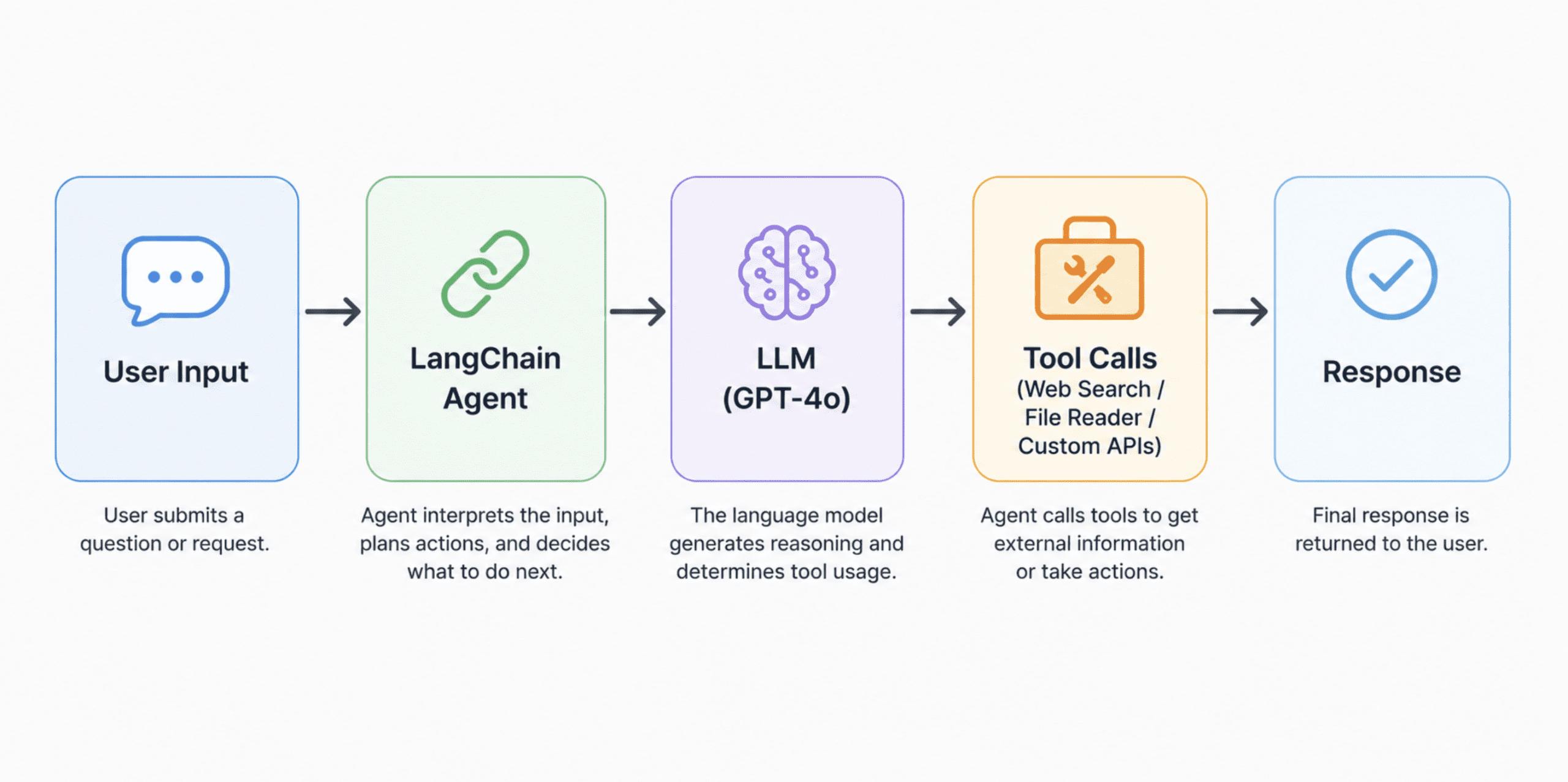
With the "why" firmly established, the "how" began with meticulous stack selection. Shittu opted for a robust yet accessible Python-based ecosystem, leveraging popular frameworks and tools:
- Python 3.10 or higher: The foundational programming language, chosen for its versatility and extensive AI/ML libraries.
- Virtual Environment: Essential for isolating project dependencies, preventing conflicts, and ensuring reproducible builds.
- API Keys (.env): Secure storage of sensitive credentials, adhering to best practices by preventing hardcoding and inclusion in version control.
- LangChain: A powerful framework for developing applications powered by large language models, providing the orchestration layer for agents, tools, and memory.
- Langchain-OpenAI: Specifically for integrating with OpenAI’s models, including the advanced GPT-4o.
- Langchain-Community & Langgraph: Supporting modules for diverse components and advanced agentic workflows.
- DuckDuckGo-Search: A web search tool, notably requiring no external API key, offering a private and efficient search capability.
- Python-dotenv, Pydantic, Requests: Standard Python libraries for environment variable management, data validation, and HTTP requests, respectively.
The core architecture revolved around several critical components:
- Language Model (LLM): GPT-4o, chosen for its advanced reasoning capabilities and versatility, with a temperature setting of 0.2 to ensure focused and consistent responses suitable for a professional assistant.
- System Prompt: The foundational instruction set, meticulously crafted to define the assistant’s persona (focused, reliable personal assistant) and operational guidelines (direct answers, clarification seeking, conciseness, citation requirement, and explicit instruction to use web search for time-sensitive data).
- Persistent Memory: Implemented using
SQLChatMessageHistorystoring conversation logs in a local SQLite database (assistant_memory.db). This ensures that the assistant retains context across sessions, providing a continuous, evolving understanding of the user’s ongoing projects and preferences.ConversationBufferMemorythen wraps this history for injection into prompts. - Tools:
- DuckDuckGoSearchRun: For real-time information retrieval, crucial for addressing queries about current events and dynamic data.
- Custom
read_filetool: A Python function decorated with@tool, enabling the assistant to ingest and process local text files for summarization or analysis, a direct answer to Shittu’s need to handle document backlogs.
- Agent: Constructed using
create_openai_tools_agent, which intelligently combines the LLM, the defined tools, and the system prompt. This agent is capable of autonomous decision-making, determining when and which tool to invoke based on user input. - Agent Executor: The operational heart of the system,
AgentExecutormanages the iterative loop of agent reasoning, tool execution, and response generation, complete with verbose logging for debugging and amax_iterationssafeguard against infinite loops.
The Iterative Path to Reliability: Testing and Refinement
The initial deployment of the assistant, as Shittu candidly recounted, was far from flawless. It produced factually incorrect answers, overlooked relevant tools, and generated poorly formatted responses. This phase, often overlooked in introductory tutorials, is where the "real work" of AI development begins: rigorous testing and iterative refinement.
A key learning was the critical importance of explicit prompt engineering. Early failures, such as the agent attempting to answer from its training data instead of performing a web search for current information, were ameliorated by strengthening the system prompt. Adding directives like, "When answering questions about recent events, current data, or anything time-sensitive, always use the web search tool. Do not rely on your training knowledge for facts that may have changed," significantly improved the agent’s tool-use accuracy.
Robust error handling also proved paramount. Shittu implemented try/except blocks within the chat() function to prevent session crashes, providing users with graceful error messages rather than abrupt terminations. This attention to resilience is vital, particularly given industry statistics: research from Mordor Intelligence indicates that nearly half of AI-generated code fails its initial security review, a principle that extends to the reliability of AI-generated responses in general. Outputs, especially early on, should be treated as drafts requiring verification.
Structured testing, involving predefined test cases to verify tool usage, memory recall, and general behavior, became an indispensable practice. Running these tests after any prompt adjustment or configuration change helped quickly identify and address surprising downstream effects, ensuring the assistant maintained expected performance.
Tangible Returns: Quantifying the Impact
After approximately two weeks of consistent use, Shittu’s custom AI assistant had evolved into an indispensable tool, effectively managing a range of tasks that previously consumed significant portions of his workday:
- Summarizing client briefs and research papers: Automating the extraction of key insights from lengthy documents.
- Conducting targeted web research: Efficiently gathering up-to-date information on specific topics.
- Drafting professional communications: Assisting with emails and internal technical documentation, maintaining a consistent tone.
- Generating code snippets and troubleshooting: Providing immediate assistance for programming tasks, including explanations and debugging.
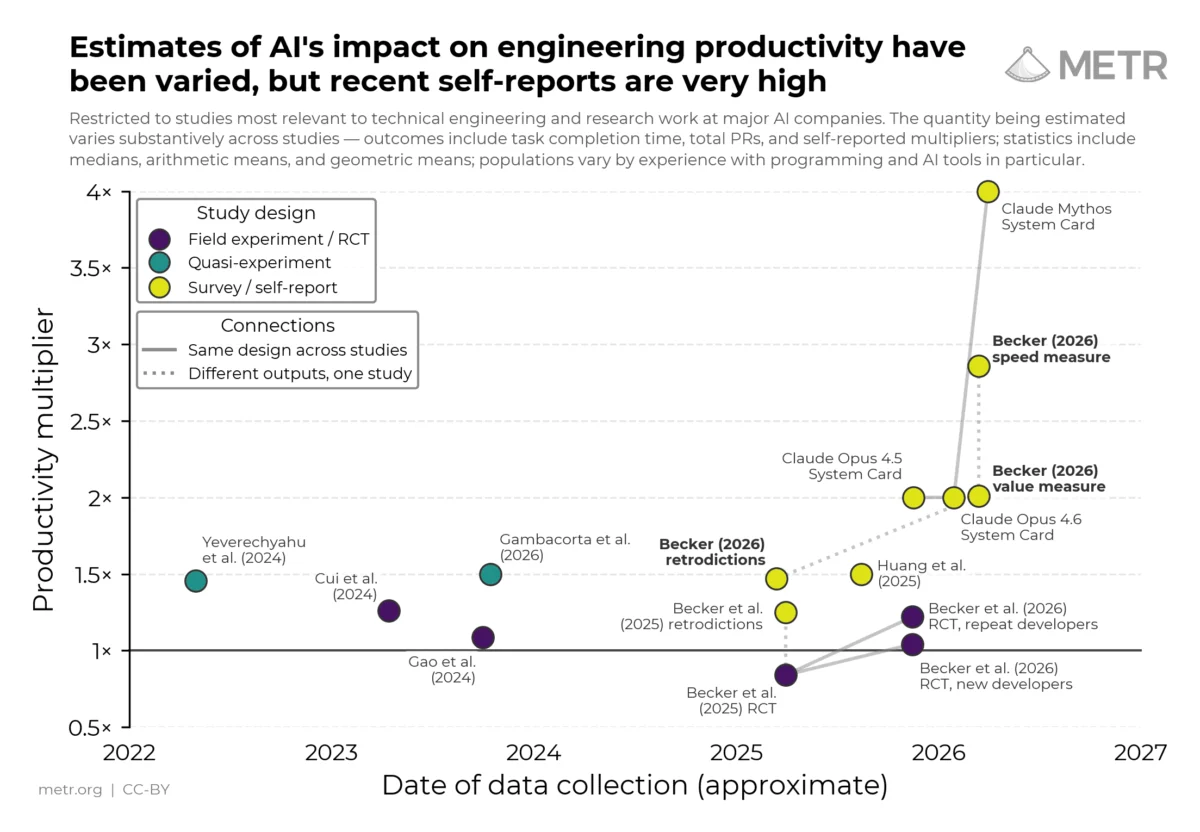
The quantitative benefits were striking. Data from DX’s analysis of over 135,000 developers indicated an average saving of 3.6 hours per week when leveraging AI tools, with daily users experiencing even greater gains. Shittu’s personal experience largely aligned with these findings, particularly on task-heavy days, demonstrating a tangible return on his development investment.
The Broader Implications: A New Paradigm for Productivity
The journey of building a personalized AI assistant extends beyond mere task automation; it represents a profound shift in how professionals interact with their work. Shittu noted that the experience fundamentally altered his perspective on daily responsibilities. "When you’re responsible for a tool, you start noticing friction differently. You start asking ‘could this be delegated?’ more consistently," he reflected. This proactive mindset, irrespective of AI involvement, fosters continuous process improvement and strategic delegation.
The accessibility of building such powerful tools is also a significant takeaway. The complete, functional assistant, as presented by Shittu, comprised under 150 lines of Python code, utilized freely available frameworks, and could run on any standard machine. This low barrier to entry democratizes the creation of sophisticated AI solutions, empowering individuals to tailor technology to their precise needs rather than conforming to generalized software.
Ultimately, the efficacy of a custom AI assistant lies in its focus. A general-purpose tool, while versatile, will always be outmatched by a specialized agent designed to handle specific tasks within a defined workflow. Shittu’s advice to "start small. Give it one job. Add complexity only when you run out of value at the simpler level" provides a pragmatic roadmap for aspiring AI builders. This iterative, value-driven approach ensures that the technology serves as a true extension of individual capability, transforming challenges into opportunities for enhanced productivity and strategic thinking.
The implications of such bespoke AI solutions are far-reaching, signaling a future where personalized digital assistants become integral to individual professional empowerment, offering not just efficiency, but a deeper, more controlled engagement with the digital tools that shape our work lives.
Shittu Olumide is a software engineer and technical writer passionate about leveraging cutting-edge technologies to craft compelling narratives, with a keen eye for detail and a knack for simplifying complex concepts. You can also find Shittu on Twitter.