The mystery of why the vast majority of the human population—approximately 90%—favors the right hand has remained one of the most persistent questions in the study of anthropology and biology. While many animal species exhibit individual preferences for one limb over another, humans are unique in their overwhelming, population-level bias toward the right side. This phenomenon, known as "handedness," has long been thought to be a byproduct of our complex cognitive abilities or our history of tool use. However, a comprehensive new study led by the University of Oxford has identified a more complex evolutionary trajectory, suggesting that our right-handed dominance is the result of a two-stage process driven by the transition to walking upright and the subsequent dramatic expansion of the human brain.
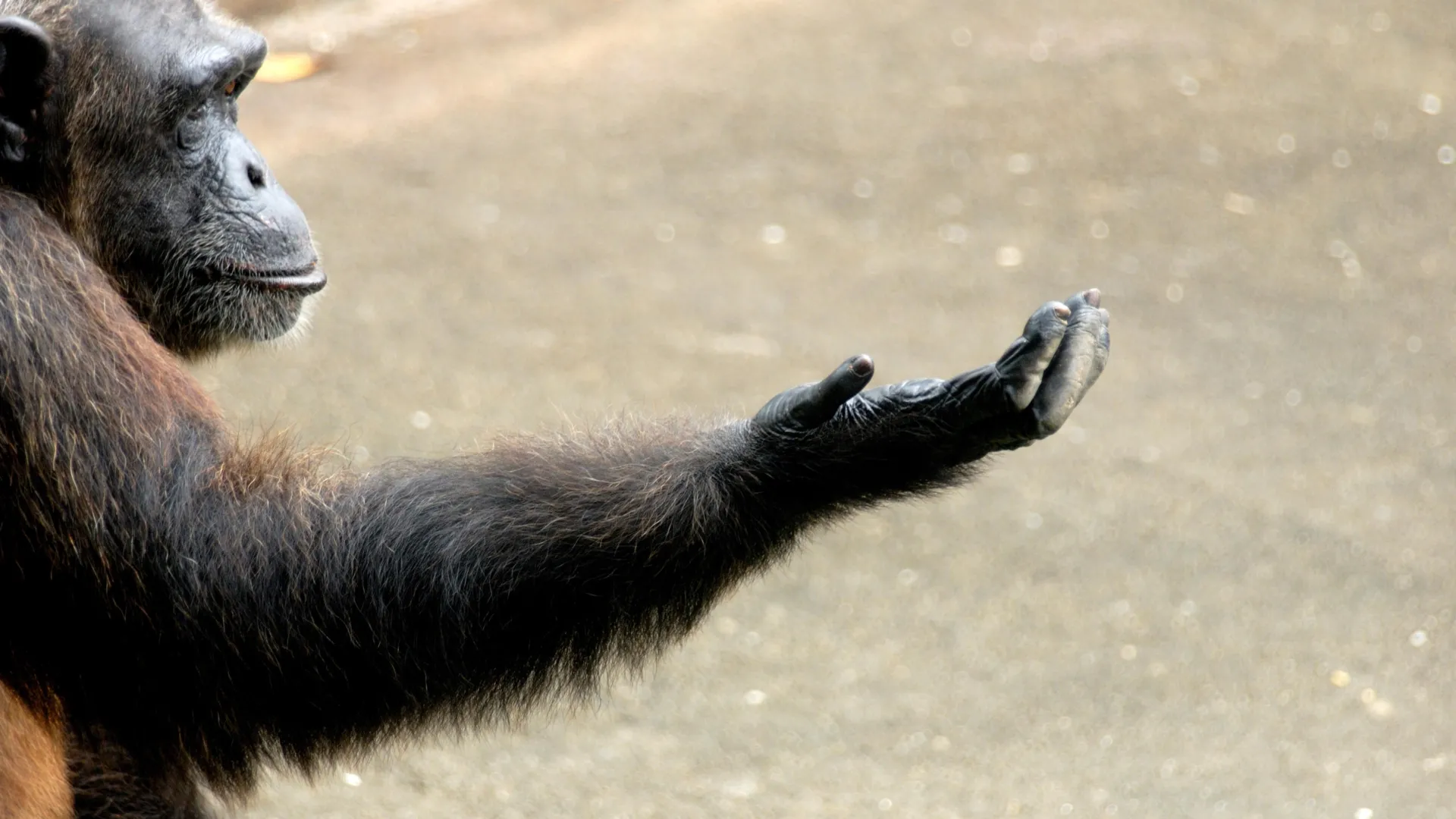
The research, recently published in the prestigious journal PLOS Biology, provides a data-driven framework that finally places human handedness within the broader context of primate evolution. Led by Dr. Thomas A. Püschel and Rachel M. Hurwitz from Oxford’s School of Anthropology and Museum Ethnography, alongside Professor Chris Venditti from the University of Reading, the team conducted a massive comparative analysis. They synthesized data from 2,025 individual monkeys and apes across 41 different species to determine what environmental, physical, or social factors truly correlate with hand preference.
The Handedness Enigma: Beyond Simple Tool Use
For decades, the "Tool Use Hypothesis" was the leading explanation for human right-handedness. The theory posited that as early humans began to craft and use complex tools, the brain specialized to handle these tasks more efficiently. Because the left hemisphere of the brain typically controls the right side of the body and is also the primary seat of motor coordination and language in humans, researchers believed tool-making drove the brain toward a right-hand bias.
However, the Oxford study suggests that tool use is only a small piece of a much larger puzzle. By utilizing sophisticated Bayesian modeling—a statistical method that accounts for the evolutionary relationships between species—the researchers were able to test multiple variables simultaneously. They looked at brain size, body mass, social structure (group size), habitat (arboreal versus terrestrial), diet, and movement patterns (locomotion).
The initial results confirmed that humans are a statistical anomaly. When compared directly to chimpanzees, gorillas, or macaques, the human 90% right-handed majority stands in stark contrast to the more balanced or weakly biased distributions seen in our closest relatives. Yet, the researchers discovered that this "uniqueness" disappeared when two specific factors were integrated into the model: the ratio of arm length to leg length (an indicator of bipedalism) and absolute brain size.
The Two-Stage Evolutionary Model
The findings point toward a "two-step" evolution of the human hand. The first milestone was the transition to bipedalism. In many primate species, the hands are heavily involved in locomotion—whether it be swinging through trees (brachiation) or knuckle-walking on the forest floor. When early hominins began to walk on two legs, their hands were "liberated" from the demands of movement.
According to Dr. Püschel and his team, this freedom allowed the hands to become more specialized. Without the need to support body weight during travel, the hands could evolve for fine motor tasks. This transition created an evolutionary pressure for "asymmetric" hand use, where one hand becomes the stabilizer and the other becomes the primary manipulator.
The second milestone was encephalization, or the dramatic growth of the brain. As the genus Homo evolved, brain volume increased significantly, particularly in areas related to motor control and complex planning. The study suggests that as the brain grew larger, it became more efficient to "lateralize" functions. Rather than having both hemispheres perform the same tasks, the brain began to divide labor. The left hemisphere became dominant for precise, sequential motor tasks—a trait that manifested physically as right-handedness.
A Chronology of the Human Hand
By applying their model to the fossil record, the researchers were able to estimate the likely handedness of extinct human ancestors, providing a chronological map of how we became right-handed.
-
Early Hominins (Ardipithecus and Australopithecus): Species such as Australopithecus afarensis (the famous "Lucy") likely showed only a mild preference for the right hand. Their brain sizes were still relatively small—comparable to modern chimpanzees—and while they were bipedal, they still retained some adaptations for climbing. Their handedness distribution likely hovered around a 60-70% right-hand bias, similar to what is observed in some modern great ape populations today.
-
The Emergence of Homo ergaster and Homo erectus: With the arrival of Homo ergaster and Homo erectus approximately 1.8 million years ago, the trend toward right-handedness accelerated. These species were fully terrestrial bipeds with significantly larger brains than their predecessors. The study suggests that it was during this period that the 90% dominance began to take shape, coinciding with the development of more sophisticated stone tool industries like the Acheulean hand-axe.
-
Neanderthals and Modern Humans: By the time Homo neanderthalensis and Homo sapiens appeared, the right-hand bias was firmly established. Archaeological evidence, such as the wear patterns on Neanderthal teeth (caused by holding meat with the hand and cutting it with a stone tool), has long suggested they were overwhelmingly right-handed. The Oxford study provides the biological and evolutionary rationale for why this was the case.
The Curious Case of the "Hobbit" Species
One of the most intriguing aspects of the study involves Homo floresiensis, the small-bodied hominin found on the island of Flores in Indonesia, often called the "Hobbit." Despite being a member of the genus Homo, the Oxford model predicts that Homo floresiensis had a much weaker right-hand bias than modern humans.
This prediction aligns with the species’ unique anatomy. The "Hobbit" had a remarkably small brain (roughly the size of an orange) and possessed physical traits that suggested it was not as specialized for bipedalism as Homo erectus. It retained longer arms and shorter legs, reminiscent of more primitive ancestors. This reinforces the study’s primary conclusion: without the combination of a large brain and specialized upright walking, the extreme right-hand dominance seen in modern humans does not emerge.
Implications for Language and Cognitive Development
The link between brain size and handedness has profound implications for our understanding of human language. In the vast majority of right-handed people, language processing is located in the left hemisphere of the brain (Broca’s and Wernicke’s areas). This "co-localization" of manual dexterity and language in the same hemisphere has led many scientists to believe that the evolution of one was tied to the other.
"By looking across many primate species, we can begin to understand which aspects of handedness are ancient and shared, and which are uniquely human," Dr. Püschel noted. The study suggests that the neurological architecture that allows us to speak and the architecture that allows us to precisely manipulate tools evolved in tandem, driven by the same pressures that favored a larger, more lateralized brain.
The Persistence of the 10%: Why Left-Handedness Remains
While the study explains why the majority of humans are right-handed, it also highlights the enduring mystery of the 10% who are left-handed. If evolution so strongly favored the right hand, why hasn’t left-handedness been phased out?
Researchers suggest that a "balancing selection" may be at play. One popular theory, the "Fighting Hypothesis," suggests that left-handed individuals had a competitive advantage in hand-to-hand combat because their movements were unexpected to a right-handed majority. In various cultures throughout history, this "surprise factor" may have allowed left-handers to survive and pass on their genes, maintaining a stable minority in the population.
The Oxford team also noted that human culture likely played a role in reinforcing right-handedness. As societies became more complex, tools, writing systems, and social norms were designed for the majority, creating a "cultural feedback loop" that further cemented the 90/10 split.
Future Research and Animal Comparisons
The study opens new doors for investigating lateralization in other branches of the animal kingdom. While humans are the only primates with such extreme population-level bias, other animals show similar patterns. For example, some species of parrots show a strong preference for using one foot to hold food, and certain species of kangaroos are known to be predominantly "left-handed" when grooming or feeding.
Future research will likely focus on whether these animals also follow the "two-stage" model identified in humans. Do kangaroos show limb preference because of their unique bipedal locomotion? Does the complexity of a parrot’s brain contribute to its footedness?
Conclusion: A New Framework for Human Evolution
The Oxford study represents a significant shift in evolutionary anthropology. It moves the conversation away from single-cause explanations, like tool use, and toward a more holistic view of human development. By identifying bipedalism and brain expansion as the primary drivers of handedness, the research provides a clearer picture of how our ancestors’ physical movements and cognitive growth shaped the very way we interact with the world today.
As Dr. Püschel concluded, this research demonstrates that our most basic physical habits are deeply rooted in the milestones that defined our species. Right-handedness is not just a habit; it is a signature of the journey from the forest floor to the upright, large-brained modern human. The study serves as a reminder that even the simplest of actions—reaching for a pen or a tool—is the result of millions of years of evolutionary refinement.