

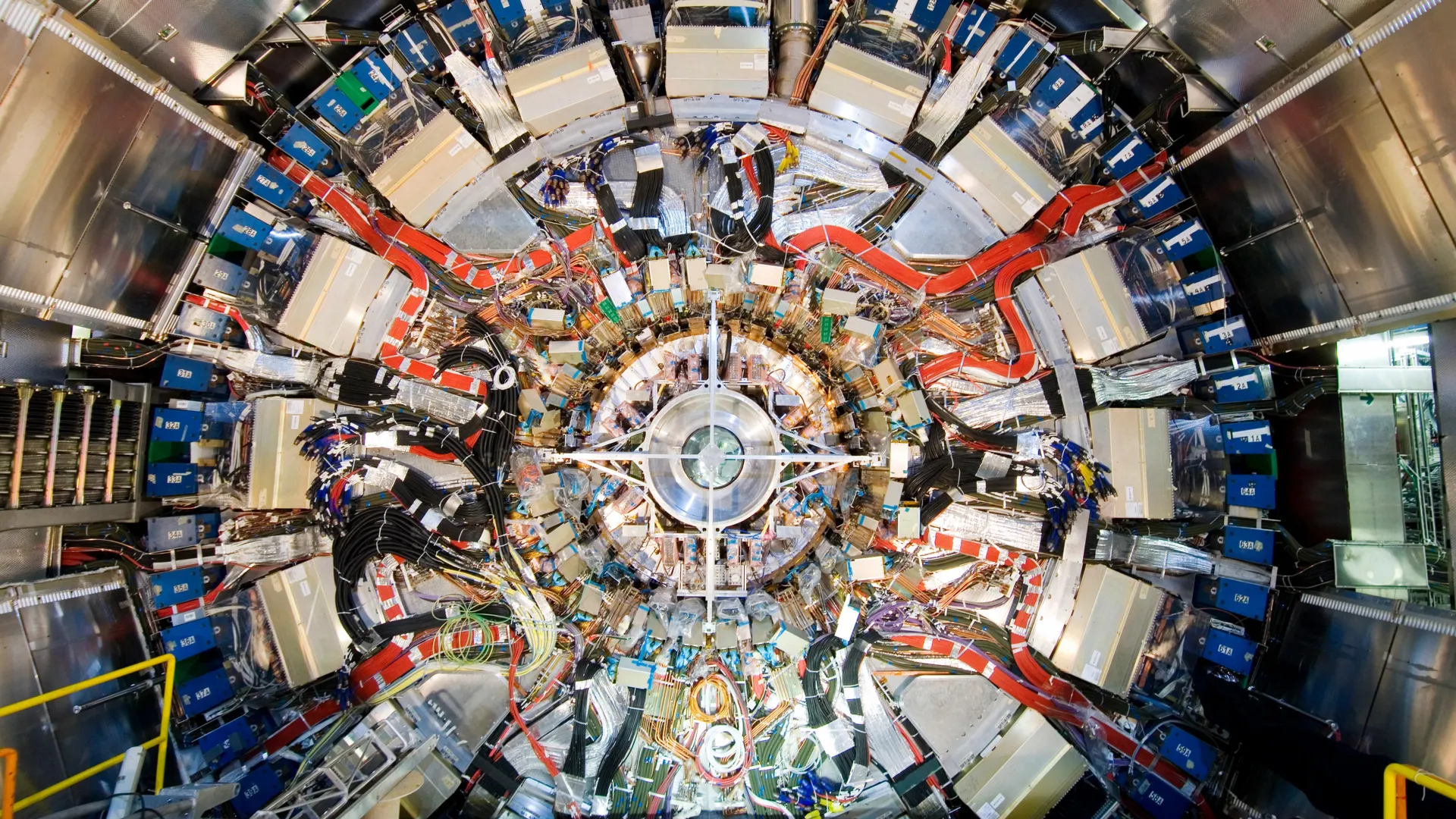
In the vast, silent expanse of the cosmos, particles of nearly inconceivable energy occasionally strike the Earth’s atmosphere, leaving scientists to grapple with the fundamental limits of known physics. In 2023, one such event occurred when an international collaboration detected a subatomic particle, specifically a neutrino, possessing an energy level so extreme that it defied existing models of cosmic acceleration. This single particle carried approximately 100,000 times more energy than the maximum output of the Large Hadron Collider (LHC) at CERN, the most sophisticated and powerful machine ever built by humanity. The detection has sent shockwaves through the scientific community, as no known astronomical process—neither the collapse of stars nor the swirling maws of supermassive black holes—seemed capable of generating such a concentrated burst of power.
Now, a team of theoretical physicists at the University of Massachusetts Amherst has proposed a groundbreaking explanation that could bridge the gap between observation and theory. Published in the prestigious journal Physical Review Letters, their research suggests that the source of this "impossible" particle may not be a traditional cosmic accelerator, but rather the violent, explosive death of a rare class of ancient objects: quasi-extremal primordial black holes (PBHs). This hypothesis not only accounts for the 2023 detection but also offers a potential resolution to the enduring mystery of dark matter and provides a glimpse into the conditions of the universe mere fractions of a second after the Big Bang.
The Nature of the 2023 Detection
The particle in question was recorded by the KM3NeT Collaboration, an international research infrastructure located in the depths of the Mediterranean Sea. KM3NeT uses thousands of optical sensors submerged in water to detect the faint flashes of light, known as Cherenkov radiation, produced when neutrinos interact with water molecules. Neutrinos are often called "ghost particles" because they have nearly no mass and no electric charge, allowing them to pass through solid matter—including the entire Earth—unhindered. However, when a neutrino possesses extreme energy, its interaction with matter becomes more probable, allowing detectors to pinpoint its origin and energy level.
The 2023 event was unprecedented. While the IceCube Neutrino Observatory in Antarctica has previously detected high-energy neutrinos in the PeV (petaelectronvolt) range, the KM3NeT event pushed into the EeV (exaelectronvolt) territory. To put this in perspective, the LHC accelerates protons to energies of roughly 13.6 TeV (teraelectronvolts). The neutrino detected in 2023 operated on a scale five orders of magnitude higher. For decades, physicists believed such energies could only be reached in the most violent environments, such as the jets of active galactic nuclei or gamma-ray bursts. Yet, even those sources struggle to explain a single neutrino of this magnitude without accompanying signals that were notably absent in this case.
Understanding Primordial Black Holes
To explain this anomaly, the UMass Amherst team, led by Assistant Professors Andrea Thamm and Michael Baker along with postdoctoral researcher Joaquim Iguaz Juan, turned to a theoretical concept first proposed by Stephen Hawking in 1970. Unlike the black holes familiar to astronomers, which form from the gravitational collapse of massive stars, primordial black holes are hypothesized to have formed in the high-density environment of the very early universe.
In the moments following the Big Bang, fluctuations in the density of matter and energy could have caused localized regions to collapse under their own gravity, creating black holes of varying sizes. While stellar-mass black holes are typically several times the mass of our Sun, PBHs could theoretically range from the mass of a mountain to that of a planet, all compressed into a space smaller than an atom.
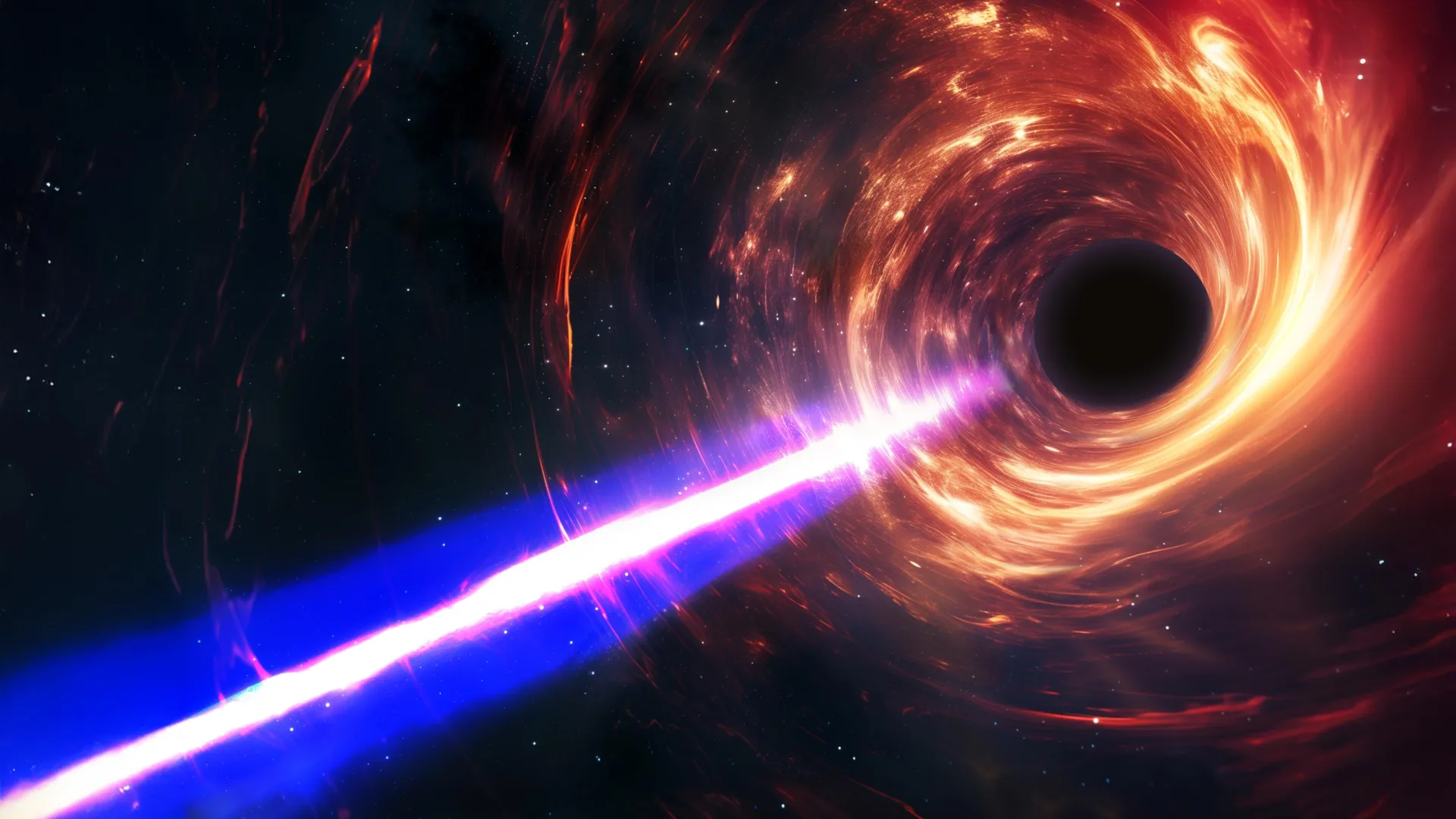
A defining characteristic of these objects is Hawking radiation. Hawking demonstrated that through quantum mechanical effects near the event horizon, black holes are not truly black but emit a steady stream of particles. This process causes the black hole to lose mass over time—a phenomenon known as evaporation. Crucially, the rate of evaporation is inversely proportional to the black hole’s mass. As a black hole gets smaller, it becomes hotter and radiates energy more intensely. This creates a feedback loop: the lighter the black hole becomes, the faster it evaporates, culminating in a final, cataclysmic explosion that releases a burst of high-energy particles.
The Chronology of a Theoretical Breakthrough
The journey to this new hypothesis follows a distinct timeline of scientific inquiry and observation:
- 1970: Stephen Hawking publishes his seminal paper proposing the existence of primordial black holes and the mechanism of Hawking radiation.
- 2010s: The IceCube Neutrino Observatory begins providing the first consistent maps of high-energy neutrinos, though none reach the extreme "impossible" threshold.
- Early 2020s: The UMass Amherst team begins investigating the frequency of PBH explosions, suggesting they might occur as often as once per decade within a detectable range of Earth.
- 2023: The KM3NeT Collaboration detects the ultra-high-energy neutrino, providing the first observational data point that matches the theoretical predictions of a PBH explosion.
- 2024: The UMass team publishes their "dark charge" model in Physical Review Letters, offering a mathematical framework to explain why this specific neutrino was seen by KM3NeT but not by other observatories like IceCube.
The "Dark Charge" and the IceCube Discrepancy
One of the primary challenges the researchers faced was an apparent inconsistency in experimental data. While KM3NeT recorded the extreme neutrino, the IceCube observatory—which has a much larger effective volume and has been operational for longer—had never seen anything like it. Under standard models of black hole evaporation, an explosion should produce a predictable spectrum of particles that both detectors should eventually see.
The UMass team proposed that the solution lies in a "dark charge." They suggest that these primordial black holes are "quasi-extremal," meaning they possess a specific type of charge that relates to a "dark" sector of physics. This model introduces a "dark electron," a hypothetical heavy version of the electron that interacts via a force similar to electromagnetism but hidden from our standard view.
"We think that PBHs with a ‘dark charge’ are the missing link," explained Joaquim Iguaz Juan. This dark charge alters the way the black hole evaporates. Instead of a standard, uniform release of energy, a quasi-extremal black hole would reach a state where its evaporation is influenced by its charge, potentially focusing the energy into specific types of high-energy emissions. This would explain why the events are rare and why the resulting neutrinos possess such specific, extreme energy profiles that might fall outside the optimal detection windows of certain instruments while being perfectly captured by others.
Broader Implications: Dark Matter and New Physics
The implications of this research extend far beyond the explanation of a single subatomic particle. For decades, one of the greatest mysteries in cosmology has been the nature of dark matter—the invisible substance that makes up roughly 85% of the matter in the universe. While many scientists have searched for "WIMPs" (Weakly Interacting Massive Particles), no direct evidence has been found.
If the UMass Amherst model is correct, primordial black holes themselves could be the dark matter. "If our hypothesized dark charge is true," said Iguaz Juan, "then we believe there could be a significant population of PBHs, which would be consistent with other astrophysical observations, and account for all the missing dark matter in the universe."
Furthermore, the explosion of a PBH acts as a natural particle accelerator far more powerful than anything humans can build. By studying the particles released in these final moments, scientists could detect evidence of the Higgs boson in new states, discover dark matter candidates, or identify entirely new particles that exist beyond the Standard Model of physics.
Scientific Analysis and Future Outlook
The scientific community has reacted with cautious optimism to the UMass Amherst study. While the existence of primordial black holes remains theoretical, the 2023 KM3NeT detection provides the strongest circumstantial evidence to date. Independent analysts note that the "dark charge" model is more complex than previous theories, but its ability to harmonize conflicting data from IceCube and KM3NeT makes it a compelling candidate for further study.
The next steps for researchers involve cross-referencing neutrino detections with other astronomical observations. If a PBH explodes, it should theoretically produce a "multimessenger" signal—not just neutrinos, but also gamma rays and potentially gravitational waves. Future missions and the continued expansion of the KM3NeT array in the Mediterranean will be crucial in determining if the 2023 event was a statistical fluke or the first of many detections.
As Michael Baker concluded, the scientific community may be standing on the threshold of a new era. The verification of Hawking radiation through the observation of a PBH explosion would not only confirm one of the most famous predictions in theoretical physics but would also provide a definitive answer to the dark matter problem. For now, the ultra-high-energy neutrino of 2023 remains a singular beacon from the deep past, suggesting that the most profound secrets of the universe may be hidden in the smallest, oldest, and most violent objects in existence.















Leave a Reply