A landmark study published in the journal Nature has fundamentally altered the scientific understanding of chronic myeloid leukemia (CML), revealing that the cancer originates years earlier than previously suspected and expands at an "explosive" rate that distinguishes it from almost all other known malignancies. Conducted by researchers at the Wellcome Sanger Institute in collaboration with international partners, the research utilizes advanced whole-genome sequencing to trace the ancestry of cancerous cells, providing a high-resolution timeline of how a single genetic accident transforms into a life-threatening blood disorder.
Chronic myeloid leukemia is a type of cancer that affects the blood and bone marrow, characterized by the overproduction of white blood cells. For decades, it has served as a model for precision medicine because its primary cause—a specific genetic abnormality known as the Philadelphia chromosome—is well-defined. However, the exact timing of when this abnormality arises and the pace at which it progresses toward a clinical diagnosis have remained elusive until now. The findings suggest that CML cells can multiply by more than 100,000 percent annually, a growth rate that explains why the disease can appear suddenly despite having been present in the body for over a decade.
The Genetic Catalyst: Understanding the BCR::ABL1 Fusion
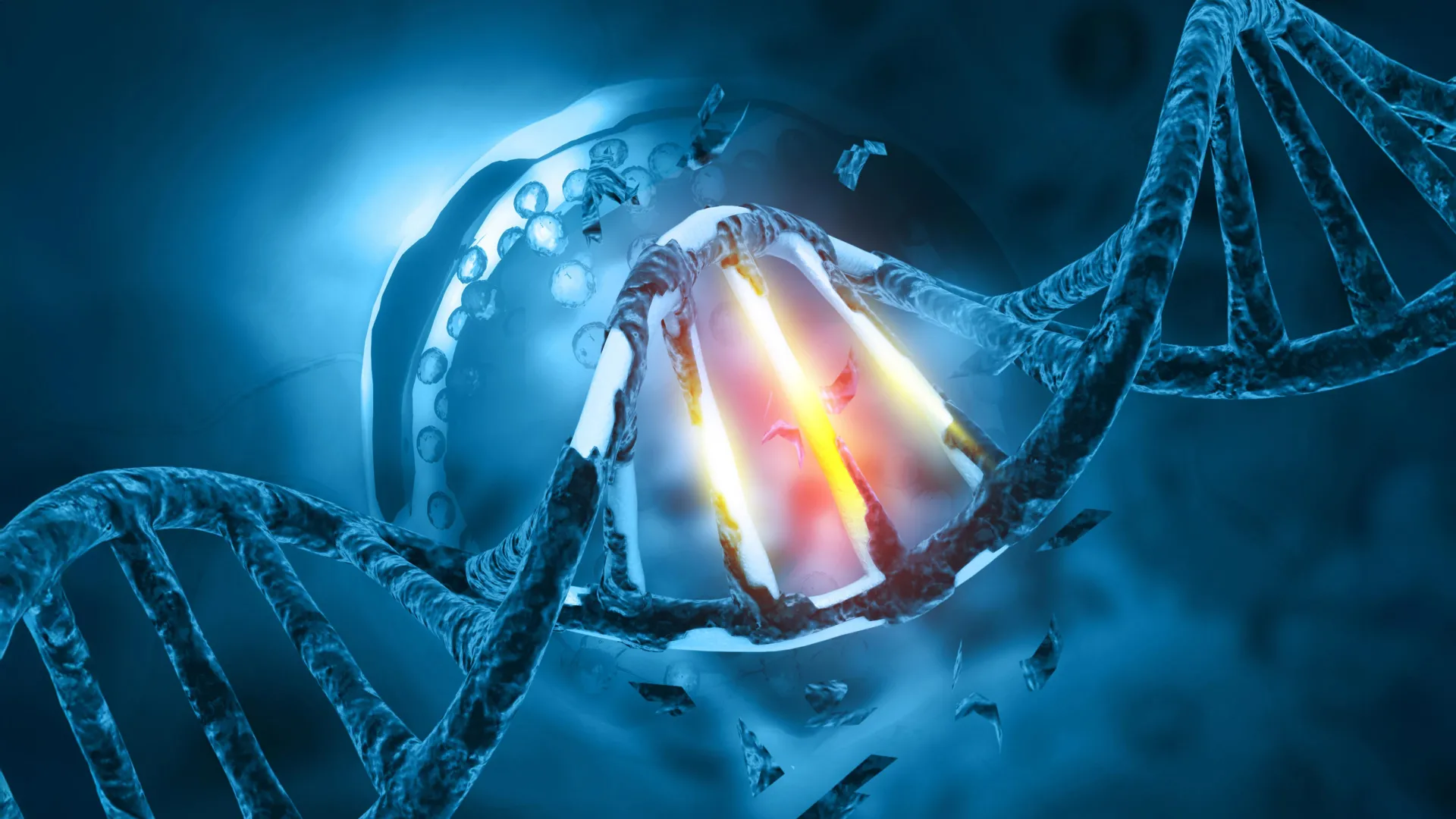
To understand the significance of the study, one must first look at the biological architecture of CML. The disease is driven by the fusion of two genes: BCR (located on chromosome 22) and ABL1 (located on chromosome 9). When a piece of chromosome 9 breaks off and attaches to chromosome 22, it creates the BCR::ABL1 fusion gene. This new, abnormal gene produces a protein—a tyrosine kinase—that stays permanently "on," signaling white blood cells to divide uncontrollably.
Prior to this research, the scientific community lacked a clear "biography" of this fusion gene. While doctors knew the BCR::ABL1 gene was the culprit, they did not know how long the "pre-clinical" phase lasted. By analyzing over 1,000 whole genomes of single blood cells from nine patients ranging in age from 22 to 81, the Sanger Institute team was able to perform a feat of biological detective work. They reconstructed the "family trees" of these cells, known as phylogenetic trees, which allowed them to look back in time and pinpoint the exact moment the first BCR::ABL1 fusion occurred.
A Timeline of Silent Expansion
The study’s most striking revelation is the timeline of the disease’s development. The researchers found that the BCR::ABL1 fusion typically appears between three and 14 years before a patient experiences symptoms or receives a diagnosis. This lengthy "silent" period suggests that the cancer is a slow-burning fuse that eventually leads to a rapid explosion of cellular growth.
Once the fusion occurs, the resulting tumor clones—groups of genetically identical cells—exhibit a growth rate that is virtually unprecedented in oncology. In some patients, the cancerous population expanded by more than 100,000 percent per year. To put this in perspective, most other forms of cancer, including various solid tumors and other types of leukemia, develop over many decades through the gradual accumulation of multiple genetic mutations. CML, by contrast, appears to be an "outlier," requiring only a single genetic event to trigger a massive and rapid takeover of the bone marrow.
This rapid growth explains a long-standing mystery in hematology: why CML often presents so aggressively in patients who had perfectly normal blood counts just a year or two prior. The "explosive" nature of the clones means that once they reach a certain threshold, they can overwhelm the healthy blood-clearing mechanisms in a very short window of time.
The Influence of Age and Patient Variation
The research also highlighted significant variations in how CML behaves across different age groups. Contrary to the general rule that cancers become more aggressive with age due to a weakened immune system or accumulated cellular damage, the study found that younger patients often exhibited much higher rates of cancerous cell multiplication than older patients.
This age-related disparity suggests that the "fitness" of the BCR::ABL1 mutation may be influenced by the internal environment of the bone marrow, which changes as a person ages. In younger individuals, the bone marrow may provide a more fertile ground for these specific clones to proliferate, leading to a more rapid onset of the disease. This finding has profound implications for how clinicians approach younger patients, who may require more intensive monitoring or different therapeutic strategies compared to the elderly.
Clinical Implications: Predicting Treatment Response
Beyond the biological insights, the study offers critical data regarding the efficacy of current treatments. The standard of care for CML involves tyrosine kinase inhibitors (TKIs), such as Imatinib (Gleevec), which specifically target the protein produced by the BCR::ABL1 gene. While TKIs have turned CML from a fatal disease into a manageable chronic condition for many, approximately 20 percent of patients do not respond well to these drugs.
The researchers discovered a correlation between the pre-diagnostic growth rate of the cancer and the patient’s subsequent response to treatment. Patients whose CML clones grew the fastest were significantly less likely to achieve a deep molecular response when treated with TKIs. This suggests that the inherent "velocity" of the cancer is a key predictor of its resilience.
Dr. Aleksandra Kamizela, a co-first author of the study and a resident doctor at Lister Hospital, noted that current clinical tools are somewhat limited in this regard. While healthcare professionals use blood tests like reverse transcription polymerase chain reaction (RT-PCR) to monitor treatment response, they do not routinely analyze the genetic growth dynamics at the DNA level. "Our findings provide a rationale to look at the rate of cancer growth more closely in future studies in order to understand if we can use such information in a clinical setting," Kamizela stated.
Insights from the "All of Us" Cohort
To determine if the BCR::ABL1 fusion gene could exist in a "dormant" state without ever causing disease, the team turned to the "All of Us" research program, a massive health database in the United States. They analyzed the health records and sequencing data of over 200,000 participants.
The results were definitive: almost every individual identified with the BCR::ABL1 fusion was eventually diagnosed with a blood disorder. This suggests that the expansion of BCR::ABL1 clones is an inevitable path toward leukemia rather than a benign genetic variation. This finding underscores the potential for early detection. If the medical community can identify these clones during the 3-to-14-year window before symptoms appear, there may be an opportunity for earlier intervention, though the researchers caution that more work is needed to determine the feasibility of such screening.
Redefining the Landscape of Cancer Research
The Sanger Institute’s work places CML in a unique category of human malignancy. Dr. Jyoti Nangalia, the senior author of the study and a hematologist at the University of Cambridge, emphasized that CML is an outlier. "We have shown that chronic myeloid leukemia cells undergo incredibly rapid growth within a few years to a decade before diagnosis, whereas for most cancers, the timeline from start to clinical presentation is several decades," Nangalia explained.
This distinction is crucial for the future of oncology. If CML operates on a different "biological clock" than other cancers, it may require a different set of rules for prevention and therapy. The study paves the way for a more personalized approach to leukemia, where the growth rate of a patient’s specific cancer clones could be used to tailor their medication dosage or determine if they are candidates for more aggressive treatments, such as bone marrow transplants, earlier in the process.
Broader Impact and Future Directions
The implications of this study extend beyond leukemia. By demonstrating the power of whole-genome sequencing and phylogenetic mapping, the researchers have provided a blueprint for studying the origins of other cancers. If scientists can map the growth rates and "birth dates" of other tumors, they can better understand the window of opportunity for early detection and the factors that lead to drug resistance.
For now, the focus remains on validating these findings in larger patient cohorts. The link between rapid growth and TKI resistance, in particular, could change the way clinical trials for new leukemia drugs are designed. Rather than treating all CML patients with a "one size fits all" approach, the next generation of therapies may be calibrated based on the genomic speed of the disease.
As the scientific community digests these findings, the message is clear: the battle against chronic myeloid leukemia begins long before the first symptom appears. By unmasking the "explosive" years that precede a diagnosis, researchers have opened a new chapter in the effort to outpace one of the most uniquely aggressive genetic drivers in human cancer. The study not only solves a decades-old mystery about the Philadelphia chromosome but also sets the stage for a future where cancer growth rates are as vital to a diagnosis as the presence of the cancer itself.