Over a decade ago, the American Society of Clinical Oncology (ASCO) initiated a groundbreaking endeavor with the launch of CancerLinQ, a platform conceived to aggregate electronic health record (EHR) data from diverse oncology practices. The ambitious goal was to transform routine patient interactions into a continuous learning system, thereby fostering improvements in cancer care quality and accelerating research. This vision aimed to leverage the vast, untapped potential of real-world data, moving beyond traditional clinical trial limitations to understand cancer treatment and outcomes in broader, more diverse patient populations.
For many years, CancerLinQ served primarily as a vital tool for automated reporting, especially in the context of ASCO certification quality measures. As Eron Kelly, ConcertAI’s chief executive, explained, "Before we bought it, CancerLinQ largely just delivered software that automated the measurement of ASCO certification quality measures, in order to get your ASCO certification." While valuable for quality assurance and compliance, this initial functionality represented only a fraction of the platform’s potential for driving deeper insights and real-time clinical impact.
A Strategic Acquisition: Shifting Paradigms in Oncology Data
A significant turning point occurred in December 2023 when ConcertAI, a company specializing in AI and real-world data solutions for oncology, acquired CancerLinQ from ASCO. This acquisition marked a pivotal moment, signaling a strategic shift to evolve CancerLinQ from a data aggregation and reporting service into a comprehensive, AI-powered oncology intelligence platform. ConcertAI’s established expertise in applying artificial intelligence to complex healthcare datasets provided the impetus and technological capabilities to unlock CancerLinQ’s dormant potential, aligning with the broader industry trend of transforming raw clinical data into actionable insights.
The integration of CancerLinQ into ConcertAI’s ecosystem was not merely an expansion of data sources but a fundamental re-imagining of its utility. The aim was to embed sophisticated AI models and analytical capabilities directly into the clinical workflow, empowering oncologists with timely, data-driven support at the point of care. This transformation addresses a critical need in modern oncology: the burgeoning volume of medical information, rapid therapeutic advancements, and the increasing complexity of personalized treatment strategies.
Closing the Care-Research Gap: A Unified Vision
A core objective driving ConcertAI’s strategy is to bridge the persistent gap between routine clinical care and cutting-edge clinical research. Dr. Shaalan Beg, ConcertAI’s chief medical officer for oncology, emphasizes the crucial nature of this divide. In rapidly evolving disease areas, particularly within oncology, the most current and effective treatment options are often only accessible through participation in clinical trials. This creates a disparity where patients receiving standard care may miss out on potentially life-saving innovations.
Dr. Beg highlighted this challenge with a recent example: ASCO data presented just days before the interview demonstrated a novel multi-selective RAS inhibitor nearly doubling the median survival for patients with previously treated metastatic pancreatic cancer, extending it from approximately six months to 12 months. Such advancements are transformative, yet their immediate availability outside of a trial setting remains limited. "If you’re a pancreatic cancer patient right now and you want the best standard of care," Dr. Beg stated, "the only way you’re going to get it is through clinical trials." This underscores the urgent need for systems that can seamlessly identify eligible patients and connect them with appropriate research opportunities.
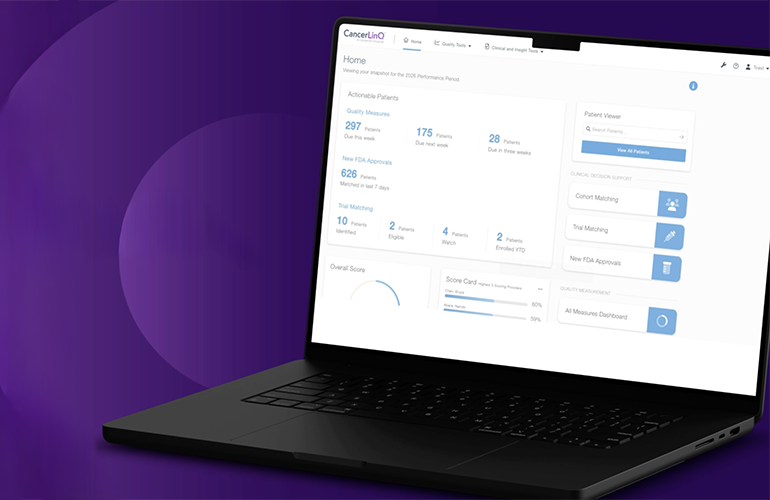
ConcertAI’s revamped CancerLinQ platform is designed precisely for this purpose. It integrates trial-matching capabilities, allowing physicians to quickly identify suitable clinical trials for their patients based on their specific clinical profiles. Furthermore, it generates research-grade datasets and provides clinical decision support tools, all powered by advanced AI. The recent focus has been on pushing these critical insights directly into physicians’ live workflows, ensuring that the information is accessible and actionable when it matters most.
The Evolution of AI in Healthcare: A Broader Landscape
The move by ConcertAI to enhance CancerLinQ reflects a broader trend within the healthcare technology sector. Companies like Flatiron Health, Tempus, and Komodo Health have also been increasingly focused on aggregating clinical data and leveraging AI to derive insights, develop predictive models, and create agentic AI tools. This competitive landscape highlights the growing recognition of real-world data’s value and AI’s potential to revolutionize healthcare delivery and research.
What distinguishes ConcertAI, according to Dr. Beg, is its platform’s agnosticism. It is designed to be compatible with all major EHR vendors and all genomic/molecular laboratories, allowing it to collect comprehensive, longitudinal, and prospective data for both clinical care and research without vendor lock-in. This vendor-agnostic approach is crucial for creating a truly comprehensive and interoperable data network, essential for capturing the full spectrum of patient experiences and accelerating discoveries across the oncology landscape. The ability to synthesize prospective data at the point of care was a key factor that drew Dr. Beg to the program, recognizing its potential for immediate impact.
The adoption of AI by physicians themselves has seen a dramatic surge. According to a survey from the American Medical Association (AMA), in 2023, 38% of physicians were incorporating AI in one or more cases. By 2026, this figure had jumped to an impressive 72%. Concurrently, physician awareness of AI increased from 66% in 2025 to 81% in 2026, indicating a growing acceptance and understanding of these technologies within the medical community. This rapid adoption underscores the tangible benefits AI is beginning to deliver in clinical practice, particularly in areas like documentation, summarization, and decision support.
"Lane Assist" for Oncology: Augmenting Physician Capabilities
Dr. Beg uses a compelling analogy to describe the role of AI in clinical workflows: "For most of the clinical care doctors are asking for right now, it’s more like lane assist, keeping the car in its lane and giving nudges along the way." This analogy perfectly encapsulates the assistive, rather than autonomous, nature of these AI tools. The "nudges" manifest as timely alerts and suggestions, such as "here’s a care gap, you’re missing molecular data on this colon-cancer patient" or "here’s a trial, have you considered it?" These subtle yet critical interventions help oncologists maintain optimal care pathways and explore all available options for their patients.
The AMA’s research corroborates this perspective, indicating that physician use and enthusiasm for AI tools predominantly cluster around documentation and summarization. Summaries of research and standards of care have become the single most common use case, accounting for nearly 40% of AI applications, a significant 26-point increase since 2024. Documentation tools follow closely in terms of physician enthusiasm, highlighting the administrative burden that AI is effectively alleviating.
The underlying philosophy guiding ConcertAI is clear: "We’re not working under the assumption that these tools will autonomously care for patients," Dr. Beg affirmed. Instead, the tools are designed to relieve the immense pressure on clinical capacity. Modern oncology has become too vast and complex for any single clinician to master comprehensively. "The era of one physician taking care of all your needs is decades over," Dr. Beg noted, underscoring the necessity of team-based care and advanced technological support.
A cancer patient’s journey now routinely involves a multidisciplinary team, including an oncologist, nurse practitioner, geneticist, dietitian, and physical therapist. Coordinating care across these diverse roles presents significant challenges, often compounded by staffing shortages. "I don’t know of any academic program or clinical trials office that says it’s fully staffed," Dr. Beg lamented. Against this backdrop, AI tools serve as a crucial efficiency layer, potentially saving oncologists a few precious minutes per patient, thereby enabling them to oversee more patients and dedicate more time to complex decision-making and patient interaction.
Transforming Trial Matching and Data Insights
One of the most impactful applications of the transformed CancerLinQ platform is its ability to accelerate clinical trial matching. Dr. Beg highlighted that AI-powered trial matching can compress screening time to less than a third of what manual screening typically requires. The system integrates the entire workflow for trial coordinators: once a patient is flagged as a probable match, the AI system evaluates 20 to 30 specific eligibility criteria, provides a determination for each, and links directly back to the source documentation within the patient’s record. This eliminates the laborious process of manually scouring charts in separate windows, significantly streamlining the recruitment process. Crucially, this capability also extends the reach of clinical trials to patients in satellite sites within hub-and-spoke setups, democratizing access to cutting-edge therapies.
The bedrock of these point-of-care capabilities and rapid trial matches is ConcertAI’s robust data engine. This engine ingests both structured EHR fields and unstructured clinical content directly from oncology sites across the CancerLinQ network. This includes physician notes, detailed pathology reports, and comprehensive genomic/Next-Generation Sequencing (NGS) laboratory reports. The ingested data is then processed and summarized into a structured data model, which is refreshed weekly, ensuring that clinicians are working with the most current and accurate patient information.

The Architecture of Trust: Chaining AI Models for Precision
Eron Kelly provided deeper insight into the technological sophistication underpinning CancerLinQ’s capabilities. "We use a chain of AI models and agents to parse all that information, understand really challenging concepts like progression, or timelines within a diagnosis journey, and summarize that into a structured data model that can be queried from our SaaS software stack," Kelly explained. This multi-layered approach is critical for extracting nuanced clinical information from often messy and complex unstructured text. The system achieves impressive accuracy, with Kelly reporting "0.9 and higher in precision and recall," indicating a high degree of reliability in its data abstraction and summarization.
A paramount concern in deploying AI in clinical settings is trust: can clinicians rely on the AI’s output as much as they would a human abstractor? ConcertAI addresses this through a layered validation process where multiple AI agents cross-check one another. One layer focuses on abstraction accuracy, verifying that the model correctly interprets and extracts information from the chart. Another layer assesses coherence, ensuring that the sequence of events makes clinical sense – for example, flagging a treatment regimen that would not logically follow a particular radiation therapy. This rigorous internal validation is designed to maintain clinicians’ confidence in the system’s recommendations and insights.
Unlocking Precision Medicine: The HER2 Example
The power of this granular data analysis and AI interpretation extends to identifying patients who may qualify for newer targeted therapies based on evolving diagnostic criteria. Because ConcertAI holds the underlying pathology reports, it can re-evaluate historical data in light of current understanding. Kelly cited the example of HER2 status in breast cancer. Historically, patients with a HER2 expression score of "1+" were categorized as HER2-negative and not eligible for HER2-targeted therapies like trastuzumab. However, with the advent of newer HER2-targeted antibody-drug conjugates (ADCs) that are effective even at low expression levels, patients previously classified as HER2-negative (e.g., "HER2-low" or 1+) are now considered positive under updated criteria.
The CancerLinQ system can proactively identify these patients from historical records, flagging them for potential re-evaluation and access to these new, highly effective treatments. This anecdote vividly illustrates how a specific, incremental change in treatment guidelines, when combined with AI-driven data analysis, can have a tangible, life-altering impact for patients who might otherwise miss out on appropriate care.
Beyond Moonshots: The Philosophy of "Ground Shots"
For more than half a century, the popular imagination has been captivated by the "War on Cancer" and more recently, the federal "Cancer Moonshot," fueling dreams of a sweeping cure. While these initiatives have coincided with real breakthroughs—such as checkpoint-inhibitor immunotherapy, CAR-T therapies for certain blood cancers, and targeted drugs like imatinib for chronic myeloid leukemia—most gains in oncology have been incremental. Survival is often measured in additional months, achieved through better-targeted therapies, refined biomarkers, and optimized treatment sequences.
While grand "moonshots" certainly have their place in inspiring ambitious research, Dr. Beg articulated a more pragmatic, ground-up approach. He advocates for focusing on "ground shots first, disseminating the treatments we already know work to the people who need them right now." This philosophy underscores the immediate, practical impact of ConcertAI’s work with CancerLinQ. By leveraging AI to optimize current care, reduce disparities, and ensure eligible patients access the best available treatments and trials, the platform is contributing to a steady, widespread improvement in cancer outcomes. It’s about maximizing the impact of existing knowledge and rapidly translating research findings into real-world patient benefits, one patient at a time.
The transformation of CancerLinQ into an AI-powered point-of-care oncology intelligence platform by ConcertAI represents a significant stride in modernizing cancer care. By closing the care-research gap, augmenting physician capabilities, and ensuring data-driven precision, the platform is poised to enhance patient outcomes and streamline clinical workflows, paving the way for a more intelligent, equitable, and efficient future in oncology.