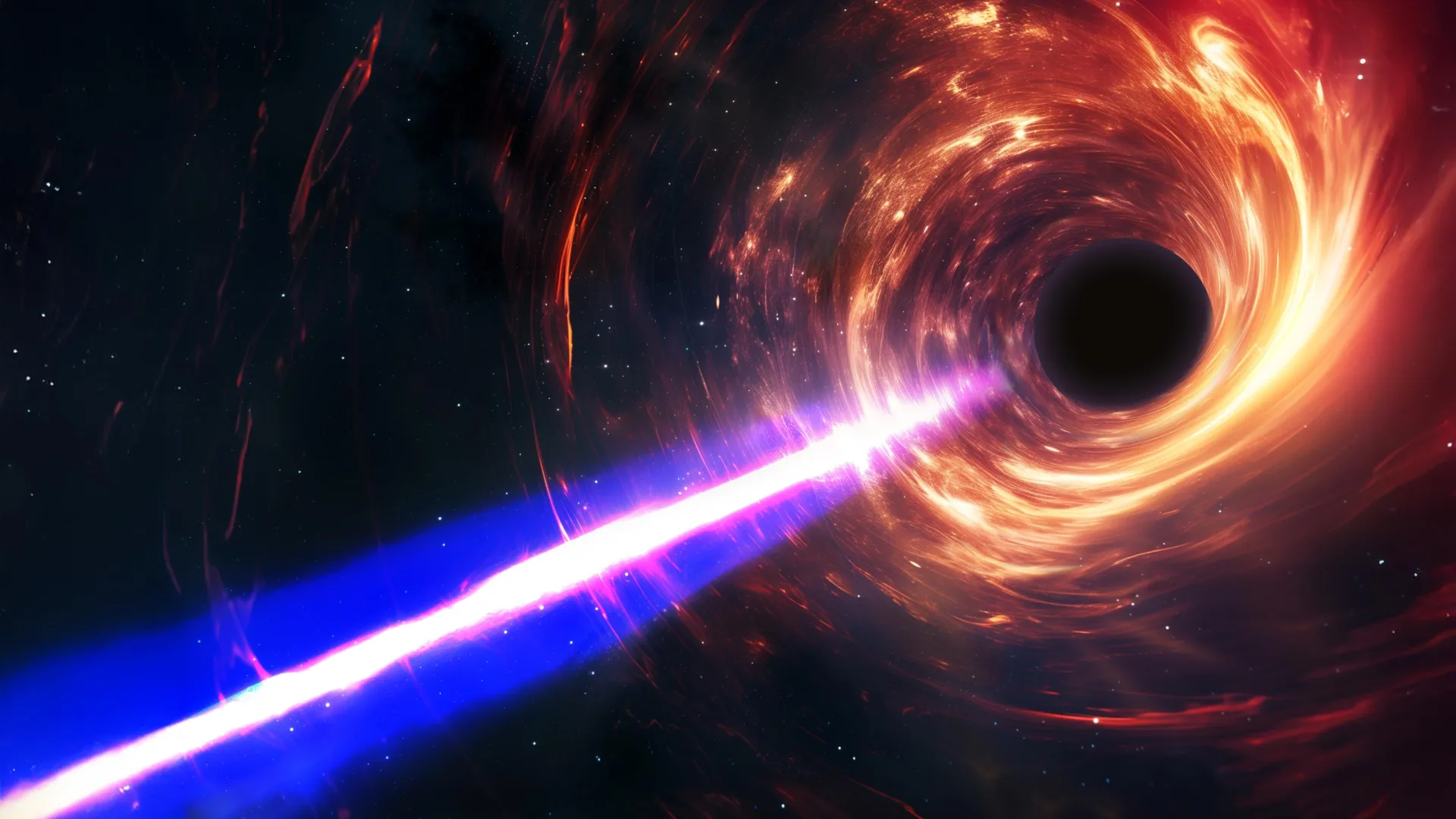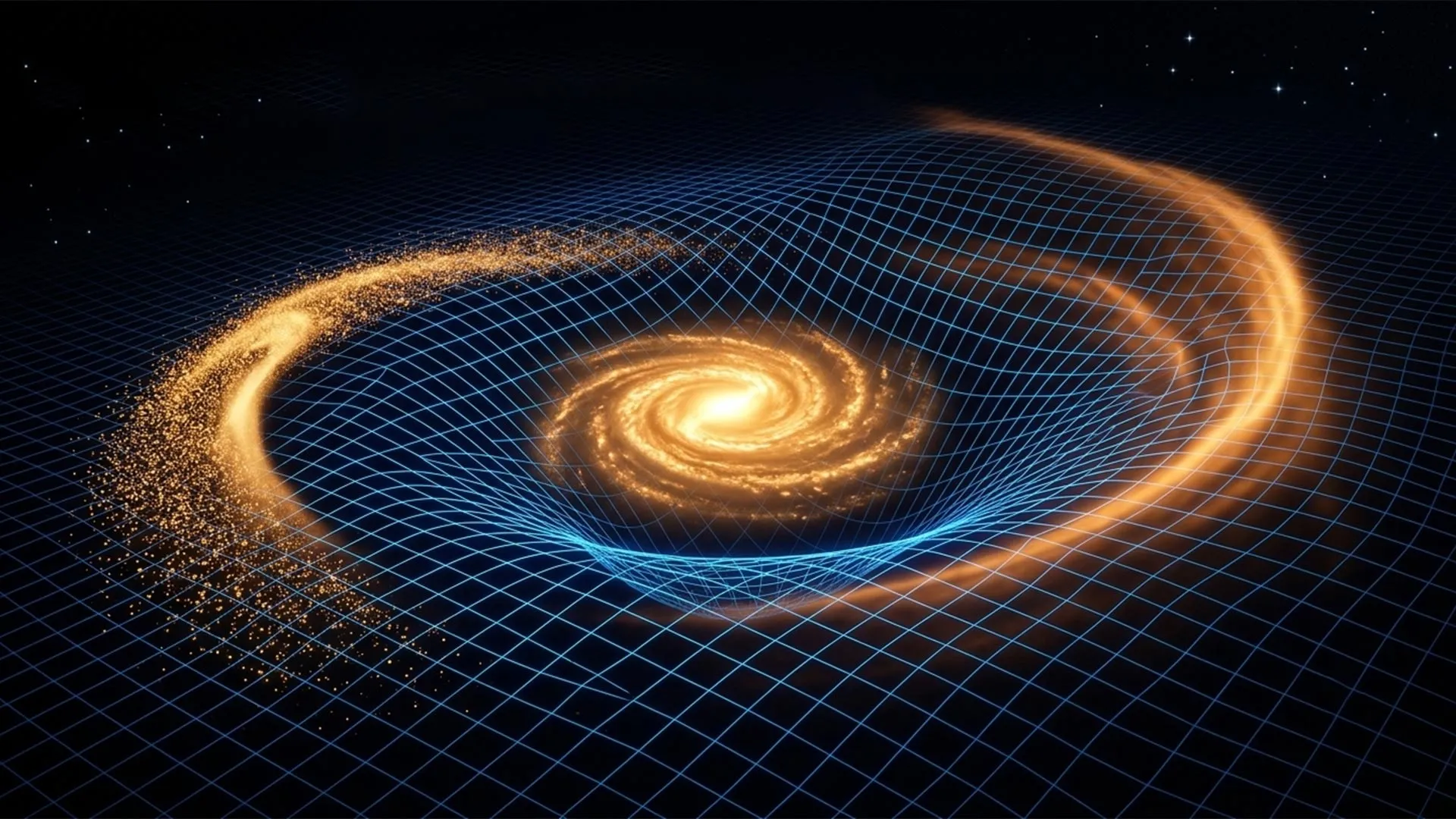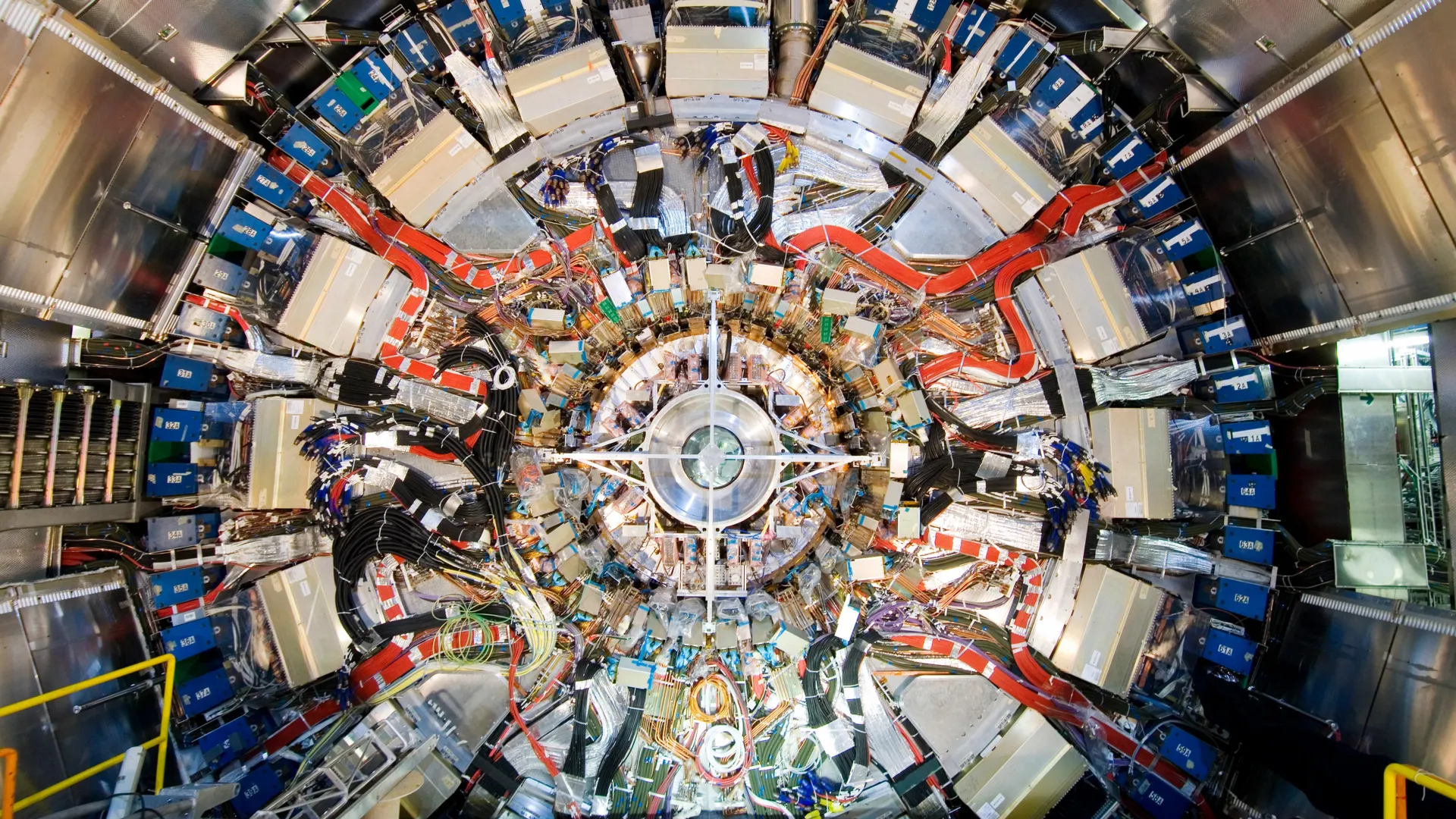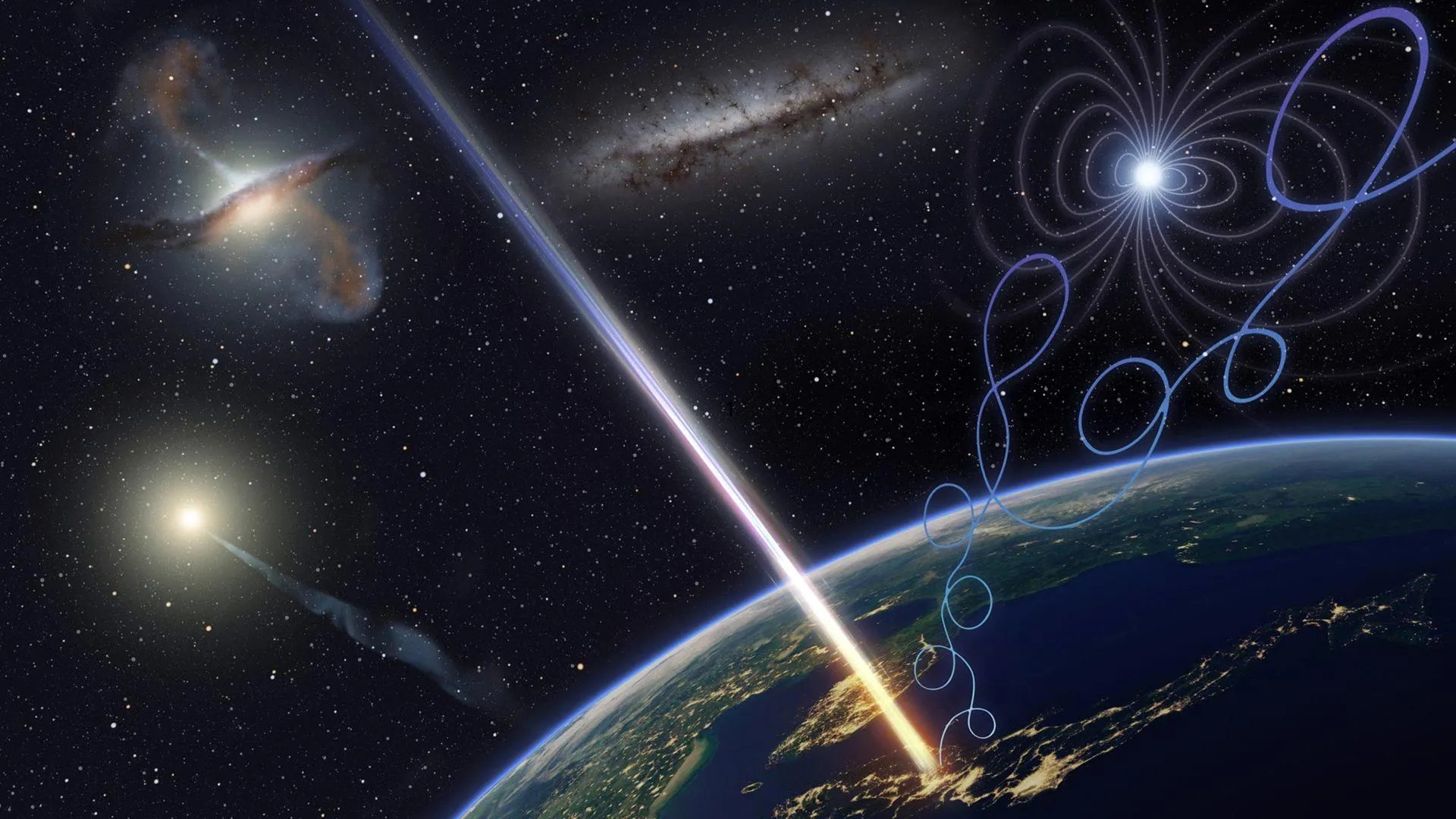
The discovery of the Amaterasu particle in 2021 sent shockwaves through the global astrophysical community, marking one of the most significant detections in the history of cosmic ray research. This single particle, arriving from the depths of space with an energy level of approximately 240 exa-electron volts (EeV), challenged existing models of particle acceleration and propagation. Now, a groundbreaking study led by researchers at Pennsylvania State University and published in the journal Physical Review Letters suggests that the solution to this mystery may lie in the chemical composition of the rays themselves. The research proposes that these ultrahigh-energy cosmic rays (UHECRs) are not protons or light nuclei, as previously hypothesized, but rather ultraheavy atomic nuclei—elements heavier than iron—that possess the unique physical resilience required to traverse the vast, hostile reaches of intergalactic space.
The Enigma of the Amaterasu Particle
The Amaterasu particle, named after the sun goddess in Japanese mythology, was detected by the Telescope Array experiment in the high deserts of Utah. Its energy was so immense—roughly 10 million times greater than what the Large Hadron Collider can achieve—that it was immediately compared to the legendary "Oh-My-God" particle recorded in 1991. The 1991 event remains the highest-energy cosmic ray ever detected at 320 EeV, but the Amaterasu particle is a close second, and it carries a specific mystery that the 1991 event did not: its point of origin.
When scientists traced the arrival direction of the Amaterasu particle back into the cosmos, they found themselves staring into the "Local Void." This is a region of space largely devoid of galaxies, stars, or any known high-energy astrophysical phenomena. In the standard model of astrophysics, cosmic rays are expected to travel in relatively straight lines at such high energies, meaning the source should be located exactly where the particle came from. The lack of a visible source led to two possibilities: either our understanding of magnetic deflection in space is incomplete, or the particle is of a type that behaves differently than we expected.
A New Theoretical Framework: Ultraheavy Nuclei
The research team, led by Kohta Murase, a professor of physics and of astronomy and astrophysics at Penn State, utilized advanced computational simulations to test a new hypothesis. While most cosmic ray research focuses on protons (hydrogen nuclei) or intermediate nuclei like helium, carbon, or iron, Murase’s team looked further up the periodic table. They investigated "ultraheavy" nuclei—atoms with a mass greater than iron (atomic number 26).
Atomic nuclei are incredibly dense structures, containing nearly all the mass of an atom within a fraction of its volume. The Penn State study suggests that these ultraheavy nuclei lose energy much more slowly than lighter particles when interacting with the Cosmic Microwave Background (CMB)—the faint afterglow of the Big Bang that permeates the universe. For decades, the "Greisen-Zatsepin-Kuzmin (GZK) limit" has been the theoretical ceiling for cosmic ray energy, suggesting that particles traveling over long distances should lose energy through interactions with CMB photons. However, the team’s calculations show that ultraheavy nuclei might "bypass" some of these energy-loss mechanisms, allowing them to retain their extreme kinetic energy over much longer distances.
"Ultrahigh-energy cosmic rays can only be accelerated by some of the most powerful sources in the universe," Murase explained. "When we detect individual cosmic-ray particles such as the Amaterasu particle here on Earth, we can often use their energies, arrival directions and expected magnetic deflections to infer their possible cosmic sources."
A Chronology of Discovery: From 1912 to the Present
The quest to understand cosmic rays has spanned more than a century, characterized by incremental technological leaps and sudden, baffling discoveries.
- 1912: Victor Hess discovers cosmic rays during a high-altitude balloon flight, proving that ionizing radiation enters the atmosphere from outer space.
- 1962: The first ultrahigh-energy cosmic ray (above 10 EeV) is detected at the Volcano Ranch array in New Mexico, proving that the universe contains "natural accelerators" far beyond human capability.
- 1991: The "Oh-My-God" particle is detected by the Fly’s Eye camera in Utah. At 320 EeV, it remains the most energetic particle ever recorded, carrying the kinetic energy of a baseball thrown at 60 mph within a single subatomic entity.
- 2008: The Pierre Auger Observatory in Argentina begins providing data suggesting a correlation between UHECRs and the positions of nearby active galactic nuclei, though this correlation remains statistically debated.
- 2021: The Telescope Array in Utah detects the Amaterasu particle (244 EeV), originating from the Local Void.
- 2024: The Penn State study provides a mathematical and simulative basis for the "ultraheavy nuclei" theory, offering a path forward for identifying the sources of these particles.
The Physics of Survival in Intergalactic Space
The primary challenge for any high-energy particle traveling through space is the interaction with ambient light and radiation. Protons at ultra-high energies frequently collide with CMB photons, producing pions—a process that drains the proton of its energy. This effectively creates a "horizon" beyond which we cannot see high-energy protons.
Heavy nuclei, such as iron, face a different problem: photo-disintegration. When a heavy nucleus hits a photon, it can shed individual protons or neutrons, slowly breaking down into lighter elements. However, Murase’s team found that for particles with the specific energy of the Amaterasu event, ultraheavy nuclei (those significantly heavier than iron) may actually have a lower cross-section for certain types of energy loss.
This slower rate of decay means that an ultraheavy nucleus could potentially originate from a source much further away than a proton could. Furthermore, because these nuclei carry a higher electric charge (Z), they are more strongly deflected by galactic and intergalactic magnetic fields. This "magnetic bending" could explain why the Amaterasu particle appeared to come from a void; its true source might be a violent galaxy located many degrees away in the sky, with the particle’s path being curved by magnetic fields during its multimillion-year journey.
Identifying the Cosmic Engines
If the ultraheavy nuclei theory holds, it narrows the list of potential "cosmic engines" capable of producing such particles. The energy required to accelerate a heavy nucleus to 240 EeV is staggering, and only a few known astrophysical events fit the bill.
- Binary Neutron Star Mergers: When two neutron stars—the collapsed cores of massive stars—collide, they create a "kilonova." These events are known to be the primary sites of "r-process nucleosynthesis," the process that creates heavy elements like gold, platinum, and uranium. The intense magnetic fields and shockwaves produced in these mergers could act as a natural particle accelerator.
- Hypernovae and Black Hole Formation: The death of an extremely massive star, resulting in a black hole and a massive explosion known as a hypernova, provides the necessary energy density. If these stars are rich in heavy elements, the resulting explosion could strip and accelerate those nuclei into the cosmos.
- Magnetars: These are neutron stars with magnetic fields a quadrillion times stronger than Earth’s. The rapid rotation and magnetic flares of a magnetar could potentially "fling" heavy nuclei at relativistic speeds.
"The most promising sites for producing and accelerating such ultraheavy nuclei are massive star deaths involving explosive collapse into black holes or strongly magnetized neutron stars," Murase noted. These events are also the sources of gamma-ray bursts (GRBs), the most luminous electromagnetic events in the universe.
Implications for Future Observation
The Penn State research has significant implications for the next generation of observatories. Currently, there is a noted discrepancy between the cosmic ray spectra observed in the Northern Hemisphere (by the Telescope Array) and the Southern Hemisphere (by the Pierre Auger Observatory). If the composition of these rays shifts toward ultraheavy nuclei at the highest energy levels, it could explain these regional variations.
Future projects like AugerPrime, an upgrade to the Pierre Auger Observatory in Argentina, and the proposed Global Cosmic Ray Observatory (GCOS), are designed to have much higher sensitivity to the mass of incoming particles. By measuring the "shower depth"—how deep into the atmosphere a particle travels before it shatters into a cascade of secondary particles—scientists can determine whether an incoming ray was a light proton or a heavy nucleus.
Conclusion: A New Window into the Violent Universe
The study led by Murase and his collaborators at the Yukawa Institute for Theoretical Physics and Virginia Tech represents a pivot in the field of high-energy astrophysics. By moving beyond the "proton-centric" model, researchers are beginning to reconcile the existence of particles like Amaterasu with the observable reality of our universe.
If future data confirms that the most energetic particles in the universe are indeed ultraheavy nuclei, it will provide more than just an answer to a 60-year-old mystery. It will offer a new way to map the most violent and energetic events in the cosmos, using these heavy "messengers" to probe the physics of black holes, neutron star collisions, and the very limits of the Standard Model of particle physics. As next-generation detectors come online, the transition from theoretical simulation to empirical confirmation may finally reveal the true birthplaces of these extraordinary cosmic travelers.