

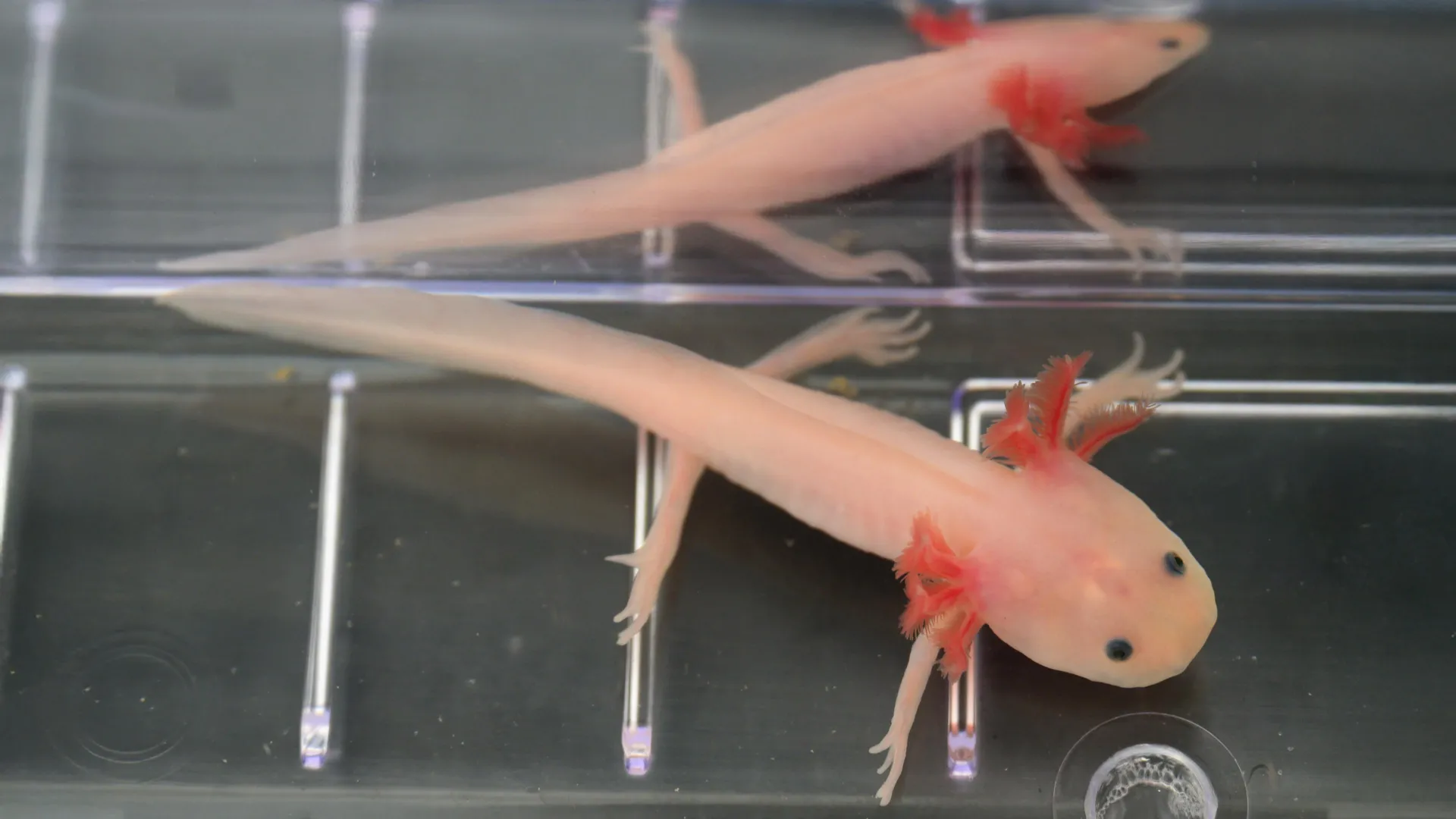
A groundbreaking collaborative study involving scientists who study axolotls, zebrafish, and mice has identified a conserved set of genes that could fundamentally alter the landscape of regenerative medicine and pave the way for therapies aimed at regrowing human limbs. The research, published in the prestigious journal Proceedings of the National Academy of Sciences, represents a significant leap forward in understanding the intricate genetic mechanisms that govern regeneration across vastly different species.
A Tri-Species Approach to Unlocking Regenerative Secrets
The ambitious project brought together three distinct research groups, each with deep expertise in the regenerative capabilities of their chosen model organisms. Dr. Josh Currie, an Assistant Professor of Biology at Wake Forest University, whose laboratory specializes in the remarkable regenerative abilities of the Mexican axolotl salamander, spearheaded the comparative analysis. He was joined by Dr. David A. Brown, a plastic surgeon at Duke University focused on digit regeneration in mice, and Dr. Kenneth D. Poss of the University of Wisconsin-Madison, renowned for his work on fin regeneration in zebrafish.
"This significant research brought together three labs, working across three organisms to compare regeneration," stated Dr. Currie. "It showed us that there are universal, unifying genetic programs that are driving regeneration in very different types of organisms, salamanders, zebrafish and mice." This cross-species comparison is crucial, as it moves beyond the unique regenerative prowess of a single animal to identify fundamental principles that might be transferable to human biology.
The impetus for such a collaborative effort is underscored by the sheer scale of limb loss globally. According to statistics from the Global Burden of Disease, over one million amputations occur annually worldwide. These are attributed to a confluence of factors, including the escalating prevalence of diabetes-related vascular disease, severe traumatic injuries, persistent infections, and cancer. Projections indicate that this number is likely to rise further as global populations age and the incidence of chronic diseases like diabetes continues to climb, placing an immense burden on healthcare systems and individuals alike. For decades, the medical community has strived to move beyond the limitations of prosthetic limbs, seeking treatments that can restore natural movement, sensation, and function to affected individuals. This new research offers a compelling glimpse into a potential future where such restorative therapies become a reality.
The Central Role of SP Genes in Tissue Repair
At the heart of this discovery lies a group of genes known as SP genes, which researchers now believe play a pivotal role in the complex process of regeneration. The selection of axolotls, zebrafish, and mice was deliberate, each species offering a distinct yet complementary window into regenerative biology.
The Mexican axolotl ( Ambystoma mexicanum) is perhaps the most celebrated regenerator in the animal kingdom. These amphibians possess an unparalleled capacity to regrow not only entire limbs but also complex tissues such as spinal cord segments, tails, and even substantial portions of vital organs, including the heart, brain, lungs, liver, and jaw. Their regenerative prowess has long fascinated scientists, making them an indispensable model for studying the fundamental processes of tissue regrowth.
Zebrafish (Danio rerio), a small freshwater fish, also exhibit remarkable regenerative capabilities. They can repeatedly regenerate damaged tail fins, a testament to their robust repair mechanisms. Beyond fin regeneration, zebrafish are known to repair damage to their hearts, brains, spinal cords, kidneys, retinas, and pancreases. Their genetic tractability and rapid generation time make them an excellent model for high-throughput screening and genetic manipulation studies related to regeneration.
Mice (Mus musculus) were included in the study because they are mammals, sharing a closer evolutionary lineage with humans. While their regenerative abilities are far more limited than those of axolotls or zebrafish, mice can regenerate the tips of their digits. This capacity is particularly significant because humans, under specific conditions—namely, if the nailbed remains intact after injury—can also achieve some degree of regrowth of fingertips, including skin, flesh, and bone. This mammalian model provides a critical bridge between the more extreme regenerative capacities of amphibians and fish, and the potential for similar processes in humans.
The critical breakthrough came when the research team identified that the regenerating epidermis, the outermost layer of skin tissue, in all three species consistently activated two specific genes: SP6 and SP8. This shared activation across such diverse organisms strongly suggested a conserved, fundamental role for these genes in the initiation and progression of regeneration.
The research team involved in this discovery included dedicated scientists at Wake Forest University, such as Biology Ph.D. student Tim Curtis Jr., and undergraduate Elena Singer-Freeman, a distinguished Goldwater Scholar and expected 2025 graduate in biochemistry and molecular biology, who contributed significantly to the work in Dr. Currie’s lab.
CRISPR Experiments Illuminate SP Gene Function in Limb Regeneration
To delve deeper into the functional significance of SP6 and SP8, the researchers employed cutting-edge CRISPR-Cas9 gene-editing technology. This allowed them to precisely manipulate the genetic makeup of the model organisms. The team focused on the axolotl, where SP8 was found to be particularly crucial for limb regeneration. By utilizing CRISPR to remove SP8 from the axolotl genome, they observed a profound disruption in the regeneration process. Axolotls lacking SP8 were unable to properly regenerate their limb bones, highlighting the gene’s indispensable role.
Similar critical roles for SP6 and SP8 were observed in mice. When these genes were absent in regenerating digits, scientists encountered comparable difficulties, indicating that these SP genes are not only important for the robust regeneration seen in amphibians but also play a vital role in the more limited mammalian regenerative capacity.
Building upon these findings, Dr. Brown’s laboratory at Duke University designed a novel viral gene therapy. This therapeutic approach was informed by a tissue regeneration enhancer previously identified in zebrafish. The therapy was engineered to deliver a signaling molecule called FGF8, a substance that is normally activated by SP8. In experimental mice with damaged digits, the FGF8-based gene therapy demonstrated promising results. It encouraged bone regrowth in the injured areas and partially restored some of the regenerative abilities that were lost when the SP genes were experimentally suppressed.
While human limbs do not possess the inherent regenerative capacity of salamander limbs, these findings offer a tangible proof of concept. Researchers are optimistic that future therapies could be developed to mimic or substitute for the biological mechanisms orchestrated by SP genes, potentially stimulating regenerative processes in human tissues.
"We can use this as a kind of proof of principle that we might be able to deliver therapies to substitute for this regenerative style of epidermis in regrowing tissue in humans," Dr. Currie explained, emphasizing the potential of gene therapy as a means to augment human regenerative capabilities.
Charting a Course for Future Human Limb Regeneration
Despite the exciting implications of this research, the scientists involved are careful to temper expectations. They stress that this work is still in its nascent stages, and a considerable amount of further research is required before these discoveries can be translated into clinical applications for humans. The transition from findings in model organisms like mice to safe and effective human therapies is a complex and lengthy process.
Nevertheless, Dr. Currie characterizes the current findings as a critical foundation upon which future regenerative treatments can be built. "Scientists are pursuing many solutions for replacing limbs, including bioengineered scaffolds and stem cell therapies," he elaborated. "The gene-therapy approach in this study is a new avenue that can complement and potentially augment what will surely be a multi-disciplinary solution to one day regenerate human limbs."
The collaborative nature of this research is also highlighted as a key factor in its success and a model for future scientific endeavors. Dr. Currie underscored the importance of interdisciplinary collaboration, particularly when studying complex biological processes that span different species and biological systems.
"Many times, scientists work in their silos: we’re just working in axolotl, or we’re just working in mouse, or just working in fish," he observed. "A real standout feature of this research is that we work across all these different organisms. That is really powerful, and it’s something that I hope we’ll see more of in the field." This integrated approach, combining the unique strengths of different model systems and the expertise of diverse research groups, is crucial for unraveling fundamental biological questions and accelerating the pace of scientific discovery. The identification of conserved genetic pathways for regeneration in axolotls, zebrafish, and mice represents a significant step toward unlocking the potential for limb regeneration in humans, a long-held dream of medical science. The future of regenerative medicine may well lie in understanding and harnessing these universal biological blueprints.















Leave a Reply