For decades, the petrochemical industry has relied on the partial oxidation of methane (POM) as a cornerstone process for transforming abundant natural gas reserves into synthesis gas—a vital industrial mixture of carbon monoxide and hydrogen used to manufacture synthetic fuels, methanol, and various high-value chemicals. Yet, despite its widespread commercial deployment, a fundamental mystery has continuously puzzled surface chemists and catalysis engineers: the exact identity of the true active site driving the reaction. Traditional scientific consensus long held that metallic nickel nanoparticles served as the primary active centers facilitating the conversion. However, this assumption left a glaring gap in the literature. Advanced post-reaction analyses frequently detected metallic nickel on spent catalysts, but researchers could never definitively prove whether these metallic structures were the genuine catalysts performing the work or merely passive bystanders—the byproduct of nickel oxide being reduced by syngas under extreme operating temperatures.
Resolving this long-standing debate required peering directly into the catalyst at the atomic scale while it was actively engaged in chemical transformation. Nickel is notoriously dynamic, readily altering both its oxidation state and its atomic arrangement when exposed to the harsh, high-temperature redox environments typical of industrial POM reactors. Until recently, tracking these transient structural shifts in real time remained technologically out of reach, obscuring the true mechanisms at play.
Now, a breakthrough study published in the prestigious journal Nature Catalysis has shattered these long-standing assumptions. An international multidisciplinary research team has demonstrated that highly active, unconventional structures form dynamically in situ when the surface of nickel oxide reconstructs during the partial oxidation of methane. The findings not only pinpoint the atomic-scale source of catalytic activity in these systems but also underscore the absolute necessity of observing catalysts under authentic, operating reaction conditions rather than relying solely on post-mortem analyses.
The groundbreaking research was spearheaded by a collaborative network of prominent scientists, including Professors Tao Zhang, Aiqin Wang, and Xiaoyan Liu from the Dalian Institute of Chemical Physics (DICP) of the Chinese Academy of Sciences (CAS). They were joined by Prof. Wei Liu from DICP, Prof. Tao Yang from Xi’an Jiaotong University, and Prof. Graham J. Hutchings from Cardiff University. By combining cutting-edge in situ characterization techniques with rigorous density functional theory (DFT) calculations, the team has effectively rewritten the textbook understanding of nickel-catalyzed methane activation.
Experimental Design and High-Performance Metrics
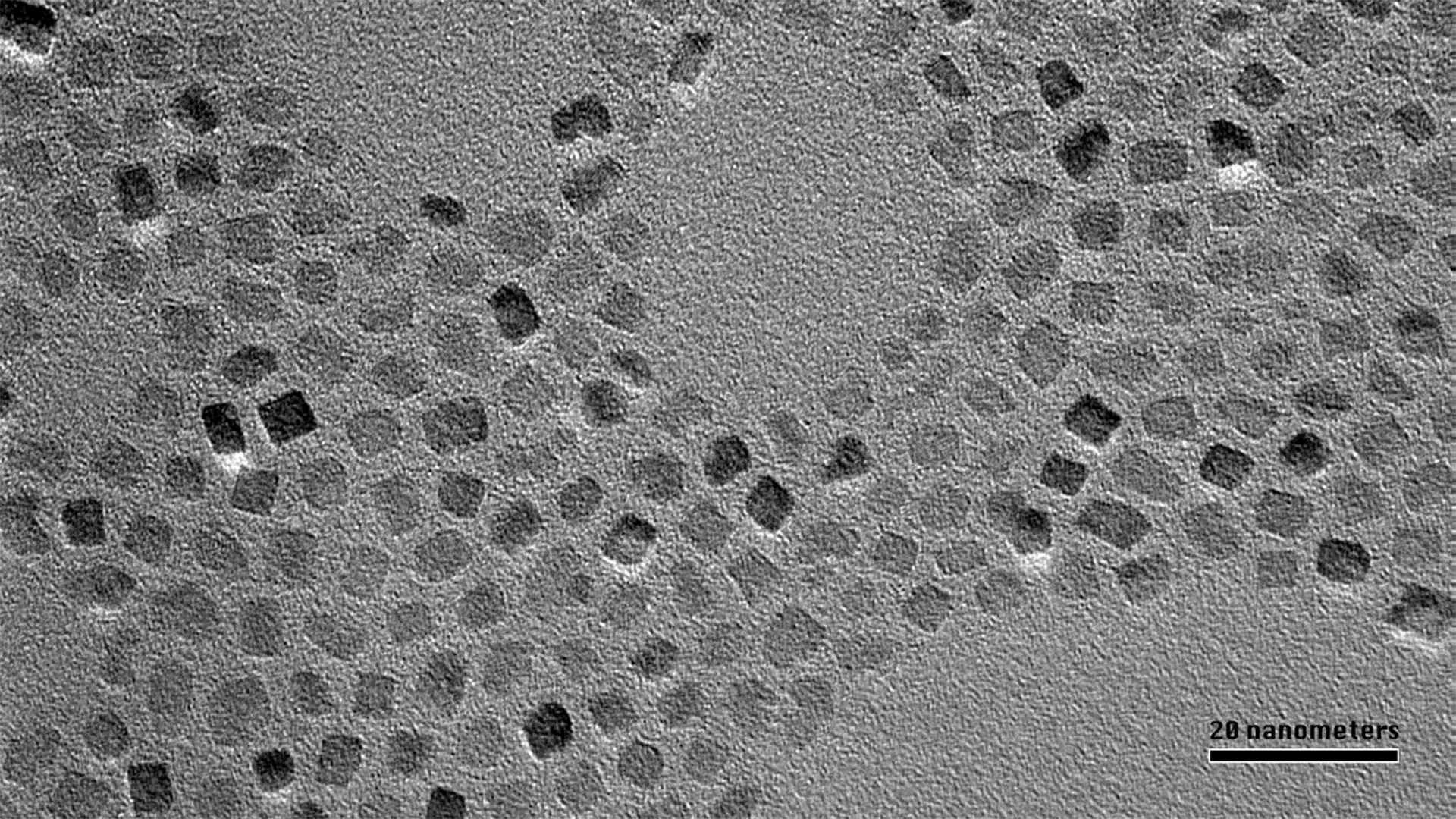
To untangle the complex behavior of nickel under reaction conditions, the research team adopted a meticulous approach to catalyst design. They synthesized an innovative nickel-on-alumina catalyst—designated as Ni/Al2O3—featuring an extraordinarily low nickel loading of just 0.8 weight percent (wt%). This material was meticulously prepared using an advanced microemulsion method designed to ensure ultra-high dispersion of the metal phase across the support material.
Despite containing a fraction of the metal typically found in industrial formulations, the low-loading microemulsion catalyst exhibited phenomenal catalytic performance during the partial oxidation of methane. Under rigorous testing conditions, the material successfully converted 92 percent of the input methane. Furthermore, the selectivities toward the desired products—carbon monoxide (CO) and hydrogen (H2)—reached an impressive 87.0 percent, while the H2/CO molar ratio remained exceptionally stable at approximately 2.0, the ideal stoichiometric ratio for downstream Fischer-Tropsch synthesis and related chemical processing.
To put these results into proper perspective, the researchers compared the 0.8 wt% microemulsion catalyst against traditional benchmarks. Most notably, its overall catalytic performance was found to be directly comparable to a conventional 8.0 wt% Ni/Al2O3 catalyst produced via standard wet impregnation methods—even though the newly developed material contained only one-tenth of the nickel metal.
The manufacturing method proved to be equally critical. When the research team prepared another 0.8 wt% Ni/Al2O3 control material using standard impregnation rather than the microemulsion technique, the resulting catalyst failed entirely to perform POM under identical operational conditions. Instead of producing syngas, the conventionally prepared low-loading material drove the complete combustion of methane, yielding only unwanted carbon dioxide and water. This stark performance divergence highlighted that the mere presence of nickel, or even low metal loadings, was insufficient; the spatial distribution and initial state of the metal precursor dictated whether the catalyst could access the necessary transformation pathways.
The Dynamic Evolution of Catalyst Phases
Chronologically, the investigation mapped out a fascinating sequence of phase transformations that challenged conventional dogmas regarding metal reduction and oxidation under reaction conditions. When the researchers examined the initial state of their high-performing catalyst prior to heating, they observed metallic nickel nanoparticles distributed across the support. However, as soon as the system was exposed to the reactive environment of the partial oxidation of methane, these metallic nanoparticles were rapidly and completely oxidized into the nickel oxide (NiO) phase.
Faced with this unexpected oxidation, the team investigated whether pure nickel oxide alone was responsible for the catalytic activity. To test this hypothesis, they evaluated a pre-formed, pure-phase NiO catalyst under POM conditions. The results were conclusive: the pure NiO material displayed zero activity toward partial oxidation, directing the reaction exclusively down the pathway of complete methane combustion.
This apparent paradox—wherein metallic nickel oxidizes to NiO under reaction conditions, yet pure NiO fails to catalyze POM—forced the researchers to look beyond static bulk phases. The key to the reaction lay not in stable, macroscopic phases, but in transient, atomic-scale restructuring occurring specifically on the surface of the catalyst while the reaction was actively running.
Atomic Reconstruction and the Discovery of the True Active Site
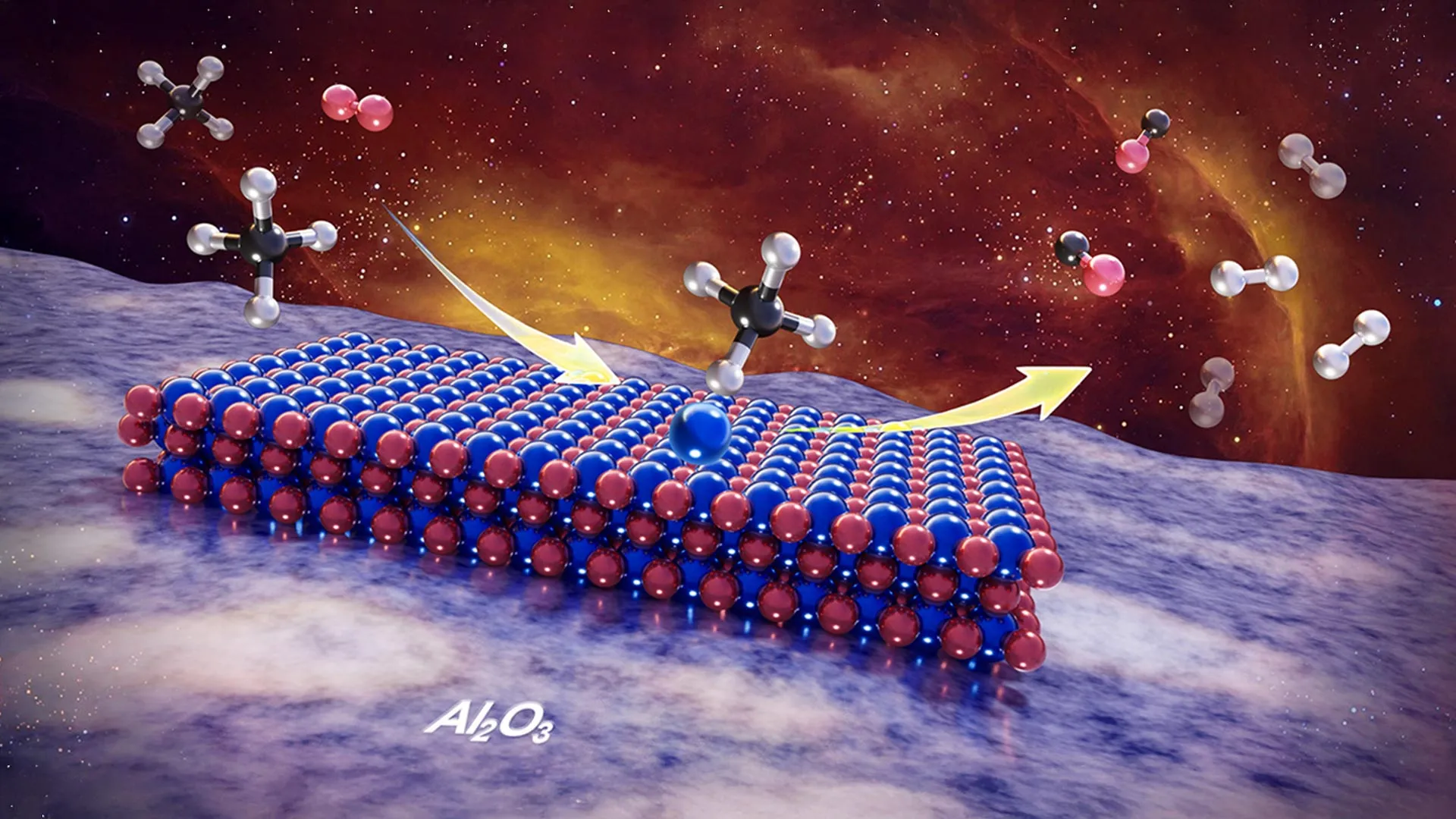
By employing advanced spectroscopic and microscopic tools capable of probing matter at the atomic level during catalysis, the team captured the real-time formation of a highly specific surface motif: a reconstructed [Ni1O4Ni4] structural unit emerging dynamically on the NiO(100) surface.
To understand why this specific atomic arrangement unlocked such high catalytic efficiency, the researchers turned to advanced theoretical modeling. Using density functional theory (DFT) calculations, they evaluated the energetic barriers associated with breaking the resilient carbon-hydrogen (C-H) bonds in methane—historically recognized as the rate-limiting step in methane activation.
The theoretical data provided a compelling explanation for the experimental observations. The calculated activation barrier for methane dissociation over the newly discovered [Ni1O4Ni4] reconstructed motif was measured at a remarkably low 12.5 kilocalories per mole (kcal·mol⁻¹). For comparison, the calculated activation barrier for the intact, unreconstructed NiO(100) surface stood at a prohibitive 38.5 kcal·mol⁻¹, while the barrier for the traditional metallic Ni(111) surface was calculated at 15.7 kcal·mol⁻¹.
This massive kinetic advantage—featuring a significantly lower energy barrier than either pure metal or bulk oxide surfaces—provided definitive theoretical backing. It confirmed that the dynamic [Ni1O4Ni4] reconstructed structure is the true, highly reactive active center responsible for driving the partial oxidation of methane.
Broader Implications for Catalyst Design and Industry
The synthesis of experimental observation and theoretical calculation achieved by the DICP-led team fundamentally shifts how scientists view catalytic surfaces under operating conditions. The research demonstrates unequivocally that high catalytic activity does not originate from static metallic nanoparticles or uniform bulk metal oxides. Instead, it emerges from dynamic, fleeting atomic configurations born out of the interplay between the catalyst material and the reactive gas environment.
Reflecting on the broader significance of the work, Prof. Liu emphasized the critical necessity of modern analytical methodologies. "Our study highlights the critical role of in situ characterization in identifying dynamic active structures under reaction conditions," Prof. Liu stated. "Dynamic reconstruction enables low-loading catalysts to achieve high performance, offering new opportunities for the rational design of efficient catalysts while reducing reliance on high metal loadings."
The implications of these findings for the chemical and energy industries are profound. Platinum-group and transition-metal catalysts often rely on high metal loadings to ensure commercial viability, driving up production costs and exposing supply chains to the economic volatility of critical raw materials. By proving that highly dispersed, low-loading systems can be engineered to form ultra-active, reconstructed surface motifs in situ, this research opens a viable pathway toward sustainable catalyst design.
Future industrial catalyst development may increasingly pivot away from trial-and-error bulk formulations toward precision-engineered nanomaterials designed specifically to undergo controlled, beneficial surface reconstruction. As refineries and chemical plants face mounting regulatory and economic pressures to optimize energy efficiency and minimize resource consumption, leveraging dynamic atomic phenomena offers a powerful new tool in the quest for next-generation chemical manufacturing.