The fundamental nature of water, a substance that covers the majority of our planet and sustains all known forms of life, remains one of the most complex frontiers in modern chemistry. For decades, a central question has eluded a definitive answer: what happens to the chemical behavior of water when it is compressed into spaces so small that only a few molecules can fit? This phenomenon, known as nanoconfinement, occurs naturally in biological ion channels, geological pores, and man-made membranes. A landmark study published in Science Advances has finally provided a unified framework to explain this behavior, resolving years of contradictory experimental data by demonstrating that the perceived changes in water’s reactivity are driven not by the act of confinement itself, but by intense internal pressures and specific surface interactions.
The Core of the Debate: Water Dissociation at the Nanoscale
At the heart of water’s chemical identity is its ability to undergo self-ionization, or water splitting. In this process, two water molecules react to form a hydronium ion (H3O+) and a hydroxide ion (OH-). This equilibrium is the foundation of the pH scale, which dictates the acidity or alkalinity of a solution. In bulk water—the liquid we see in a glass or an ocean—this process is well-understood. However, when water is trapped in "nanofluidic" environments, such as the interior of a carbon nanotube or the space between two-dimensional sheets, its properties begin to shift.
Previous studies over the last decade had produced a frustrating array of results. Some experiments suggested that confinement significantly enhanced the ionization of water, making it millions of times more reactive than bulk water. Other studies found little to no change, while some even suggested a decrease in reactivity. These discrepancies created a bottleneck in the development of technologies that rely on nanoscale water transport, such as high-efficiency desalination membranes and next-generation hydrogen fuel cells.
The research team, led by scientists from the Yusuf Hamied Department of Chemistry and the Cavendish Laboratory at the University of Cambridge, set out to identify the "missing link" that could reconcile these conflicting observations. Their findings suggest that the scientific community had been overlooking the roles of thermodynamic chemical potential and extreme localized pressure.
Methodology: Bridging Quantum Accuracy and Large-Scale Simulation
To investigate these sub-microscopic environments, the researchers utilized cutting-edge machine learning simulations. Traditional computational methods, such as density functional theory (DFT), provide high quantum mechanical accuracy but are computationally expensive, limiting researchers to very small systems over short timescales. Conversely, classical molecular dynamics can handle larger systems but often lack the chemical accuracy required to model the breaking and forming of molecular bonds.
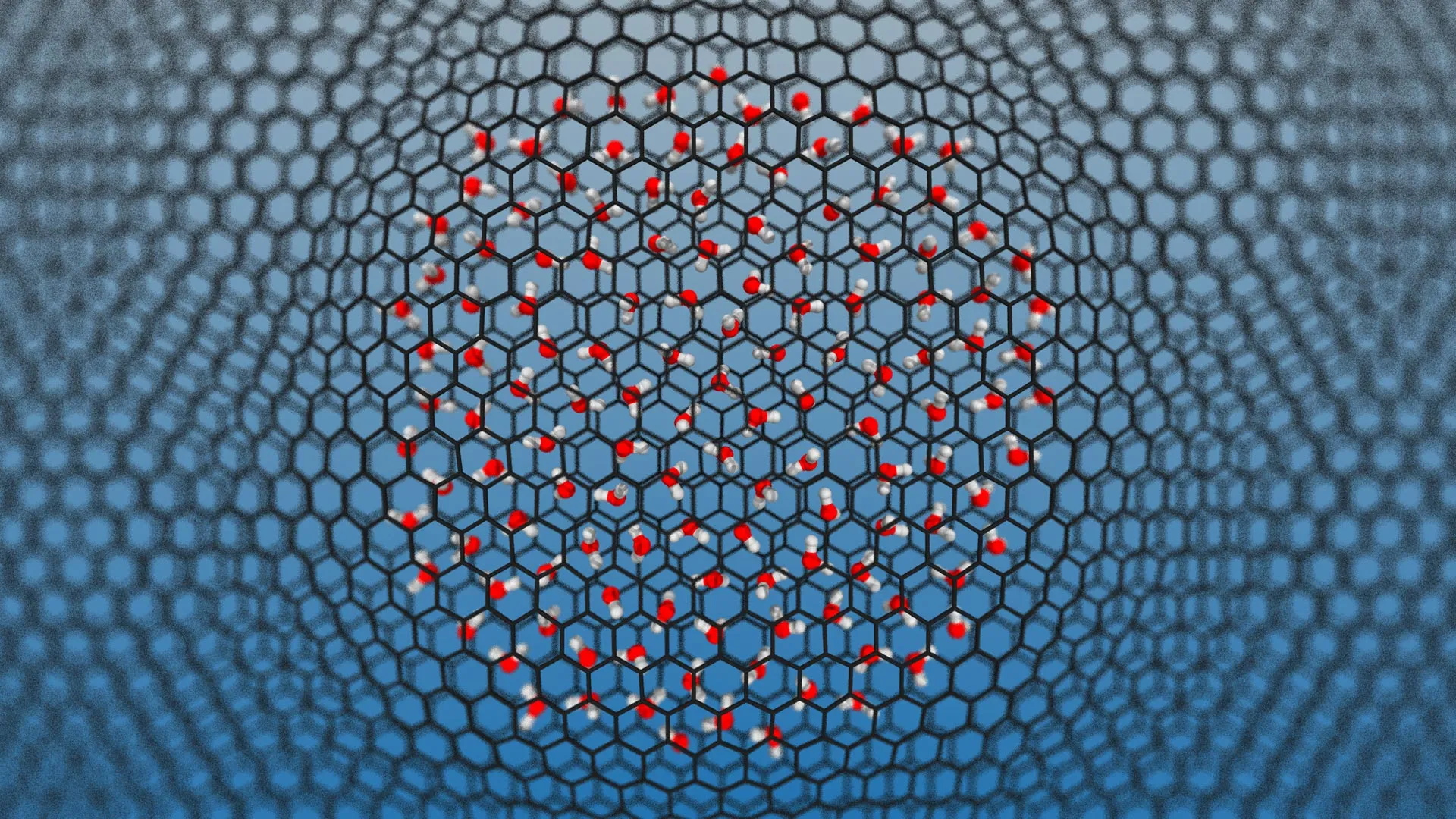
By training machine learning models on quantum mechanical data, the Cambridge team was able to simulate water confined between layers of graphene and hexagonal boron nitride (hBN) with unprecedented precision. These materials were chosen because they are atomically thin and represent the "gold standard" for studying two-dimensional confinement. While graphene is composed of carbon and is chemically inert, hBN consists of boron and nitrogen atoms and possesses a more complex electronic surface.
The simulations allowed the team to observe the behavior of water at various densities and under different degrees of compression. They discovered that water molecules trapped between these sheets do not behave like a standard liquid; instead, they exist in a state of high tension and high pressure, even in the absence of an external mechanical force.
The Role of Passive Pressure and Van der Waals Forces
One of the most striking revelations of the study is the magnitude of the pressure generated naturally within nanoconfined spaces. The researchers found that water droplets trapped between sheets of graphene or hBN can experience internal pressures reaching several gigapascals (GPa). To put this into perspective, one gigapascal is approximately 10,000 times the atmospheric pressure at sea level, similar to the conditions found deep within the Earth’s mantle or at the bottom of the deepest oceanic trenches.
This pressure is not the result of an external pump or piston. Instead, it arises from van der Waals forces—the weak attractive forces that exist between all atoms. While these forces are negligible at a macroscopic scale, they become dominant when two large, atomically flat surfaces are brought within nanometers of each other. The sheets of graphene or hBN are essentially pulled together by these forces, squeezing the water molecules trapped between them with immense intensity.
The study demonstrated that this "passive" pressure is the primary driver of increased water splitting. When the researchers compared the behavior of nanoconfined water to bulk water subjected to the same extreme pressures, the results were nearly identical. This led to a crucial realization: confinement does not "intrinsically" change the chemistry of water. Rather, confinement creates a high-pressure environment, and it is the pressure that alters the reactivity.
Resolving a Decade of Scientific Conflict
The introduction of thermodynamic "chemical potential" as a metric was the key to resolving the historical contradictions in the field. Lead author Xavier R. Advincula explained that previous researchers were often comparing systems that were fundamentally different, even if they appeared similar on the surface.
"The contradictions in the literature were largely because scientists were comparing systems at different effective pressures or densities without realizing it," Advincula stated. When the team adjusted their data to account for equivalent thermodynamic conditions—ensuring that the chemical potential was the same across different systems—the "confinement effect" largely evaporated. This explains why an experiment using a rigid pore might yield different results than an experiment using a flexible membrane; the two systems generate different internal pressures, leading to different levels of chemical reactivity.
By establishing that water reactivity is a function of pressure and chemical potential, the study provides a "Rosetta Stone" for nanofluidics, allowing researchers to translate results from one experimental setup to another for the first time.
Surface Chemistry: The Active Participant
While pressure is the dominant factor, the study also highlighted that the surrounding material is not always a passive observer. The comparison between graphene and hexagonal boron nitride revealed a significant difference in how the two materials interact with the products of water splitting.
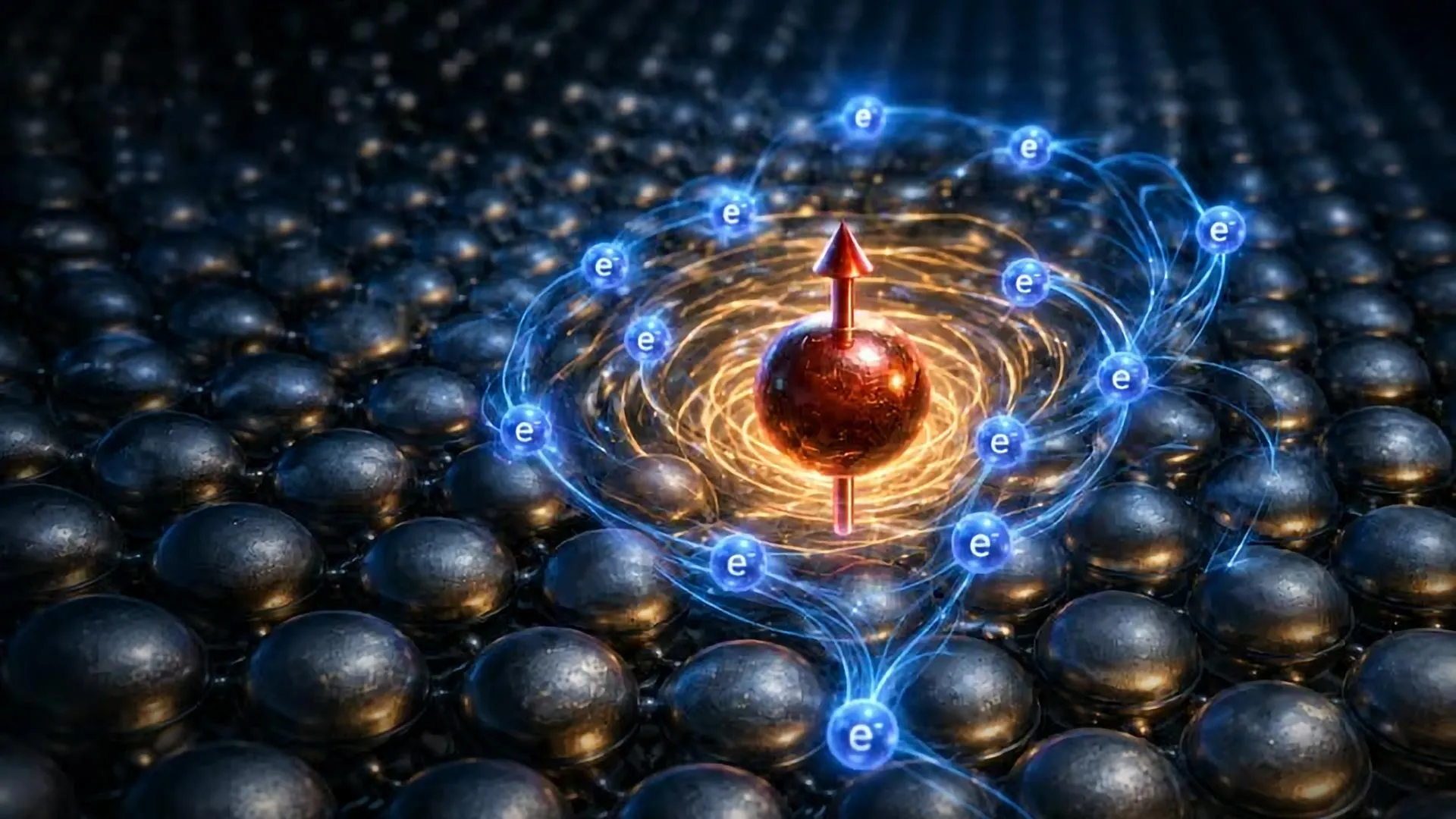
In the case of hBN, the simulations showed that hydroxide ions (OH-) formed during dissociation tended to migrate toward the edges of the material, where they formed chemical bonds with the boron and nitrogen atoms. This "trapping" of the hydroxide ions stabilized them, effectively lowering the energy barrier required for water molecules to split. Consequently, water confined in hBN showed a higher degree of dissociation than water in graphene, where the chemically inert surface does not interact with the ions.
This finding introduces a second "knob" that scientists can turn when designing nanoscale systems. By selecting materials with specific surface chemistries, they can either encourage or discourage the ionization of water, independent of the pressure.
A Chronology of Nanofluidic Research
The quest to understand water under confinement has moved through several distinct phases over the last twenty years:
- The Early 2000s: Discovery of Anomalous Flow. Researchers first noticed that water flows through carbon nanotubes at rates thousands of times faster than predicted by classical fluid dynamics. This sparked interest in the unique properties of "nano-water."
- 2010–2018: The Era of Contradiction. As more labs began studying nanoconfined water, the data became increasingly chaotic. Reports of "super-acidic" water and "solid-like" water at room temperature emerged, but results were rarely reproducible across different experimental platforms.
- 2019–2023: The Rise of ML-Simulations. Advances in machine learning began to allow for more accurate modeling of the water-surface interface, setting the stage for the current breakthrough.
- 2024: The Unified Framework. The Cambridge study identifies pressure and chemical potential as the unifying variables, effectively closing the chapter on the "confinement paradox."
Technological Implications and Future Frontiers
The ability to predict and control the reactivity of water at the nanoscale has profound implications for a variety of industries. In the field of energy storage, the findings could lead to more efficient electrolytes for batteries and supercapacitors. In hydrogen fuel cells, where water splitting and proton transport are central to power generation, the study offers a blueprint for designing membranes that can operate at higher efficiencies by leveraging passive internal pressures.
Furthermore, the research has significant applications in desalination and water purification. By tailoring the pore size and surface chemistry of filtration membranes, engineers could potentially create filters that require less energy to strip ions from seawater, addressing global water scarcity.
Dr. Christoph Schran, of the Theory of Condensed Matter Group at the Cavendish Laboratory, emphasized the practical nature of these findings. "The work offers a practical design principle for engineering nanoscale chemical environments," Schran noted. "Rather than focusing solely on the size of pores or channels, we can tailor water reactivity by choosing a confining material whose surfaces interact with the products of water dissociation and by controlling the pressures generated within confined spaces."
Looking ahead, the Cambridge team plans to expand their research to include more complex, "real-world" environments. This includes studying how defects in materials, such as cracks or chemical impurities, affect water behavior. They are also utilizing high-throughput screening to analyze thousands of different two-dimensional materials to find the optimal combinations for specific technological tasks.
As science moves closer to mimicking the sophisticated water-handling capabilities of biological cells, this study stands as a definitive guide to the hidden forces at play in the smallest of spaces. By proving that water’s "magic" under confinement is actually a result of predictable thermodynamic laws, the researchers have turned a scientific mystery into a powerful engineering tool.