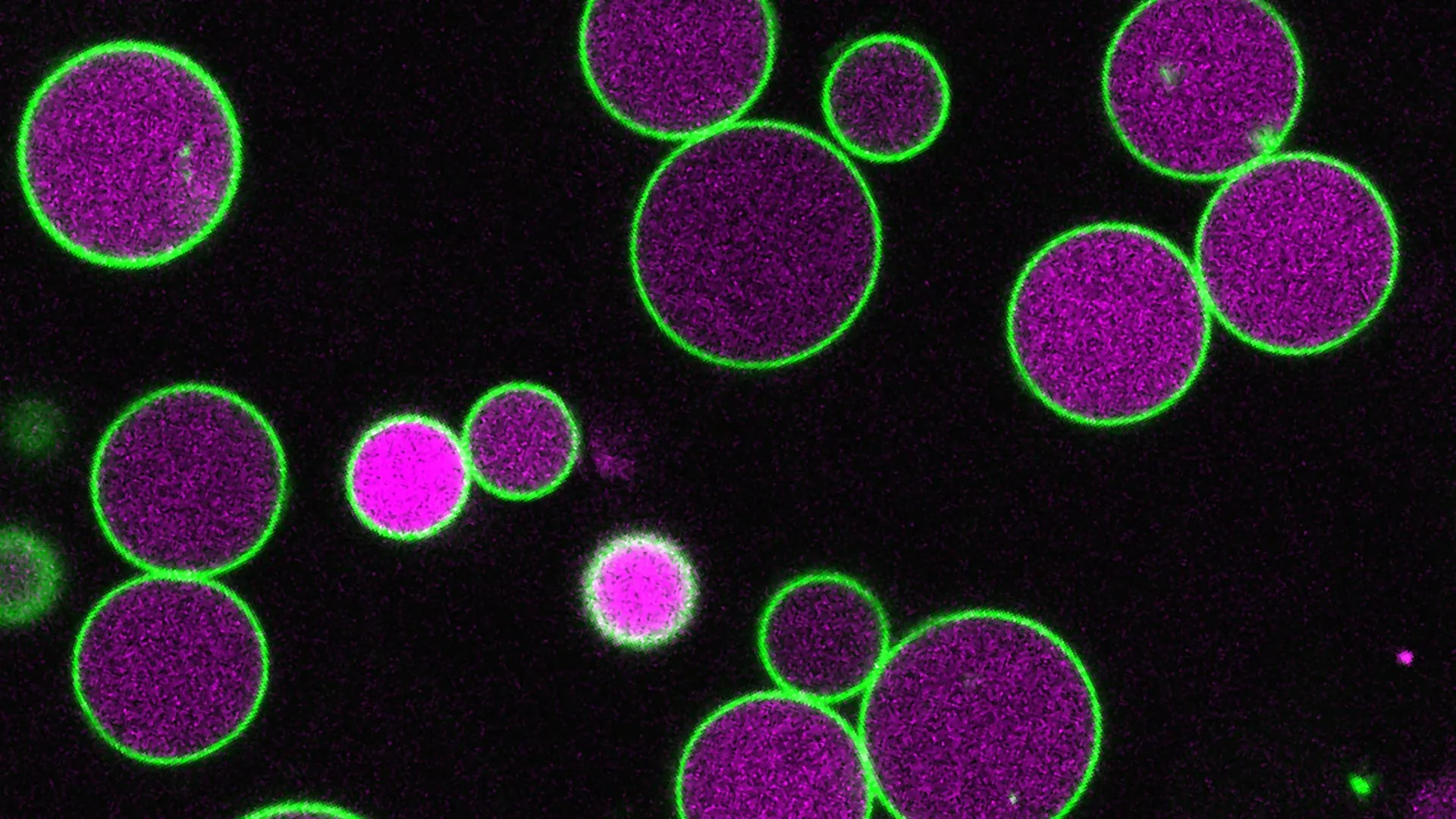
Plants, the silent architects of our planet’s ecosystems, undertake a remarkable feat of biological engineering throughout their lives. For the majority of their existence, they harness the power of sunlight through photosynthesis, converting light energy into the fuel that sustains them. However, a critical, yet fleeting, period exists at the very inception of a plant’s life – the transition from a dormant seed to a nascent seedling. During this crucial phase, before the young plant’s leaves are developed enough to capture light, it relies entirely on a different energy source: stored fatty acids. The intricate process of breaking down these fatty acids is orchestrated by a specialized cellular organelle known as the peroxisome, a membrane-bound compartment that plays a vital role not only in plants but also in human cells.
The unique characteristics of plant cells, particularly their substantial size and the remarkable visibility of their peroxisomes under microscopic observation, have long made them an invaluable model system for scientific inquiry into the fundamental workings of these organelles. This is precisely the advantage leveraged by researchers at Rice University, who have recently made significant strides in understanding how peroxisomes regulate their size during this pivotal early stage of plant development.
The Expanding Universe of the Peroxisome: A Dynamic Organelle
Bonnie Bartel, the Ralph and Dorothy Looney Professor of Biosciences at Rice, has dedicated years to unraveling the complexities of cellular life. Her team’s focus on Arabidopsis thaliana, a small flowering plant commonly used in plant biology research due to its rapid life cycle and well-characterized genome, has proven exceptionally fruitful. "The plant we use, Arabidopsis, has large cells and peroxisomes so large that we can see inside them with a light microscope," Professor Bartel explained. "The peroxisome gets even larger during the seed to seedling stage, when the plant is relying on fatty acids for energy, before shrinking back down to its normal size once the plant can photosynthesize." This observation highlights a dynamic lifecycle for peroxisomes, one that is directly tied to the plant’s metabolic needs.
Protein PEX11: The Master Regulator of Peroxisome Size Dynamics
At the heart of this dynamic process lies a protein named PEX11. For years, scientists have recognized PEX11’s role in peroxisome division, the process by which these organelles multiply within a cell. However, the groundbreaking research published in the esteemed journal Nature Communications by Bartel’s team reveals a far more comprehensive function for PEX11: it acts as a key regulator, controlling not only the division but also the expansion and contraction of peroxisomes during the critical seed-to-seedling transition.
Nathan Tharp, a graduate student at Rice and the lead author of the study, underscored the broader significance of this research. "Peroxisomes are implicated in some human diseases and used in bioengineering," he stated. "They can, however, be rather tricky to study." This inherent complexity, coupled with the organelle’s involvement in diverse biological processes, makes every new insight particularly valuable.
Navigating Genetic Complexity: The Power of Advanced CRISPR Techniques
Investigating the precise function of a protein often involves genetically modifying an organism to understand the consequences of its absence. A common approach is to disable the gene responsible for producing the protein and observe the resulting phenotypic changes. However, the PEX11 protein presented a significant challenge in this regard. Unlike many proteins encoded by a single gene, PEX11 in Arabidopsis is produced by a family of five distinct genes. Disrupting just one of these genes yielded minimal observable effects, while attempting to eliminate all five proved lethal to the plant, making it impossible to isolate the specific role of PEX11.
To circumvent this intricate genetic puzzle, Tharp employed cutting-edge CRISPR-Cas9 gene-editing technology. This revolutionary tool allows for precise and targeted modifications of DNA. By leveraging recent advancements in CRISPR, Tharp was able to selectively disable different combinations of the five PEX11 genes, creating a spectrum of genetic alterations rather than an all-or-nothing approach. "I was able to use recent advances in CRISPR to go in and break specific combinations of the five genes," Tharp elaborated. "It was only then that we were able to see that PEX11 is clearly involved in controlling the growth of the peroxisome during the seed to seedling stage." This meticulous approach allowed researchers to dissect the complex genetic architecture and pinpoint PEX11’s crucial role.
Giant Peroxisomes: A Window into Growth Control Mechanisms
The results of Tharp’s gene-editing experiments were striking. He successfully engineered two distinct lines of mutant plants, each lacking specific sets of PEX11 genes. In these modified plants, the peroxisomes, as anticipated, expanded during the seed-to-seedling phase. However, instead of undergoing the normal contraction process, some of these peroxisomes continued to grow unchecked, exceeding their typical size by an extraordinary margin. In some extreme cases, the peroxisomes elongated to span the entire length of the plant cell, transforming from discrete organelles into colossal cellular structures.
Accompanying this dramatic enlargement was a notable absence of vesicles within these giant peroxisomes. Vesicles, small membrane-bound sacs, are typically observed forming inside peroxisomes during the breakdown of fatty acids. These vesicles are believed to play a role in the organelle’s growth regulation by budding off portions of the peroxisome’s outer membrane. "The vesicles taking pieces of membrane as they form may help control the peroxisome’s growth," Tharp theorized. "In our PEX11 mutants, these vesicles either don’t form or are abnormally small and rare, and so we see these massive peroxisomes, way larger than normal." This observation suggests a direct correlation between vesicle formation and the controlled shrinkage of peroxisomes, with PEX11 acting as the conductor of this intricate cellular ballet.
A Conserved Mechanism: Implications Beyond the Plant Kingdom
The implications of this research extend far beyond the study of plant development. Tharp, driven by a desire to understand the universality of biological mechanisms, investigated whether the observed growth control mechanism in plants might be conserved in other organisms. To test this hypothesis, he introduced the yeast homolog of PEX11, known as Pex11, into the mutant plant cells. The results were remarkable: the yeast Pex11 protein was able to restore the peroxisomes in the mutant plant cells to their normal size. "We put yeast Pex11 into our mutant plant cells to see if it could return the peroxisomes back to normal," Tharp confirmed. "And it did."
This finding strongly suggests that Pex11 performs a functionally analogous role in yeast as it does in plants, despite the significant evolutionary divergence between these two kingdoms of life. The conservation of this protein’s function across such a vast evolutionary distance implies that it may play a comparable role in a wide range of cell types, including human cells. "Finding that this protein fills the same role in yeast and plant cells suggests that it may be a highly conserved protein," Professor Bartel remarked. "Our findings in plants, in this relatively easy-to-study model, may thus be applicable to human cells and cells used for bioengineering."
Broader Impact and Future Directions
The implications of this research are far-reaching. Peroxisomes are involved in a multitude of essential cellular processes, including lipid metabolism, detoxification, and the synthesis of certain essential molecules. Dysfunctions in peroxisomal activity are linked to a spectrum of human genetic disorders, collectively known as peroxisome biogenesis disorders, which can have severe neurological and developmental consequences. Understanding the fundamental mechanisms that govern peroxisome size and function, as illuminated by this study, could pave the way for novel therapeutic strategies and diagnostic tools for these debilitating conditions.
Furthermore, the role of peroxisomes in bioengineering is gaining increasing attention. Their ability to synthesize and break down various molecules makes them attractive targets for developing novel biotechnological applications, such as the production of biofuels or the bioremediation of environmental pollutants. A deeper understanding of peroxisome dynamics, facilitated by the insights into PEX11’s function, could accelerate progress in these fields.
The research team plans to further explore the precise molecular interactions of PEX11 with other cellular components involved in membrane trafficking and vesicle formation. Future studies may also involve investigating the role of PEX11 in different plant species and under varying environmental conditions, potentially revealing additional layers of complexity in peroxisome regulation. The ability to precisely manipulate peroxisome size through genetic engineering also opens avenues for exploring how altered peroxisome morphology might impact overall plant growth and stress resilience.
The journey from a tiny seed to a photosynthesizing plant is a testament to the intricate and finely tuned processes occurring at the cellular level. This latest research, by demystifying the role of PEX11 in controlling peroxisome size, not only deepens our understanding of plant biology but also offers a crucial glimpse into conserved cellular mechanisms that could hold the key to treating human diseases and advancing biotechnological innovations. The unassuming Arabidopsis plant, with its readily observable cellular structures, continues to serve as a powerful beacon of discovery, illuminating the fundamental principles of life.