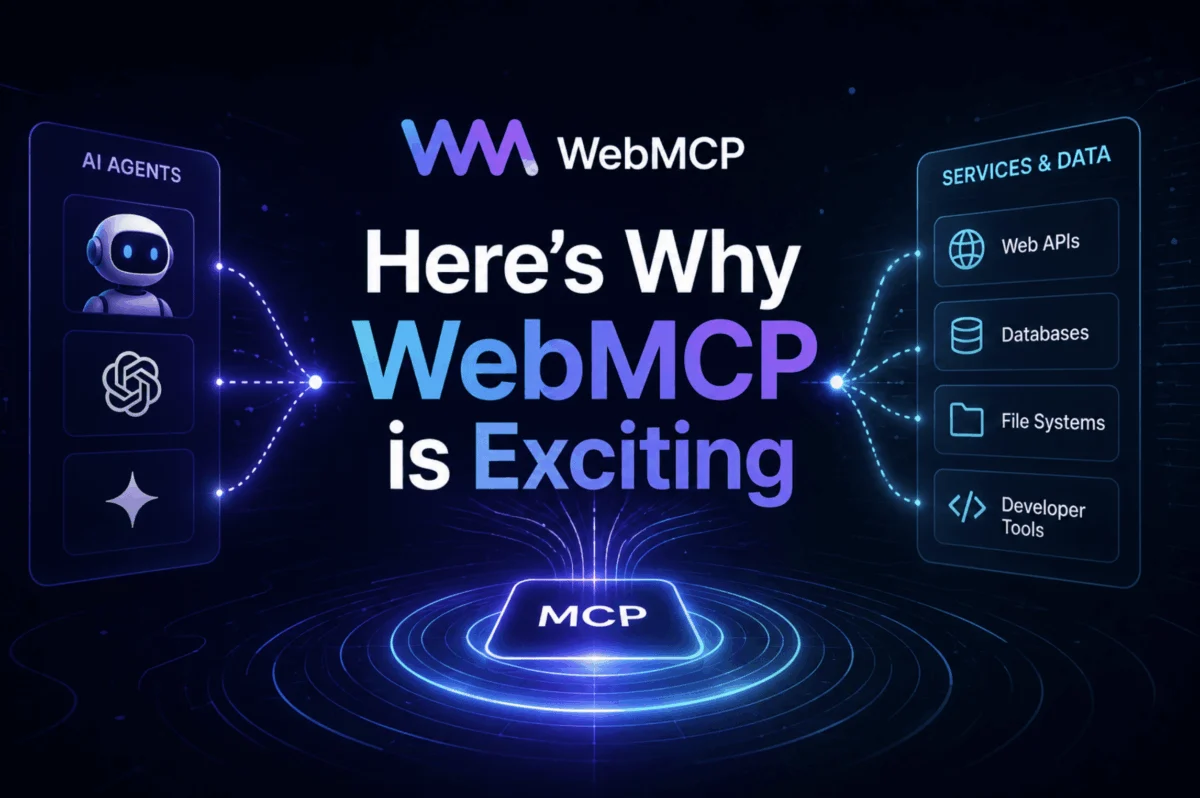
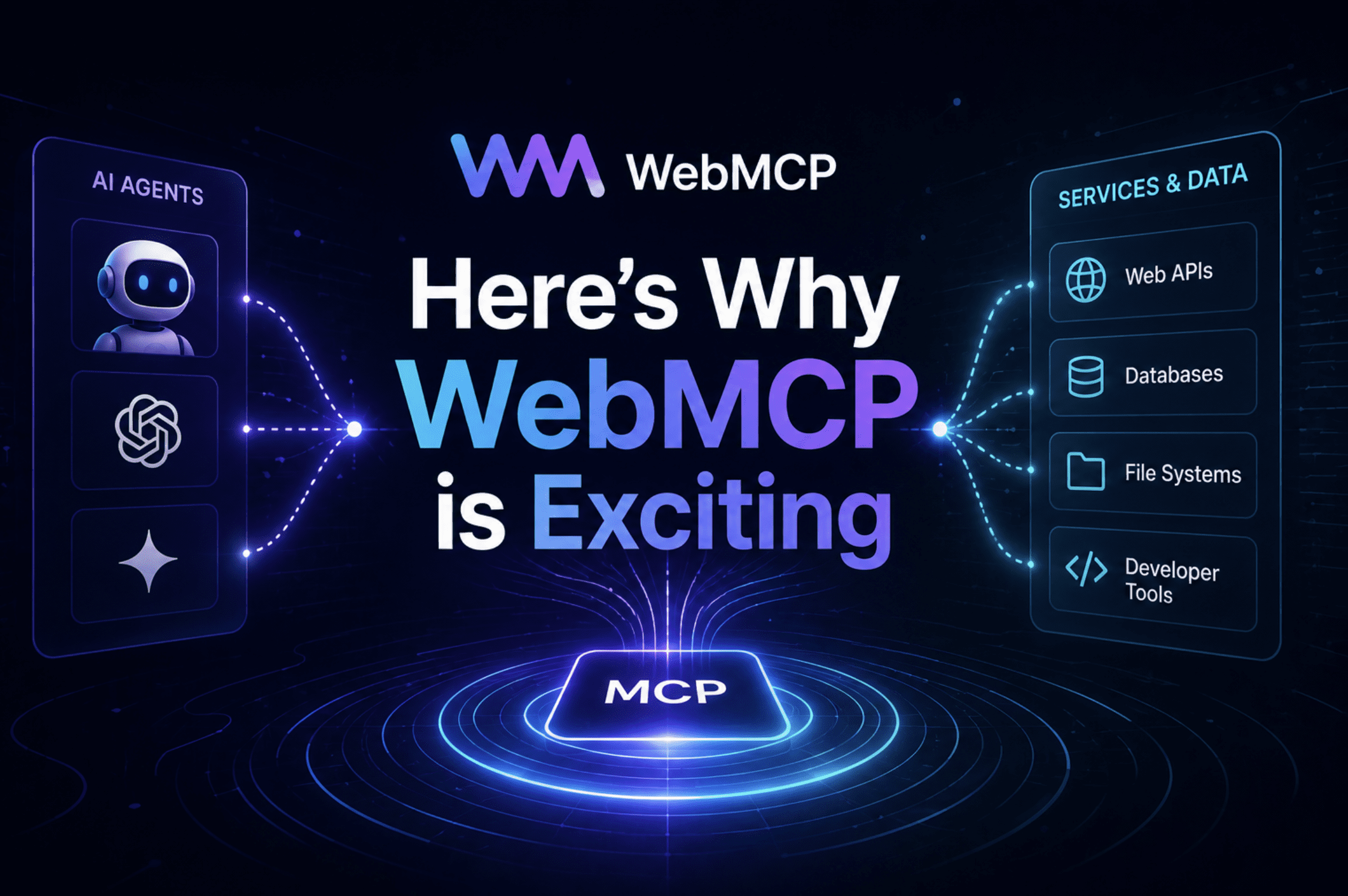
The landscape of web interaction is on the cusp of a profound transformation with the advent of WebMCP (Web Model Context Protocol), a proposed open web standard designed to revolutionize how AI agents interact with websites. Unveiled as a pivotal development at Google I/O 2026 and swiftly integrated into Chrome 149 for real-world traffic, WebMCP addresses a fundamental "protocol problem" that has long plagued the reliability and efficiency of browser-based AI agents. This new standard empowers websites to explicitly expose structured, callable tools directly to AI agents, moving beyond the fragile guesswork of pixel interpretation and DOM scraping that characterized earlier generations of automated web interaction.
A Protocol Problem, Not a Model Problem: Understanding the Challenge
For the past several years, the burgeoning field of AI agents has promised unprecedented automation and intelligent assistance across digital platforms. However, browser-based agents have consistently grappled with a core limitation when interacting with the public web: a lack of standardized communication protocols. Traditional methods, while functional for demonstrations, proved inherently unreliable and inefficient for robust deployment.
The prevailing approaches fell into two main categories: vision-based actuation and DOM scraping. Vision-based actuation, akin to a human watching a screen, involved an AI agent taking screenshots, analyzing pixels with multimodal models to deduce actionable elements, calculating coordinates, simulating clicks, and then waiting for the Document Object Model (DOM) to update before repeating the entire cycle. This iterative process was painstakingly slow, often consuming five seconds or more for a single task, and fraught with potential failure points. Even minor changes to a website’s CSS, animation timings, or the introduction of lazy-loaded content could entirely derail an agent’s workflow, leading to frequent errors and incomplete tasks. The sheer number of variables meant that reliability remained elusive, hindering widespread adoption for critical, repetitive tasks.
Conversely, DOM scraping offered a faster but semantically blind alternative. Agents could read the structural elements of a webpage but lacked intrinsic understanding of their purpose. A button labeled "Go" could signify a search, a submission, a confirmation, or a navigation action, requiring the agent to constantly infer intent from contextual clues – a task prone to misinterpretation and errors. This semantic ambiguity meant that even with direct access to the page’s structure, agents were still left to "guess" the function of various UI elements, leading to inconsistent performance and a high maintenance burden for developers.
The cumulative effect of these limitations became a significant bottleneck in the advancement of practical AI agent applications. Research conducted prior to WebMCP’s introduction, particularly studies on structured versus unstructured browser automation, starkly highlighted this efficiency gap. According to analyses published in 2026 alongside WebMCP implementation guides, structured approaches were shown to reduce task errors by an impressive 67% and improve overall completion rates by 45% when compared to conventional scraping methods. These figures underscore the critical need for a more robust and predictable interaction model, signaling that the issue was not with the intelligence of the AI models themselves, but with the absence of a clear, standardized language for web pages to communicate their capabilities.
WebMCP: A New Standard for Agent-Website Communication
WebMCP emerges as the definitive solution to this protocol problem, proposing an open web standard that enables websites to directly communicate their functionality to browser-based AI agents. It shifts the burden of interpretation from the agent, which previously had to infer actions from visual cues or DOM structure, to the website itself, which explicitly declares its available tools.
A Collaborative Standard: Google, Microsoft, and the W3C
The development of WebMCP is a testament to cross-industry collaboration, co-developed by technology giants Google and Microsoft. Its journey to standardization began in February 2026, when the W3C Web Machine Learning Community Group published the specification as a draft. This crucial step brought together leading experts, with Brandon Walderman from Microsoft and Khushal Sagar and Dominic Farolino from Google serving as the specification’s editors, ensuring a robust and widely applicable standard. The W3C’s involvement lends significant weight, indicating a commitment to open, interoperable web technologies that will benefit the entire ecosystem.
The Core Concept: Structured Tools and Direct Calls
At its heart, WebMCP is elegantly simple: a website registers "tools" – named, typed JavaScript functions or annotated HTML forms – through a new document.modelContext interface. When a browser agent encounters a WebMCP-enabled page, it can discover these tools, understand their purpose through human-readable descriptions and machine-readable JSON Schemas, and then invoke them directly. This eliminates the need for simulated mouse clicks or pixel-by-pixel navigation. Instead of an agent painstakingly trying to interpret a UI, the website explicitly tells the agent what functions are available, what inputs they require, and what outputs they will return. This fundamental shift is akin to providing someone with a universal remote control for a television, rather than having them poke at the screen hoping to hit the right buttons.
Differentiating WebMCP in the AI Protocol Landscape
It’s crucial to understand where WebMCP fits within the broader ecosystem of AI agent protocols. It complements, rather than replaces, existing standards:
- Anthropic’s Model Context Protocol (MCP): This is primarily a server-to-server protocol. It facilitates communication between an AI model and a backend service, often over standard I/O (stdio) or HTTP, allowing the model to perform actions by interacting directly with a service’s API.
- Agent-to-Agent (A2A): This protocol focuses on enabling different AI agents to communicate and collaborate with each other, orchestrating complex tasks that might involve multiple specialized agents.
WebMCP fills a critical gap by operating at the client-side, browser/page layer. It addresses the scenario where the logged-in user is directly interacting with a web application, providing a secure and authenticated channel for browser-based agents to act on the user’s behalf within that specific web context. This client-side focus, with its inherent connection to the user’s session, represents a significant architectural advantage.
Empowering Developers: The Dual API Approach
WebMCP thoughtfully introduces two distinct APIs, both accessible via the document.modelContext interface, to cater to a diverse range of development scenarios. This dual approach ensures both simplicity for common patterns and robust flexibility for complex, dynamic applications.
The Declarative API: Simplicity for Forms
For traditional HTML forms, WebMCP offers a straightforward, declarative API. Developers can enhance existing form elements by adding two new attributes: toolname and tooldescription. The browser then automatically translates these annotated forms into structured, callable tools that agents can invoke. This means that for many common web interactions – search queries, contact forms, checkout processes – developers require minimal effort, often without writing a single line of JavaScript.
Consider a typical support request form. By simply adding toolname="createSupportRequest" and tooldescription="Submits a support request with the user's issue and contact details." to the <form> element, the browser registers this form as a tool. An agent, needing to submit a support request, can then directly call createSupportRequest with the necessary inputs, bypassing the need to visually locate fields, type, or click. The user retains visibility of the form, ensuring transparency regarding the agent’s actions. An optional toolautosubmit attribute can further streamline the process, allowing the agent to automatically submit the form once fields are populated, removing the final manual click. This API is ideal for static, well-defined interfaces, offering the quickest path to agent-readiness.
The Imperative API: Flexibility for Dynamic Interactions
The Imperative API, accessed through document.modelContext.registerTool(), is designed for everything the Declarative API cannot gracefully handle. This includes dynamic tools whose availability changes based on application state, interactions driven by complex JavaScript logic, tools that directly call backend APIs, or those requiring intricate input validation.
With the Imperative API, developers define tools using JavaScript objects that specify:
name: A unique identifier for the tool.description: A plain-language description tailored for the AI agent, emphasizing clarity and specificity (e.g., "Returns the order number, current shipping status, and estimated delivery location for orders in a selected time period. Call this when the user asks about their orders or a delivery," rather than a vague "get orders").inputSchema: A JSON Schema compliant definition of the tool’s expected inputs, ensuring strict type validation and guiding the agent on how to call the tool correctly.execute: An asynchronous JavaScript function that the browser invokes when an agent calls the tool. This function receives validated inputs and performs the actual logic, typically interacting with existing backend APIs, and returns a structured string summary for the agent to interpret.
This flexibility is crucial for Single Page Applications (SPAs) and highly interactive web experiences where UI elements and available actions are constantly changing. The Imperative API also provides mechanisms for managing tool lifecycle, such as using an AbortController to cleanly unregister tools when they are no longer relevant (e.g., after a user logs out or navigates away from a specific section), preventing stale or incorrect tools from being offered to agents. The ability to dynamically add and remove tools ensures that agents always have an accurate and up-to-date understanding of the page’s capabilities, greatly enhancing their reliability in complex web environments. Furthermore, developers can inspect and test registered tools using document.modelContext.getTools() and document.modelContext.executeTool(), often facilitated by tools like the Model Context Tool Inspector Chrome extension.
The Authentication Revolution: Seamless and Secure Agent Access
One of WebMCP’s most impactful, yet often understated, innovations lies in its approach to authentication. Traditional server-side agent integrations (like Anthropic’s MCP) necessitate complex OAuth flows. Each backend service an agent needs to interact with typically requires its own OAuth client registration, token exchange, refresh logic, secure credential storage, and meticulous audit logging. For developers building agents that might touch five different services, this translates into five separate, intricate integrations to maintain, significantly increasing development overhead and potential security vulnerabilities.
WebMCP bypasses this entire paradigm. By operating inside the browser, on a page where the user is already authenticated, the agent automatically inherits the user’s existing session cookies. This is not a workaround but a core design principle. If the user is logged into a web application, any tool they have permission to use, the browser-based agent can also use. The user’s active session becomes the credential, simplifying the security model dramatically.
This has profound implications beyond mere developer convenience. It fundamentally alters the security posture of agent interactions. An agent operating via WebMCP cannot perform any action that the logged-in user themselves could not directly execute. It cannot escalate privileges, access data belonging to other users, or bypass any existing permission boundaries established by the web application. The application’s inherent security model, already designed for human users, applies seamlessly to agent interactions. This "session-as-credential" model significantly reduces the attack surface and simplifies compliance, making WebMCP-enabled agents a far more secure and trustworthy proposition for enterprises and sensitive applications.
It’s vital, however, to adhere to WebMCP’s security guidance, which explicitly states that the agentInvoked boolean on SubmitEvent (indicating if an agent triggered a form) should be treated as a signal, not a credential. Developers must not use it to grant additional permissions or verify identity, as its purpose is purely informational, detailing the source of the submission rather than authenticating the actor.
Transforming User Experiences: A Case Study in Travel Booking
The power of WebMCP is perhaps best illustrated through practical use cases, with travel booking serving as a prime example highlighted by Google at I/O 2026. This scenario vividly demonstrates the contrast between the old, fragile methods and the new, robust standard.
From Clicks to Commands: The WebMCP Advantage
Imagine an AI agent tasked with booking a multi-city flight without WebMCP. The process would be a laborious sequence:
- Navigate to the flight search page.
- Take a screenshot of the search form.
- Analyze the screenshot to identify the "From" field’s coordinates.
- Simulate a click on the "From" field.
- Type the departure city.
- Repeat for the "To" field and the arrival city.
- Visually interpret and interact with a potentially custom date picker widget, clicking through months and selecting specific dates.
- Locate and interact with the passenger count selector.
- Finally, click the "Search" button and await results, hoping no part of the intricate sequence failed due to a UI change or animation.
Any single broken selector, a missed animation, or a form field resetting unexpectedly could lead to the booking failing silently or incorrectly, frustrating both the agent and the user.
With WebMCP, this entire multi-step, visually dependent process is distilled into a single, reliable function call. A travel site registers a search_flights tool with a clear description, a JSON Schema defining inputs like origin, destination, departure_date, passengers, and cabin_class, and an execute function that interfaces directly with the site’s existing flight search API.
When a user asks their AI agent to "Find me a business class flight from Lagos to London for next month with 2 passengers," the agent, powered by WebMCP, calls the search_flights tool. It provides the validated inputs directly to the tool, which then executes the search using the user’s existing authenticated session. The tool returns a structured list of results (e.g., "British Airways BA215: departs 09:00, arrives 17:30, nonstop, 750 USD"), which the agent can then summarize and present to the user. The entire search chain, which previously involved multiple screenshot-click-wait cycles, now occurs in a single, efficient, and reliable API call. This drastically reduces execution time from minutes to mere seconds and virtually eliminates errors caused by UI variations.
Broader Applications Across Industries
The implications extend far beyond travel. WebMCP can revolutionize interactions across various sectors:
- E-commerce: Agents can directly "add to cart," "apply coupon," or "track order status" without navigating complex product pages or checkout flows.
- Customer Support: Agents can "create support tickets," "check warranty status," or "access knowledge base articles" by calling specific tools, leading to faster resolutions.
- Productivity Tools: Agents can "schedule meetings," "create tasks," or "update project status" within web-based applications, streamlining workflows.
- Healthcare Portals: Securely "request appointments," "refill prescriptions," or "access lab results" via agent-driven tools, maintaining user privacy and authentication.
This shift from UI interpretation to direct function invocation represents a fundamental leap in the efficiency, reliability, and security of AI agent interactions across the web.
Navigating the Rollout: Implementation and Adoption Timeline
The journey to widespread WebMCP adoption is already underway, with a clear roadmap for developers to begin integrating this transformative standard.
Developer Access: Flags and Inspectors
For immediate local development and testing, Google Chrome provides a specific flag: developers can navigate to chrome://flags/#enable-webmcp-testing, set it to "Enabled," and relaunch the browser. This action activates the WebMCP APIs within the local Chrome environment, bypassing the need for an origin trial token during the development phase.
Complementing this, the "Model Context Tool Inspector" Chrome extension, available on the Chrome Web Store, is an indispensable tool. It allows developers to visualize all registered WebMCP tools on any given page, inspect their JSON Schemas, manually call them with custom inputs, and verify that the outputs are formatted correctly for agent interpretation. The inspector even defaults to sending prompts to gemini-3-flash-preview, enabling immediate natural language invocation testing against custom tools.
Scaling to Production: The Origin Trial
For those ready to deploy WebMCP on live traffic before its full release as a default browser feature, Google has opened an Origin Trial. Developers can sign up for the Chrome origin trial to receive a unique token. This token, when included in HTTP headers or a meta tag on their web pages, enables WebMCP for Chrome 149+ users visiting their origin, allowing for real-world testing and feedback gathering. This strategic rollout ensures that the standard matures with practical developer input.
Ensuring Broad Compatibility: Cross-Browser Support
Recognizing the multi-browser nature of the web, cross-browser compatibility is a key consideration. While Chrome 149 and Microsoft Edge 147 already ship with native WebMCP support, other browsers are on different timelines. Firefox currently has no public timeline for native support, and Safari has a WebKit bug-tracker entry but no formal commitment.
To bridge this gap and ensure immediate broad compatibility, the @mcp-b/global polyfill is available via npm. By simply importing @mcp-b/global at the top of a project’s main entry file, developers can ensure that the document.modelContext interface is available across all browsers. In browsers with native support (like Chrome and Edge), the polyfill intelligently acts as a no-op. In other browsers, it sets up a compatible surface that forwards tool calls through a fallback mechanism, ensuring that tool registration code remains consistent across all environments. This proactive approach allows developers to embrace WebMCP today without waiting for universal native browser adoption.
Industry Reactions and Future Outlook
The introduction of WebMCP has elicited significant interest and positive reactions across the tech industry, signaling a collective recognition of its potential to reshape the digital landscape.
Statements from Tech Giants
Officials from Google have consistently emphasized WebMCP as a cornerstone for building a more intelligent and intuitive web. At Google I/O 2026, the focus was on developer empowerment and the creation of seamless AI experiences, with spokespersons highlighting how WebMCP aligns with Google’s vision for an AI-first future where users can interact with information and services more naturally. They stressed the commitment to open standards, ensuring that this powerful technology is accessible to all web developers.
Microsoft, a key co-developer, has underscored its dedication to cross-browser compatibility and enterprise utility. Their rapid integration of native WebMCP support into Edge 147 demonstrates a strong belief in the standard’s value for productivity and business applications. Statements from Microsoft representatives have focused on the collaborative spirit of the W3C Web Machine Learning Community Group and the shared goal of creating a more robust and reliable foundation for AI on the web.
The W3C Web Machine Learning Community Group has highlighted WebMCP as a critical advancement in standardizing the interaction layer between AI and the web. Their involvement ensures that the protocol is developed with principles of openness, interoperability, and long-term sustainability, paving the way for a healthier and more accessible AI-powered internet.
Analyst Perspectives: Shaping the AI-Powered Web
Industry analysts have largely hailed WebMCP as a game-changer. Tech research firms are predicting that it will significantly accelerate the deployment of sophisticated AI agents, not just in niche applications but across mainstream web services. The simplification of authentication and the dramatic increase in reliability are seen as crucial catalysts for enterprise adoption, where security and consistent performance are paramount. Analysts foresee WebMCP leading to a new wave of innovation in user interfaces, moving beyond traditional click-and-type interactions towards more conversational and intent-driven experiences. The efficiency gains, they argue, will translate into substantial operational cost savings for businesses and vastly improved user satisfaction.
Challenges and the Path Ahead
While the outlook for WebMCP is overwhelmingly positive, certain challenges and areas for future development remain. Ensuring consistent adoption across all major browsers, particularly Firefox and Safari, will be critical for achieving ubiquitous functionality. Further research and standardization around advanced tool discovery mechanisms, complex multi-tool orchestration, and refined error handling will continue to evolve the protocol. Moreover, ethical considerations surrounding agent autonomy, user control, and transparency will remain at the forefront, guiding the responsible development and deployment of WebMCP-enabled agents.
Conclusion: The Inevitable Evolution of the Web
For decades, the web has been designed for human consumption, a visual and interactive canvas navigated by clicks and scrolls. The advent of AI agents introduced a paradigm where machines attempted to mimic human browsing behavior – clicking, waiting, screenshotting, and, crucially, guessing. This was always a temporary solution, a stopgap in the face of rapidly advancing AI capabilities.
WebMCP represents the foundational infrastructure for the next generation of the web: a web where websites can speak directly to intelligent agents, articulating their capabilities with clarity and precision. It signifies a transition from fragile pixel-chasing to robust, explicit function calls, eliminating the guesswork and the constant threat of breakage with every minor UI update.
The origin trial is open, and the cost of initial implementation is remarkably low, often requiring just two HTML attributes on an existing form. The downside of being an early adopter is negligible, especially with the availability of polyfills for broader compatibility. Conversely, the upside is substantial: being recognized as a reliably agent-friendly site in an ecosystem poised for exponential growth. With the backing of Google, Microsoft, and the W3C, and rapid browser adoption already underway, the question is no longer if WebMCP will become a standard, but when. The window for developers to position themselves at the forefront of this revolution is open, offering a unique opportunity to shape the future of AI-powered web interaction.