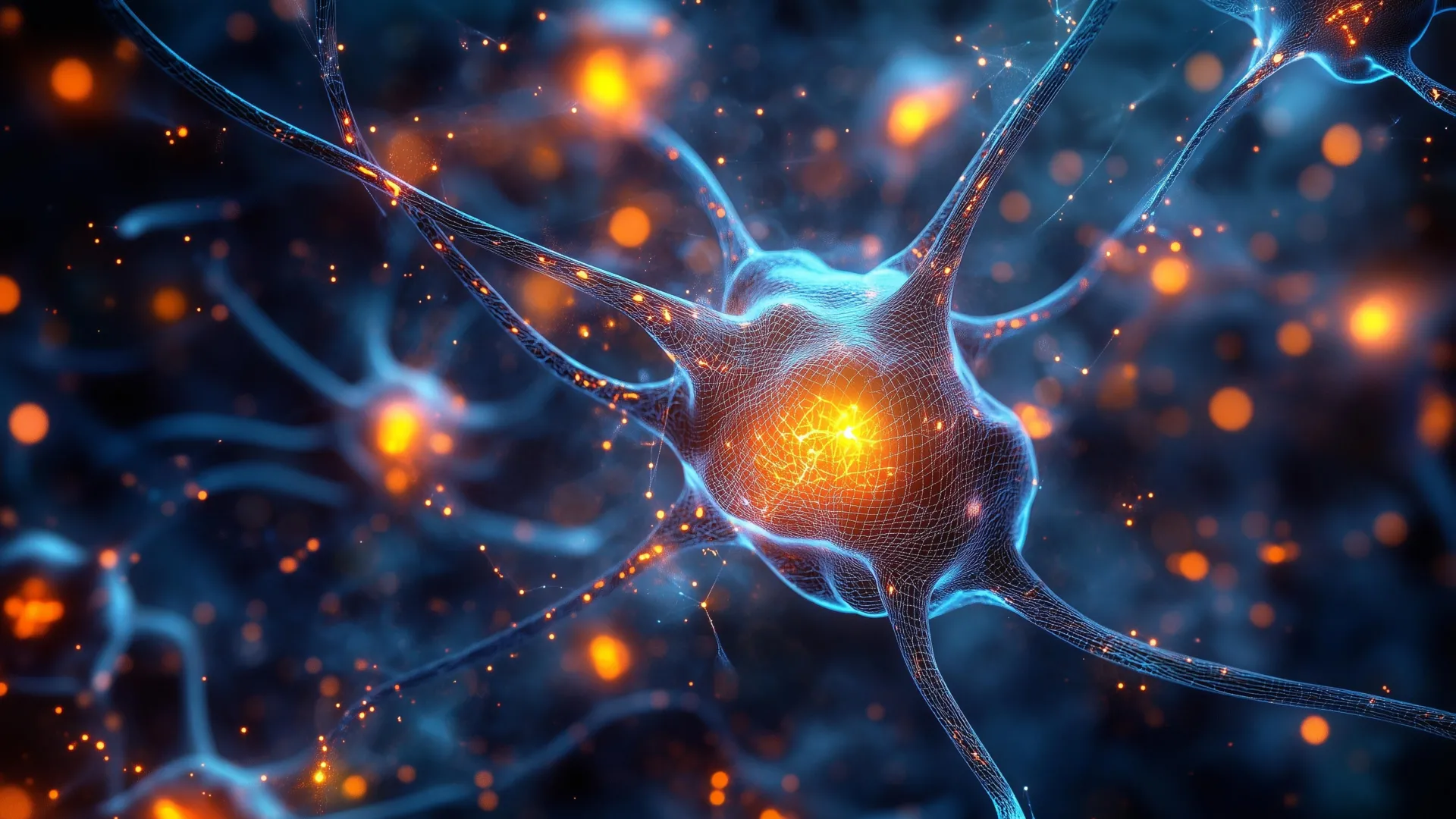
Neuroscientists at Johns Hopkins University have identified a specialized group of neurons within an evolutionarily ancient region of the brain that serves as a fundamental "selection engine" for attention. This discovery, centered in the brainstem, suggests that the ability to focus and filter out environmental noise is not merely a high-level function of the modern mammalian cortex but a deeply rooted mechanism shared across the vertebrate lineage. By isolating these specific inhibitory neurons in mice, researchers have demonstrated that this circuit is responsible for evaluating competing sensory inputs and directing the brain’s resources toward the most relevant information. The findings, recently published in the journal Nature Communications, provide a transformative perspective on how the brain manages distractibility and offer a potential roadmap for more precise treatments for neurodevelopmental conditions such as Attention-Deficit/Hyperactivity Disorder (ADHD) and autism.
The Evolutionary Roots of Selective Attention
For decades, the prevailing consensus in neuroscience held that the prefrontal cortex—the most recently evolved part of the brain, which is highly developed in humans and primates—was the primary seat of executive function and attentional control. This "top-down" model suggested that complex focus was a hallmark of higher intelligence. However, this theory struggled to account for the sophisticated behavior observed in "lower" vertebrates. Birds, fish, and reptiles, which lack a highly developed prefrontal cortex, nonetheless exhibit an uncanny ability to focus on prey or navigate complex environments while ignoring distractions.
"If we really go back in evolution, for hundreds of millions of years, birds have had this ability, fish have had this ability," explained lead author Ninad Kothari, a postdoctoral fellow in the Department of Psychological and Brain Sciences at Johns Hopkins. "They do not typically have a highly developed prefrontal cortex, so how does the brain solve this problem?"
The research team turned their attention to the brainstem, a structure often associated with basic survival functions like breathing and heart rate, but which also houses ancient sensory processing centers. By investigating a network of inhibitory neurons within this region, the researchers identified what they believe is the "attentional selection engine" that predates the modern cortex. This suggests that while the prefrontal cortex may refine or provide high-level strategy for focus, the core machinery that decides what is "important" resides in the more primitive parts of the brain.
Decoding the Attentional Selection Engine
The ability to focus on a single conversation in a crowded, noisy room—a phenomenon often called the "cocktail party effect"—relies on selective spatial attention. This process requires the brain to perform two simultaneous tasks: enhancing the relevant signal and suppressing the irrelevant noise.
The Johns Hopkins study focused on a group of inhibitory neurons in the brainstem that act as a gatekeeper. These neurons function by suppressing "distractor" signals. When an animal is presented with multiple stimuli, these neurons fire to inhibit the neural representations of the less important cues, effectively clearing a path for the most critical information to reach the higher processing centers of the brain.
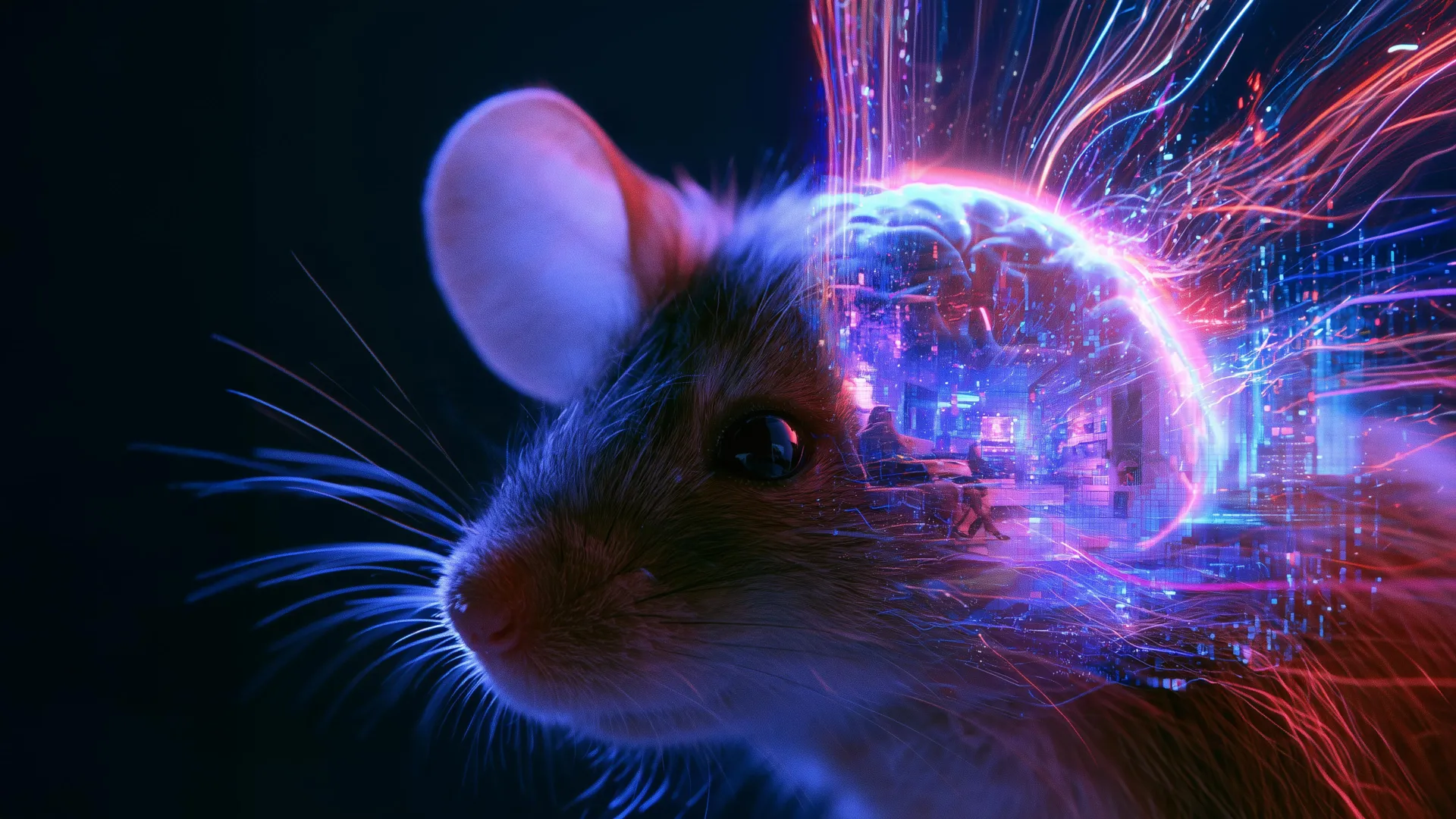
To observe this in action, the researchers developed a rigorous behavioral task for mice. The animals were trained to monitor a visual screen and respond to cues appearing directly in front of them to receive a reward. While the mice attempted to focus on the primary task, the researchers introduced distracting visual cues at various locations in their peripheral vision.
Under normal conditions, the mice were highly proficient at ignoring these distractions, even when they were bright or sudden. However, the dynamics changed dramatically when the researchers utilized advanced techniques to temporarily "switch off" or silence the specific group of brainstem neurons.
Experimental Results and Data Analysis
The results of the behavioral trials were stark. When the identified neurons were inactivated, the mice lost their ability to filter out peripheral noise.
"When we inactivate these neurons, the mice become hyper-distractable," Kothari noted. "A hallmark of ADHD is that even faint distractors draw attention away—and that’s exactly what we see here when these neurons are silenced."
To ensure the validity of their findings, the research team conducted a series of control experiments. They needed to confirm that the mice weren’t failing the task due to a loss of vision or a physical inability to move. The data revealed that:
- Sensory Perception: The mice could still see the primary cues; their basic visual processing remained intact.
- Motor Control: The mice were physically capable of performing the required movements to claim their reward.
- Selection Failure: The failure occurred exclusively when a distraction was present. Without the brainstem neurons functioning, the mice could no longer prioritize the "important" cue over the "irrelevant" one.
According to senior author Shreesh Mysore, a neuroscientist who specializes in neural circuits tied to behavior, the neurons act as a comparative tool. "The only thing impaired was their ability to take the competing pieces of information, compare them, and pay attention to the location with the most important information," Mysore said. "This part of the brain helps solve the question: ‘What is the most important information I should pay attention to right now?’"
One of the most compelling aspects of the data was the reversibility of the effect. When the neurons were "turned back on" the following day, the same animals regained their full capacity for focus, successfully ignoring even strong distractors. This pinpointed the specific circuit as the causal factor in the mice’s attentional state.
Chronology of the Discovery
The identification of these neurons in mice is the culmination of years of cross-species research. The project began with earlier observations made by Mysore and his colleagues in non-mammalian vertebrates, including birds, frogs, and turtles.
- Phase 1 (Comparative Studies): Researchers observed that birds possessed a highly efficient midbrain/brainstem circuit for spatial selection. This led to the hypothesis that a similar ancient circuit must exist in mammals, despite the presence of the more dominant cortex.
- Phase 2 (Circuit Identification): Using anatomical tracing and genetic markers, the Johns Hopkins team located the homologous (evolutionarily related) group of inhibitory neurons in the mouse brainstem.
- Phase 3 (Behavioral Testing): The team spent months training mice on a specialized "distractor task" that mirrored the types of attention tests used in human clinical settings.
- Phase 4 (Inactivation Trials): Using optogenetic or chemogenetic tools (technologies that allow scientists to control neuron activity with light or chemicals), the team tested the necessity of these neurons for focus.
- Phase 5 (Analysis and Publication): The data were analyzed throughout 2023 and early 2024, leading to the study’s selection as an editorial highlight in Nature Communications.
Implications for ADHD and Neurodevelopmental Disorders
The discovery has significant implications for our understanding of human neurobiology, particularly regarding ADHD and autism. While these conditions are often treated as "higher-order" cognitive issues related to the prefrontal cortex, this study suggests that the "faulty wiring" might actually be located deeper in the brain’s basement.
In many individuals with ADHD, the brain struggles to suppress irrelevant stimuli, leading to a state of constant sensory overload. Current treatments, such as methylphenidate (Ritalin) or amphetamines (Adderall), work by broadly increasing dopamine and norepinephrine levels across the entire brain. While effective for many, these "blunt instrument" approaches can cause widespread side effects because they do not target a specific circuit.
If the brainstem circuit identified in this study functions the same way in humans—which Mysore believes is highly likely—it could lead to the development of "next-generation" therapeutics.
"All the evidence to date suggests that these neurons exist in humans too," said Mysore. "An exciting hypothesis is that they play a crucial role in selective spatial attention in humans."
By targeting this specific brainstem "selection engine," pharmaceutical researchers might be able to develop medications that enhance the "filtering" mechanism without affecting the rest of the brain’s chemistry. This could result in treatments that are both more effective and have fewer side effects than current options.
A New Paradigm in Neuroscience
The study’s publication marks a shift in how scientists view the hierarchy of the brain. Rather than viewing the cortex as the sole controller of complex behavior, researchers are increasingly recognizing that ancient structures provide the essential foundation upon which modern cognitive abilities are built.
The research team, which also includes Arunima Banerjee, Qingcheng (Jessica) Zhang, and Wen-Kai You, plans to continue their work by investigating how these brainstem neurons communicate with the rest of the brain. They are particularly interested in the "handshake" between the brainstem and the prefrontal cortex—how the ancient selection engine passes information up to the higher-level decision-making centers.
As future studies move toward human subjects, the use of high-resolution functional MRI (fMRI) may allow scientists to observe these brainstem circuits in people with ADHD and autism. If the activity of these neurons is found to be diminished in these populations, it would confirm the brainstem’s role as a primary driver of attentional disorders.
The study, funded by federal grants, underscores the importance of basic research in animal models. By looking back through the lens of evolution, the researchers have found a key to one of the most complex problems in modern human psychology: the ability to pay attention in a world designed to distract. For now, the discovery serves as a reminder that even our most "advanced" behaviors are deeply connected to the ancient biological history we share with all vertebrate life.