A significant advancement in environmental chemistry has provided a new roadmap for addressing one of the most daunting ecological challenges of the 21st century. Researchers at Aarhus University have identified a specific chemical mechanism that allows for the degradation of per- and polyfluoroalkyl substances (PFAS)—commonly known as "forever chemicals"—using only intense ultraviolet (UV) light. By isolating the role of hydrogen radicals in the breakdown of these persistent molecules, the study offers a potential path toward sustainable, chemical-free water treatment technologies that destroy pollutants rather than merely relocating them.
For decades, PFAS have been utilized in a vast array of industrial and consumer products, from non-stick cookware and water-repellent clothing to firefighting foams and food packaging. Their utility stems from the carbon-fluorine bond, which is one of the strongest and most stable in organic chemistry. However, this same stability prevents the chemicals from breaking down in the environment, leading to their accumulation in soil, groundwater, and human tissue. The discovery of a mechanism to sever these bonds using light energy represents a pivotal shift in remediation strategy.
Understanding the Persistence of the Forever Chemical
The term "PFAS" encompasses a family of more than 12,000 synthetic chemicals. Their primary characteristic is a chain of carbon atoms bonded to fluorine atoms. Because the carbon-fluorine bond requires an immense amount of energy to break, these substances do not degrade through natural processes like sunlight, microbial action, or oxidation. Consequently, they have earned the "forever chemical" moniker, with some estimates suggesting they could persist in the environment for over a thousand years.
The health implications of PFAS exposure have become increasingly clear over the last two decades. Epidemiological studies have linked long-term exposure to a range of serious health issues, including kidney and testicular cancer, thyroid disease, high cholesterol, pregnancy-induced hypertension, and decreased vaccine response in children. Because PFAS are mobile in water, they frequently migrate from industrial sites or landfills into municipal drinking water supplies, creating a systemic public health crisis.
The Aarhus University Discovery: The Role of Hydrogen Radicals
The study led by Associate Professor Zongsu Wei at Aarhus University’s Department of Biological and Chemical Engineering focuses on a process known as photolysis. While previous research into PFAS degradation often relied on the addition of oxidizing or reducing chemicals to spark a reaction, the Aarhus team found that high-energy UV light can trigger a self-sustaining breakdown process in water.
The researchers identified hydrogen radicals ($H^bullet$) as the primary drivers of this degradation. These are highly reactive, short-lived particles generated when water molecules are exposed to specific wavelengths of UV light, typically below 300 nanometers. Unlike more commonly studied reactive species like hydroxyl radicals, hydrogen radicals are particularly effective at attacking the robust carbon-fluorine bonds of PFAS molecules.
"We know that PFAS are extremely stable because of the strong carbon-fluorine bonds, and breaking those bonds is the main challenge," Associate Professor Wei stated. "By identifying hydrogen radicals as a dominant driver, we now have a clearer direction for how to design more efficient and sustainable technologies to actually destroy these chemicals, rather than just removing them."
The process involves a stepwise "defluorination," where the hydrogen radicals systematically strip fluorine atoms from the carbon backbone. This transforms the complex, toxic PFAS molecule into smaller, shorter-chain substances and, eventually, into harmless mineral components like fluoride ions and carbon dioxide.
A Chronology of the PFAS Crisis and Remediation Efforts
To understand the weight of this discovery, it is necessary to examine the history of PFAS development and the subsequent realization of its dangers:
- 1938: PTFE (Teflon) is discovered by DuPont, marking the beginning of the PFAS era.
- 1940s-1970s: PFAS use expands rapidly into aerospace, textiles, and firefighting foams (AFFF).
- 1998: A farmer in Parkersburg, West Virginia, sues DuPont after his cattle die from drinking water contaminated by a nearby landfill, leading to the discovery of PFOA toxicity.
- 2002: 3M, a major manufacturer, phases out the production of PFOS (perfluorooctane sulfonate) due to environmental concerns.
- 2016: The U.S. Environmental Protection Agency (EPA) issues a non-binding health advisory for PFOA and PFOS in drinking water at 70 parts per trillion (ppt).
- 2023: Major chemical manufacturers, including 3M, agree to multi-billion dollar settlements to resolve claims regarding PFAS contamination in U.S. public water systems.
- 2024: The EPA announces the first-ever legally enforceable national drinking water standards for six PFAS, setting limits as low as 4 ppt for certain compounds.
The Aarhus University study arrives at a time when regulatory pressure is at an all-time high, and municipal water authorities are searching for cost-effective ways to meet these stringent new standards.
The Limitation of Current Filtration Technologies
Currently, the most common methods for handling PFAS in water are Granular Activated Carbon (GAC) and Ion Exchange (IX) resins. While these technologies are effective at "removing" PFAS from water, they do not "destroy" the chemicals. Instead, the PFAS molecules are trapped on the surface of the carbon or resin.
This creates a secondary waste problem. Once the filters are saturated, they must be disposed of, often in landfills or through high-heat incineration. Landfilling risks the PFAS leaching back into the environment, while incineration requires temperatures exceeding 1,000 degrees Celsius to ensure the carbon-fluorine bonds are broken. If incineration is incomplete, it can release toxic fluorinated gases into the atmosphere.
The Aarhus research points toward a "destructive" technology. By utilizing UV-generated hydrogen radicals, the chemicals are neutralized on-site. This eliminates the need for transporting hazardous waste and reduces the carbon footprint associated with filter regeneration and high-temperature burning.
Technical Data and Experimental Findings
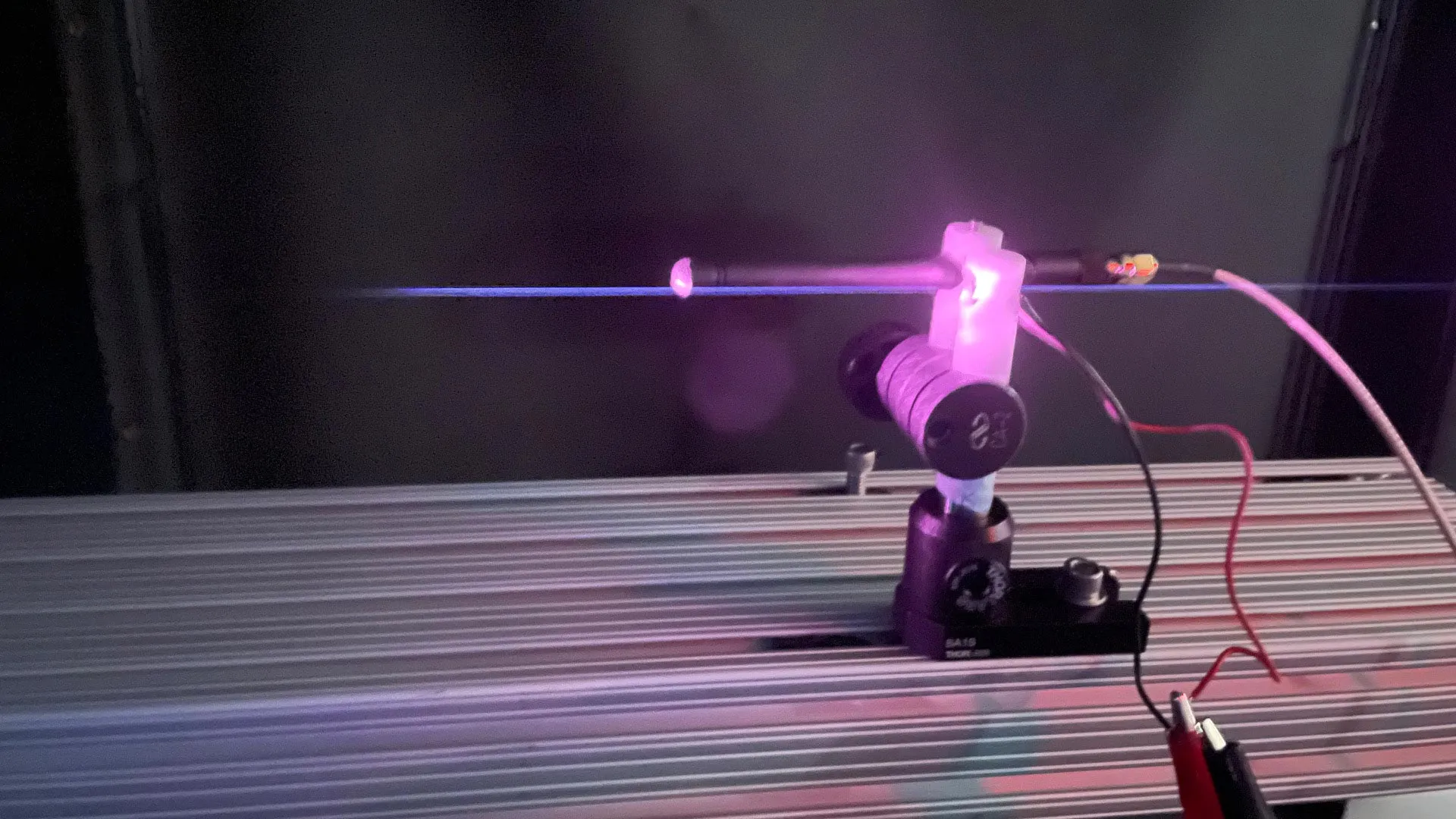
In the experiments conducted by Wei’s team, the researchers utilized vacuum ultraviolet (VUV) lamps. These lamps emit light at 185 nm and 254 nm. The 185 nm light is energetic enough to split water molecules ($H_2O$) into hydrogen radicals ($H^bullet$) and hydroxyl radicals ($OH^bullet$).
Key findings from the data include:
- Wavelength Sensitivity: Degradation efficiency increased significantly at wavelengths below 300 nm.
- Chemical Independence: The reaction proceeded without the need for hydrogen peroxide or ozone, which are typically required in Advanced Oxidation Processes (AOPs).
- Byproduct Management: While the process is effective, it is not instantaneous. The study noted the formation of intermediate "short-chain" PFAS during the reaction. These intermediates are generally considered less bioaccumulative than their long-chain counterparts but still require further degradation to reach total mineralization.
The research also highlighted that the efficiency of the hydrogen radical attack is influenced by the pH and the presence of other organic matter in the water, which can "scavenge" the radicals before they reach the PFAS molecules.
Global Implications and Industrial Reaction
The discovery has drawn interest from both the public and private sectors. Environmental engineers suggest that if the process can be scaled, it could be integrated into existing wastewater treatment plants as a tertiary treatment stage.
"The real goal is degradation: to break the molecules down completely," Wei noted. "Understanding the mechanism is essential if we want to achieve that in a green and scalable way."
Industry analysts expect the PFAS remediation market to grow to over $10 billion annually by 2030, driven by litigation and new environmental mandates. Technologies that can offer "total destruction" are highly sought after by companies looking to mitigate long-term liability. While the Aarhus study is a laboratory-scale breakthrough, it provides the theoretical foundation for engineering firms to develop commercial-scale UV reactors optimized for hydrogen radical production.
However, the scientific community remains cautious. Some experts point out that UV systems are energy-intensive. For the technology to be truly "green," it would need to be powered by renewable energy sources. Furthermore, the "slow" nature of the current degradation process means that large volumes of water would require significant "contact time" with the UV light, necessitating large reactor footprints.
Future Research and Potential for Scalability
The next phase of research for the Aarhus team and the wider scientific community involves optimizing the UV delivery system. This includes the development of more efficient LED-based UV sources, which could reduce energy consumption compared to traditional mercury-vapor lamps.
Additionally, researchers are looking into "sensitizers"—non-toxic additives that could accelerate the production of hydrogen radicals without remaining as pollutants themselves. There is also a focus on treating "concentrates." Since filtering PFAS is still the fastest way to clean large volumes of water, the Aarhus UV method might be most effectively used to destroy the highly concentrated PFAS waste generated during the filter cleaning process, rather than treating the entire municipal water stream at once.
Conclusion: A New Direction in Environmental Protection
The identification of hydrogen radicals as the primary engine for PFAS destruction marks a significant milestone in the effort to clean up "forever chemicals." By moving the focus from sequestration to molecular destruction, the Aarhus University study aligns with a broader global shift toward sustainable, circular environmental management.
While challenges regarding speed and energy efficiency remain, the clarity provided by this study allows scientists to stop guessing which chemical reactions are occurring and start engineering solutions that target the carbon-fluorine bond with precision. As Associate Professor Wei concluded, even the most persistent pollutants are vulnerable once their chemistry is fully understood. The "forever" in forever chemicals may finally have an expiration date.