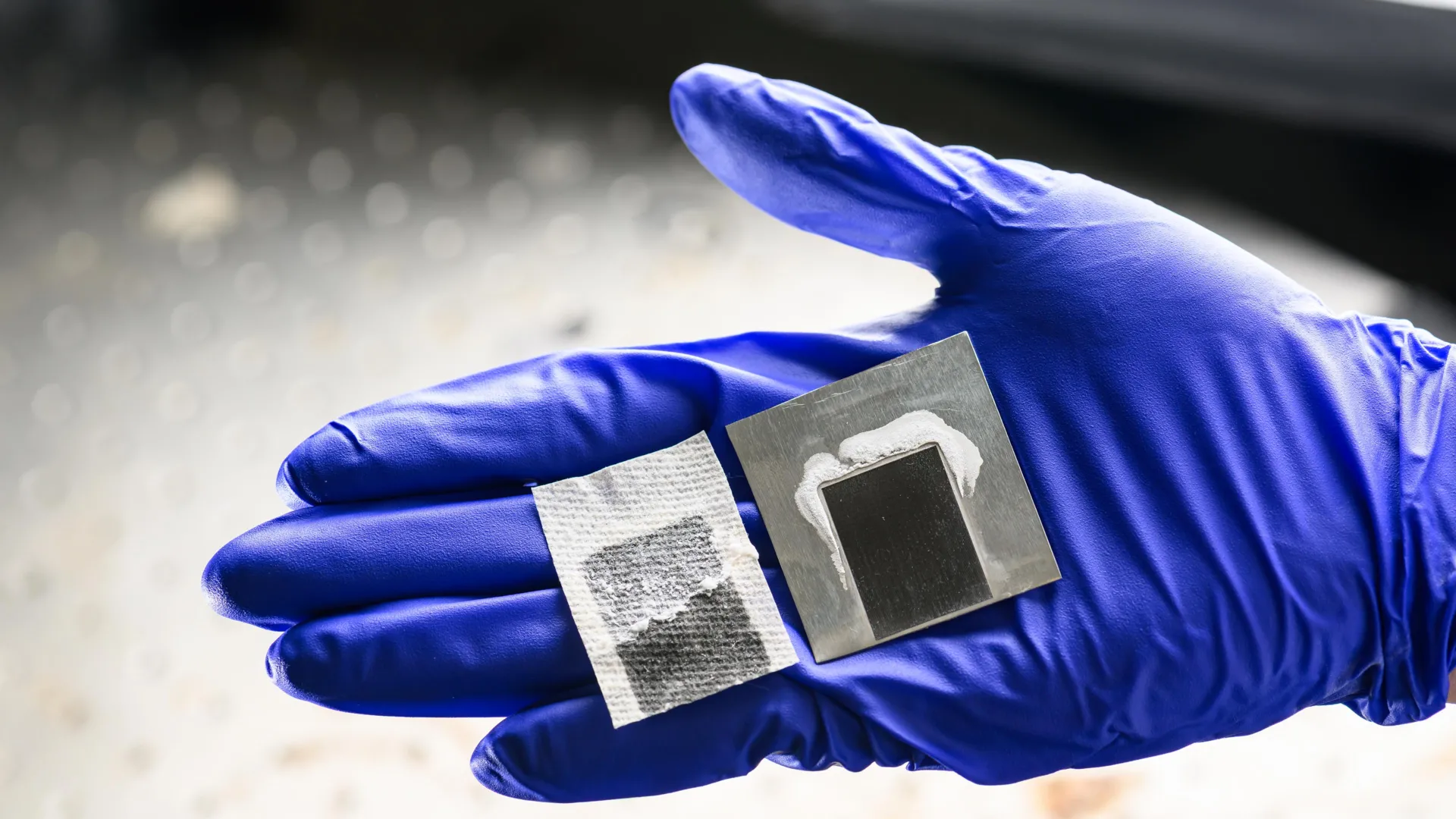
A novel phase of quantum magnetism known as altermagnetism could fundamentally transform the architecture of modern computing, rendering digital memory significantly smaller, faster, and more energy-efficient. Recent experimental breakthroughs led by an interdisciplinary coalition of physicists have provided compelling evidence that ruthenium dioxide—a quantum material traditionally classified as nonmagnetic in its standard bulk form—manifests this exotic magnetic behavior when reduced to an ultrathin film measuring only a few atomic layers in thickness.
The findings, published in the peer-reviewed journal Science Advances, were spearheaded by Rice University physicist Ming Yi in close collaboration with Bharat Jalan of the University of Minnesota and Milan Radovic of the Paul Scherrer Institute. This discovery bridges a critical gap in condensed matter physics, offering both a resolution to a longstanding scientific debate and an entirely new methodology for manipulating electron states at the nanoscale. By demonstrating that dimensional reduction and atomic-level mechanical strain can unlock hidden quantum phases, the research team has opened a promising frontier for the development of advanced spintronic devices and high-density random-access memory (RAM).
The Evolution of Magnetism: From Ferromagnetism to Altermagnetism
To understand the magnitude of this discovery, it is essential to examine the traditional paradigms of magnetism that have governed physics and electronics for more than a century. Historically, magnetic materials have been broadly categorized into two primary groups: ferromagnets and antiferromagnets. Ferromagnets, such as iron, cobalt, and nickel, possess net magnetic moments because their internal electron spins align in the same direction. This macroscopic magnetization makes them indispensable for permanent magnets and traditional data storage technologies like hard disk drives. However, ferromagnets generate stray magnetic fields that can interfere with adjacent components, creating physical limits to how densely data can be packed on a microchip.
Antiferromagnets, on the other hand, feature neighboring electron spins that point in opposite directions, canceling each other out entirely. Because they produce no net external magnetic field, antiferromagnets are immune to magnetic cross-talk and can switch states at terahertz frequencies—millions of times faster than standard electronics. For decades, physicists recognized antiferromagnetism as the holy grail for ultra-fast, high-density memory. The primary obstacle, however, was that their hidden, compensated magnetic order made them notoriously difficult to detect, control, and read out using conventional electrical methods.
In recent years, theoretical physicists proposed an intermediate third class of magnetic order known as altermagnetism. Altermagnets combine the best characteristics of both traditional worlds. Like antiferromagnets, their net magnetization is zero, rendering them impervious to stray magnetic fields and crosstalk. Yet, like ferromagnets, they possess momentum-dependent spin splitting in their electronic band structures. This unique combination allows altermagnets to exhibit macroscopic manifestations of magnetism—such as anomalous Hall effects and distinct spin-polarized transport—without the drawbacks of stray fields. Ruthenium dioxide was highlighted among the earliest theoretical candidates for altermagnetism. Nevertheless, experimental efforts to verify this behavior in bulk ruthenium dioxide consistently failed, leading researchers to conclude that the bulk material was simply nonmagnetic.
The Experimental Methodology: Unlocking Quantum Textures
Faced with the apparent contradiction between theoretical models and bulk measurements, Yi and her collaborators decided to investigate whether altering the physical dimensions of ruthenium dioxide could awaken its dormant magnetic properties. The team hypothesized that confining the material to an ultrathin film might fundamentally modify its quantum mechanical environment, changing how its electrons interact.
To test this hypothesis, the researchers needed to examine the material’s spin texture—the precise spatial arrangement of the magnetic moments belonging to its constituent electrons. Spin texture serves as a direct fingerprint of a material’s underlying magnetic symmetry, revealing whether unconventional magnetic states are present even when net bulk magnetization is absent.
The research team deployed a sophisticated experimental instrument called spin-resolved angle-resolved photoemission spectroscopy (spin-ARPES). This advanced spectroscopic technique bombards a material with ultraviolet light, causing electrons to be ejected from its surface. By measuring the momentum, energy, and spin polarization of the emitted electrons, scientists can construct a detailed, high-resolution map of the material’s electronic band structure and spin configuration.
Yichen Zhang, a recent Rice University graduate and the primary author of the study, noted that interpreting the spin-ARPES data required extensive theoretical calculations and meticulous cross-verification. "After analyzing our measurements, including informing our interpretation with theoretical calculations, we found that, in our experimental conditions, the ruthenium dioxide shows spin textures consistent with unconventional magnetism," Zhang explained. "This suggests that bulk and ultrathin ruthenium dioxide, under the right conditions, may have distinctly different magnetic properties."
The Role of Atomic Strain as a Quantum Control Knob
A pivotal aspect of the discovery is the identification of the specific physical mechanism that triggers altermagnetism in ultrathin ruthenium dioxide. The researchers observed that the unconventional spin behavior did not appear spontaneously upon reducing the film thickness alone. Instead, the emergence of altermagnetism was strictly contingent upon the presence of lattice strain.
Lattice strain occurs when a thin film is grown on a crystalline substrate whose atomic spacing does not perfectly match that of the film. This mismatch places intense mechanical pressure on the film’s crystal lattice, stretching or compressing the atomic bonds. In the case of the ruthenium dioxide ultrathin films, the epitaxial growth process induced significant lattice strain, which modified the overlapping orbitals of the ruthenium and oxygen atoms. Without this strain—such as in the unstressed, natural three-dimensional crystal lattice of bulk ruthenium dioxide—the electron spins remained unpolarized and showed no signs of altermagnetism.
This discovery transforms lattice strain from a manufacturing defect to be avoided into a powerful engineering tool. "The strain-dependent nature suggests that we may be able to use lattice strain as a tuning knob to induce or control altermagnetism," Zhang stated. By engineering substrates with specific lattice constants or by applying external mechanical stresses, future materials scientists could dynamically switch altermagnetic states on and off, tailoring the quantum properties of electronic components with unprecedented precision.
Broader Impacts and Implications for Spintronics and RAM
The implications of inducing altermagnetism in ultrathin films extend far beyond fundamental condensed matter physics, offering a direct pathway toward revolutionary computing paradigms. The primary beneficiary of this research is the field of spintronics. While conventional electronics rely exclusively on the electrical charge of electrons to process and transmit data, spintronics exploits both charge and quantum spin. Because electron spin can be manipulated with minimal energy dissipation, spintronic devices promise drastically reduced power consumption and vastly superior processing speeds compared to conventional charge-based semiconductors.
Furthermore, the integration of altermagnetic materials into computer memory architectures could solve major scaling bottlenecks. As traditional silicon-based transistors approach fundamental physical limits, the semiconductor industry has increasingly focused on non-volatile memory technologies, such as magnetic random-access memory (MRAM). Current MRAM designs rely on ferromagnetic tunnel junctions, which are susceptible to magnetic interference when packed closely together. Altermagnetic RAM, constructed from strain-tuned ultrathin films like ruthenium dioxide, could achieve extreme storage densities because the materials produce no stray magnetic fields. This would allow memory cells to be placed immediately adjacent to one another without the risk of data corruption from cross-talk.
In addition, the terahertz switching speeds characteristic of altermagnets could bridge the longstanding performance gap between computer processor speeds and memory access latencies, leading to computing systems that execute complex operations almost instantaneously.
Resolving a Longstanding Scientific Debate
The publication of these findings also marks a significant milestone in the ongoing study of complex quantum materials. For years, ruthenium dioxide was the subject of intense academic controversy. Theoretical physicists insisted that its crystal symmetry made it a prime candidate for unconventional magnetism, while experimentalists studying bulk crystals repeatedly found no evidence of magnetic order. This discrepancy created a persistent friction between theory and experiment within the quantum materials community.
The new research demonstrates that the debate was rooted in a failure to account for dimensional scaling and mechanical boundary conditions. By proving that bulk ruthenium dioxide is indeed nonmagnetic while ultrathin, strain-engineered films display clear altermagnetic signatures, the team has underscored the profound influence that physical dimensions and mechanical stress exert on quantum states.
"This work shows just how complex these questions can be," reflected Ming Yi. She emphasized that achieving the breakthrough required extraordinary precision at every stage of the investigation. "The high-quality material prep and the careful measurement protocol were critical to our observation of the correct electron spin properties. The results required careful analysis of spin-resolved angle-resolved photoemission spectroscopy. Through this, we were able to determine not only the magnetic state symmetries but a potential way to manipulate it in next-generation quantum materials."
The success of the project relied heavily on a multidisciplinary approach, combining the advanced materials synthesis expertise of Bharat Jalan’s laboratory at the University of Minnesota, the state-of-the-art spectroscopic capabilities coordinated with Milan Radovic at the Paul Scherrer Institute in Switzerland, and the rigorous theoretical and analytical framework established at Rice University.
Funding and Future Directions
Financial support for this foundational research was provided by several major scientific funding agencies and philanthropic organizations, reflecting the high priority assigned to quantum materials research globally. Primary financial backing came from the U.S. Department of Energy under grant awards DE-SC0026179, DE-SC0020211, and DE-SC0024710. Additional support was furnished by the Gordon and Betty Moore Foundation’s EPiQS Initiative via grant GBMF9470, and by the Robert A. Welch Foundation under grant C-2175.
With the initial proof-of-concept established, the research team and the broader scientific community are now poised to explore the practical implementation of strain-tuned altermagnetism. Future research will likely focus on fabricating stable heterostructures, integrating ultrathin ruthenium dioxide into prototype electronic devices, and testing its switching speeds and endurance under operating conditions.
As the semiconductor industry continues its relentless search for post-silicon technologies to sustain the trajectory of computing power, discoveries regarding materials like ruthenium dioxide demonstrate that the answers may lie not in inventing entirely new chemical compounds, but in mastering the quantum mechanical behavior of known elements at the atomic scale. By unlocking altermagnetism through the subtle art of lattice strain, researchers have taken a decisive step toward the realization of faster, smaller, and more efficient computing systems for the decades ahead.