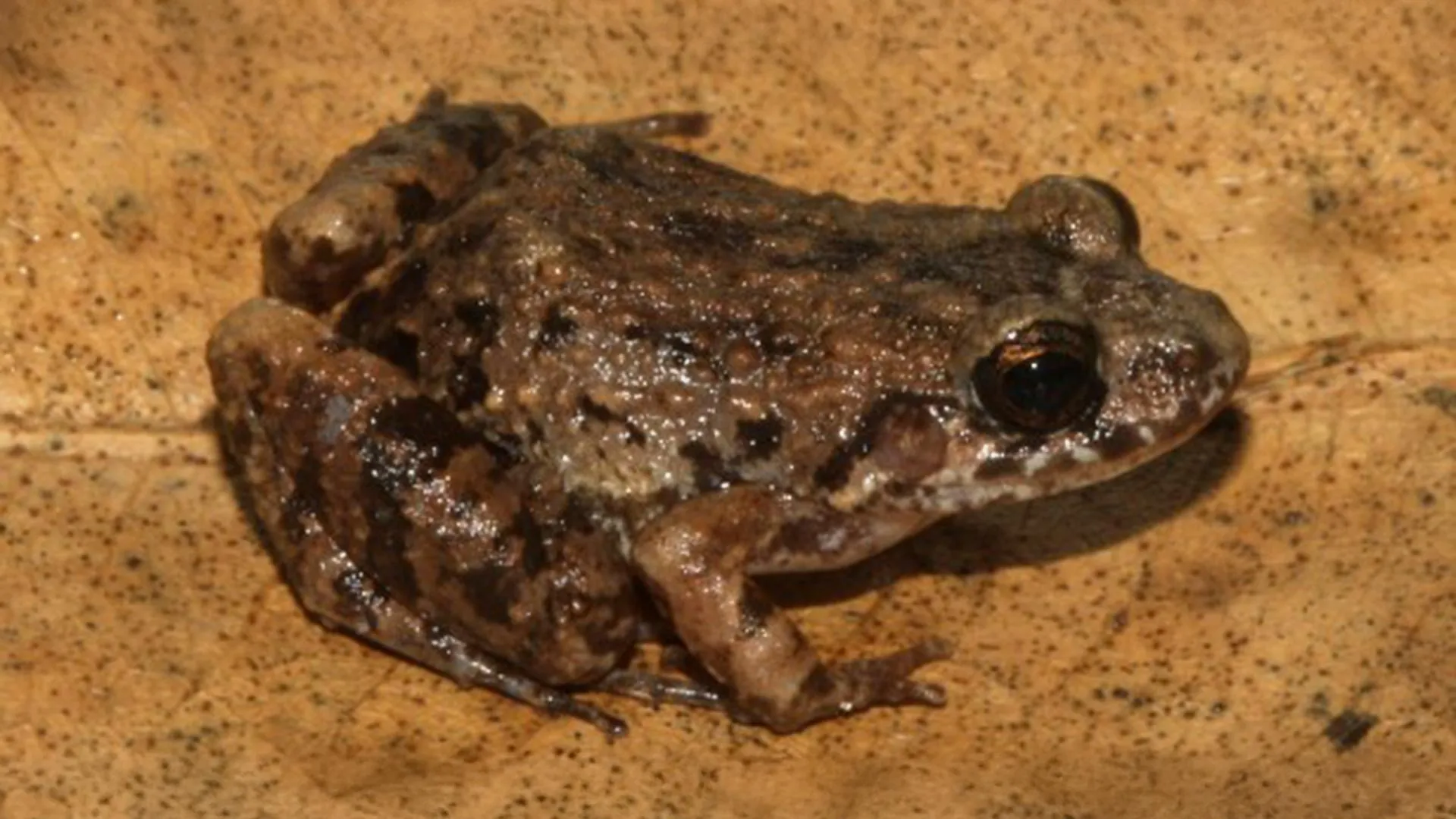
In the remote, seasonally submerged forests of the western Amazon, scientists have identified a previously unknown species of frog, Adenomera varcena. This discovery, recently detailed in the journal Ichthyology & Herpetology, serves as a stark reminder of the massive, undocumented biological wealth hidden within one of the world’s most critical ecosystems. The finding underscores the phenomenon of "cryptic diversity"—a challenge in taxonomy where distinct evolutionary lineages remain unrecognized due to their near-identical physical appearance to known species.
The research team, which includes experts from São Paulo State University (UNESP) and the Federal University of Minas Gerais (UFMG), utilized a multi-disciplinary approach to confirm the species’ status. By synthesizing genomic data, acoustic analysis of mating calls, and morphological examination of preserved specimens, the researchers established that Adenomera varcena is not only a unique entity but also occupies a ecological niche previously thought to be outside the standard range for its genus.
Chronology and Field Expedition Context
The path to identifying Adenomera varcena began with intensive biological surveys conducted in the Upper Juruá River region of western Acre, Brazil. This area, located near the municipalities of Cruzeiro do Sul and encompassing the Moa and Crôa rivers, is known for its complex mosaic of upland and floodplain forests.
Between 2018 and 2022, the research team—part of the Center for Research on Biodiversity Dynamics and Climate Change (CBioClima)—conducted multiple expeditions to catalog amphibian life in these forest fragments. The field work was physically demanding, requiring navigation of riverine environments that undergo drastic transformations based on seasonal rainfall. As the water levels rise and fall, the landscape shifts from dry land to flooded forest, a dynamic that dictates the life cycles of the organisms residing there.
During these surveys, researchers encountered specimens of the genus Adenomera that exhibited subtle but consistent differences from known species. The formal description process followed a rigorous timeline: initial field collection was succeeded by months of laboratory analysis, including DNA sequencing to determine phylogenetic placement and the digitization of vocalization recordings to ensure the acoustic signature was unique. By 2023, the data was compiled and peer-reviewed, leading to the official naming of Adenomera varcena, a name derived from the environment it inhabits: the "varzea," or Amazonian floodplain forest.
Supporting Data and Scientific Methodology
The identification of a new vertebrate species in the 21st century is rarely a matter of simple visual observation. In the case of Adenomera varcena, the "cryptic" nature of the frog necessitated a high-resolution comparative study. The researchers relied on four primary data streams:
- Molecular Phylogenetics: By comparing mitochondrial DNA sequences, the team confirmed that the genetic divergence between A. varcena and its closest relatives was sufficient to classify it as a distinct lineage.
- Bioacoustics: The mating call of an amphibian is often the most reliable "species marker." The team recorded the frog’s vocalizations, finding a specific, rhythmic, short-pulse signature that differs significantly from the calls of other Adenomera species, which typically favor dryland habitats.
- Morphological Analysis: Using high-precision calipers and stereomicroscopes, the team documented structural variations. A key diagnostic feature identified was the absence of a dark, pigmented spot on the underside of the forearm—a common trait in other members of the genus.
- Ecological Mapping: The team analyzed habitat preference, noting that Adenomera species are predominantly terrestrial, living in leaf litter on the forest floor. A. varcena displays a specialized adaptation to the flooded varzea, suggesting an evolutionary divergence that allowed it to exploit a niche that other relatives cannot easily occupy.
The Ecological Significance of the Varzea
The Amazonian varzea is one of the most dynamic environments on Earth. These forests are characterized by "white water" rivers, which carry nutrient-rich sediments that fertilize the forest floor during peak flood months. For a small amphibian, this environment presents extreme challenges: the need to breed and thrive in a habitat that is periodically underwater.
The discovery of Adenomera varcena in this specific environment is significant because it challenges the traditional understanding of the genus Adenomera. Previously, it was assumed that these frogs were restricted to terra firme (dryland) environments. Finding a member of this group in the floodplain suggests that the Amazon’s biodiversity is not just "richer" than expected, but also more specialized and potentially more vulnerable to fluctuations in water cycles.
Implications of Climate Change and Habitat Loss
The research team has expressed cautious concern regarding the long-term viability of the species. As global climate patterns shift, the intensity and duration of seasonal floods in the Amazon are becoming increasingly unpredictable.
Thiago R. Carvalho of the Federal University of Minas Gerais notes that the lack of baseline data on the frog’s reproductive cycle makes it difficult to model its survival. "We don’t yet know in detail the species’ ecological requirements and its natural history," Carvalho stated. "If climate change alters the flood dynamics, it could disrupt the reproductive behavior of this frog. In a scenario of accelerated loss of natural areas, we face a silent crisis where species are extinguished before they are even cataloged."
This concern is amplified by the rate of deforestation in the Amazon. When forests are cleared or degraded, the micro-habitats that species like A. varcena depend on are destroyed. If a species remains undescribed, it is essentially invisible to environmental legislation, preventing it from being included in protected status lists or impact assessment reports.
Taxonomy as a Conservation Tool
The formal naming of Adenomera varcena is more than an academic exercise; it is a fundamental act of conservation. Célio F. B. Haddad of São Paulo State University emphasizes that taxonomy is the bedrock of environmental policy.
"The pace of ecosystem destruction currently outpaces the capacity of taxonomic studies to keep up," Haddad observed. "When we describe a new species, we provide it with a legal identity. This identity allows it to be factored into biodiversity assessments, environmental licensing for development projects, and land-use planning."
Without a formal name, a species cannot be protected by the law. By identifying A. varcena, the team has successfully added a new line to the inventory of Brazilian fauna, providing the necessary data for future conservation strategies. This collaborative effort—which involved researchers from the University of São Paulo, the Federal University of Uberlândia, and international partners from the University of Ecuador—demonstrates the necessity of international cooperation in mapping the world’s remaining biological frontiers.
Future Research Directions
The discovery of A. varcena has prompted the research team to call for a renewed focus on the Juruá River region. The team suspects that this area, and perhaps other parts of the western Amazon, may hold dozens of other undescribed Adenomera lineages.
Future research will likely focus on:
- Population Surveys: Determining the actual range and population density of A. varcena to assess if it should be classified as vulnerable or endangered under IUCN criteria.
- Life-History Studies: Investigating the reproductive mode of the species, specifically how it manages egg-laying and larval development in an environment that is susceptible to rapid flooding.
- Systematic Cataloging: Expanding the use of DNA barcoding across the Amazon basin to identify other cryptic species that may be hidden in plain sight.
As the scientific community continues to peel back the layers of Amazonian biodiversity, the case of Adenomera varcena stands as a reminder of the fragility of the natural world. It highlights that the preservation of the Amazon is not just about protecting vast swaths of forest, but about safeguarding the specific, intricate, and often hidden life forms that have evolved over millennia to inhabit the world’s most complex ecosystem. The race to catalog these species remains one of the most pressing scientific imperatives of our time.