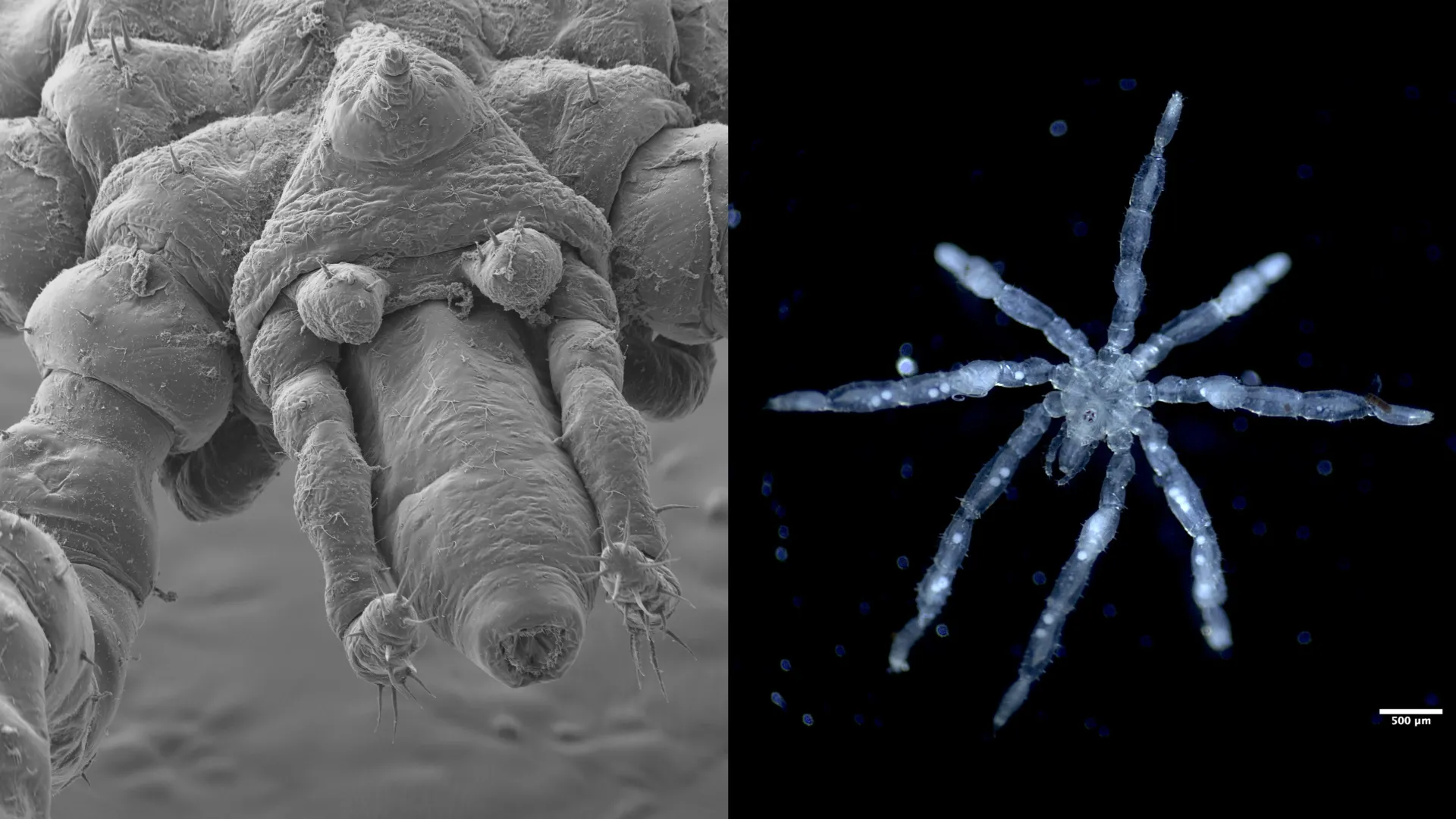
If you happen to be swimming in the Salish Sea at night and imagine tiny, spindly legs creeping up your body, there is now at least one unsettling reason that image feels plausible. Researchers at the University of British Columbia (UBC) have formally identified two previously unknown species of sea spider, a discovery that marks the first addition to the region’s catalog of these marine arthropods in nearly a century. The findings, published in the journal Organisms Diversity & Evolution, represent a significant milestone in marine biology, shedding light on a cryptic group of animals that have remained largely overlooked despite their ubiquity in temperate coastal waters.
The discovery was spearheaded by lead author Cormac Toler-Scott, who conducted the investigation as part of his master’s degree in zoology at UBC. By integrating traditional morphological observation—the study of an organism’s physical structure—with modern genetic barcoding, the team has managed to bridge a century-long gap in regional biodiversity records. The last formal description of a new sea spider species in the Salish Sea dates back to the 1920s, a testament to the lack of focused attention on these specific invertebrates.
A Half-Billion-Year Evolutionary Legacy
Sea spiders, scientifically known as Pycnogonids, belong to an ancient and highly specialized lineage that branched off from the main arthropod family tree approximately 500 million years ago. While they share a distant evolutionary history with terrestrial spiders, scorpions, and horseshoe crabs, Pycnogonids have evolved to survive exclusively in marine environments. Their physiological design is an outlier even among the vast diversity of the arthropod phylum.
The anatomy of a sea spider is a study in efficiency and bizarre adaptation. Because their bodies are so slender, many internal organs, including parts of the digestive system and reproductive tract, are actually housed within their legs. Many species possess a sucking proboscis, a tubular mouthpart used to siphon nutrients from soft-bodied marine invertebrates. Their size variance is extreme; while shallow-water species in the Salish Sea are often no larger than a human fingernail, deep-sea species in Antarctica can exhibit leg spans exceeding 70 centimeters, a phenomenon known as polar gigantism.
Physiologically, these creatures are equally anomalous. They lack a dedicated respiratory or circulatory system in the traditional sense; instead, they rely on gas exchange through the cuticle of their skin. Their reproductive biology is perhaps their most distinct trait: in many species, the burden of parental care rests entirely on the male. Females develop eggs within their limbs, which then emerge through specialized pores. The male gathers these eggs, cements them into clusters using glandular secretions from his own legs, and carries them on modified appendages called ovigers until they hatch.
The Search for Biodiversity in the Salish Sea
The research project was driven by a pressing concern regarding the impacts of anthropogenic climate change on marine invertebrates. Toler-Scott’s initial research attempts revealed a profound lack of baseline data, which he noted is a significant hurdle for conservation efforts. "In order to understand how marine invertebrates are being impacted by things like climate change and how we can better protect these key elements of the ecosystem, we have to be able to identify them," Toler-Scott explained.
Between September 2023 and August 2024, the research team conducted a series of systematic dives reaching depths of up to 18 meters. The sampling sites were strategically chosen to represent a cross-section of the Salish Sea’s diverse coastal topography, including locations near Quadra Island, Vancouver, Bamfield, and Victoria. This field campaign was the first of its kind to combine high-resolution imaging with DNA sequence analysis for regional Pycnogonids.
Profiles of the New Discoveries
The first species, Callipallene pilosuspedes, derives its name from the Latin term for "hairy feet," a nod to the dense, curved spines covering the distal segments of its legs. Beyond its hairy appearance, the specimen is defined by striking red eyes and a complex mouth apparatus. The proboscis is relatively short and reinforced with claws, designed to grip prey before the triangular, three-lipped mouth begins the feeding process. Observations under the microscope revealed a fascinating behavioral trait: the spider uses its agile ovigers not only for reproduction but as grooming tools, employing comb-like spines to clear debris from its body. Despite its distinct features, the team recovered only a single specimen, underscoring how little is truly known about the population density of these animals.
The second species, Tanystylum kiixin, was named in honor of the ancient Huu-ay-aht First Nations village site of Kiixin, located near the collection point on Vancouver Island. The name serves as a linguistic tribute to the sound of waves crashing against the shoreline. Unlike its counterpart, T. kiixin possesses significantly less flexible ovigers, a physical limitation that appears to result in a life of relative untidiness. Researchers frequently observed these spiders covered in dirt, algae, and various commensal parasites. This led the team to describe the species as an "ecosystem within an ecosystem," where the spider’s body acts as a host for smaller organisms that it is physically unable to groom away.
Implications for Marine Conservation
The research team’s work has been registered in global marine databases, providing a foundation for future taxonomic studies. However, the researchers emphasize that these two species likely represent only a fraction of the hidden diversity present in the Salish Sea. The reliance on genetic sequencing has proven that many species previously thought to be singular are actually complex groups of morphologically similar but genetically distinct animals.
The broader implications of this study reach into the heart of marine ecology. As the Salish Sea faces increasing pressures from warming waters, ocean acidification, and habitat degradation, the loss of uncatalogued species remains a silent threat to the stability of the food web. Pycnogonids serve as both predators and prey, occupying a specific niche that, if disrupted, could have cascading effects on the health of the seafloor environment.
A New Era of Taxonomical Focus
The success of the 2023–2024 field season highlights the necessity of localized biodiversity inventories. The identification guide produced by the UBC team is now being used to train local marine biologists and citizen scientists, effectively decentralizing the expertise required to monitor these species. By making it easier for researchers to identify these "nightmare-looking" yet vital organisms, the study facilitates a more robust approach to long-term environmental monitoring.
"I only had one field season," Toler-Scott noted, "but there’s definitely more diversity out there that we haven’t documented." This statement reflects a growing consensus among marine taxonomists: the coastal waters of British Columbia are far more biologically complex than current literature suggests. The discovery of Callipallene pilosuspedes and Tanystylum kiixin serves as a poignant reminder that even in well-traversed areas, the ocean remains the planet’s final, and most resilient, frontier for discovery.
Supported by the Natural Sciences and Engineering Research Council of Canada (NSERC), the research not only provides answers to long-standing taxonomic questions but also challenges the scientific community to re-evaluate the importance of "minor" marine invertebrates. As the region moves forward, the integration of genomic data with traditional biology will be the primary tool in understanding how these ancient, bizarre creatures—with their hairy feet, red eyes, and complex parental care—will adapt to the rapidly changing conditions of the 21st-century ocean. For those who frequent the waters of the Salish Sea, the discovery adds a layer of depth to the experience, proving that even the most overlooked organisms play a vital, if mysterious, role in the survival of our coastal ecosystems.