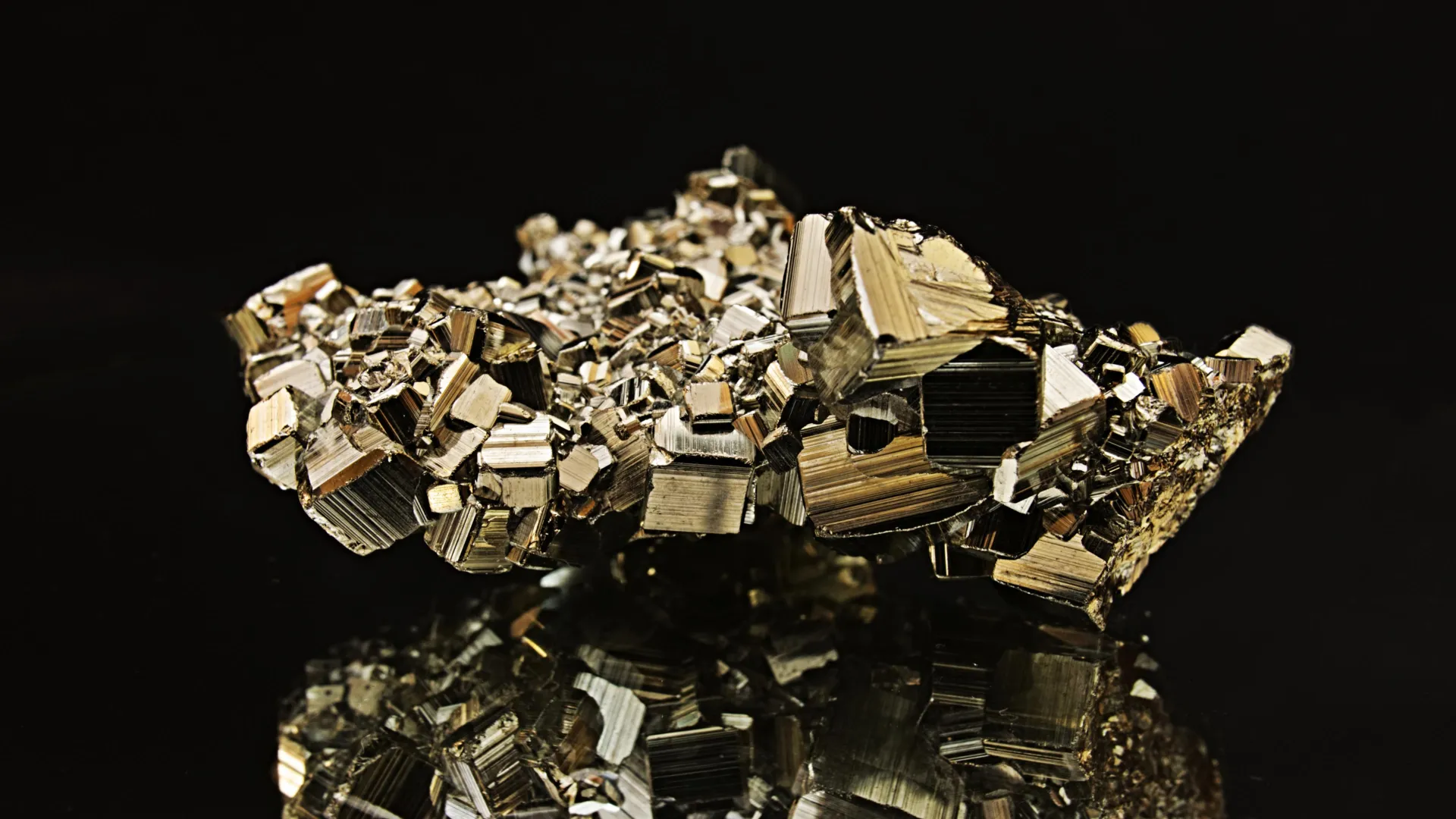
The global race to secure a stable supply of lithium, the "white gold" essential for the transition to renewable energy, has taken a surprising turn toward the ancient sedimentary rocks of the Appalachian Basin. Researchers at West Virginia University (WVU) have identified a significant and previously unknown association between lithium and pyrite—commonly known as "fool’s gold"—within middle-Devonian shale formations. This discovery, presented at the European Geosciences Union (EGU) General Assembly 2024, suggests that industrial waste from past mining and drilling operations could serve as a vital, domestic source of the minerals required for the next generation of battery technology. As the United States and other industrialized nations seek to decouple their green energy supply chains from volatile international markets, the ability to extract lithium from common sedimentary minerals like pyrite could represent a paradigm shift in both geology and economic policy.
The Chemistry of Modern Energy: Why Lithium Matters
To understand the weight of the WVU discovery, one must first consider the unique chemical properties that make lithium indispensable to modern life. Lithium is the lightest metal on the periodic table, possessing an exceptionally high electrochemical potential. This allows lithium-ion batteries to store vast amounts of energy in a compact, lightweight format—a requirement for portable electronics and, more critically, electric vehicles (EVs). However, this same high reactivity presents significant safety challenges. Lithium is prone to rapid oxidation and can react violently with water, producing heat and flammable hydrogen gas. This is why airlines enforce strict regulations regarding the transport of laptops and external power banks; a compromised battery can lead to thermal runaway, a self-sustaining fire that is difficult to extinguish.
Despite these risks, lithium remains the undisputed cornerstone of the "Green Revolution." In the quest to mitigate climate change, the global economy is shifting from internal combustion engines to electric powertrains and from fossil-fuel-based grids to intermittent renewable sources like wind and solar. These technologies require massive energy storage capacities. According to the International Energy Agency (IEA), lithium demand is projected to grow by over 40 times by 2040 if the world is to meet the goals of the Paris Agreement. This unprecedented surge in demand has forced geologists and materials scientists to look beyond traditional mining sites.
Breaking New Ground: The West Virginia University Study
The research team, led by Shailee Bhattacharya, a sedimentary geochemist and doctoral student working with Professor Shikha Sharma in the IsoBioGeM Lab at WVU, set out to explore whether organic-rich shales could host significant lithium deposits. The team analyzed 15 samples of middle-Devonian shale, a geological formation dating back approximately 380 million years. During this period, much of what is now the eastern United States was submerged under a shallow inland sea, leading to the accumulation of organic matter and minerals that eventually compressed into shale.
While shale is traditionally known as a source of natural gas and oil, the WVU researchers utilized advanced geochemical analysis to peer into the mineralogical makeup of the rock. What they found was a high concentration of lithium specifically sequestered within pyrite framboids. Pyrite, an iron sulfide, is ubiquitous in sedimentary environments but has never before been considered a primary host for lithium. "This is unheard of," Bhattacharya noted during the presentation of the findings. The discovery is particularly striking because lithium is typically associated with silicate minerals or concentrated in brines, rather than sulfide minerals like pyrite.
The Shift Toward Unconventional Resource Recovery
The discovery comes at a critical juncture for the mining industry. Currently, the world’s lithium supply is primarily derived from two types of deposits: pegmatites (hard-rock deposits found in places like Australia) and continental salars (lithium-rich brines found in the "Lithium Triangle" of Chile, Argentina, and Bolivia). While these sources are well-understood, they come with high environmental and social costs. Brine extraction requires staggering amounts of water in some of the world’s most arid regions, while hard-rock mining involves extensive land disruption and energy-intensive processing.
The WVU study proposes a different path: the "circular" recovery of minerals from industrial byproducts. By identifying lithium in shale-associated pyrite, the research suggests that mine tailings, drill cuttings, and other materials discarded by the oil, gas, and coal industries could be reprocessed. This approach aligns with the U.S. Department of Energy’s broader initiative to extract "critical minerals" from coal waste and acid mine drainage. If lithium can be harvested from materials that have already been brought to the surface, the environmental footprint of the battery supply chain could be drastically reduced.
A Chronology of Discovery and Resource Expansion
The journey toward this discovery is rooted in a decade of shifting geological focus:
- 2010–2015: The "Shale Gale" sees a massive expansion in hydraulic fracturing across the Appalachian Basin, primarily targeting the Marcellus and Utica shales for natural gas.
- 2016–2020: As the EV market begins to mature, the U.S. government identifies lithium as a "critical mineral," noting a dangerous reliance on foreign imports (primarily from China, which dominates the processing stage).
- 2021: The Biden Administration signs Executive Order 14017, emphasizing the need for resilient, diverse, and secure supply chains for high-capacity batteries.
- 2023: The WVU IsoBioGeM Lab begins its specific investigation into the geochemistry of Devonian shales, looking for trace elements that could provide economic value beyond hydrocarbons.
- 2024: The team announces the lithium-pyrite link, opening a new chapter in sedimentary geochemistry.
Technical Analysis: The Lithium-Sulfur Battery Connection
The discovery of lithium within a sulfur-rich mineral like pyrite is not only a geological curiosity but also a potential boon for battery engineering. Currently, the industry is heavily invested in lithium-ion technology, but there is a growing movement toward lithium-sulfur (Li-S) batteries. These next-generation cells theoretically offer much higher energy densities and lower production costs than their ion-based counterparts.
Bhattacharya’s work focuses on the fundamental question of how lithium and pyrite interact at a molecular level. If the natural world has already found a way to associate lithium with iron sulfides in shale, it may provide clues for material scientists attempting to stabilize lithium-sulfur interfaces in the lab. Understanding the geochemical "bonding" in 380-million-year-old rocks could, paradoxically, be the key to designing the high-performance batteries of 2030 and beyond.
Economic and Geopolitical Implications
The implications of finding a domestic, unconventional lithium source in the Appalachian Basin are profound. The region, which has historically been the backbone of the American energy industry through coal and natural gas, has faced economic headwinds as the world moves away from carbon-intensive fuels. Transforming the Appalachian Basin into a hub for "green" mineral extraction could provide a much-needed economic transition for local communities.
Furthermore, the discovery has significant geopolitical weight. The United States currently has only one operational lithium mine (the Silver Peak mine in Nevada). By contrast, China controls a vast majority of the world’s lithium refining capacity. Identifying lithium in widespread shale formations allows the U.S. to potentially bypass some of the hurdles associated with opening new "greenfield" mines, which often face years of litigation and environmental permitting delays. Reprocessing "brownfield" industrial waste is generally viewed more favorably by environmental regulators and the public.
Cautionary Perspectives and Next Steps
Despite the excitement surrounding the WVU findings, the researchers have maintained a disciplined scientific outlook. Bhattacharya has characterized the current results as "well-specific," meaning that while the 15 samples showed significant lithium concentrations, it is not yet certain that this phenomenon is uniform across the entire Appalachian Basin or in other shale formations globally.
The path from a laboratory discovery to a commercial mining operation is long and fraught with challenges. Key hurdles include:
- Extraction Efficiency: Scientists must develop a cost-effective way to separate lithium from pyrite framboids on an industrial scale without creating new environmental hazards.
- Scalability: Further testing is required to determine if the concentration of lithium in these shales is high enough to justify the capital investment required for recovery plants.
- Environmental Impact: While using waste materials is more sustainable than new mining, the chemical leaching processes used to extract lithium must be carefully managed to prevent groundwater contamination.
Conclusion: A Sustainable Vision for the Future
The discovery of lithium in "fool’s gold" serves as a reminder that the solutions to the climate crisis may be hidden in the very materials we once discarded. By bridging the gap between ancient geology and modern technology, the researchers at West Virginia University have provided a roadmap for a more sustainable energy future.
As the study moves into its next phase, the focus will shift to mapping the regional extent of these deposits and refining the extraction techniques. If successful, the Appalachian Basin—once the land of coal—could become the heart of the American battery belt. In the words of Shailee Bhattacharya, the goal is to reach a point where "we can talk about sustainable energy without using a lot of energy resources." Through the lens of this discovery, the "waste" of the past is rapidly becoming the most precious resource of the future.