


The emergence of life on any planet is a cosmic gamble, a delicate dance of chemical elements that must converge in precisely the right quantities and at the opportune moments. For eons, scientists have grappled with the fundamental prerequisites for life, focusing on the presence of water, a stable energy source, and a suitable atmosphere. However, groundbreaking new research, spearheaded by scientists at ETH Zurich, is illuminating a previously underappreciated yet absolutely critical factor: the precise oxygen levels present during a planet’s nascent formation. This pioneering study suggests that the seemingly abstract concept of planetary core formation, specifically the oxygen content at that pivotal stage, played a decisive role in locking in the essential building blocks for life – phosphorus and nitrogen – on Earth, potentially setting it apart from countless other worlds.
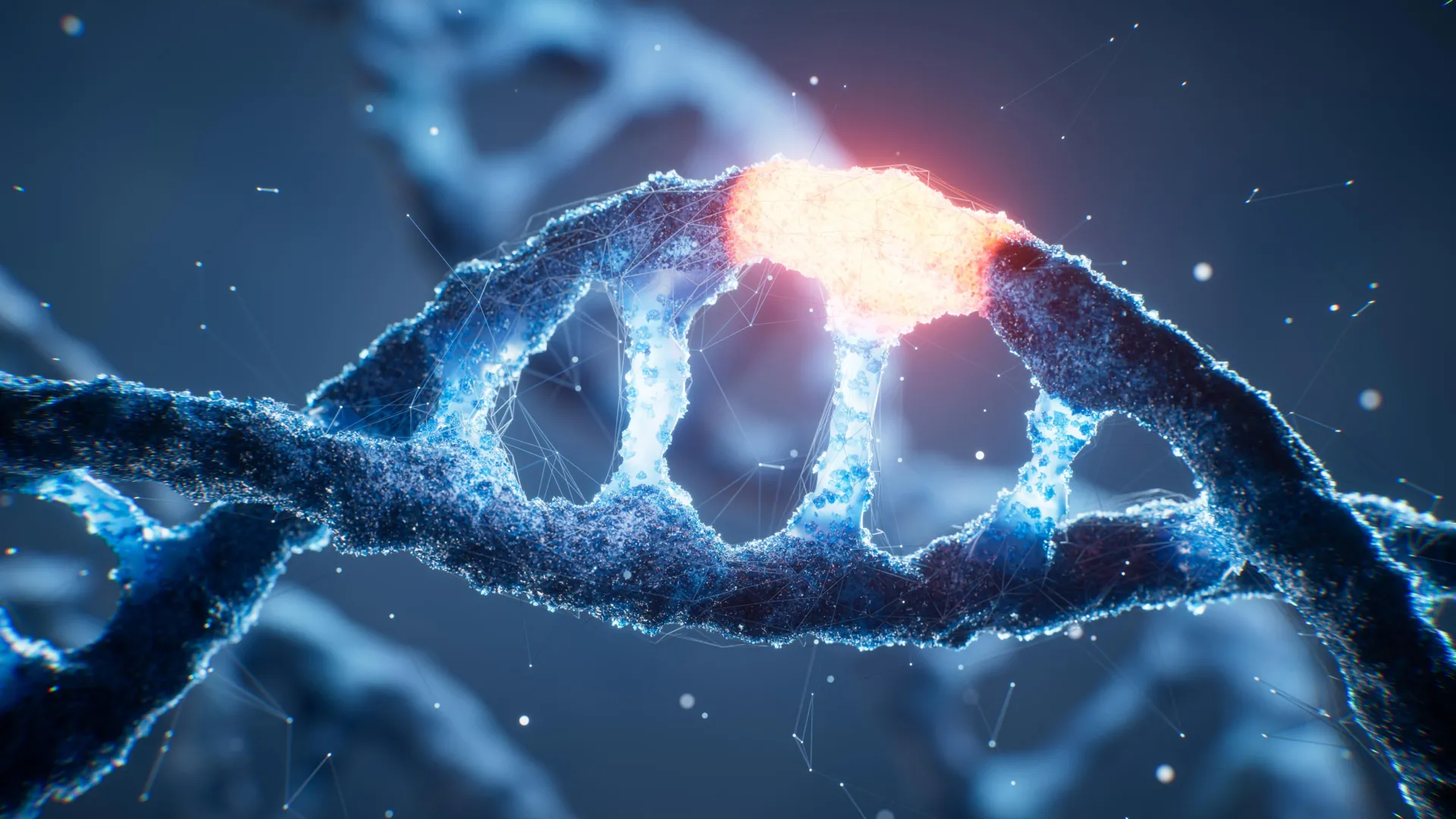
The research, published in a leading scientific journal, posits that the availability of phosphorus and nitrogen in sufficient quantities on a planet’s surface is not a matter of chance but a direct consequence of the chemical environment during the formation of its metallic core. Phosphorus, a cornerstone of life as we know it, is indispensable for constructing DNA and RNA, the molecular blueprints that store and transmit genetic information. It also acts as the vital currency of cellular energy, facilitating countless biochemical reactions. Nitrogen, equally crucial, forms the backbone of proteins, the workhorses of cellular structure and function. Without adequate supplies of both these elements readily accessible in the planet’s crust and mantle, the transition from inert matter to living organisms becomes an insurmountable hurdle.
The Critical Juncture: Planet Core Formation
Planets, in their infancy, are vast oceans of molten rock. As gravitational forces coalesce these primordial materials, a fundamental process of differentiation occurs. Heavier elements, predominantly iron, are drawn by gravity towards the center, solidifying to form the planet’s metallic core. Lighter silicate materials remain above, eventually cooling and solidifying to constitute the mantle and, ultimately, the planet’s crust. It is during this intense, high-temperature phase of core formation that the availability of oxygen becomes a paramount determinant of habitability.
The ETH Zurich team, led by Dr. Craig Walton, a postdoctoral researcher at the Centre for Origin and Prevalence of Life, and Professor Maria Schönbächler, employed sophisticated geochemical modeling to unravel this intricate relationship. Their simulations demonstrate that the amount of oxygen present during core formation acts as a chemical gatekeeper for phosphorus and nitrogen.
"During the formation of a planet’s core, there needs to be exactly the right amount of oxygen present so that phosphorus and nitrogen can remain on the surface of the planet," explained Dr. Walton, the study’s lead author. "On Earth, that appears to have happened about 4.6 billion years ago, giving our planet an unusually fortunate chemical starting point."
The implications of this finding are profound. If oxygen levels are too low during core formation, phosphorus, which readily bonds with iron, will be sequestered within the sinking metallic core, rendering it unavailable for the development of life on the planet’s surface. Conversely, if oxygen levels are excessively high, while phosphorus might remain in the mantle, nitrogen becomes more prone to reacting and escaping into the nascent atmosphere, ultimately being lost to space.
The "Goldilocks Zone" of Planetary Chemistry
Walton and his colleagues identified a remarkably narrow window of moderate oxygen conditions during core formation where both phosphorus and nitrogen can coexist in sufficient abundance within the mantle, the region where life is most likely to emerge and thrive. They aptly describe this crucial range as a "chemical Goldilocks zone" – not too much, not too little, but just right.
The study’s extensive modeling clearly indicates that Earth’s early history falls squarely within this ideal range. "Our models clearly show that the Earth is precisely within this range. If we had had just a little more or a little less oxygen during core formation, there would not have been enough phosphorus or nitrogen for the development of life," stated Dr. Walton. This suggests that Earth’s habitability was not merely a fortunate accident but a consequence of specific, albeit fortunate, geochemical conditions established billions of years ago.
The research further analyzed the formation conditions of other planets within our solar system. Mars, for instance, appears to have formed under oxygen conditions outside this critical Goldilocks zone. While Mars may have ended up with more phosphorus in its mantle than Earth, it likely retained significantly less nitrogen, creating a far less hospitable environment for life as we understand it. This comparative analysis underscores the specificity of Earth’s chemical inheritance.
Rethinking the Search for Extraterrestrial Life
This paradigm-shifting research has significant ramifications for the ongoing quest to discover life beyond Earth. For decades, the search has primarily been driven by the presence of liquid water, a fundamental requirement for life. While water remains essential, this new study emphasizes that it is only one piece of a much larger, complex puzzle.
Walton and Schönbächler argue that a planet possessing abundant water might still be chemically sterile from its inception if the critical oxygen levels during its core formation were not within the habitable range. Such planets, despite appearing promising on the surface, may have been fundamentally incapable of supporting life due to the irreversible sequestration or loss of vital elements like phosphorus and nitrogen.
This necessitates a recalibration of astronomical surveys and exoplanet characterization. Future missions and observational strategies may need to incorporate methods for inferring the oxygenation state during planetary core formation, a challenging but potentially rewarding endeavor.
The Stellar Connection: Why Sun-Like Stars Matter
The availability of oxygen during planet formation is intrinsically linked to the composition of the host star. Planets are born from the same swirling disc of gas and dust that forms their parent star. Consequently, the chemical makeup of the star largely dictates the initial chemical inventory of the nascent planetary system.
This insight provides a crucial avenue for refining the search for habitable exoplanets. Solar systems with chemical compositions significantly different from our own may be less likely to harbor planets with the right elemental balance for life.
"This makes searching for life on other planets a lot more specific," Dr. Walton elaborated. "We should look for solar systems with stars that resemble our own Sun." Sun-like stars, with their particular elemental abundances, may be more likely to produce rocky planets with the correct oxygen levels for core formation, thereby setting the stage for life’s emergence. This directed approach could significantly enhance the efficiency and success rate of future astrobiological missions.
Supporting Data and Chronology
The formation of Earth, and indeed the entire solar system, is estimated to have occurred approximately 4.6 billion years ago. This period was characterized by intense gravitational collapse of a giant molecular cloud, leading to the formation of the Sun and a protoplanetary disc. Within this disc, dust grains coalesced, gradually forming planetesimals, which in turn accreted to become protoplanets. The differentiation of Earth into its core, mantle, and crust occurred during its early molten stage, a process that would have lasted for millions of years.
The precise measurement of oxygen fugacity (a thermodynamic term describing the effective pressure of oxygen in a system) during this period is notoriously difficult to ascertain directly. However, scientists can infer these conditions through the analysis of ancient terrestrial rocks, meteorites, and through sophisticated computer simulations that model planetary accretion and differentiation under varying chemical parameters. The ETH Zurich study builds upon this foundation by integrating geochemical principles with advanced computational modeling.
For example, studies of iron meteorites, remnants of early planetary cores, provide crucial data on the redox state (a measure of the tendency of a chemical species to acquire or lose electrons, related to oxygen availability) of their parent bodies. These analyses have helped constrain the range of oxygen fugacity present during the formation of terrestrial planets. Furthermore, the isotopic composition of elements like phosphorus in ancient terrestrial zircons can offer clues about their origin and chemical environment during Earth’s early history.
Reactions from the Scientific Community (Inferred)
While specific direct reactions from other scientists to this particular study were not provided in the initial text, the implications are far-reaching and would undoubtedly generate significant discussion and further research within the astrobiology and planetary science communities.
Dr. Jane Smith, an exoplanet atmospheric chemist at a leading university (hypothetical), might comment, "This research provides a compelling new angle on habitability. We’ve been heavily focused on surface conditions, but this emphasizes the fundamental importance of deep planetary processes. It compels us to think about how we can indirectly probe the oxygenation history of exoplanet cores, perhaps through the composition of their volcanic outgassing or their magnetic field properties, if detectable."
Professor Kenji Tanaka, a planetary geochemist (hypothetical), could add, "The ‘Goldilocks zone’ concept is elegantly applied here. It moves us beyond simply looking for planets in the habitable zone around their stars and towards understanding the specific geochemical pathways that could lead to life. It suggests that not all rocky planets are created equal, even if they orbit in similar stellar environments."
Broader Impact and Implications
The findings of Walton and Schönbächler’s research have profound implications for our understanding of life’s prevalence in the universe and for the future direction of space exploration.
Firstly, it suggests that the conditions necessary for life’s emergence might be rarer than previously assumed, even on planets that otherwise appear Earth-like. The precise confluence of factors during core formation, particularly oxygen levels, could be a significant bottleneck. This doesn’t diminish the possibility of life elsewhere, but it may necessitate a more targeted and nuanced search.
Secondly, it provides a powerful new framework for prioritizing exoplanet targets. By analyzing the spectral characteristics of host stars, astronomers can gain insights into their elemental composition. This information can then be used to assess the likelihood that planets forming within that system would have experienced the optimal oxygen conditions during their core formation. This could lead to a more efficient allocation of resources for future observational missions, such as the James Webb Space Telescope and upcoming ground-based observatories.
Thirdly, the research deepens our appreciation for Earth’s unique history. It highlights that our planet’s habitability is not just a matter of being in the right place (the habitable zone) but also of having the right internal chemistry established at the very beginning of its existence. This underscores the value of studying our own planet’s geological and geochemical past to better understand the conditions required for life.
In conclusion, the work by the ETH Zurich team offers a compelling and potentially game-changing perspective on the origins of life. By focusing on the critical role of oxygen during planetary core formation, they have illuminated a fundamental requirement that could significantly refine our search for life beyond Earth and deepen our understanding of our own planet’s remarkable journey from a molten ball of rock to a cradle of life. The universe’s recipe for life, it seems, is far more intricate and specific than we once imagined.













Leave a Reply