

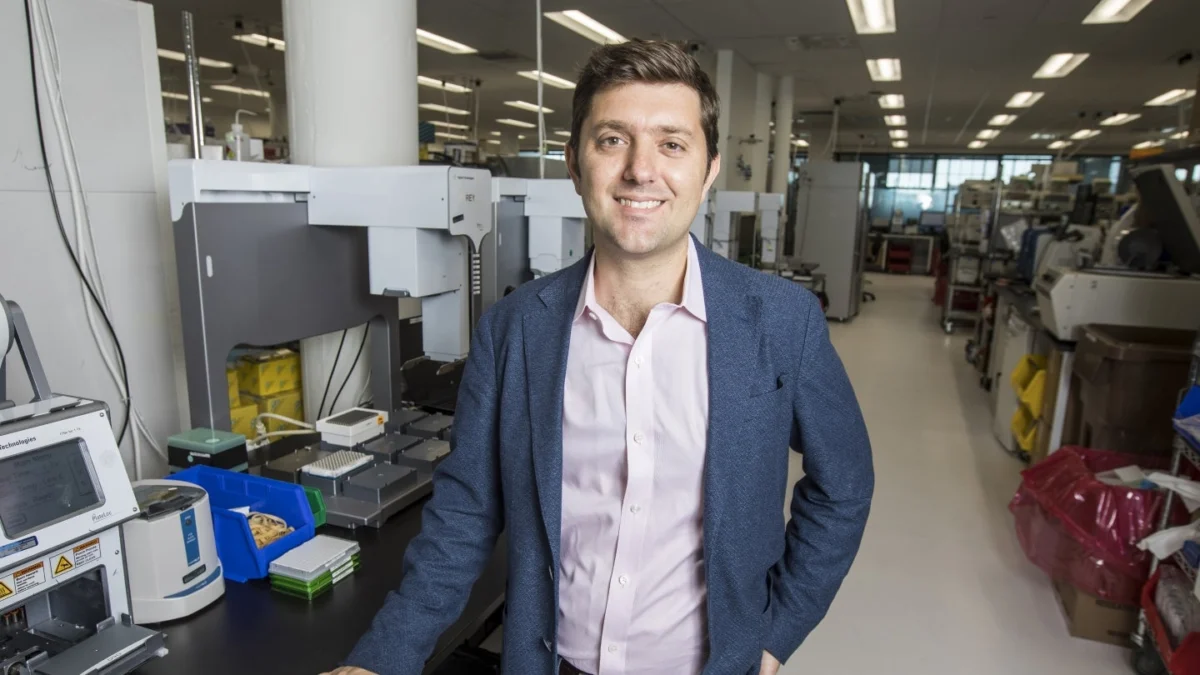
The biopharmaceutical industry, long reliant on the meticulous, hands-on work of human researchers, is on the cusp of a profound transformation, mirroring the automation-driven advancements seen in sectors like automotive manufacturing. This evolution is spearheaded by the increasing integration of autonomous capabilities, promising unprecedented gains in accuracy, reproducibility, and efficiency across the entire research and development (R&D) pipeline. At the forefront of this revolution is Ginkgo Bioworks, a company that is not only building the infrastructure for these advanced labs but is also actively redefining the very nature of biopharma experimentation.
Ginkgo CEO Jason Kelly, in a recent interview, articulated a vision where biopharma experiments could become "like magic" through the power of automation and artificial intelligence (AI). This ambition is not merely aspirational; it is rapidly becoming a tangible reality. The convergence of breakthroughs in AI, coupled with the sophisticated development of robotic arms and other advanced machinery, is paving the way for AI agents capable of coordinating and even autonomously planning complex experiments. This technological leap is poised to liberate human researchers from repetitive, data-intensive tasks, allowing them to focus on higher-level conceptualization and scientific discovery, while simultaneously expanding the sheer scale and speed of R&D efforts.
The Genesis of Autonomous Labs: A New Era for Biopharma
The concept of an autonomous biopharma lab is rooted in a fundamental re-evaluation of how scientific research is conducted. Traditional laboratory settings, characterized by a high degree of manual intervention and inherent variability, often present bottlenecks in the R&D process. Jason Kelly draws a compelling analogy to the transportation industry, contrasting the predictable efficiency of a train with the flexible, user-controlled nature of a car. He posits that while conventional automated "workcells" in biopharma offer a degree of automation, they are akin to trains – efficient but limited to pre-defined routes and experiments.
"We have labs with a low amount of variability and a high amount of automation, called ‘workcells’," Kelly explained. "These are great and fully automated, but they have to run the same experiment they did yesterday. You can’t just make it do something new." He contrasts this with the "lab bench" approach, which involves low automation and high variability, where scientists in white coats manually perform tasks. Ginkgo’s mission, he states, is to create the "Waymo version" of the biopharma lab – a system where scientists can simply request any experiment they desire, much like passengers in a self-driving car dictating their destination. This paradigm shift aims to replace the billions of dollars currently invested in traditional lab benches with a more dynamic, responsive, and ultimately more productive automated ecosystem.
Ginkgo’s Vision in Practice: The Autonomous Biopharma Playground
Ginkgo Bioworks’ flagship facility in Boston serves as a tangible testament to this vision. This sprawling 18,000-square-foot laboratory houses an impressive array of 70 robots, interconnected with approximately 90 different laboratory devices. The core principle is to create a fluid and adaptable environment where Ginkgo scientists can seamlessly integrate new experimental protocols. On a typical busy day, this system can accommodate dozens of unique protocols and hundreds of total experiments, including necessary replicates.
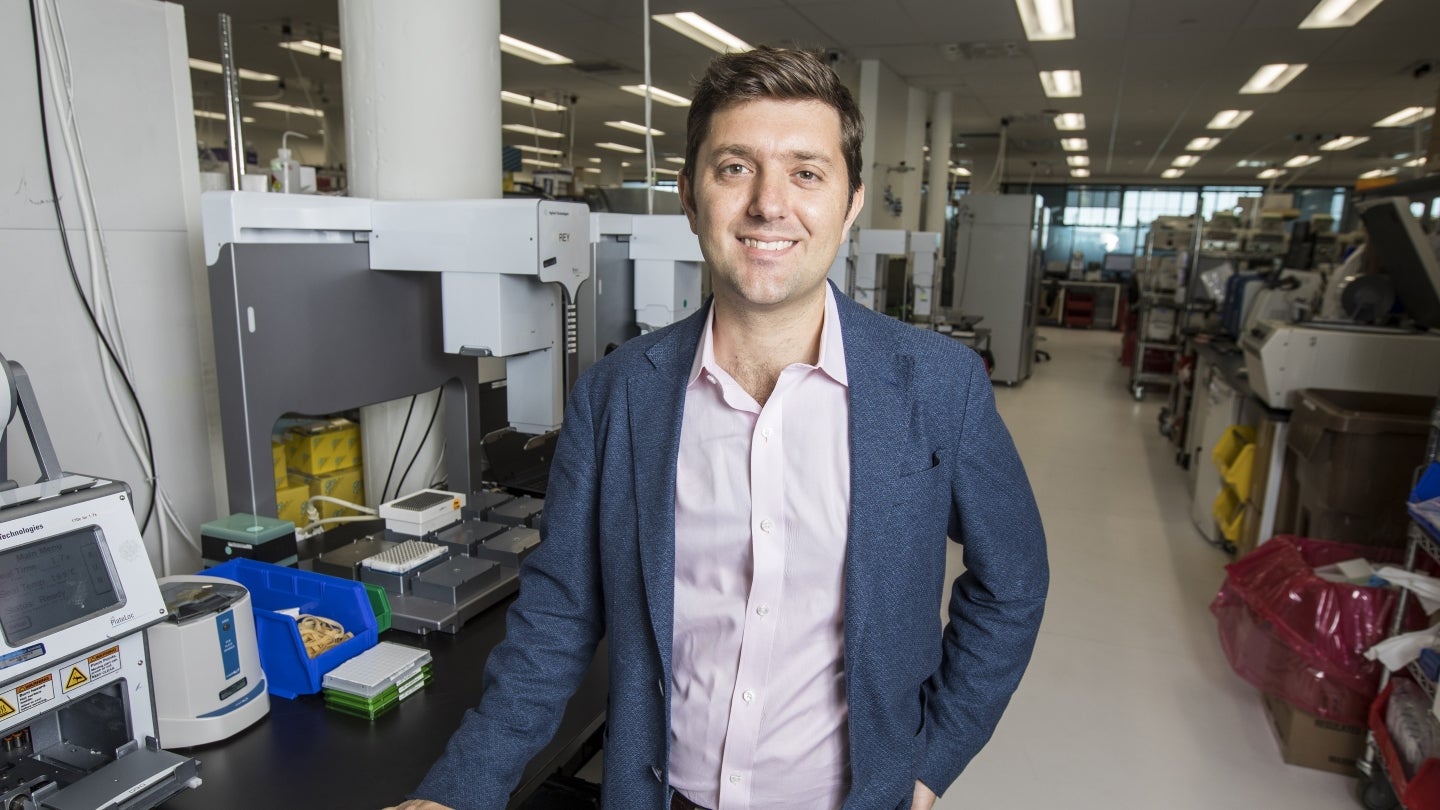
The architecture of Ginkgo’s autonomous lab is designed for maximum flexibility. Unlike the confined nature of traditional workcells, where robotic arms are restricted to a limited radius, Ginkgo’s system employs a MagneMotion track – an industrial-grade automated transport system. This track enables the movement of 96-, 384-, or even 1,536-well plates to any device within the lab. Once a plate arrives, a six-axis robotic arm precisely transfers it to the designated device with high reliability.
Crucially, every device within the lab is integrated with Ginkgo’s proprietary software. This integration allows for programmatic control of the instruments, and increasingly, a more intuitive interface where scientists can communicate experimental protocols in plain English. The software then translates these requests into the complex code required to orchestrate the 70-robot system, creating a truly dynamic and responsive experimental environment. This interconnectedness ensures that samples can be efficiently moved between a vast array of equipment, including centrifuges, heat blocks, and liquid chromatography-mass spectrometry (LC-MS) devices, mimicking and even surpassing the fluidity of manual sample handling.
The AI Scientist: The Next Frontier of Autonomy
While the development of sophisticated autonomous labs is a monumental achievement, Kelly emphasizes a critical distinction between an "autonomous lab" and an "AI scientist." Ginkgo’s primary focus remains on perfecting the autonomous laboratory infrastructure, creating an intuitive and efficient platform for executing experiments. However, the company is also actively exploring the integration of AI models that can act as intelligent agents, capable of designing and optimizing experiments.
"There are two different technologies being developed: one is an autonomous lab, and the second is an AI scientist," Kelly clarified. "We’re very focused on the autonomous lab part. We want to make it a beautiful experience, whether it’s the AI model or a human saying, ‘this is the protocol I want done, and I want it done now.’ Companies like Edison Scientific, Potato.ai, and others are trying to make reasoning models into better scientists."
Ginkgo has already demonstrated the potential of this synergistic approach through a groundbreaking project with OpenAI. In this collaboration, GPT-5 was tasked with acting as an AI scientist to run experiments within Ginkgo’s autonomous lab. The project focused on optimizing cell-free protein synthesis, a process often hampered by the high cost of the resulting proteins. Academic and industry groups have historically strived to reduce this cost by experimenting with various reagent mixes.
A benchmark study from Stanford and Professor Michael Jewett’s lab provided a baseline for the most cost-effective protein production per dollar. Ginkgo, using GPT-5 as its AI scientist, aimed to surpass this benchmark. The process involved iterative rounds of experiments. GPT-5 would design a set of approximately 100 384-well plate experiments, these would be executed in Ginkgo’s autonomous lab, and the resulting data would be fed back to GPT-5. The AI would then analyze the data and design the subsequent experimental round.
The results were remarkable. After just four rounds of this AI-driven iterative process, the system managed to outperform the Stanford paper’s findings. By the sixth round, it had achieved a 40% improvement in cost-effectiveness for protein production. This experiment not only validated the capability of autonomous labs to execute complex, AI-designed experiments but also showcased the potential for AI to accelerate scientific discovery by intelligently exploring vast experimental parameter spaces far more rapidly than traditional human-led approaches.
Implications and Future Trajectories for Biopharma R&D
The implications of this autonomous revolution in biopharma R&D are far-reaching. By significantly enhancing the speed, accuracy, and reproducibility of experiments, autonomous labs can dramatically shorten development timelines for new drugs and therapies. This increased efficiency can lead to reduced R&D costs, potentially making life-saving treatments more accessible and affordable.
Furthermore, the ability to scale up experimentation exponentially opens doors to exploring previously intractable scientific questions. Complex biological systems, with their myriad variables, can be investigated with a level of detail and throughput that was previously unimaginable. This could accelerate breakthroughs in areas such as personalized medicine, gene therapy, and the development of novel biologics.
The shift towards autonomous labs also signals a change in the role of the human researcher. Instead of being hands-on technicians, scientists will evolve into strategic thinkers, experimental designers, and data interpreters. Their expertise will be focused on formulating hypotheses, designing elegant experimental strategies for the AI to execute, and critically analyzing the wealth of data generated by these automated systems. This elevation of the human role, from execution to conceptualization, is a testament to the power of technology to augment human intellect.
The biopharma industry is not alone in this journey. Similar trends are being observed in other scientific fields, indicating a broader technological paradigm shift. As companies like Ginkgo Bioworks continue to refine their autonomous lab platforms and integrate increasingly sophisticated AI capabilities, the pace of scientific innovation is set to accelerate. The "magic" that Jason Kelly envisions for biopharma experiments is not a distant dream, but a tangible outcome of strategic investment in automation, AI, and a forward-thinking approach to research and development. The autonomous revolution is here, and it promises to reshape the future of medicine.















Leave a Reply