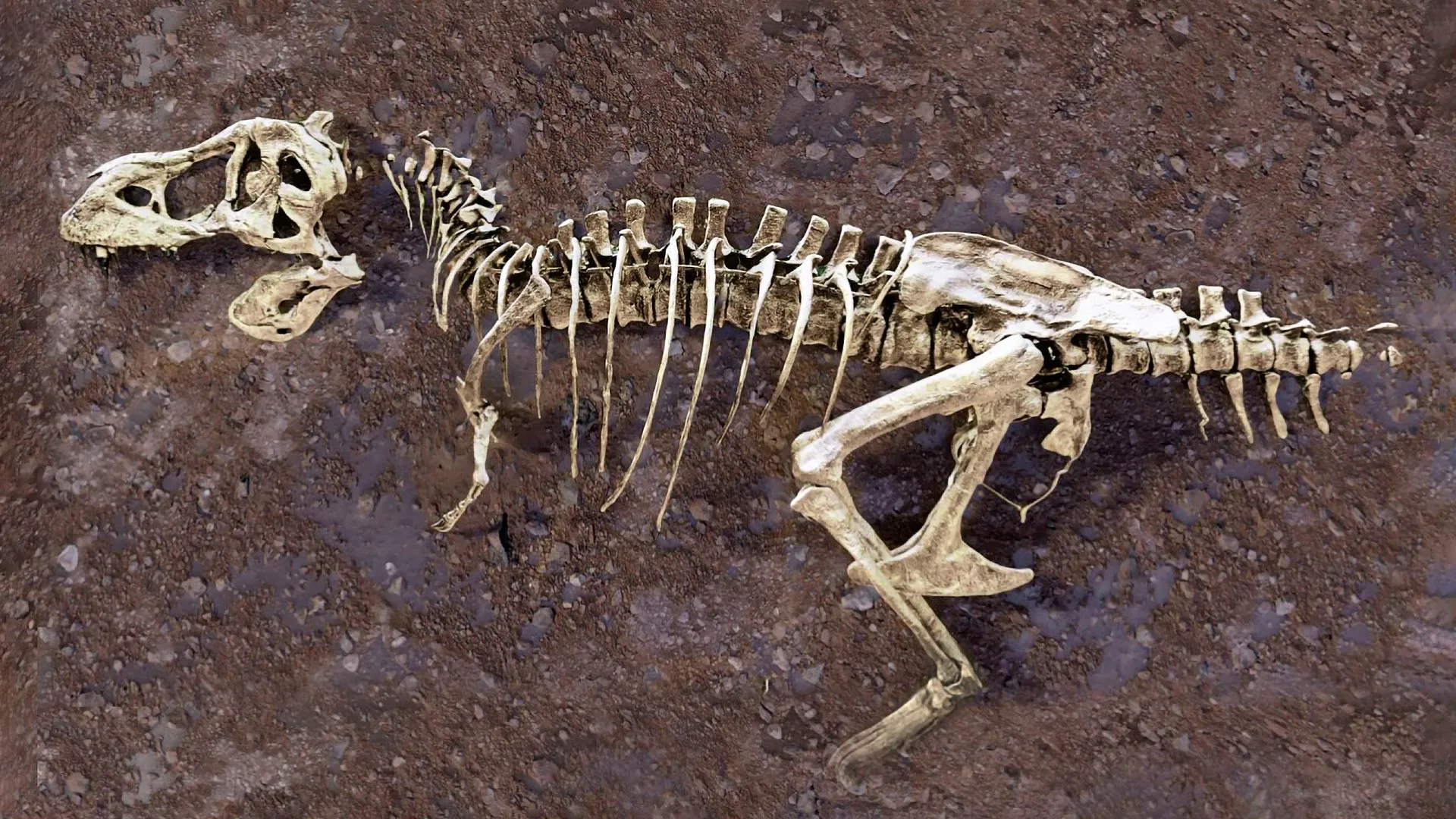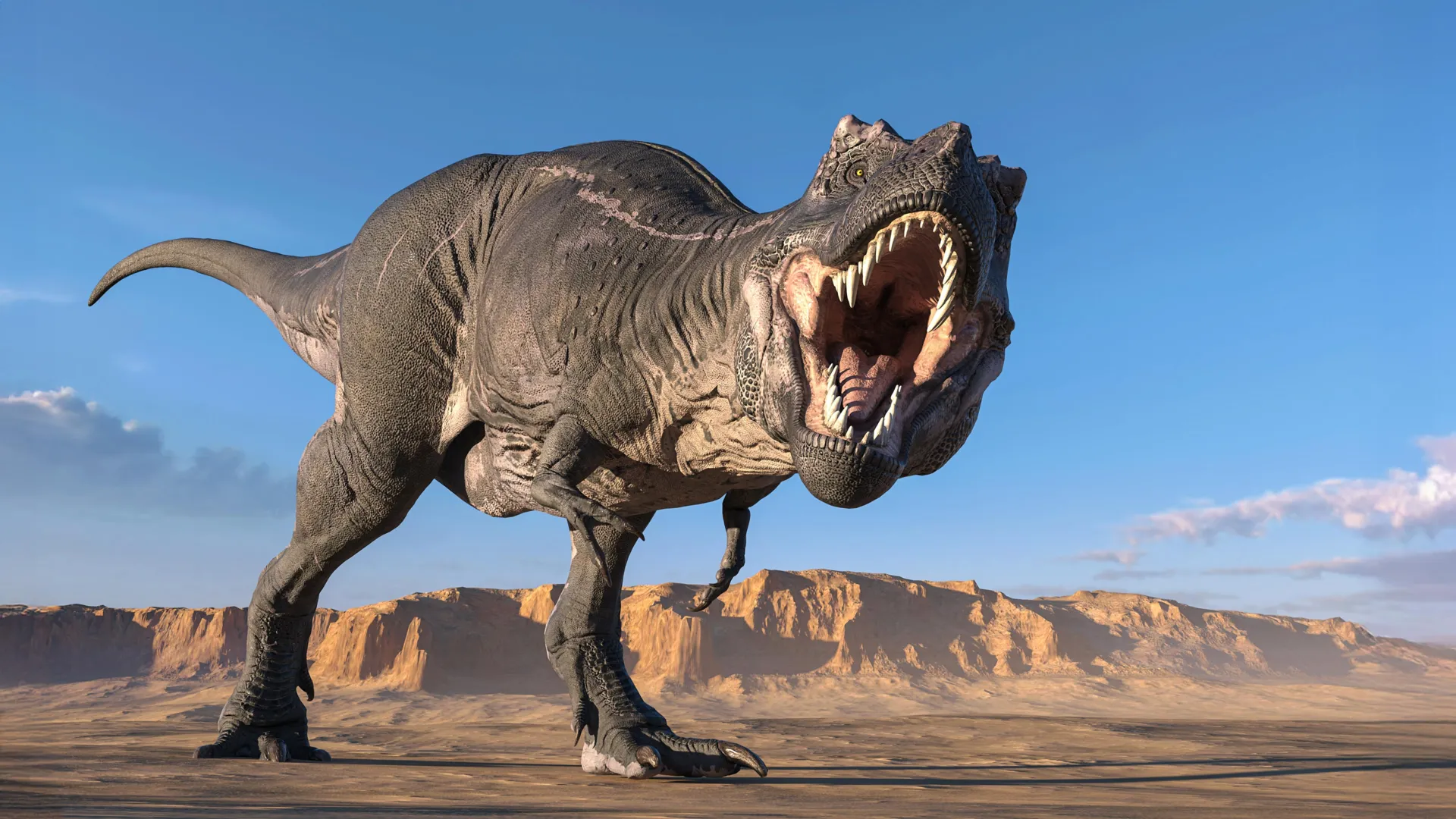
For more than a century, paleontologists have relied on skeletal morphology, biomechanical modeling, and ecological distribution to infer the physiology of Tyrannosaurus rex. While the image of the dinosaur as a sluggish, cold-blooded scavenger dominated early 20th-century thought, the paradigm has shifted significantly. New research published in Science Advances has finally provided empirical data to settle this debate: the apex predator of the Cretaceous period maintained a stable body temperature of approximately 97 degrees Fahrenheit (36 degrees Celsius), suggesting a high-metabolism, endothermic biology similar to that of modern mammals.
This landmark discovery was made possible by a decade of refinements in isotope geochemistry at the University of California, Los Angeles (UCLA). By analyzing the chemical signatures locked within fossilized tooth enamel, researchers have successfully moved beyond theoretical models to measure the biological heat of an animal that vanished 66 million years ago.
The Evolution of a Paleontological Thermometer
The methodology employed by the UCLA team is rooted in the study of clumped isotopes. Within the crystalline structure of hydroxyapatite—the mineral that composes tooth enamel—carbon and oxygen atoms bond in configurations that are highly sensitive to temperature. During the formation of these bonds, the frequency of "clumping" is inversely proportional to the ambient temperature of the organism.
The primary challenge in applying this technique to prehistoric specimens has always been the requirement for significant sample mass. Early iterations of the method required portions of bone or tooth that were simply too large to justify destroying. For a curator at a major institution, the prospect of drilling into a rare T. rex skull is an ethical dilemma; the specimen is an irreplaceable cultural and scientific asset.
Over the past ten years, the UCLA team, led by geobiologist Robert Eagle and researcher Randy Flores, optimized the mass spectrometry process. By refining the extraction and purification protocols, they reduced the required sample material by 90%. This technological breakthrough was the turning point that allowed the Natural History Museum of Los Angeles County to authorize the analysis of "Thomas," a celebrated T. rex specimen discovered in the Hell Creek Formation of Montana.
Chronology of the Investigation
The path to this discovery was neither quick nor straightforward. The timeline of this research reflects a slow but steady maturation of geochemical analytical techniques:
- 2014: UCLA researchers establish the initial proof-of-concept for the clumped isotope thermometer, demonstrating its potential for distinguishing between warm-blooded and cold-blooded organisms.
- 2016–2019: The team undergoes a period of technical refinement, focusing on reducing the volume of material needed for mass spectrometry to minimize the destruction of museum-grade fossils.
- 2021: Discussions between UCLA and the Natural History Museum of Los Angeles County intensify regarding the use of the "Thomas" T. rex teeth.
- 2023: Successful extraction and analysis of enamel samples from two teeth belonging to the Thomas specimen.
- September 2024: Publication of the findings in Science Advances, providing the first objective physiological temperature reading for a tyrannosaur.
The Biological Implications of 97 Degrees
The finding that T. rex operated at 97 degrees Fahrenheit carries profound implications for our understanding of dinosaur behavior. A body temperature of this magnitude suggests that the dinosaur was neither a purely ectothermic (cold-blooded) animal—which relies on environmental heat—nor a high-energy avian endotherm (which often operates at 104 to 109 degrees Fahrenheit).
Instead, the data points to a mesothermic or highly active endothermic metabolism. This allows for a more nuanced understanding of the T. rex lifestyle. Rather than being a sedentary creature prone to basking for hours to regulate its temperature, the dinosaur was likely capable of sustained, high-energy bursts of movement. This aligns with modern biomechanical models that suggest a predator capable of covering significant ground to track prey or scavenge vast territories.
Furthermore, this internal heat regulation provided a distinct evolutionary advantage. During the Cretaceous period, Earth was a "hothouse" planet, but even within that warmer context, the presence of T. rex in high-latitude regions such as Alaska presented a thermal challenge. Cold-blooded reptiles are absent from the fossil records of these ancient northern latitudes, yet tyrannosaurs thrived there. The ability to generate and maintain a consistent internal temperature likely acted as a physiological buffer, allowing the species to dominate niches that were fundamentally inhospitable to other reptiles.
Comparative Analysis: The Crocodilian Control
To ensure the integrity of the findings, the researchers conducted a comparative analysis of crocodilian fossils retrieved from the same Montana geological strata. The crocodilians exhibited a significantly lower temperature of 30 degrees Celsius (86 degrees Fahrenheit).
This control was vital. If the fossilization process had altered the isotope bonds in a way that mimicked a higher temperature, both the dinosaur and the crocodilian would have displayed similar readings. The discrepancy between the two—a clear six-degree difference—serves as strong evidence that the measured temperatures are biological rather than environmental or geological artifacts. It confirms that the 97-degree reading is a true reflection of the dinosaur’s internal metabolic state.
Institutional Ethics and the Value of Destructive Analysis
The collaboration between UCLA and the Natural History Museum of Los Angeles County highlights the evolving relationship between analytical scientists and museum curators. Luis Chiappe, curator of the museum’s Dinosaur Institute, noted that the decision to permit the sampling was reached only after rigorous deliberation.
"We have an obligation to future generations to preserve these specimens," Chiappe stated. "However, preservation is not the same as stagnation. If we can extract fundamental biological truths from a few milligrams of material that was not on public display, the scientific gain justifies the minimal physical cost."
This sentiment is increasingly common in the field of paleontology. As analytical technologies become more precise, museums are opening their collections to destructive analysis, provided that the researchers can demonstrate that the technique is non-invasive to the aesthetic integrity of the exhibit and provides high-impact data.
Broader Impact on Evolutionary Theory
The placement of T. rex on the metabolic spectrum provides a clearer picture of the evolutionary trajectory from ancestral reptiles to modern birds. As descendants of theropod dinosaurs, birds represent the pinnacle of high-metabolism, endothermic development. The T. rex measurement fits neatly into the transition zone, acting as a link between the lower-energy ectotherms of the past and the high-energy avian endotherms of the present.
This research also refines the paleoclimate models used by scientists to map ancient ecosystems. By knowing the physiological constraints of T. rex, researchers can more accurately model the environmental ranges that the species could have inhabited. By cross-referencing this with climate reconstructions of the Late Cretaceous, experts can now delineate the probable boundaries of the T. rex empire with much greater precision than was previously possible.
Ultimately, the ability to take the temperature of an animal that has been dead for 66 million years represents a technological milestone. It moves paleontology away from the realm of educated conjecture and toward the rigors of hard, empirical physiology. While the T. rex remains a subject of mystery and awe, it is no longer the "cold-blooded monster" of 20th-century cinema; it is now recognized as a physiologically complex, high-functioning predator that shared more in common with the warm-blooded life forms of today than with the reptiles that slithered in its shadow. As research continues, the integration of isotope analysis with traditional fossil study will undoubtedly uncover further details about the lives of these titans, proving that even after millions of years, they still have much to tell us.