

The intricate dance between light and plant development, a cornerstone of life on Earth, continues to reveal its complexities to scientific inquiry. Researchers at Osaka Metropolitan University have recently illuminated a previously uncharted pathway by which light profoundly influences plant architecture and growth, identifying a key molecular player, p-coumaric acid, in this sophisticated biological process. This discovery not only deepens our understanding of fundamental plant physiology but also holds significant promise for advancements in agriculture and the development of more resilient crops.
The Hidden Architecture of Plant Growth: Light’s Influence on Tissue Adhesion
For centuries, botanists have recognized light as an indispensable factor in plant life, powering photosynthesis and dictating photomorphogenesis—the developmental responses of plants to light. However, the precise molecular and cellular mechanisms through which light orchestrates these changes have remained an active area of research. The breakthrough from Osaka Metropolitan University, detailed in a recent publication in Physiologia Plantarum, focuses on a nuanced aspect of plant structure: the adhesion between the epidermal layer, the plant’s protective outer skin, and the underlying inner tissues.
Professor Kouichi Soga, leading the research at the Graduate School of Science, and his team embarked on a detailed investigation utilizing young pea stems, a model organism often employed in plant science due to its relatively simple structure and rapid growth. Their methodology involved a specialized technique designed to quantify the mechanical strength of the bond between these two distinct tissue layers. The results of their meticulous experiments revealed a striking dichotomy: plants cultivated under light conditions exhibited a significantly greater degree of adhesion between the epidermal and inner tissues compared to their counterparts grown in complete darkness.
"Compared with plants grown in the dark, the epidermal and inner tissues of plants grown in the light are more tightly bound together," Professor Soga stated, emphasizing the novelty of their observation. "This phenomenon has never been reported before, making it a particularly interesting finding." This enhanced adhesion suggests that light exposure actively reinforces the structural integrity of the plant stem, creating a more robust framework.
The Molecular Architect: Identifying p-Coumaric Acid
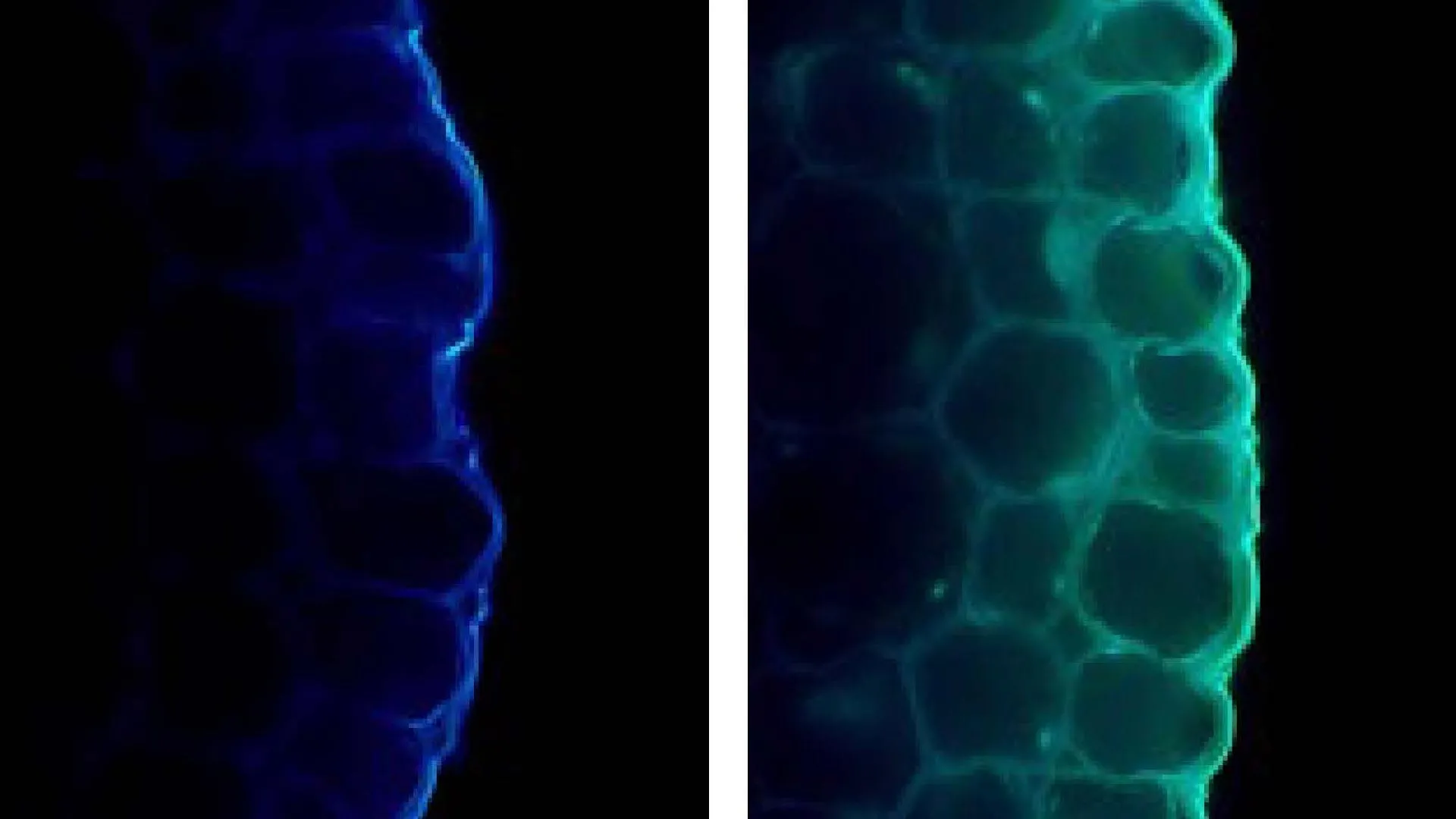
The immediate question arising from this discovery was the underlying cause of this light-induced increase in tissue adhesion. To unravel this mystery, the researchers employed advanced fluorescence microscopy, a powerful tool that allows for the visualization of specific molecules within cells. Their microscopic examination of light-exposed stems yielded a significant observation: these tissues emitted signals that correlated with elevated levels of a particular phenolic acid known as p-coumaric acid.
P-coumaric acid is a well-established compound in plant biochemistry, recognized for its role in the structural reinforcement of plant cell walls. Phenolic acids, in general, contribute to the rigidity and strength of plant tissues by cross-linking with other cell wall components like cellulose and lignin. The presence of increased p-coumaric acid in light-grown stems strongly suggested that light exposure triggers an upregulation in the synthesis of this compound, which subsequently strengthens the structural connections holding the epidermal and inner tissues together.
Yuma Shimizu, a graduate student and the first author of the study, elaborated on the significance of this molecular identification. "This provided strong evidence that the accumulation of p-coumaric acid was a key factor in strengthening the adhesion between the epidermal and the inner tissues," Shimizu explained. The research team’s findings paint a clear picture: light, through its influence on cellular metabolism, promotes the production of p-coumaric acid, which then acts as a molecular glue, enhancing the mechanical linkage between different plant tissues.
A Balancing Act: The Trade-off Between Strength and Growth
The implications of this heightened adhesion are profound and introduce an intriguing biological trade-off. While a stronger structural bond offers enhanced stability and potentially better defense against physical stresses, it appears to come at a cost to growth potential. When the epidermal and inner tissues are more rigidly adhered, the capacity for the inner tissues to expand and stretch—a fundamental process for stem elongation—is curtailed.
This discovery sheds new light on how light can, under certain circumstances, act as a brake on plant growth. While light is essential for photosynthesis, the very process that fuels growth, it also, through the mechanism identified by the Osaka Metropolitan University team, contributes to a more rigid plant structure, thereby limiting the extent to which the stem can elongate. This suggests a sophisticated regulatory system where plants balance the need for structural integrity with the imperative for growth, with light playing a dual role in this complex interplay.
Historical Context and Chronological Development of Light and Plant Growth Research
The study of light’s influence on plants dates back to antiquity. Early observations noted that plants would grow towards a light source, a phenomenon later termed phototropism. The discovery of photosynthesis in the 18th and 19th centuries provided a fundamental understanding of light’s role in energy conversion. By the late 19th and early 20th centuries, scientists began to investigate the more subtle developmental responses to light, leading to the identification of photoreceptors like phytochromes and cryptochromes, which perceive different wavelengths of light and initiate signaling cascades.
The late 20th century saw a surge in molecular biology research, enabling scientists to dissect these signaling pathways and identify the genes and proteins involved in photomorphogenesis. Research has focused on how light regulates gene expression, hormone signaling, and the synthesis of various compounds that influence cell division, elongation, and differentiation.
The work by Professor Soga’s team represents a more recent advancement, moving beyond the well-established roles of light in photosynthesis and basic photomorphogenesis to investigate its impact on the mechanical properties of plant tissues. This research builds upon decades of foundational work, applying advanced imaging and mechanical testing techniques to uncover a previously overlooked layer of light-mediated regulation. The timeline of this specific discovery can be traced to the ongoing research efforts within Professor Soga’s laboratory at Osaka Metropolitan University, culminating in the publication of their findings in Physiologia Plantarum.
Supporting Data and Experimental Evidence
The robustness of the Osaka Metropolitan University team’s findings is underpinned by several key pieces of experimental evidence. The initial differentiation in adhesion strength between light-exposed and dark-grown pea stems was quantified using a specialized force measurement technique. While the precise numerical values for the force required to separate the tissues were not detailed in the provided summary, the researchers unequivocally reported a "clear difference" and that stems grown in light were "much stronger." This quantitative data formed the basis of their hypothesis.
Subsequent microscopic analysis provided the molecular link. The fluorescence microscopy revealed distinct patterns of light emission in light-grown stems, directly attributable to the presence of p-coumaric acid. This was not merely a correlation; the researchers established that the intensity of the fluorescence, and thus the concentration of p-coumaric acid, directly mirrored the observed increase in tissue adhesion. This dual approach—mechanical measurement and molecular visualization—provides strong, convergent evidence for their proposed mechanism.
Furthermore, the researchers’ understanding of p-coumaric acid’s known function in reinforcing cell walls lent significant credibility to their interpretation. This background knowledge from plant cell wall biology acted as a crucial piece of supporting data, allowing the team to confidently link the observed molecular changes to the macroscopic phenomenon of increased tissue adhesion.
Broader Impact and Implications for Agriculture
The implications of this discovery extend far beyond academic curiosity, holding significant potential for practical applications in agriculture and horticulture. The ability to modulate plant growth and resilience through controlled environmental factors, particularly light, opens new avenues for crop management.
Enhancing Crop Resilience to Environmental Stress
One of the most exciting prospects lies in the development of crops with improved tolerance to environmental stressors. Plants are constantly subjected to challenges such as drought, extreme temperatures, and mechanical damage. Structural integrity, as demonstrated by the increased adhesion in light-exposed plants, can play a crucial role in a plant’s ability to withstand these adversities.
"By measuring the adhesion between the epidermal and the inner tissues as stem growth changes in response to various factors, we expect to determine whether growth regulation mediated by changes in adhesion is a universal mechanism," Professor Soga stated, hinting at the potential for broader applications. If this light-mediated adhesion mechanism is indeed a widespread phenomenon across different plant species, then manipulating light conditions during cultivation could be a strategic tool to enhance crop resilience. For instance, controlled light exposure could potentially lead to plants that are less prone to lodging (falling over) due to wind or heavy rain, or that exhibit improved mechanical strength to resist pest damage.
Precision Agriculture and Optimized Growth
The findings also suggest possibilities for precision agriculture, where environmental conditions are meticulously controlled to optimize plant growth and yield. Understanding how light influences the balance between structural strength and elongation allows for more nuanced cultivation strategies. In some cases, it might be desirable to promote rapid elongation, while in others, a more robust, albeit slower-growing, plant structure might be advantageous.
For example, in the cultivation of certain vegetables or ornamental plants, a compact and sturdy structure might be preferred for aesthetic reasons or to facilitate harvesting. Conversely, for crops where rapid biomass accumulation is paramount, understanding the conditions that promote elongation might be key. The ability to fine-tune these processes through light management could lead to increased yields, reduced crop losses, and more efficient resource utilization.
Breeding for Enhanced Traits
Beyond environmental manipulation, these findings could also inform plant breeding programs. If genetic variations exist that influence p-coumaric acid production or the plant’s response to light in terms of tissue adhesion, then these traits could be selectively bred for. This could lead to the development of new plant varieties inherently possessing enhanced structural integrity or a more adaptable growth response to varying light conditions.
The research team’s forward-looking statement about breeding plants with "improved tolerance to environmental stress" underscores this potential. By identifying the genetic underpinnings of this light-driven adhesion mechanism, plant breeders could develop crops that are naturally more resilient, reducing the need for extensive agricultural interventions.
Official Statements and Future Directions
Professor Kouichi Soga, the principal investigator, expressed optimism about the future trajectory of this research. His concluding remarks highlight the ongoing commitment to exploring the universality of this mechanism and its far-reaching implications. The research team’s dedication to scientific rigor and their methodical approach, from initial observation to molecular identification and potential application, are commendable.
The publication of their findings in Physiologia Plantarum, a respected journal in the field of plant science, signifies the scientific community’s recognition of the significance of this discovery. This peer-reviewed validation ensures that their work is accessible to researchers worldwide, fostering further investigation and collaboration.
The next steps for the Osaka Metropolitan University team are likely to involve expanding their research to a wider range of plant species to confirm the universality of the p-coumaric acid-mediated adhesion mechanism. Further investigations could also delve deeper into the specific light signaling pathways that trigger p-coumaric acid synthesis and explore the interplay between this mechanism and other plant hormones known to regulate growth and development. Ultimately, the goal is to translate this fundamental biological insight into practical solutions that benefit global food security and sustainable agriculture.













Leave a Reply